
China’s AI Push at WAIC 2026 Spurs Japan Tech Response
China's 2026 World Artificial Intelligence Conference has unveiled ambitious targets for humanoid robot production and robotaxi fleets, signaling a decisive state-backed push into embodied AI. This scale of deployment is prompting Japan to accelerate its own semiconductor and AI programs under METI and the Society 5.0 framework. The resulting regional competition is reshaping supply chains across autonomous vehicles and advanced robotics.
China's 2026 World Artificial Intelligence Conference has unveiled ambitious targets for humanoid robot production and robotaxi fleets, signaling a decisive state-backed push into embodied AI. This scale of deployment is prompting Japan to accelerate its own semiconductor and AI programs under METI and the Society 5.0 framework. The resulting regional competition is reshaping supply chains across autonomous vehicles and advanced robotics.
China WAIC 2026 AI Push Spurs Japan Tech Response
Tokyo, Japan – July 19, 2026 — Article continues...
WAIC 2026 Opens with Record Scale in Shanghai
The 2026 World Artificial Intelligence Conference opened on July 17 in Shanghai, occupying 100,000 square meters of exhibition space and featuring more than 1,100 exhibitors. Chinese President Xi Jinping delivered the opening address, underscoring the government's commitment to AI as a driver of economic expansion.
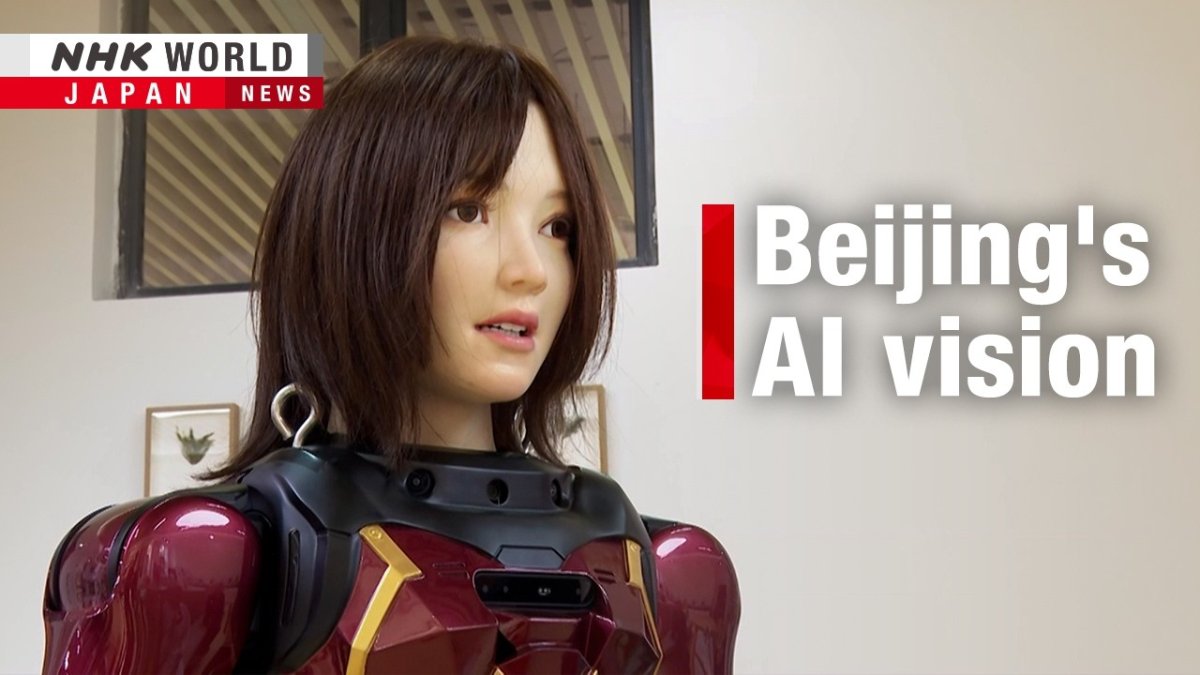
NHK WORLD-JAPAN coverage of the event focused on China's integration of AI into autonomous vehicles and humanoid robots. The scale of the exhibition reflects concrete policy support rather than aspirational statements alone.
Humanoid Robot Output Targets Set by MIIT
Gan Xiaobin, Deputy Director of the Department of Science and Technology under the Ministry of Industry and Information Technology, stated that China's humanoid robot output is expected to exceed 100,000 units in 2026. This projection aligns with earlier industrial planning documents that prioritize embodied AI applications in manufacturing and services.
China's MIIT target of surpassing 100,000 humanoid robot units this year reflects a deliberate scaling strategy that leverages the country's vast manufacturing base. Key players such as BYD, Xiaomi, Unitree, and Fourier Intelligence are integrating automotive-grade supply chains to drive down component costs, with ambitions to halve actuator and sensor prices within two years. This approach contrasts sharply with Japan's established industrial robot sector, where Fanuc, Yaskawa, and Kawasaki maintain premium positioning through precision engineering but face slower volume growth. Japanese component makers supplying harmonic drives and high-torque motors now confront both opportunity and risk, as Chinese assemblers seek to localize these parts while still relying on imported high-end materials for initial batches.
In global context, 100,000 units would represent roughly one-fifth of annual industrial robot installations worldwide, signaling China's intent to dominate the emerging embodied AI segment rather than merely compete in traditional automation. The policy elevation of "Embodied AI" in the government work report underscores a shift from pilot projects to mass deployment, potentially accelerating technology decoupling as Western and Japanese firms reassess exposure to Chinese production networks.
Embodied AI Enters Government Work Report
"Embodied AI" and "humanoid robot" appeared for the first time in China's 2026 Government Work Report, elevating both from research interest to national priority. XPeng CEO He Xiaopeng, during China's Two Sessions legislative meetings, described 2026 as the "inaugural year for Physical AI," submitting proposals covering autonomous driving, humanoid robots, and flying cars. The designation signals that policymakers in Beijing are treating AI-driven hardware as a measurable industrial output rather than an experimental domain.
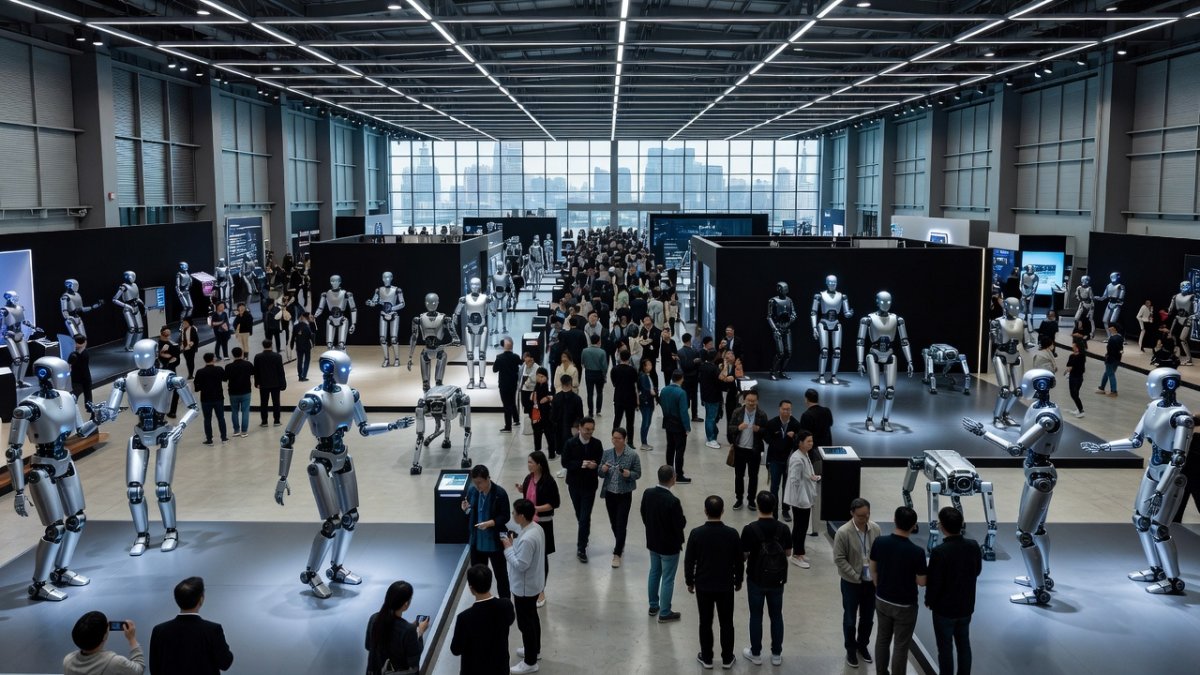
Companies including BYD, Xiaomi, and Unitree have accelerated development timelines. Unitree's latest models emphasize cost reduction through simplified actuator designs, while Fourier Intelligence has begun small-scale production of humanoid robots for rehabilitation and elder care applications.
Pony.ai and Toyota Advance Robotaxi Fleet
The Pony.ai and Toyota collaboration has produced the seventh-generation robotaxi platform, featuring 100 percent automotive-grade components and a 70 percent reduction in bill-of-materials costs compared with the previous generation. Pony.ai raised its 2026 fleet target to 3,500 vehicles following stronger-than-expected first-quarter revenue growth.
The Pony.ai and Toyota Gen-7 robotaxi partnership illustrates selective Japan-China collaboration amid intensifying competition. By achieving a 70 percent BOM cost reduction through 100 percent automotive-grade components, the venture positions itself against Baidu Apollo and WeRide in China's crowded robotaxi market, where municipal regulators in Beijing and Shanghai are expanding operational zones under strict safety data requirements. This development pressures Japanese automakers to accelerate their own autonomous strategies, particularly as Toyota continues controlled testing on Japanese public roads under METI and MLIT frameworks that prioritize safety certification over deployment speed.
Tesla Shanghai Operations Support Broader Ecosystem
Tesla reported 16 percent year-on-year revenue growth in the first quarter of 2026, driven by robust performance at its Shanghai Gigafactory. The company is preparing for the debut of its third-generation humanoid robot, expected in mid-2026. While Tesla's operations in China remain subject to evolving data localization rules, the Shanghai facility continues to serve as both an export hub and a testbed for AI-integrated manufacturing processes.
Japanese automotive suppliers with contracts linked to the Shanghai Gigafactory are monitoring these developments closely. The scale of Tesla's China operations creates both opportunities for component supply and risks associated with overexposure to a single geopolitical market.
Japan's METI Allocates Resources for AI and Chips
Japan's Ministry of Economy, Trade and Industry has allocated approximately ¥1.23 trillion in the FY2026 budget for chip and AI support programs. This includes funding for Rapidus, the domestic advanced semiconductor initiative, as well as AI development programs under the Society 5.0 framework. The budget represents a significant increase over previous allocations, reflecting Tokyo's assessment of accelerating regional competition.
Rapidus's 2nm pilot line, represents a targeted response to China's state-backed AI hardware push. While exact splits remain opaque, funding prioritizes domestic advanced logic production alongside AI software initiatives under the Society 5.0 framework, involving firms such as Sony for imaging sensors, Tokyo Electron for deposition equipment, and Keyence for precision inspection tools. Compared with China's multi-hundred-billion-dollar AI investment pipelines, Japan's approach remains more concentrated and export-oriented, seeking to maintain leverage in upstream materials and equipment even as Chinese foundries advance.
Policymakers in Tokyo have noted WAIC 2026 developments with measured concern, viewing them as validation for continued public-private coordination rather than direct emulation of scale-driven models. This strategy aims to preserve Japan's position in the AI supply chain without matching China's output targets.
Implications for Japanese Industry and Regional Competition
The rapid expansion of China's AI-driven robotics and autonomous vehicle sectors creates both competitive pressure and selective opportunities for Japanese industry. Japanese suppliers continue to provide specialized components for Chinese AI platforms, particularly in sensors and automotive-grade electronics, even as Tokyo pursues technology security frameworks that limit direct transfer of advanced manufacturing know-how.
China's humanoid and autonomous vehicle acceleration poses tangible displacement risks for Japanese exporters in Southeast Asian markets, where cost-competitive Chinese systems could capture infrastructure projects previously supplied by Japanese trading houses. At the same time, opportunities persist for Mitsubishi, Mitsui, and Sumitomo to secure roles in precision materials, rare-earth processing, and specialized logistics that Chinese manufacturers still import. Recent US-Japan summit agreements on AI safety and semiconductor coordination provide a partial buffer, enabling Japanese firms to diversify while maintaining selective engagement with Chinese partners.
Japanese businesses and consumers should anticipate gradual technology bifurcation, with premium robotics and autonomous features increasingly sourced from domestic or allied ecosystems, even as lower-cost Chinese alternatives proliferate in adjacent sectors. This dynamic will likely reinforce Japan's focus on high-reliability components over volume leadership.
Outlook for Asia-Pacific Technology Cooperation
The WAIC 2026 outcomes provide a reference point for measuring progress in both Japan and China's national AI strategies. Observers in Tokyo note that sustained METI investment in Rapidus and AI testbeds will determine whether Japan maintains parity in high-value segments. The divergence in scale and strategic approach between the two countries suggests that complementary rather than fully competitive dynamics may persist in specific technology verticals, particularly where Japanese precision manufacturing and Chinese volume production align.
By Kenji Tanaka, Staff Writer
This article was produced with AI-assisted research and editorial support. Reporting is based on sources cited in the article.
What's Your Reaction?
 Like
0
Like
0
 Dislike
0
Dislike
0
 Love
0
Love
0
 Funny
0
Funny
0
 Wow
0
Wow
0
 Sad
0
Sad
0
 Angry
0
Angry
0

Japan Correspondent at Global1.News. Tokyo-based voice covering Japanese politics, technology, economy, and culture. Tracks the intersection of tradition and innovation in one of the world's most dynamic societies.













Comments (0)