
Kikuyu Men Adopt Mothers' Names in Bold Kenyan Shift
In the bustling markets of Nairobi and the quiet villages of central Kenya, a quiet revolution is unfolding among the Kikuyu people. Sons are stepping forward with their mothers' names proudly displayed on official documents, business cards, and even music albums, turning centuries of patriarchal custom on its head and inviting both admiration and sharp-tongued mockery across the continent. Kikuyu Men Adopt Mothers' Names in Bold Kenyan Shift Nairobi, Kenya — Article continues...
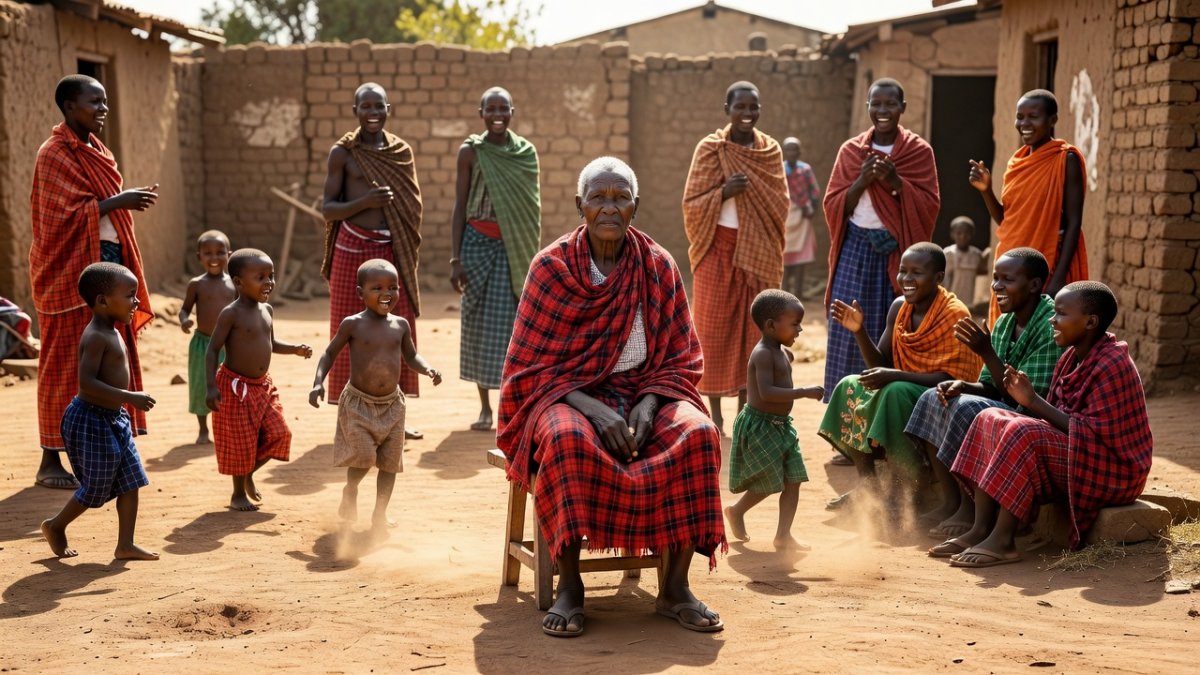
In the bustling markets of Nairobi and the quiet villages of central Kenya, a quiet revolution is unfolding among the Kikuyu people. Sons are stepping forward with their mothers' names proudly displayed on official documents, business cards, and even music albums, turning centuries of patriarchal custom on its head and inviting both admiration and sharp-tongued mockery across the continent.
Kikuyu Men Adopt Mothers' Names in Bold Kenyan Shift
Nairobi, Kenya — Article continues...
Breaking the Patriarchal Mold
Across Africa, names carry the weight of ancestry, belonging, and social order. In many communities from the Sahel to the savannas of East Africa, a child’s surname traditionally signals the father’s line. Yet among Kenya’s Kikuyu, the largest ethnic group, an increasing number of men are choosing their mother’s name instead. This shift does not reject tradition outright; it reclaims a deeper layer of identity rooted in the very soil of Kikuyu history. Simon Macharia Wangũi, a journalist, explains his choice simply: he sees no reason to credit an absent father. His decision echoes across generations of African families where mothers have shouldered the heaviest burdens of raising children while fathers moved on.
The Weight of a Name: Stigma and Ridicule
Names shape how the world sees us, and female surnames still draw ridicule in many Kenyan circles. Broadcaster Evans Kibe Waceke describes how people assume children raised by single mothers lack discipline. TV personality Fred Mũitĩrĩri dropped his mother’s name at twenty-three after years of bullying left him depressed. Such stories reveal the tension between personal truth and societal expectation. Yet the mockery often masks deeper anxieties about changing family structures. In Senegal, where I grew up hearing Wolof proverbs about the strength of mothers, similar whispers once followed families headed by women. Over time those whispers faded as communities recognized that love and responsibility, not gender, define a household.
Similar naming tensions surface among the Akan of Ghana, where matrilineal clans once traced identity through the mother's abusua line, yet colonial administrators pushed patrilineal surnames. In Namibia, Ovambo communities historically used maternal prefixes in names to denote lineage. Contemporary data from the African Development Bank shows single-parent households headed by women now comprise roughly 28 percent of urban families across sub-Saharan Africa, correlating with rising urbanization rates that exceed 45 percent in countries like Kenya.
Choosing Mother: Stories of Pride and Identity
Many men speak of their choice with quiet pride. Veteran benga musician Peter Kĩgia, known as Kĩgia wa Esther, says taking his mother’s name signals love and respect. MP John Njũgũna Wanjikũ, raised by a single mother, carries the affectionate nickname “Ka-Wanjikũ,” meaning child of Wanjikũ. These men are not erasing their fathers; they are honoring the parent who remained. The late author Ngũgĩ wa Thiong’o was known in childhood by his mother’s name, Wanjikũ, before adopting his father’s. His early identity reflected the same maternal anchor that today’s young Kikuyu men are reclaiming.
Cultural Roots: The House of Mũmbi
The Kikuyu call themselves the House of Mũmbi after their mythical founding mother. In traditional polygamous households, children were identified by their mother’s name to avoid confusion among half-siblings. Cultural expert Wairimũ Mũkũrũ notes that today’s trend partly reflects the rise in single-mother families. Mũgwe wa Njhĩhĩ of a Kikuyu cultural group reminds us that lineage traces back to the ten daughters of Gĩkũyũ and Mũmbi. This matrilineal thread was never fully severed; it simply lay dormant under colonial and missionary influences that elevated the father’s name. In my own Wolof culture in Senegal, children often carry both parents’ names in daily speech, and grandmothers’ names surface in praise songs.
The Akan of Ghana preserve matrilineal naming through the mother's clan, a system that colonial ordinances systematically undermined. Ovambo traditions in Namibia similarly linked children to maternal homesteads before missionaries promoted patriarchal baptismal records. Urbanization data from the United Nations indicates that single-parent households in African cities have risen to 32 percent in many capitals, coinciding with women's economic participation rates climbing above 60 percent in informal sectors.
A Changing Continent: Women's Rising Influence
University of Nairobi academic George Gathigi views the trend as evidence of women’s strength amid male abandonment of responsibilities. Across Africa, women lead households, run businesses, and preserve cultural knowledge while men migrate for work. In Dakar’s bustling markets, women traders sustain entire neighborhoods. In Nairobi’s informal settlements, mothers organize community savings groups that lift families out of poverty. When sons publicly claim their mothers’ names, they acknowledge this reality. The practice challenges the imported ideal of the nuclear, father-headed family that never matched most African lived experience.
Among the Akan in Ghana, matrilineal inheritance through the mother's line empowered women traders in pre-colonial markets. Ovambo women in Namibia historically controlled household resources via maternal lines. Current statistics from the World Bank note that female-headed households across Africa average 25 to 35 percent in urban zones, supported by women's economic participation exceeding 50 percent in agriculture and trade.
The Debate Continues
Not everyone welcomes the change. Some blogs call female surnames “a yoke around men’s necks,” fearing loss of masculine identity. Others worry about confusion in inheritance or clan records. Yet Kikuyu history shows flexibility; names have always adapted to circumstance. The ridicule often comes from those uncomfortable with women’s growing public roles. In Senegal, similar debates arose when women began keeping their maiden names after marriage. Over time, society adjusted. The same will likely happen in Kenya as more prominent men like the musician Kĩgia and the parliamentarian Wanjikũ normalize the practice.
A Future Beyond the Name
Ultimately, a name is a doorway, not a destination. These Kikuyu men are opening doors to fuller recognition of maternal love and labor. Their choices invite all Africans to examine which customs still serve us and which ones quietly wound the very families they claim to protect. From the highlands of Kenya to the shores of Senegal, women continue to shape our identities in kitchens, classrooms, and parliaments. When sons proudly bear their mothers’ names, they affirm that strength flows through both lines. The continent’s future will be richer for it, grounded in the truth that every child belongs first to the mother who carried and nurtured them.
By Amara Diop, Staff Writer
This article was produced with AI-assisted research and editorial support. Reporting is based on sources cited in the article.
What's Your Reaction?
 Like
0
Like
0
 Dislike
0
Dislike
0
 Love
0
Love
0
 Funny
0
Funny
0
 Wow
0
Wow
0
 Sad
0
Sad
0
 Angry
0
Angry
0

West Africa/Sahel Correspondent at Global1.News. Dakar-based journalist covering politics, security, climate, and development across Francophone and Anglophone West Africa. Tells the stories of a region undergoing profound transformation.











Comments (0)