
Record Ocean Heat and El Niño Threaten Latin America 2026
The world's oceans are running a fever unlike anything scientists have seen. Global sea surface temperatures have smashed every previous record, and a powerful El Niño is now developing in the Pacific that threatens to bring devastating floods, droughts, and economic disruption across Latin America. From the fishing communities of northern Peru to the maize fields of Guatemala,
The world's oceans are running a fever unlike anything scientists have seen. Global sea surface temperatures have smashed every previous record, and a powerful El Niño is now developing in the Pacific that threatens to bring devastating floods, droughts, and economic disruption across Latin America. From the fishing communities of northern Peru to the maize fields of Guatemala, millions of people are bracing for what could be the strongest El Niño in nearly two centuries of observations.
Record Ocean Heat and Super El Niño Threaten Latin America's Future
July 3, 2026 — Global ocean temperatures have shattered every previous benchmark.
 Keywords: ocean heat record, El Niño 2026, Latin America climate, Peru emergency, Ecuador agriculture, Brazil Amazon drought, Central America drought, marine heatwave, Galápagos coral, fishmeal collapse
July 3, 2026 — Global ocean temperatures have shattered every previous benchmark, with average sea surface readings reaching 21°C and triggering the most intense El Niño event in recorded history. The developing phenomenon, already labeled “El Niño Godzilla” by scientists, threatens to upend agriculture, fisheries and water security across Latin America well into 2027.
Keywords: ocean heat record, El Niño 2026, Latin America climate, Peru emergency, Ecuador agriculture, Brazil Amazon drought, Central America drought, marine heatwave, Galápagos coral, fishmeal collapse
July 3, 2026 — Global ocean temperatures have shattered every previous benchmark, with average sea surface readings reaching 21°C and triggering the most intense El Niño event in recorded history. The developing phenomenon, already labeled “El Niño Godzilla” by scientists, threatens to upend agriculture, fisheries and water security across Latin America well into 2027.
The Ocean's Fever
Global average sea surface temperatures have now reached 21°C, surpassing the records set in both 2023 and 2024. The National Oceanic and Atmospheric Administration was forced to extend its model y-axis to 5°C to accommodate the unprecedented projections. A trans-Pacific marine heatwave stretching roughly 9,000 miles across the North Pacific has persisted since late 2025, feeding energy into the atmosphere.
European Centre for Medium-Range Weather Forecasts models project Niño 3.4 anomalies reaching +3.5°C by November 2026, with a range between +2.8°C and +4.3°C. This would make the event the strongest in 175 years of observations, exceeding both the 1997-98 and 2015-16 episodes. Robust Bjerknes feedback is already visible: warmer sea surface temperatures are weakening trade winds and driving strong Kelvin wave activity across the equatorial Pacific.
Climate change is amplifying every aspect of the cycle. The combination of background warming and natural variability is producing conditions never before measured in the instrumental record. Latin American nations from Mexico to Chile now face the prospect of an El Niño whose intensity and duration could rewrite regional climate risk assessments for an entire generation.
Peru's State of Emergency
On July 2, 2026, Peru declared a state of emergency across 796 districts, representing 40 percent of the national territory. The measure covers 22 regions and 147 provinces spanning coastal, Andean and Amazon zones. The decision rests on detailed risk assessments from CENEPRED and real-time data from SENAMHI showing coastal waters 7°C above the long-term average.
In Lima, residents are experiencing summer temperatures during the middle of winter. Crocodiles are expanding their range southward from the Ecuador border as warm waters allow them to colonize new estuaries. Peru’s SENAMHI has launched intensive capacity-building programs and agroclimatic forecasts to help farmers adapt, yet the scale of the threat is overwhelming.
The anchovy fishery that supplies 60 percent of global fishmeal is collapsing. Warm waters have disrupted the Humboldt Current upwelling, triggering fishing bans and massive economic losses. Global supply chains for aquaculture feed are already feeling the shock. Communities along the northern coast report empty nets and shuttered processing plants, while inland farmers watch crops wither under unseasonal heat.
Ecuador's Agricultural Contingency Plan
Ecuador’s Ministry of Agriculture has activated a contingency plan containing 62 specific actions backed by a $19.7 million budget. The Inter-American Institute for Cooperation on Agriculture is providing technical support to coordinate response across provinces. Authorities have already issued 14,937 subsidized insurance policies and trained more than 47,000 producers in climate-resilient practices.
Under an extreme scenario, losses could reach $1.3 billion and affect up to 2 million hectares. Priority crops include rice, maize, aquaculture and livestock. Current insurance coverage remains below 20 percent of agricultural land, leaving the majority of smallholders exposed. Coastal shrimp farms are particularly vulnerable as rising water temperatures increase disease outbreaks.
Rural communities in Manabí and Guayas provinces are already reporting stressed irrigation systems and declining river flows. The government is racing to expand early-warning networks and seed reserves before the peak impacts arrive later this year. Without rapid scaling of insurance and technical support, hundreds of thousands of farming families face the prospect of losing their entire season’s income.
Brazil's Amazon Under Siege
INMET forecasts indicate drier conditions across Brazil’s North and Northeast regions alongside wetter weather in the South. The Amazon faces elevated drought risk as higher temperatures and lower river levels increase wildfire probability. Ibama has launched Operation Apoena, issuing preventive notifications in Pará, Mato Grosso, Amazonas, Rondônia, Acre, Maranhão and Roraima.
Fire bans, construction of aceiros firebreaks and satellite monitoring are now mandatory across vast territories. NASA data show declining groundwater aquifers throughout the country, compounding the threat to both forests and agriculture. Northeast Brazil is already under extreme drought forecasts, while rice farmers in the South confront financial pressure from excessive rainfall and flooding.
Metsul meteorology warnings highlight the possibility of record-low river levels on the Madeira and Negro rivers by October. Indigenous communities and smallholder farmers are preparing for months of water scarcity and smoke-filled skies. The combination of El Niño and long-term deforestation is pushing the Amazon toward a tipping point that could release billions of tons of stored carbon.
Central America's Drought Gamble
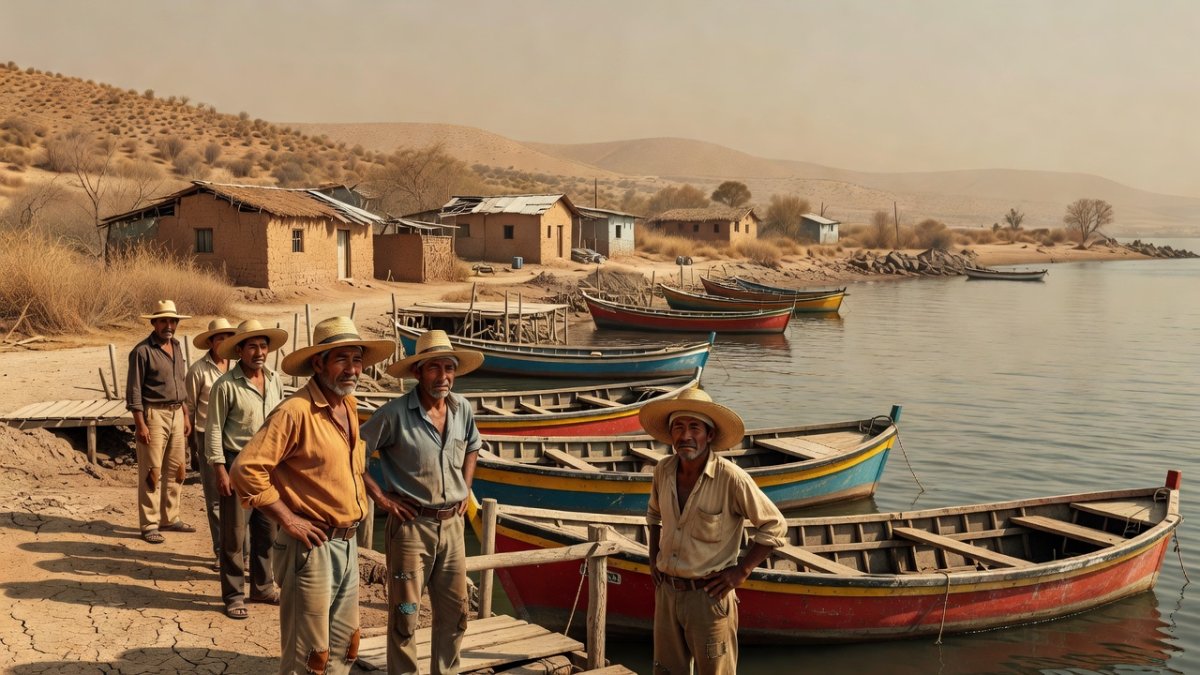
The Food and Agriculture Organization has raised the probability of agricultural drought above 50 percent across Central America. In Guatemala, maize sowing has been severely disrupted as rivers dry and soils crack. Rain-fed agriculture in Honduras, El Salvador and Nicaragua remains the most vulnerable sector, with many families dependent on a single annual harvest.
Along Colombia’s Caribbean coast, suppressed rainfall is elevating wildfire risk and threatening municipal water supplies. Past El Niño events have already reduced rice yields in the region; another strong episode could cut production by 30 percent or more. The FAO and World Food Programme have mobilized $202 million in anticipatory action across 22 countries to protect the most exposed populations.
El Niño is expected to persist until approximately February 2027. Smallholder maize and bean farmers lack irrigation and insurance, leaving them with few options when rains fail. Governments are distributing drought-tolerant seeds and reinforcing early-warning systems, yet the window for effective intervention is narrowing rapidly as soil moisture continues to decline.
Marine Ecosystems in Uncharted Waters
The Galápagos Islands face immediate risk from sustained warming waters that could trigger mass coral bleaching and disrupt the unique food webs supporting penguins, sea lions and marine iguanas. Across the wider Pacific and Caribbean, coral bleaching events are already underway at scales not seen since 2015-16.
Fish populations are shifting poleward, altering traditional fishing grounds for artisanal fleets from Panama to Chile. Seabirds and marine mammals are experiencing breeding failures as prey species move or decline. Harmful algal blooms fueled by disrupted nutrient cycles are closing shellfish harvests and threatening public health in coastal communities.
Peru’s anchovy collapse is only the most visible symptom of a broader marine crisis. The Humboldt and Caribbean ecosystems that have sustained Latin American fisheries for centuries are being reorganized by temperatures outside historical ranges. Scientists warn that recovery could take decades even after the El Niño subsides.
The Bottom Line — A Hemisphere on Alert
Peak impacts are expected between October 2026 and January 2027, with effects likely lingering well into 2027. Climate change is amplifying El Niño severity, turning a natural cycle into an existential threat for millions. While the CFSv2 model carries a warm bias, the multi-model consensus points to a very strong event whose final intensity depends on atmospheric coupling through the northern fall.
From the fishing villages of northern Peru to the maize fields of Guatemala and the cattle ranches of the Brazilian Amazon, communities are bracing for prolonged hardship. Governments have activated emergency plans and international agencies have released anticipatory funding, yet the scale of the 2026-27 El Niño may exceed every preparation.
Latin America has endured strong El Niño events before. None have arrived atop oceans this warm or ecosystems this stressed. The coming months will test whether the region’s institutions and people can adapt faster than the climate itself is changing.
By Elena Vasquez, Staff WriterThis article was produced with AI-assisted research and editorial support. Reporting is based on sources cited in the article.
What's Your Reaction?
 Like
0
Like
0
 Dislike
0
Dislike
0
 Love
0
Love
0
 Funny
0
Funny
0
 Wow
0
Wow
0
 Sad
0
Sad
0
 Angry
0
Angry
0

Latin America Correspondent at Global1.News. Based in Mexico City, covering politics, economics, energy, and culture across the region. Brings an on-the-ground perspective to stories spanning from the Rio Grande to Patagonia.















Comments (0)