
Pharma companies pledge 21 billion pesos to boost drug production in Mexico
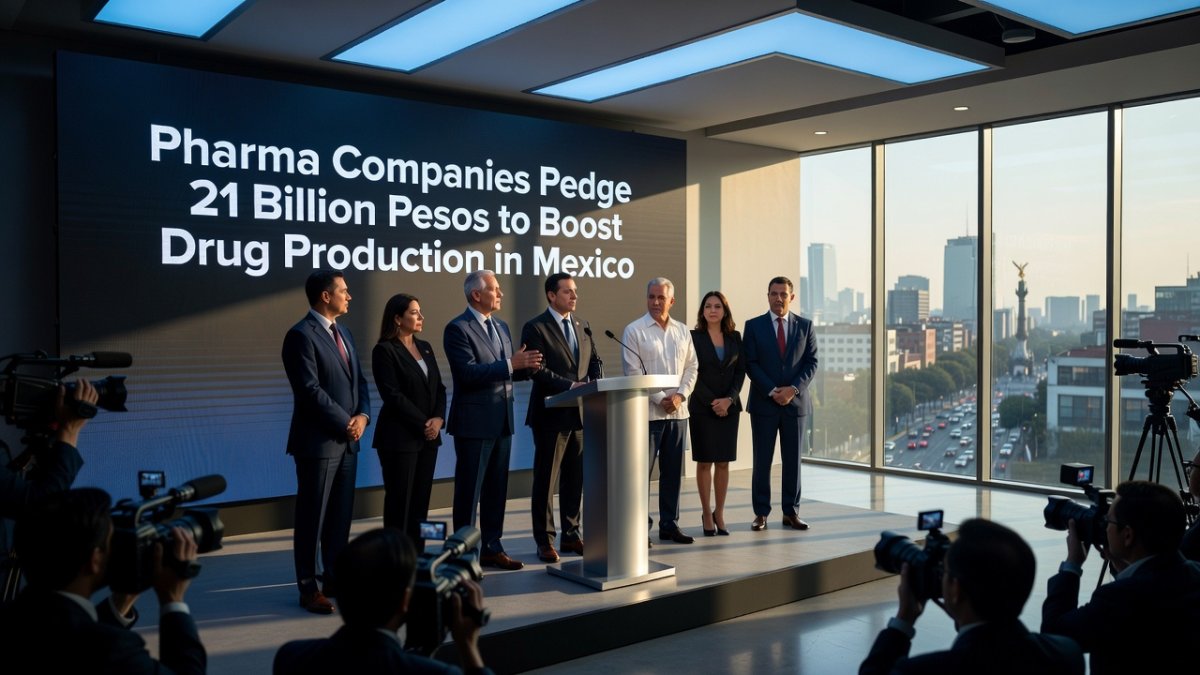
Pharma Companies Pledge 21 Billion Pesos to Strengthen Drug Production Across Mexico
President Sheinbaum Unveils Health Investment Project Aimed at Cutting Costs and Imports
Good morning, mis amigos. Standing in the grand Salon de la Salud yesterday in Mexico City, I watched President Claudia Sheinbaum announce a landmark commitment that could reshape how our families access medicines. Pharma companies have pledged 21 billion pesos—roughly 1.05 billion dollars—to expand local manufacturing under the new Health Investment Project. Health Minister David Kershenobich stood beside her, emphasizing that this initiative will lower prices at the pharmacy counter and reduce our reliance on foreign suppliers, especially from Asia.
The announcement came on Thursday morning as part of a broader strategy to fortify Mexico’s pharmaceutical sovereignty. Ten major firms, including both international players and domestic leaders like Laboratorios Pisa and Genomma Lab, signed letters of intent. Their investments target new production lines for antibiotics, insulin, oncology drugs, and antiretrovirals right here in states such as Jalisco, Estado de Mexico, and Yucatan.
Why This Matters for Everyday Mexican Families
For too long, shortages have plagued public hospitals and private pharmacies alike. During the pandemic, many of us saw loved ones wait weeks for essential medications because active ingredients came from China and India. The 21 billion pesos will finance at least six new manufacturing plants and upgrades to existing facilities, creating an estimated 8,500 direct jobs and thousands more in supply chains. This is not abstract economics—it means insulin for abuelitos in Oaxaca and chemotherapy for children in Monterrey arriving faster and at lower cost.
Data from the Ministry of Health shows Mexico currently imports over 75 percent of its active pharmaceutical ingredients. The project aims to bring that figure below 50 percent within five years. Early modeling suggests retail prices for generic medicines could drop between 12 and 18 percent once domestic capacity ramps up, according to preliminary estimates shared by Kershenobich.
Details of the Investment Commitments
Each company outlined specific targets. One European firm committed 4.2 billion pesos to a new insulin facility in Guadalajara, while two Mexican laboratories pledged 3.8 billion pesos combined for oncology and cardiovascular drug lines in Puebla. The remaining funds will support technology transfers, cold-chain logistics, and workforce training programs in partnership with the National Autonomous University of Mexico.
President Sheinbaum highlighted the collaborative nature of the effort. “This is Mexico and industry working together for the well-being of our people,” she said during the ceremony. “We are moving from dependence to production, from vulnerability to strength.” Kershenobich added that regulatory pathways will be streamlined without compromising safety standards, promising that COFEPRIS approvals for new local products would be accelerated to an average of 90 days.
Historical Context and Lessons from Past Shortages
Mexico’s pharmaceutical challenges stretch back decades. Import reliance grew sharply after NAFTA-era policies favored foreign suppliers. The 2019-2021 medicine shortages under the previous administration exposed how fragile the system had become, with cancer patients and those needing antiretrovirals hit hardest. Today’s announcement builds on lessons from that period, incorporating supply-chain resilience measures recommended by the Pan American Health Organization.
Independent analysts note that similar investment drives in Brazil and India have successfully localized production, though results depended on sustained government oversight. Mexico’s version includes performance milestones tied to price reductions and export targets to Central America.
Expert Perspectives and Economic Ripple Effects
Dr. Elena Vargas, a health economist at UNAM, told me the 21 billion pesos represent one of the largest coordinated private investments in Mexico’s health sector in a generation. “If executed well, this could generate annual savings of up to 15 billion pesos for the public health budget by 2030,” she explained. She cautioned, however, that success hinges on transparent monitoring of price commitments and quality controls.
Community leaders in rural areas expressed cautious optimism. María López, a nurse in Chiapas, shared that consistent local production could finally end the monthly scramble for pediatric antibiotics. Meanwhile, business groups in the border states see opportunities for cross-border technology partnerships that keep intellectual property and skilled jobs inside Mexico.
Potential Challenges and Government Safeguards
Of course, no major project arrives without hurdles. Environmental groups have already raised questions about water usage at the new plants in water-stressed regions. The administration responded by requiring all facilities to meet zero-liquid-discharge standards and invest in wastewater recycling. Labor unions are pushing for living wages and union representation at the new sites, commitments the companies have publicly accepted.
Sheinbaum’s team also pledged quarterly public reports tracking investment disbursement, job creation, and medicine price trends. This transparency measure aims to maintain public trust and allow course corrections if targets slip.
What This Means Going Forward
The Health Investment Project signals a strategic pivot toward nearshoring critical health infrastructure. With global supply chains still adjusting after years of disruption, Mexico’s geographic position and trade agreements position it well to become a regional medicine hub. Families across the country stand to benefit from greater availability, lower costs, and the dignity of knowing essential treatments are made closer to home.
As the sun set over the Zócalo yesterday, I spoke with several attendees who described the announcement as a rare moment of hope. One grandmother clutched a photo of her grandson and said simply, “Maybe now the medicine will be there when we need it.” That quiet faith captures why this story matters so deeply to all of us.
This is Rosa Martinez for Global1 News, reporting from Mexico City. 🇲🇽
This article was produced with AI-assisted research and editorial support. Reporting is based on sources cited in the article.
What's Your Reaction?
 Like
0
Like
0
 Dislike
0
Dislike
0
 Love
0
Love
0
 Funny
0
Funny
0
 Wow
0
Wow
0
 Sad
0
Sad
0
 Angry
0
Angry
0
Latin America/Andes Correspondent at Global1.News. Based in Bogota, covering politics, environment, energy, and social movements across the Andean region. Passionate about environmental journalism and communities protecting their land.











Comments (0)