
Cubans Protest Third Nationwide Power Cut as Energy Crisis Deepens
Cubans Protest Third Nationwide Power Cut as Energy Crisis Deepens The Human Cost in Cuban Communities Cubans across the island have endured repeated nationwide power cuts that disrupt every aspect of daily life. In rural zones, families face up to 70 hours without electricity, forcing them to rely on candles and kerosene lamps for light while food spoils in unrefrigerated home
Cubans Protest Third Nationwide Power Cut as Energy Crisis Deepens
The Human Cost in Cuban Communities
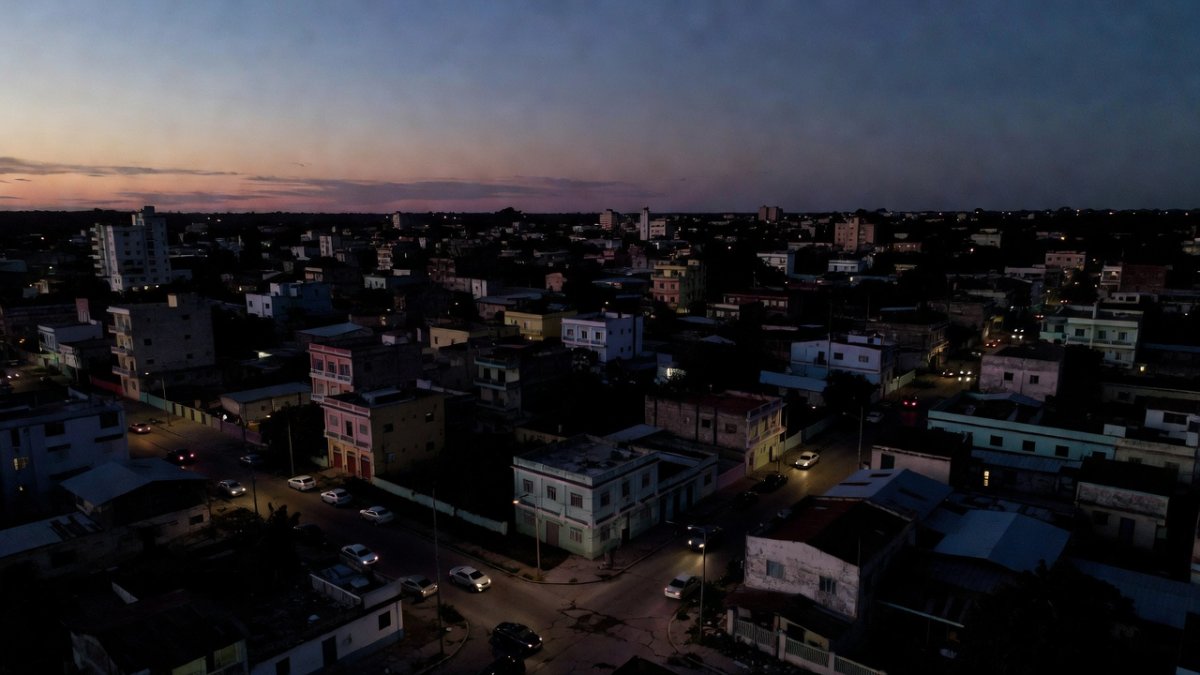
Cubans across the island have endured repeated nationwide power cuts that disrupt every aspect of daily life. In rural zones, families face up to 70 hours without electricity, forcing them to rely on candles and kerosene lamps for light while food spoils in unrefrigerated homes. Urban residents in places like Santiago de Cuba report planned outages stretching 30 hours, halting water pumps and leaving taps dry for days at a time.
These blackouts compound existing shortages of transport, food, and medicines. President Miguel Díaz-Canel stated that lengthy power cuts lasting more than 20 hours cause widespread dissatisfaction, noting that nobody can be happy when the people are suffering. Spontaneous protests have emerged in the hardest-hit areas, with residents banging pots and setting rubbish on fire to voice their frustration, even as such actions carry risks of severe punishment.
Understanding the Latest Nationwide Blackout
Monday's outage marked the third nationwide power failure this year, following state-imposed rolling cuts designed to stretch limited fuel supplies. The state electricity company offered no immediate explanation for the unplanned incident, though most of the country saw power restored by Tuesday evening. Santiago de Cuba remained among the locations still in darkness late Tuesday, prompting locals to shout demands for lights to be turned back on.
Public anger has surfaced despite the usual penalties for dissent. Cuban officials acknowledged the growing discontent while urging citizens to channel their protests toward external factors rather than internal policies. These events highlight how fragile the national grid has become under sustained pressure from fuel scarcity and aging infrastructure.
US Sanctions and the Fuel Blockade
Tight US sanctions and an effective blockade on oil shipments have intensified Cuba's fuel shortages. The Trump administration imposed fresh sanctions and threatened tariffs on countries supplying fuel to the island. Cuban foreign minister Bruno Rodríguez described these measures as multi-dimensional, non-conventional warfare against the country.
US Ambassador to the UN Michael Waltz countered by blaming the Cuban government and calling for it to change its ways. Despite public exchanges, private talks between the two nations continue, though Rodríguez reported no progress and left open the possibility of future dialogue based on mutual respect and non-interference. These tensions directly affect daily fuel availability and grid stability.
Latin America's Interconnected Energy Struggles
Cuba's crisis reflects wider patterns across Latin America, where countries like Venezuela continue to grapple with oil production shortfalls that ripple through regional supply chains. In Brazil, agencies such as IBAMA monitor environmental impacts of energy projects while the national grid faces pressure from both drought-affected hydropower and fluctuating fossil fuel imports. Similar vulnerabilities appear in Colombia and Peru, where reliance on imported fuels leaves communities exposed during global price spikes or shipping disruptions.
These shared challenges stem from decades of infrastructure built around centralized fossil fuel systems. When one nation experiences outages, neighboring economies feel indirect effects through trade and migration pressures. Cuba's repeated blackouts serve as a stark example of how sanctions, combined with domestic maintenance issues, can accelerate breakdowns that affect entire regions.
Climate Realities Behind Fossil Fuel Dependence
Heavy dependence on imported oil and diesel locks Caribbean and Latin American nations into high-emission pathways that worsen climate impacts already visible in the region. Rising sea levels threaten coastal cities in Cuba and low-lying islands, while stronger hurricanes damage transmission lines and refineries with increasing frequency. In Brazil's Amazon biome and Venezuela's oil fields, extraction activities contribute to deforestation and emissions that accelerate warming.
Each power cut forces greater use of backup generators running on scarce diesel, adding to local air pollution and carbon output. This cycle undermines efforts to meet regional climate commitments and leaves populations more exposed to extreme weather events that further strain energy systems. The connection between fossil fuel reliance and climate vulnerability grows clearer with every outage.
Exploring Renewable Pathways Across the Region
Shifting toward solar, wind, and small-scale hydropower offers concrete alternatives for the Caribbean and Latin America. Cuba possesses strong solar potential that could reduce fuel import needs if scaled through targeted investments. Similar opportunities exist in Brazil's northeast, where wind farms already contribute to the grid, and in Colombia's mountainous areas suited for micro-hydro projects managed by local communities.
Regional cooperation could accelerate these transitions by sharing technology and financing models. Countries facing parallel crises have begun exploring joint renewable initiatives that bypass traditional fossil fuel dependencies. Such steps would ease immediate pressures on grids like Cuba's while building resilience against future climate shocks and supply disruptions.
By Elena Vasquez, Staff Writer
This article was produced with AI-assisted research and editorial support. Reporting is based on sources cited in the article.
What's Your Reaction?
 Like
0
Like
0
 Dislike
0
Dislike
0
 Love
0
Love
0
 Funny
0
Funny
0
 Wow
0
Wow
0
 Sad
0
Sad
0
 Angry
0
Angry
0

Latin America Correspondent at Global1.News. Based in Mexico City, covering politics, economics, energy, and culture across the region. Brings an on-the-ground perspective to stories spanning from the Rio Grande to Patagonia.













Comments (0)