
Japan Utility Pole Removal Delayed by MLIT Plan Costs
New Five-Year Plan Targets Urban Emergency Routes Japan's Ministry of Land, Infrastructure, Transport and Tourism is preparing a new five-year plan covering fiscal 2026-2030 that will shift focus from construction start rates to measurable completion targets on designated sections. The plan centers on approximately 21,826 km of urban emergency transport routes identified by pre
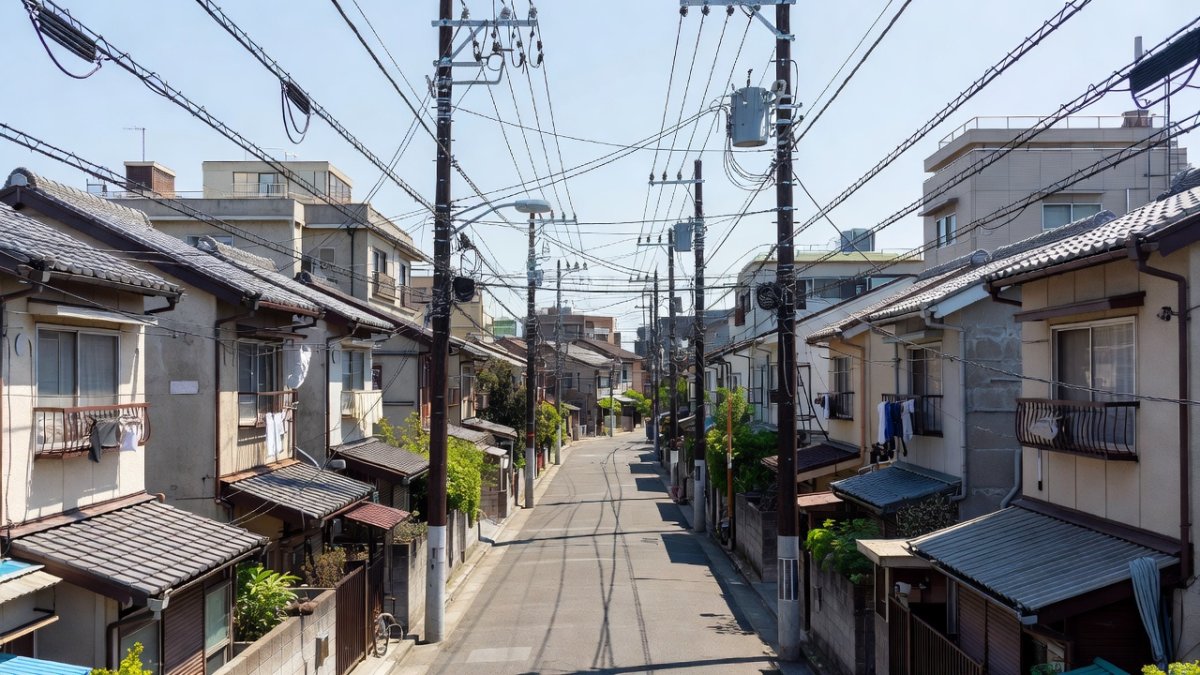
New Five-Year Plan Targets Urban Emergency Routes
Japan's Ministry of Land, Infrastructure, Transport and Tourism is preparing a new five-year plan covering fiscal 2026-2030 that will shift focus from construction start rates to measurable completion targets on designated sections. The plan centers on approximately 21,826 km of urban emergency transport routes identified by prefectural governments under the Basic Act on Disaster Management. These routes are prioritized because blocked roads during disasters can prevent emergency vehicles from reaching affected areas promptly.
As of the end of fiscal 2024, only 35 percent of these priority areas have seen utility pole elimination completed. The current program running through fiscal 2025 emphasized beginning construction on targeted segments, yet actual burial work has progressed slowly in many municipalities. The upcoming plan introduces stricter deadlines tied to specific route sections by 2030, requiring local governments to coordinate more closely with utility companies and construction firms.
Construction of new utility poles on these emergency routes is already prohibited, creating a regulatory backstop that prevents further above-ground additions. This measure reflects lessons from past events where additional poles complicated removal efforts. The ministry's approach remains measured, acknowledging that full undergrounding across all designated kilometers will require sustained annual budgets and technical adjustments for varying urban conditions. Prefectural governments retain responsibility for route designation, ensuring local seismic and traffic data inform priorities.
Tokyo Metropolitan Government maintains separate aggressive targets that sometimes exceed national timelines, illustrating how major cities can accelerate work when dedicated funding is available. The national plan will likely incorporate these local initiatives while setting uniform completion benchmarks. Observers note that success depends on whether the ministry can secure consistent appropriations amid competing infrastructure demands.
The ¥500 Million Per Kilometer Price Tag
Undergrounding power lines in Japan carries an average cost of approximately ¥500 million per kilometer, a figure driven by dense urban layouts, frequent excavation around existing infrastructure, and strict safety standards. This expense covers not only cable burial but also the relocation of telecommunications lines, water pipes, and gas mains that often share the same narrow corridors. In many older districts, streets were never designed with underground utilities in mind, forcing engineers to reroute multiple networks simultaneously.
Additional costs arise from seismic reinforcement requirements. Buried conduits must withstand ground movement, necessitating specialized flexible joints and deeper trenches in some locations. Coordination among multiple utility operators further extends project durations, as each entity follows its own maintenance schedules and technical specifications. These factors compound to make Japanese urban undergrounding more expensive than comparable projects in less densely built environments.
The ministry has begun exploring cost-sharing mechanisms with private utilities and local governments to distribute the financial burden. Even with such arrangements, annual budgets must cover thousands of kilometers if the 2030 targets are to be met. Analysts point out that delays in one section can cascade into neighboring areas, inflating overall program expenses through repeated mobilization of equipment and crews. The ¥500 million benchmark therefore serves as both a planning tool and a reminder of the scale of investment required.
Alternative financing models under consideration include long-term bonds tied to disaster resilience outcomes. Such instruments could smooth expenditure across multiple fiscal years while aligning payments with measurable risk reduction. Without innovative funding, the pace of work risks remaining below the levels needed to achieve substantial completion by 2030.
Seismic Risk and Disaster Preparedness
Japan's frequent seismic activity creates ongoing debate about whether underground lines or above-ground poles offer greater resilience. The 1995 Great Hanshin Earthquake in Kobe demonstrated how downed utility poles can block emergency vehicle access for days, delaying rescue operations in heavily damaged neighborhoods. That event prompted the initial emphasis on emergency transport routes as priority zones for pole removal.
Conversely, buried lines face risks from ground deformation during major quakes, potentially requiring lengthy repairs if conduits shift or fracture. The 2019 Typhoon Faxai exposed the opposite vulnerability when above-ground poles collapsed across Chiba Prefecture, causing prolonged blackouts. These contrasting incidents illustrate why neither solution is universally superior and why planners must weigh local soil conditions and historical disaster patterns.
The Basic Act on Disaster Management framework incorporates both earthquake and typhoon scenarios when designating routes. MLIT guidance encourages municipalities to combine undergrounding with pole reinforcement in areas where full burial remains impractical. This balanced strategy aims to reduce overall system fragility rather than eliminate one risk at the expense of another.
Disaster preparedness drills conducted by prefectural governments now routinely test response times along routes where pole elimination has advanced. Early data suggest measurable improvements in vehicle passage during simulated events, reinforcing the rationale for continued investment despite high costs. The ministry's new plan will likely require annual reporting on both completion rates and post-disaster performance metrics.
Narrow Streets and Roadside Drain Alternatives
Many Japanese urban streets are too narrow for conventional underground conduit installation without major road widening, which is often politically and financially unfeasible. In these locations the ministry plans to utilize roadside drains as an alternative pathway for cables. This approach avoids full street excavation while still removing poles from the roadway.
Engineering teams must first verify that existing drains can accommodate additional conduits without compromising stormwater capacity. Modifications may include installing separate compartments within drains or upgrading pipe diameters. Such adaptations require close collaboration between utility companies and local public works departments to maintain flood protection standards.
Pilot projects using roadside drains have shown promise in older residential districts where traditional trenching would disrupt daily life for extended periods. The technique also reduces surface disruption during construction, an important consideration in areas with heavy pedestrian traffic. However, long-term maintenance access remains a concern, as drain covers must allow periodic inspection of both drainage and electrical infrastructure.
The ministry continues to refine technical guidelines for these hybrid solutions, drawing on data from completed sections. Success will depend on whether drain-based installations can achieve the same reliability standards as fully buried lines while keeping costs below the ¥500 million per kilometer average. Local governments are encouraged to identify candidate streets early in the planning process so that drain upgrades can be synchronized with routine maintenance cycles.
How Japan Compares Internationally
European cities such as London and Paris have achieved near-complete undergrounding of power lines, with the United Kingdom reporting roughly 40 percent of its distribution network below ground and France approximately 45 percent. In contrast, Japan maintains an estimated 20 percent underground share in urban areas, reflecting decades of slower progress amid higher population densities and different historical infrastructure choices.
European advantages stem partly from earlier post-war reconstruction periods when underground systems were installed as cities were rebuilt. Japanese cities, by comparison, retained extensive above-ground networks developed during rapid economic growth phases when speed of electrification took precedence over aesthetics and resilience. The resulting legacy infrastructure now requires costly retrofits rather than new construction.
Tokyo Metropolitan Government has attempted to close this gap through dedicated budgets and streamlined permitting, yet national averages remain constrained by smaller municipalities with limited fiscal capacity. International exchanges organized by MLIT allow Japanese engineers to study European maintenance practices, particularly methods for minimizing service interruptions during cable replacement.
Despite lower overall percentages, Japan's focus on emergency transport routes represents a targeted strategy that may deliver disproportionate disaster-risk reduction compared with uniform nationwide undergrounding. This selective approach could serve as a model for other seismically active countries facing similar budget constraints.
The Road Ahead: Fiscal Targets and Political Will
The fiscal 2026-2030 plan will introduce specific completion targets for individual route sections, moving beyond the construction-start metrics of the previous cycle. Success will hinge on whether annual appropriations can sustain the necessary pace of work across multiple prefectures simultaneously. Political support at both national and local levels remains essential, as competing priorities such as aging water systems and seismic retrofits of public buildings also demand funding.
Progress will be tracked through annual reports that detail kilometers completed, costs incurred, and any technical adjustments such as expanded use of roadside drains. Stakeholders will watch closely for whether the ministry can maintain momentum when economic conditions fluctuate or when major natural events divert resources to immediate recovery efforts.
Tokyo's experience suggests that dedicated metropolitan funding can accelerate results, yet replicating this model nationwide requires equitable allocation formulas that account for varying local capacities. The ministry's emphasis on measurable 2030 outcomes signals a commitment to accountability, though realistic expectations must recognize that full elimination of utility poles on all 21,826 km will extend beyond the current planning horizon in many areas.
Continued monitoring of both disaster performance data and cost trends will inform whether adjustments to targets or techniques become necessary. The coming five years will therefore serve as a critical test of Japan's ability to translate long-standing policy goals into tangible infrastructure improvements.
Tags: Japan utility poles, mudenchuka, MLIT, underground power lines, emergency routes, disaster preparedness, seismic risk, fiscal planning
By Kenji Tanaka, Staff Writer
This article was produced with AI-assisted research and editorial support. Reporting is based on sources cited in the article.
What's Your Reaction?
 Like
0
Like
0
 Dislike
0
Dislike
0
 Love
0
Love
0
 Funny
0
Funny
0
 Wow
0
Wow
0
 Sad
0
Sad
0
 Angry
0
Angry
0

Japan Correspondent at Global1.News. Tokyo-based voice covering Japanese politics, technology, economy, and culture. Tracks the intersection of tradition and innovation in one of the world's most dynamic societies.















Comments (0)