
Supreme Court Term Exposes Conservative-Liberal Rift, Raising Questions Over Judicial Independence
Supreme Court Term Exposes Deepening Conservative-Liberal Rift, Raising Fresh Questions Over Judicial Independence in American Democracy Ideological Splits Reach Historic Levels This Term The United States Supreme Court has concluded one of its most ideologically divided terms in decades, with the six conservative justices separating from the three liberal members in nearly a q
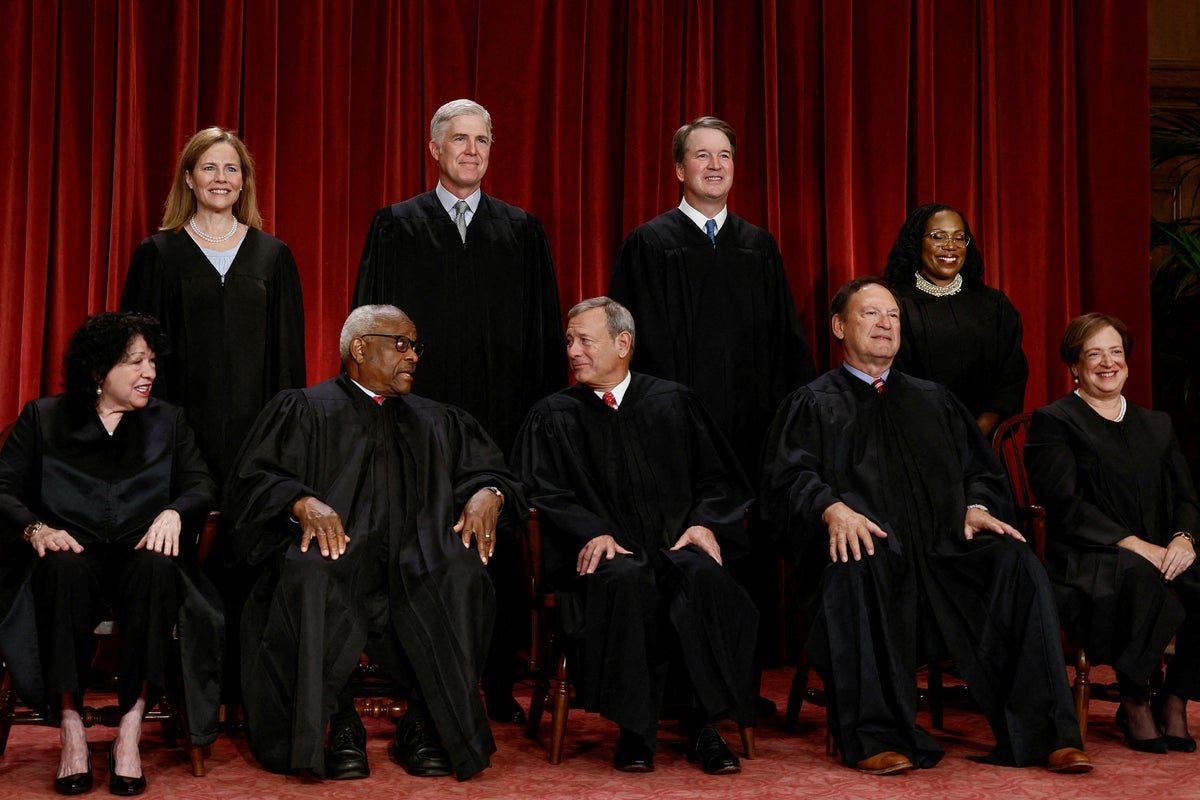
Supreme Court Term Exposes Deepening Conservative-Liberal Rift, Raising Fresh Questions Over Judicial Independence in American Democracy
Ideological Splits Reach Historic Levels This Term
The United States Supreme Court has concluded one of its most ideologically divided terms in decades, with the six conservative justices separating from the three liberal members in nearly a quarter of argued cases. Analysis from SCOTUSblog shows that conservative justices voted together against liberal dissenters in at least 13 cases, a sharp rise from the 10 percent recorded two decades earlier. High-profile matters involving voting rights, presidential power and birthright citizenship dominated proceedings, underscoring how the court's docket has become increasingly shaped by the Trump administration's legal priorities.
President Donald Trump was named as a party in several matters that reached oral argument during his second term, while his administration sought emergency relief from the justices more than two dozen times over the past year. Nonprofit watchdog Court Accountability described the court as "ground zero for an escalating constitutional clash with the Trump regime." Georgetown University Law Center professor Steve Vladeck observed that the court is behaving "even more politically," with instances of conservative justices breaking ranks now appearing exceptional rather than routine demonstrations of independence.
Landmark Decisions Highlight Partisan Fault Lines
In a 6-3 ruling that permitted Alabama Republicans to implement a congressional map previously invalidated as an unconstitutional gerrymander, Justice Sonia Sotomayor accused the conservative majority of "disregarding both democratic values and the rule of law." Following another 6-3 decision that supported efforts to restrict asylum claims at the US-Mexico border, Sotomayor read her dissent from the bench, stating that the outcome would mean "more people will die" and would "regrettably tragically extinguish the light of the torch of the Statue of Liberty."
Conservative Justice Samuel Alito responded with a rare bench statement, noting that he would have expanded his own remarks had he anticipated Sotomayor's oral dissent. These exchanges illustrate the personal and institutional tensions now visible in the court's public proceedings, particularly in matters touching presidential authority and electoral structures.
Individual Justices Reveal Patterns of Alignment and Dissent
SCOTUSblog data reveal that Chief Justice John Roberts and Justice Brett Kavanaugh sat in the majority in 95 percent of cases this term, while Justice Amy Coney Barrett reached 92 percent. Justice Ketanji Brown Jackson, the most recent appointee, recorded the lowest majority participation at 67 percent overall and 41 percent in non-unanimous matters. Liberal justices collectively dissented in nearly one-quarter of decisions.
The proportion of 6-3 rulings rose markedly, reaching 28.8 percent of all decisions compared with 15.2 percent last term, while ideological 6-3 splits increased from 9 percent to 22.7 percent. In her final opinion of the term, Justice Jackson directly addressed Justice Clarence Thomas's arguments on birthright citizenship, describing his "narrow vision" of the Fourteenth Amendment as bearing "little relationship to the history of its ratification." Thomas countered that the majority ruling "devalues" American citizenship, while Alito warned that the decision would "degrade" the concept.
Implications for American Democratic Norms
The term's pattern of consistent conservative alignment on contested issues has prompted renewed scrutiny of the court's role in a polarised political environment. Justice Jackson has publicly emphasised that courts "are apolitical, not supposed to be issuing rulings that are in the political realm," stressing the need to apply principles consistently rather than appear to treat cases differently according to context. Such statements from sitting justices reflect internal concerns that repeated ideological divisions may affect public perceptions of institutional legitimacy.
With the Trump administration continuing to route significant policy disputes through emergency applications, observers note that the court's emergency docket now functions as a frequent arbiter of executive action. This development carries direct consequences for the balance between branches of government and for the predictability of legal outcomes in areas ranging from immigration enforcement to electoral districting.
UK Perspectives on a Politicised US Court and Lessons for Judicial Independence
British officials and legal commentators have watched these developments with particular attention, given the close diplomatic, security and economic ties between the United Kingdom and the United States. A Supreme Court perceived as increasingly aligned with one political administration risks complicating negotiations on trade agreements, intelligence sharing and coordinated responses to global challenges, as Westminster and Whitehall must calibrate engagement with an institution whose rulings now appear more closely tethered to electoral cycles.
The United Kingdom's own Supreme Court, established under the Constitutional Reform Act 2005, offers a contrasting model in which justices are selected through an independent appointments commission and insulated from direct political appointment by the executive. Successive Lord Chancellors have maintained that this framework preserves public confidence by minimising any appearance of partisan influence. Parliamentary committees in recent years have examined whether similar structural safeguards might merit discussion in other common-law jurisdictions facing comparable pressures.
While the US constitutional framework differs fundamentally in its separation of powers and lifetime tenure for federal judges, the British experience demonstrates that robust institutional design can sustain judicial authority even amid intense political disagreement. For policymakers in London, the current term in Washington serves as a reminder that maintaining clear boundaries between judicial and political spheres remains essential to stable transatlantic cooperation.
By Erica Thornton, Staff WriterThis article was produced with AI-assisted research and editorial support. Reporting is based on sources cited in the article.
What's Your Reaction?
 Like
0
Like
0
 Dislike
0
Dislike
0
 Love
0
Love
0
 Funny
0
Funny
0
 Wow
0
Wow
0
 Sad
0
Sad
0
 Angry
0
Angry
0

US Politics and Policy Correspondent at Global1.News. Based in Washington DC, covering American politics, policy, elections, and the courts. Knows how the system works and tells you what it actually means.















Comments (0)