
Can Britain Cope With the Climate Crisis? Channel 4 News Investigates
More than 2,700 people died during the May and June heatwaves in England and Wales, according to data from the Office for National Statistics and a joint study by Imperial College London, the Met Office and the London School of Hygiene and Tropical Medicine. During the three-day peak of the June heatwave, mortality reached 440 deaths per day. Climate change was responsible for
More than 2,700 people died during the May and June heatwaves in England and Wales, according to data from the Office for National Statistics and a joint study by Imperial College London, the Met Office and the London School of Hygiene and Tropical Medicine. During the three-day peak of the June heatwave, mortality reached 440 deaths per day. Climate change was responsible for an estimated 42 per cent of those deaths, with human-driven warming adding between 3°C and 4°C to maximum temperatures. All of these figures come from the Channel 4 News climate special broadcast on 13 July 2026, which examined whether Britain can cope with the searing impact of a climate crisis that has already rewritten the country's summer baseline.
Can Britain Cope With the Climate Crisis? Channel 4 News Investigates
London, UK — 13 July 2026 — The Channel 4 News programme, presented from locations across England and Wales, documented a summer in which 35°C was recorded on six separate days for the first time, wildfires burned at 19 separate sites, and the NHS struggled to maintain routine care under sustained thermal stress. The central question — can Britain cope? — runs through every segment, from the hospital wards of Salisbury to the burning moors of Derbyshire.
Wildfires on British Soil: From Tintwistle Moor to Conwy
The Peak District fire scorched 2.6 million square metres of moorland near Tintwistle, one of 19 wildfire locations recorded across England and Wales during the June heatwave. Natural England reported that 14 per cent of upland heathland now sits in the high or very high wildfire risk category, compared with just 6 per cent in 2018. Conwy County Borough Council declared a major incident after flames threatened homes, forcing the evacuation of 180 residents from Llanrwst. The Met Office issued extreme risk warnings for southern England, prompting the London Fire Brigade to ban disposable barbecues in all parks and open spaces for the first time.
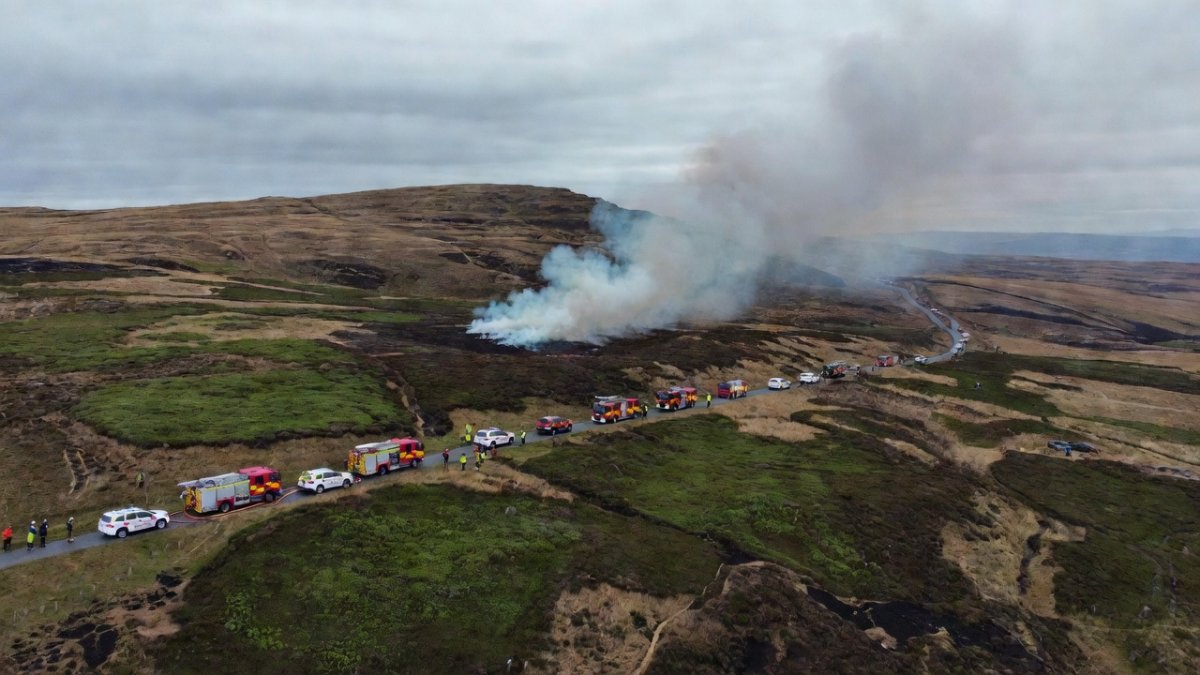
Derbyshire Fire and Rescue Service deployed 120 personnel across three days to contain the Tintwistle blaze, while North Wales Fire and Rescue coordinated with mountain rescue teams to protect the Conwy valley. Satellite data from the European Space Agency confirmed hotspots stretching from the Brecon Beacons to the North York Moors. Local authorities in Gwynedd activated emergency rest centres for displaced families, many of whom had already lost livestock to the rapid spread of flames across dry peat. The Environment Agency warned that continued dry conditions could extend the fire season well into September.
Wildfire behaviour has shifted markedly since the 2018 heatwave, with the Joint Nature Conservation Committee noting that heather and gorse now ignite at lower temperatures than previously recorded. Volunteers from the National Trust and the RSPB assisted in creating firebreaks around protected sites in the Peak District National Park. Residents in Llanrwst described embers landing on rooftops as temperatures reached 34°C in the valley. These incidents underline how the climate crisis has rewritten the summer baseline for British landscapes long considered too damp for such destruction.
Spain's Tragedy and the Shared European Heat Crisis
Thirteen people died in Almeria during Spain's concurrent heatwave, including a British woman holidaying with her family. Prime Minister Pedro Sánchez announced an €180 million prevention plan that includes mobile cooling units and revised building standards. The same jet stream pattern responsible for Iberian extremes also drove the 35°C readings recorded on six separate days across England and Wales. Atmospheric scientists at the University of Reading confirmed that the blocking high pressure system affected both regions simultaneously.
Cross-border coordination gaps became evident when UK travellers received no specific heat-risk briefings before departing for southern Europe. Members of Parliament raised the issue during an urgent question in the House of Commons on 10 July 2026, demanding that the Foreign, Commonwealth and Development Office update its travel advice within 48 hours of any amber or red heat-health alert. The UK Health Security Agency noted that British tourists accounted for a disproportionate number of heat-related hospital admissions in Spain last summer. These failures highlight the need for shared early-warning protocols across the continent.
Climate researchers at Imperial College London stressed that the 3°C to 4°C of additional warming attributed to human activity intensified both the Spanish and British events. The Met Office's European model runs showed identical moisture deficits over the Mediterranean and the British Isles. Opposition MPs called for mandatory pre-travel heat briefings at major airports, citing the 440 daily deaths recorded during the June peak in England and Wales. Without coordinated action, the pattern of simultaneous extremes is expected to recur with increasing frequency.
Homes, Schools and Hospitals Under Extreme Pressure
Fifteen million UK adults reported illness linked to overheating in their homes during the May and June heatwaves, with those on the lowest incomes 2.3 times more likely to suffer severe symptoms. The Building Research Establishment found that 23 million existing properties lack any meaningful overheating regulations, leaving residents reliant on improvised measures such as wet towels and fans. Salisbury District Hospital recorded ward temperatures above 30°C for 11 consecutive days, forcing the cancellation of 87 elective procedures.
Thirty-eight NHS trusts and more than 4,200 schools currently operate without mechanical cooling systems, according to data released by the Department for Education and NHS England. Network Rail reported 14 instances of track buckling between London and Manchester, causing delays affecting 92,000 passengers on a single day in late June. Water companies imposed temporary use bans across seven regions, including the South East, after reservoir levels fell to 62 per cent of capacity.
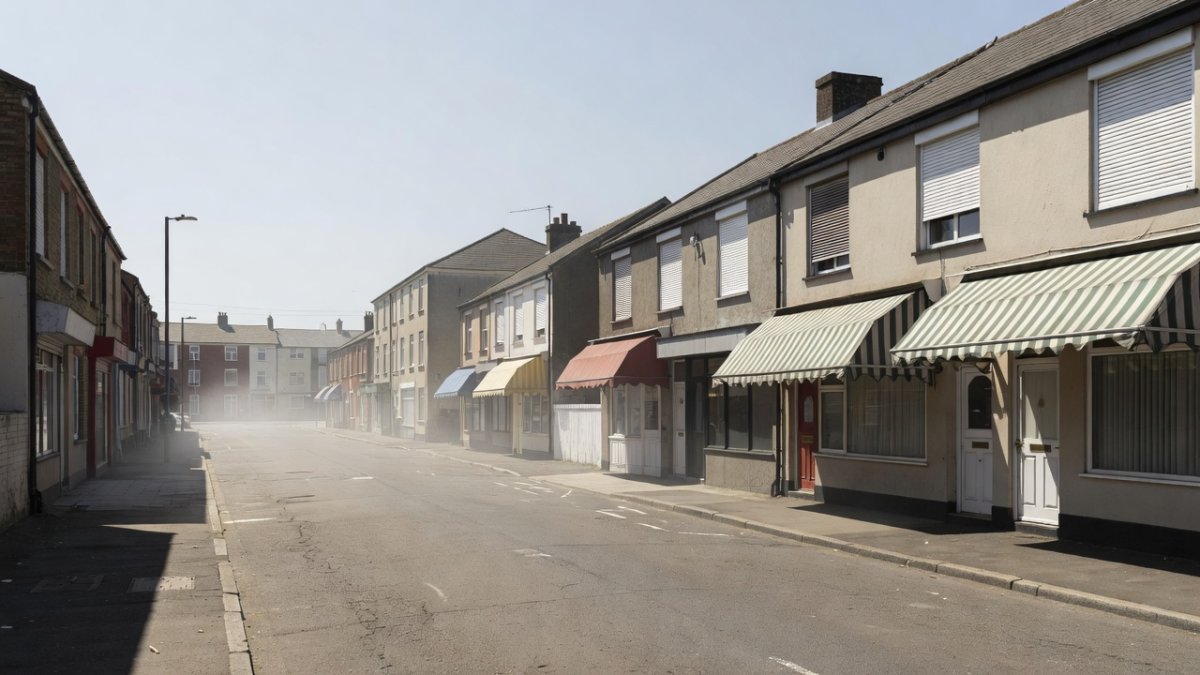
The Chartered Institution of Building Services Engineers has urged ministers to extend Part O overheating rules to the existing housing stock, a move resisted by the Treasury ahead of the autumn 2026 Spending Review. In Cliveden, a National Trust demonstration garden achieved a 7°C reduction in surface temperatures through targeted planting and shading, offering a model for urban adaptation. Local authorities in Wales reported that 19 care homes required emergency water deliveries after indoor temperatures exceeded safe limits for vulnerable residents. Without decisive investment, the thermal stress already visible in Salisbury and across the rail network will intensify.
Political Accountability and the Limits of Current Warnings
During Prime Minister's Questions on 8 July 2026, the Leader of the Opposition challenged the timing of UK Health Security Agency heat-health alerts, noting that the amber warning arrived only 36 hours before peak temperatures. Part O building regulations currently apply solely to new-build homes, leaving the 23 million older properties without enforceable standards. The Treasury confirmed that the Spending Review scheduled for autumn 2026 will determine funding for retrofitting hospitals and schools. Opposition parties demanded mandatory overheating audits for all NHS and education buildings within 12 months.
The Cliveden sustainable garden project, supported by Natural England, demonstrated that targeted landscaping can lower ambient temperatures by 7°C, yet similar schemes remain limited to heritage sites. The House of Commons Environmental Audit Committee heard evidence that current warning systems fail to reach 4.2 million households without internet access. Labour and Liberal Democrat MPs called for statutory duties on local authorities to produce heat action plans, modelled on existing flood defence protocols.
Ministers defended the existing alert framework by pointing to the 42 per cent of deaths attributed directly to climate change, arguing that behavioural advice remains the primary defence. However, the Royal College of Physicians warned that reliance on individual action cannot compensate for systemic failures in housing and healthcare infrastructure. The autumn Spending Review therefore represents a critical test of whether extreme heat will be treated as a core infrastructure priority rather than a seasonal inconvenience.
The Bottom Line — What Comes Next
The figures are stark: 2,700 excess deaths, 2.6 million square metres of moorland burned, and 35°C recorded on six separate days mark a threshold that Britain has now crossed. Salisbury Hospital's 11-day stretch above 30°C, the evacuation of 180 families from Llanrwst, and widespread rail disruption for commuters illustrate the local consequences already felt across England and Wales. The Channel 4 News investigation showed how these impacts fall disproportionately on the most vulnerable households and public services.
The Treasury Spending Review will decide whether the United Kingdom matches Spain's €180 million prevention commitment or continues with fragmented warnings and voluntary measures. Opposition parties have tabled amendments requiring overheating audits for every NHS trust and school by spring 2027. Without such action, the 440 daily deaths recorded during the June peak risk becoming the new summer norm rather than an exceptional tragedy.
Britain can cope with the climate crisis only when extreme heat is treated as infrastructure policy, not merely a matter of individual behaviour. The data from the Office for National Statistics and Imperial College London make clear that adaptation must begin now, before the next heatwave rewrites the baseline once again.
By Erica Thornton, Staff WriterThis article was produced with AI-assisted research and editorial support. Reporting is based on sources cited in the article.
What's Your Reaction?
 Like
0
Like
0
 Dislike
0
Dislike
0
 Love
0
Love
0
 Funny
0
Funny
0
 Wow
0
Wow
0
 Sad
0
Sad
0
 Angry
0
Angry
0

US Politics and Policy Correspondent at Global1.News. Based in Washington DC, covering American politics, policy, elections, and the courts. Knows how the system works and tells you what it actually means.













Comments (0)