
Brazil Amazon Fires and Pantanal Water Crisis July 2026
In the heart of Latin America, Brazil's vast ecosystems stand at a critical crossroads as July 2026 unfolds, revealing a stark environmental paradox where official deforestation metrics plummet yet fires and hydrological collapse accelerate across the Amazon and Pantanal regions. Brazil's Fire Paradox: Record-Low Deforestation but Amazon and Pantanal Burn On Brasília, Brazil –
In the heart of Latin America, Brazil's vast ecosystems stand at a critical crossroads as July 2026 unfolds, revealing a stark environmental paradox where official deforestation metrics plummet yet fires and hydrological collapse accelerate across the Amazon and Pantanal regions.
Brazil's Fire Paradox: Record-Low Deforestation but Amazon and Pantanal Burn On
Brasília, Brazil – July 13, 2026 — Brazil holds roughly 60 percent of the Amazon rainforest, yet the landscape in July 2026 presents a confounding picture of progress and peril..
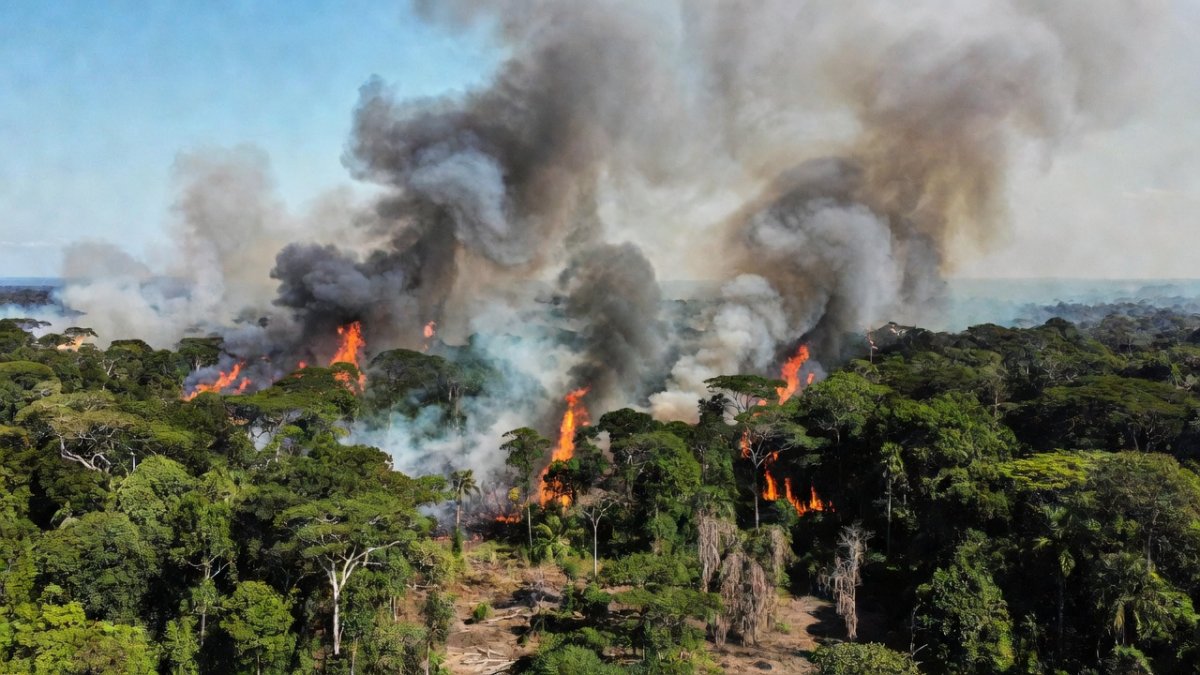
The Deforestation Paradox — collapse of clearing vs intensifying fires
Record Low: What the Numbers Tell Us — INPE Deter data, 1,295 km², 38% drop
INPE's Deter system captured Amazon deforestation alerts totaling just 1,295 square kilometers from January through June 2026, marking the lowest figure recorded since the system began operations in 2016. This represents a 38 percent reduction compared with the first half of 2025 and includes a dramatic 61.4 percent drop in May 2026 alerts versus May 2025, the largest May reduction on record. When combined with Cerrado alerts, the six-month total reaches approximately 4,437 square kilometers, still a notable improvement yet insufficient to offset the broader water and fire crises. Deter functions as a near-real-time alert mechanism, while the official annual rate will arrive later through PRODES, which previously recorded a 12-year high of 11,568 square kilometers under the Bolsonaro administration in 2022. These figures arrive as President Lula da Silva pursues the national goal of zero illegal deforestation by 2030, supported by Environment Minister Marina Silva's efforts to rebuild IBAMA and ICMBio. The data-dense improvements demonstrate that targeted enforcement can produce rapid results, yet they coexist with the Pantanal's 80 percent surface-water loss over 38 years and the relisting of the hyacinth macaw as threatened. For Latin America, such metrics offer both hope and caution, illustrating how policy shifts can bend deforestation curves while underlying hydrological and climatic pressures continue to drive fire activity across shared ecosystems.
The Pantanal Water Crisis: 80% Loss in 38 Years — Unesp study, surface waters, severe fires
The Universidade Estadual Paulista Unesp study released July 10 2026 reveals that the Pantanal has lost 80 percent of its surface waters over the past 38 years, a hydrological collapse driven by insufficient precipitation that fails to recharge aquifers and wetlands. This long-term desiccation has coincided with a sharp rise in severe fires, transforming one of the world's largest tropical wetlands into a landscape increasingly vulnerable to combustion. The data show that water loss directly amplifies fire intensity, as dried vegetation and exposed soils create conditions for rapid spread during the dry season. Brazil's threatened species list now includes approximately 790 animals at risk, with the hyacinth macaw relisted in July 2026 precisely because advancing fires and habitat degradation have intensified. These macaws depend on specific mandevi and acuri palms for nesting and feeding, resources that fire destroys outright. Across Latin America, the Pantanal's plight signals broader risks to interconnected river systems that sustain agriculture, fisheries, and Indigenous livelihoods from Paraguay to Bolivia. The 80 percent water reduction measured by Unesp underscores that even record-low deforestation alerts cannot compensate for decades of cumulative stress when precipitation patterns shift and enforcement budgets, though increased, must address both clearing and combustion simultaneously.
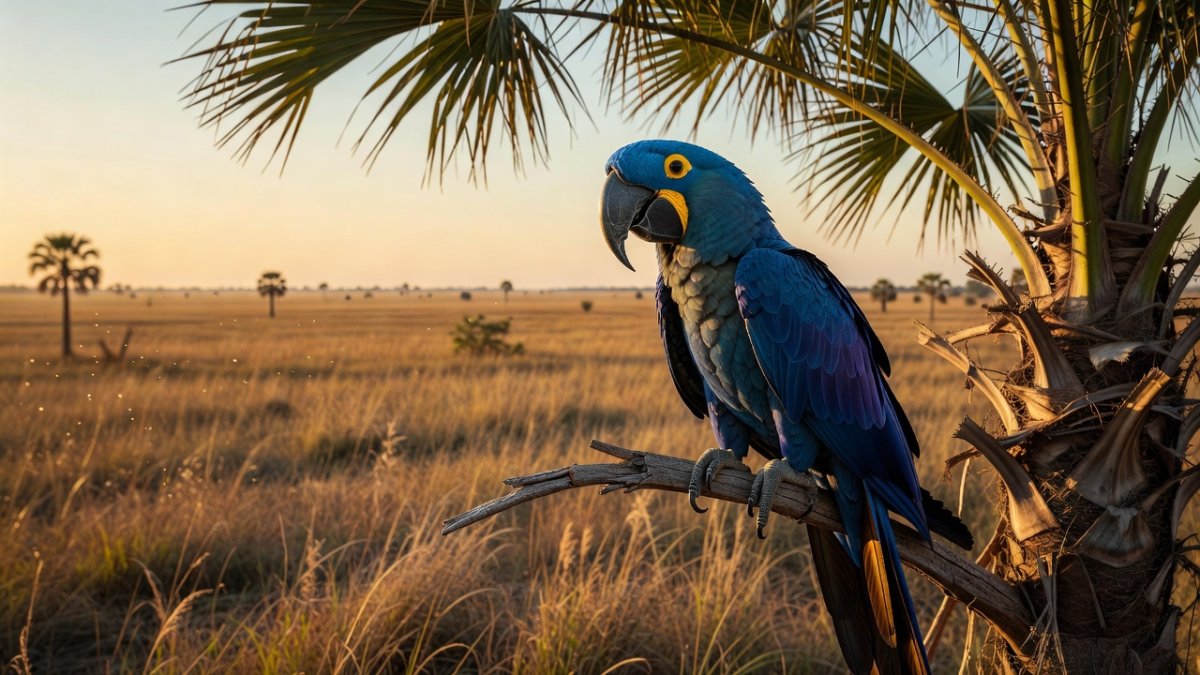
Fire on the Frontline — July 2026 dry season, 30,000 ha in 6 days, hyacinth macaw relisted
During the first six days of the July 2026 dry season, approximately 30,000 hectares burned across affected regions, with some reports describing conditions as second-worst for that period. This rapid combustion occurs even as nationwide burned area dropped 39 percent in 2025 versus the eight-year average, with improvements recorded across the Pantanal, Amazon, Atlantic Forest, and Pampa. The contrast illustrates how localized fire outbreaks can surge despite broader annual gains, particularly when water stocks remain depleted. The hyacinth macaw's relisting as threatened in July 2026 stems directly from these advancing fires destroying mandevi and acuri palms essential for nesting and feeding. Brazil's threatened species list now stands at roughly 790 animals, reflecting cumulative habitat pressures that enforcement alone has not yet reversed. For communities in the Pantanal and Amazon, the fires bring immediate health impacts from smoke and long-term economic losses as wetlands and forests degrade. Latin American analysts emphasize that Brazil's 60 percent share of the Amazon means its fire management decisions influence regional climate stability and cross-border biodiversity corridors. The 30,000 hectares burned in six days serve as a reminder that dry-season preparedness, funded in part by the Amazon Fund's R$150 million allocation for equipment, must scale rapidly to match the pace of combustion.
Lula's Environmental Turnaround — IBAMA rebuilding, Marina Silva, Amazon Fund, R$194M enforcement budget
Under President Lula da Silva, Brazil has allocated R$194.4 million to IBAMA for enforcement, firefighting, and monitoring, while the Amazon Fund has directed R$150 million toward firefighting equipment across states ahead of the 2026 dry season. Environment Minister Marina Silva has led the rebuilding of IBAMA and ICMBio, restoring institutional capacity after years of erosion. These investments align with the administration's goal of zero illegal deforestation by 2030 and have contributed to the INPE Deter results showing 1,295 square kilometers of Amazon alerts in the first half of 2026. The combined Amazon and Cerrado total of roughly 4,437 square kilometers still reflects ongoing pressure, yet the 38 percent reduction from 2025 demonstrates measurable policy impact. Marina Silva's approach integrates monitoring with on-the-ground operations, addressing both clearing and the severe fires that have increased alongside the Pantanal's 80 percent surface-water loss. For Latin America, this turnaround offers a model of how restored environmental agencies can produce rapid metric improvements while confronting deeper hydrological challenges. The R$194.4 million enforcement budget and Amazon Fund resources aim to protect the 60 percent of the Amazon rainforest within Brazil's borders, yet critics from agribusiness sectors argue that such measures impose bureaucratic burdens on small producers.
The Political Battle Ahead — polarization, agribusiness opposition, congressional threats, election context
Political polarization in Brazil has intensified as rural and agribusiness critics accuse IBAMA of bureaucratic tyranny that harms small producers, even as deforestation alerts reach decade lows. Congressional efforts in 2026 seek to shrink conservation units and Indigenous territories, threatening the very areas where enforcement has produced the 61.4 percent May reduction and overall 38 percent drop in alerts. With the October 2026 presidential election approaching and Lula leading in polls against Bolsonaro-aligned opposition, these legislative pushes risk reversing institutional gains achieved by Marina Silva at IBAMA and ICMBio. The 2022 PRODES figure of 11,568 square kilometers under the previous administration serves as a reminder of how quickly rates can climb when political will shifts. Polarization extends beyond metrics to questions of development versus protection, with opponents framing enforcement budgets such as the R$194.4 million allocation as obstacles rather than safeguards. For Indigenous communities and Pantanal residents already facing 80 percent water loss and relisted species like the hyacinth macaw, these political battles carry direct consequences for land rights and fire resilience. Latin American observers watch closely, recognizing that Brazil's internal contest between conservation and expansion will shape regional standards for balancing economic pressures with ecosystem integrity ahead of the dry season's continued challenges.
What This Means for Latin America — Amazon tipping point, regional implications, deforestation vs development tension
The paradox of record-low deforestation alerts alongside intensifying fires and the Pantanal's 80 percent surface-water loss carries profound implications for Latin America as a whole. Brazil's 60 percent share of the Amazon rainforest means that even the 1,295 square kilometers recorded by Deter in early 2026, or the combined 4,437 square kilometers with the Cerrado, can influence rainfall patterns and carbon cycles far beyond national borders. The relisting of the hyacinth macaw due to fire-driven habitat loss signals accelerating biodiversity decline that affects migratory species and ecological connectivity across the continent. Regional cooperation becomes essential when precipitation shortfalls and severe fires transcend boundaries, yet political polarization within Brazil, including congressional attempts to shrink protected areas, complicates coordinated responses. The tension between Lula's zero-illegal-deforestation target by 2030 and agribusiness demands for reduced oversight reflects a broader Latin American struggle to reconcile development aspirations with ecological limits. Data from INPE, Unesp, and IBAMA demonstrate that enforcement investments can bend clearing curves, but sustained progress requires addressing the hydrological crisis and fire dynamics that persist even when alerts fall. As the October 2026 election nears, the choices made in Brasília will determine whether Latin America's largest rainforest and wetland systems can avoid tipping points that threaten food security, water resources, and climate stability for millions across the region.
By Elena Vasquez, Staff WriterThis article was produced with AI-assisted research and editorial support. Reporting is based on sources cited in the article.
What's Your Reaction?
 Like
0
Like
0
 Dislike
0
Dislike
0
 Love
0
Love
0
 Funny
0
Funny
0
 Wow
0
Wow
0
 Sad
0
Sad
0
 Angry
0
Angry
0

Latin America Correspondent at Global1.News. Based in Mexico City, covering politics, economics, energy, and culture across the region. Brings an on-the-ground perspective to stories spanning from the Rio Grande to Patagonia.















Comments (0)