
M&S Unveils New Look Flagship on Oxford Street
The Pantheon Returns: M&S Opens Its Flagship Doors On Oxford Street, the long-awaited reopening of the top two floors of the Pantheon building marks a significant moment for Marks & Spencer. After extensive redevelopment, the retailer has unveiled a refreshed flagship that spans four floors and nearly 100,000 square feet. M&S has occupied this site since 1938, making the curren
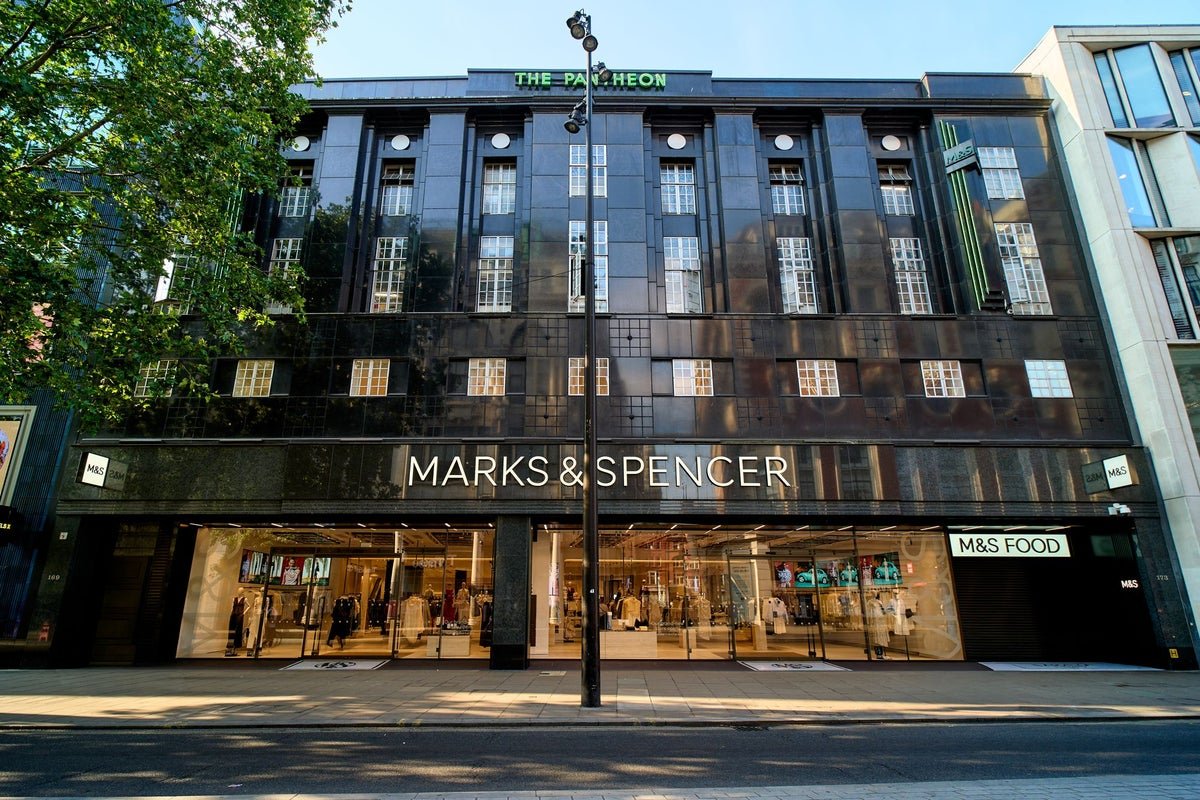
The Pantheon Returns: M&S Opens Its Flagship Doors
On Oxford Street, the long-awaited reopening of the top two floors of the Pantheon building marks a significant moment for Marks & Spencer. After extensive redevelopment, the retailer has unveiled a refreshed flagship that spans four floors and nearly 100,000 square feet. M&S has occupied this site since 1938, making the current investment a continuation of a relationship that stretches back decades. Shoppers will now encounter dedicated spaces for menswear, kidswear, lingerie and home collections, alongside a new bespoke suiting service. Parts of the store remained open throughout the works, allowing business to continue amid the disruption. This reopening carries weight beyond one retailer’s plans. It arrives as British high streets seek to recover from pandemic losses and shifting consumer habits, testing whether established names can still anchor central London’s commercial life.
The Pantheon building itself carries layers of London’s commercial past. Constructed in the 1770s and 1780s as a pleasure garden, it later operated as a bazaar before M&S took over in 1938. Each phase reflected the city’s changing tastes and economic priorities, from Georgian entertainment to Victorian retail innovation and then twentieth-century mass-market fashion. The current redevelopment therefore sits within a longer story of adaptation. The structure has witnessed the rise of department stores, the impact of wartime damage and the post-war consumer boom. Today’s changes continue that pattern, showing how a single address can embody wider shifts in how Londoners shop and spend.
Oxford Street’s post-pandemic recovery remains uneven. Footfall has improved in some periods, yet many visitors still arrive with reduced budgets and clearer intentions. The Pantheon reopening offers a concrete signal that at least one major chain sees long-term value in the West End. Local businesses watch closely, knowing that a busy flagship can draw additional trade to surrounding streets. For the wider London economy, such commitments matter because they support jobs in retail, logistics and hospitality while sustaining the tourism that the capital relies upon. Whether this investment translates into sustained spending will be watched by analysts and policymakers alike.
Four Floors of Reinvention: What Shoppers Will Find
The redeveloped space now organises itself across four distinct floors. Menswear occupies prominent ground-level areas, while kidswear, lingerie and home collections sit above. The total footprint reaches almost 100,000 square feet, giving M&S room to present products with greater clarity than in many older stores. A new bespoke suiting offer allows customers to order made-to-measure garments on site, an attempt to move beyond the retailer’s traditional ready-to-wear focus. M&S has long held a strong reputation in its food halls, yet its fashion and home ranges have faced persistent criticism for lacking direction. The Pantheon store therefore functions as a deliberate effort to alter those perceptions through better curation and service.
Leadership describes the approach as test-and-learn. New layouts, product groupings and service elements will be monitored for customer response before wider rollout. This method mirrors earlier food-store experiments and acknowledges that fashion tastes change quickly. Shoppers can expect clearer “product moments” where related items sit together, reducing the need to hunt across departments. The scale of the space also permits more room for home collections, an area where M&S hopes to capture spending that might otherwise go to specialist competitors. Success here would demonstrate that the chain can refresh its offer without abandoning its core middle-market customer base.
Critics have long argued that M&S fashion lacks the speed and edge of international rivals. The Pantheon development attempts to address that gap through physical presentation rather than price cuts alone. Whether the new configuration feels distinctive enough to draw repeat visits remains to be seen. Still, the investment signals that the company recognises the need for tangible change in how its clothing and home products are displayed and sold.
'Twenty-Five Years of Catching Up': Stuart Machin's Modernisation Drive
Chief executive Stuart Machin has placed the Pantheon project within a broader modernisation programme that began with food stores in 2019. The first renewed format opened at Clapham St John’s Road, and 160 food stores have since followed the same principles. Machin now applies similar thinking to fashion, home and beauty. He has stated plainly that the business has “25 years of catching up to do,” a frank admission of under-investment that predates his tenure. The Pantheon store forms part of six London renewals planned for this financial year, alongside four entirely new stores elsewhere in the capital. This pace indicates a deliberate attempt to accelerate change across the estate.
The challenge remains considerable. Competitors such as Next and Zara have built reputations for rapid trend response and consistent store environments. John Lewis, another British stalwart, has also refreshed its offer in recent years. M&S must close that gap while maintaining the value perception that still draws many shoppers. Machin’s strategy rests on the belief that the same disciplined renewal process used in food can work for non-food categories. Early signs from the food side suggest customers respond to brighter, better-organised stores, yet fashion carries different risks because trends move faster and margins can be tighter.
Analysts note that physical stores still matter for discovery and service, even as online sales grow. The Pantheon investment therefore tests whether renewed bricks-and-mortar space can defend market share. Machin’s public acknowledgement of the scale of the task shows an awareness that incremental improvements will not suffice. The coming months will reveal whether the chosen pace and methods can deliver the required shift in customer perception and sales performance.
Oxford Street at a Crossroads: Can Retail Bounce Back?
Oxford Street has endured well-documented difficulties since the pandemic. Between 2019 and 2022, clusters of American candy stores drew widespread criticism for aggressive tactics and questionable planning permissions. Several units stood empty for long periods, denting the street’s reputation. Westminster Council has since tightened oversight and advanced debates over partial pedestrianisation, yet progress remains slow. Against this backdrop, M&S’s decision to invest heavily in the Pantheon site represents a clear vote of confidence. The company’s continued presence suggests it believes central London retail can still thrive if stores offer genuine reasons to visit.
John Lewis’s own Oxford Street plans, initially shelved and later revived, illustrate the uncertainty that has gripped even established retailers. Those delays reflected caution over costs and footfall forecasts. M&S’s more decisive action at the Pantheon may encourage others to follow, or it may simply highlight how few chains possess the balance sheet to undertake comparable work. Employment implications are significant: a large flagship supports hundreds of direct jobs and indirect roles in supply chains and local services. Tourism operators also watch closely, since international visitors often cite Oxford Street as a key destination.
The wider London economy depends on a functioning West End. Reduced retail activity affects transport usage, restaurant trade and the overall sense of vitality that attracts further investment. M&S’s commitment does not guarantee recovery, yet it provides a tangible example of capital being deployed rather than withdrawn. Observers will monitor whether the renewed store can help shift perceptions of the street from struggling to stabilising.
A Blueprint for the High Street: Fashion, Home and Beauty R&D
The Pantheon store operates explicitly as an R&D laboratory. New fixtures, lighting, product adjacencies and service touches will be evaluated in real time with actual customers. Feedback will inform adjustments before similar changes appear in the wider network of more than 400 UK stores. The emphasis lies on curated presentation that creates distinct “product moments,” allowing shoppers to understand ranges quickly. Customer experience design receives particular attention, with staff training and layout choices intended to reduce friction and increase dwell time. This methodical approach recognises that successful formats cannot simply be copied from food halls; fashion and home require their own logic.
Whether experiential retail can rescue bricks-and-mortar more broadly remains an open question. Many high streets still suffer from tired units and limited differentiation. If the Pantheon model proves effective, it could supply a template for other M&S locations and, potentially, for competing chains facing similar pressures. The test-and-learn discipline also allows rapid reversal of ideas that fail to resonate, limiting the cost of mistakes. Early indicators will come from sales data and customer surveys conducted over the next six to twelve months.
British retail has often lagged behind international best practice in store design and service consistency. The Pantheon project attempts to close part of that gap through deliberate experimentation rather than wholesale reinvention. Its outcomes will be studied by landlords, local authorities and rival retailers seeking evidence that physical stores can still justify substantial investment.
The Preview and the Path Ahead
Sunday’s preview event brought together more than 100 guests, including M&S ambassadors and members of the leadership team. The gathering offered an early view of the completed floors and the new services on offer. Despite the celebratory tone, executives remain clear that substantial work lies ahead. Twenty-five years of under-investment cannot be reversed in a single store, however prominent. The Pantheon nevertheless functions as a statement of intent, demonstrating that the company is prepared to allocate capital and attention to its physical estate. Success would be measured not only in immediate sales but in whether the format can be replicated profitably across other locations.
The stakes extend beyond M&S itself. Oxford Street needs visible signs of renewal to maintain its status as a premier shopping destination. British retail as a whole watches to see whether a long-established name can modernise without losing the trust of its core customers. M&S, founded in 1884, remains a national institution whose fortunes often reflect wider consumer confidence. The Pantheon redevelopment therefore serves as a barometer for London’s retail health.
Whether the gamble pays off will depend on execution over the coming years. Early customer reaction, sales trends and the speed of further rollouts will provide the first indications. For now, the reopened floors stand as both an achievement and a challenge to the rest of the business and the street around it.
By Erica Thornton, Staff Writer
This article was produced with AI-assisted research and editorial support. Reporting is based on sources cited in the article.
What's Your Reaction?
 Like
0
Like
0
 Dislike
0
Dislike
0
 Love
0
Love
0
 Funny
0
Funny
0
 Wow
0
Wow
0
 Sad
0
Sad
0
 Angry
0
Angry
0

US Politics and Policy Correspondent at Global1.News. Based in Washington DC, covering American politics, policy, elections, and the courts. Knows how the system works and tells you what it actually means.















Comments (0)