
Cuba Blackout: Third Nationwide Outage Sparks Protests
Protests Erupt as Cuba Faces Third Nationwide Blackout This Year Cubans took to the streets across the island this week, banging pots and setting rubbish on fire to voice their frustration with the latest nationwide power outage. This marks the third such event this year, following Monday's complete grid failure that left most of the country in darkness once again. The state el
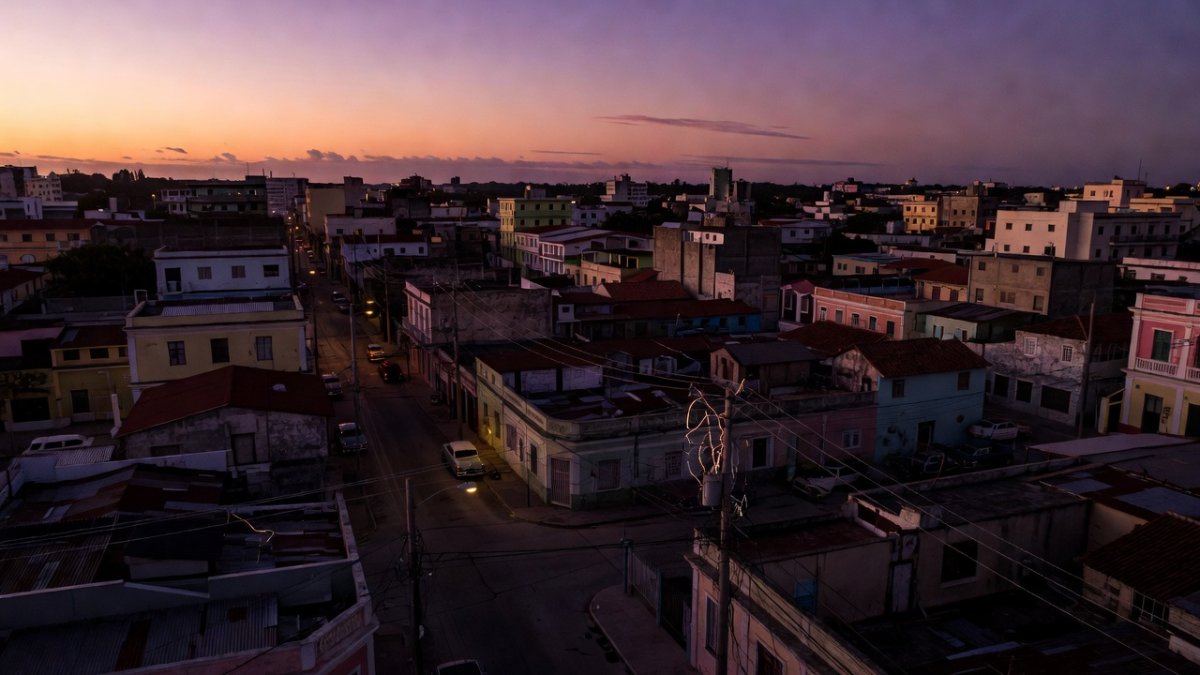
Protests Erupt as Cuba Faces Third Nationwide Blackout This Year
Cubans took to the streets across the island this week, banging pots and setting rubbish on fire to voice their frustration with the latest nationwide power outage. This marks the third such event this year, following Monday's complete grid failure that left most of the country in darkness once again. The state electricity company offered no immediate explanation for the cause, while residents in still-affected zones shouted demands for the lights to return. Santiago de Cuba, the island's second-largest city, remained without power into Tuesday evening. Rural communities have endured stretches of up to 70 hours without electricity, while urban areas have faced planned rolling cuts reaching 30 hours. These disruptions compound existing state-imposed electricity rationing that has become routine in recent months.
Cuba's energy infrastructure relies on a network of aging thermoelectric plants built decades ago, many operating at less than 60 percent capacity according to reports from the state utility. The national grid serves roughly 11 million people but lacks modern interconnections that could prevent cascading failures. When the latest collapse hit, it exposed how limited maintenance has left plants vulnerable to even minor fuel shortfalls. Similar patterns appear in Haiti, where Port-au-Prince neighborhoods often lose power for days due to fuel theft and weak transmission lines, and in Nicaragua, where rural cooperatives report frequent outages tied to imported diesel dependence.
Protests spread from Havana to smaller towns like Holguín and Matanzas, where residents blocked roads to demand immediate restoration. These demonstrations echo energy justice movements in Venezuela, where Caracas barrios have staged repeated marches against blackouts that have persisted since the 2019 grid collapse. In each case, ordinary citizens bear the brunt while political elites maintain access to private generators. Cuba's situation stands out because its centralized system offers few alternatives for households once the main plants shut down.
Fuel Shortages Worsened by Sanctions and Oil Blockade
Fuel shortages have intensified the crisis, leaving even households and businesses with backup generators unable to operate during outages. Tight US sanctions and an effective blockade on oil shipments have restricted imports, creating acute scarcity across the island. The Trump administration has threatened tariffs on any countries attempting to supply fuel, further tightening the constraints on Cuban energy supplies. Cuba's thermoelectric plants require steady deliveries of heavy fuel oil and diesel, yet arrivals have dropped sharply since additional restrictions took effect after January.
Relations between the two nations deteriorated sharply after January, when the US designated Cuba a national security threat. Following the seizure of former Venezuelan President Nicolás Maduro, additional sanctions were layered on, including murder charges against former Cuban president Raúl Castro. These measures have directly limited the arrival of oil that Cuba has historically relied upon for power generation. Venezuela once supplied up to 100,000 barrels per day under preferential terms, but that flow has fallen to a trickle, forcing Cuba to seek costlier spot purchases that sanctions now block.
The sanctions also hinder Cuba's ability to finance renewable projects that could reduce oil dependence. Solar and wind installations require imported inverters and panels, items subject to licensing delays under current rules. In comparison, Nicaragua has advanced some small-scale bioenergy from sugarcane waste despite its own sanctions exposure, while Haiti struggles with donor-funded solar pilots stalled by similar financing barriers. Without relief, Cuba cannot scale the 700 megawatts of solar potential identified in government assessments or the wind corridors along its northern coast.
Daily Hardships for Cuban Citizens Amid Prolonged Outages
The human cost of these blackouts extends far beyond inconvenience. Families struggle to store food without refrigeration, hospitals operate with limited equipment, and transportation grinds to a halt when fuel is unavailable. In many neighborhoods, the absence of power for more than 20 hours at a stretch has disrupted work, schooling, and basic hygiene, leaving communities exhausted and anxious about the next failure. Water pumps in apartment blocks stop working, forcing residents to carry buckets from street tanks that themselves run dry after repeated outages.
These conditions hit hardest in areas already facing chronic shortages of transport, food, and medicines. The combination of darkness and scarcity has created a grinding daily reality where ordinary tasks require extraordinary effort, particularly for the elderly and those with health conditions who depend on powered medical devices. Hospitals in Santiago de Cuba have postponed elective surgeries and rely on scarce diesel for emergency generators, mirroring conditions in Venezuelan facilities where medicine spoilage has become common. In Brazil's northern states such as Amazonas, similar diesel shortages during dry seasons leave remote clinics without refrigeration for vaccines.
Schools close early when lights fail, cutting short lessons for children who already share textbooks due to paper shortages. Food markets lose entire stocks of meat and dairy when freezers fail, pushing prices higher in a country where average monthly wages hover near 30 dollars. Education and nutrition suffer together, as families prioritize cooking over studying during the few hours of restored power each day.
Cuban Officials Point to External Pressures
President Miguel Díaz-Canel acknowledged the depth of public discontent, noting that lengthy power cuts lasting more than 20 hours generate widespread dissatisfaction. He stated that nobody can be happy under such conditions and that the people are suffering, while directing anger toward the US government as the source of the fuel restrictions. Officials have cited the loss of Venezuelan oil as the immediate trigger, noting that Cuba's plants were designed around that steady supply.
Foreign Minister Bruno Rodríguez described the situation as multi-dimensional, non-conventional warfare against Cuba. He confirmed that private talks with the United States continue but reported no progress, though he left open the possibility of future dialogue grounded in mutual respect. Cuban authorities have consistently framed the energy shortfalls as the direct result of external economic pressure rather than internal mismanagement. They point to blocked financing from international banks that prevents upgrades to the 2,000-megawatt thermoelectric fleet.
These statements align with regional critiques from Caribbean leaders who argue that sanctions on any one nation ripple outward. Nicaragua's government has made similar claims about external interference limiting its geothermal development, while Haitian officials blame restricted access to credit for stalled micro-grid projects. Cuba's case illustrates how such pressures compound when a country lacks diversified suppliers.
US Perspective Attributes Crisis to Cuban Governance
US Ambassador to the UN Michael Waltz countered that the Cuban government bears responsibility, asserting that there always seems to be enough power available for the Cuban leadership itself. This exchange of accusations has become a recurring feature of bilateral statements, even as both sides maintain some level of back-channel communication. US officials note that Cuba continues to export nickel and medical services while its domestic grid deteriorates.
The Trump administration's recent sanctions and blockade measures reflect a broader policy of maximum pressure. These steps have reduced the flow of oil that once arrived from Venezuela and other suppliers, leaving Cuba's aging thermoelectric plants without sufficient feedstock to maintain stable generation. The policy also restricts technology transfers that could support solar farms or biomass plants using Cuba's sugarcane residues.
Critics within Latin America argue this approach ignores how sanctions limit even non-US investors from participating in Cuba's renewable auctions. Venezuela's crisis shows parallel effects, where years of restricted access to parts have left the Guri dam underutilized. Brazil's northern grid faces different but related constraints, with transmission lines to isolated communities delayed by regulatory hurdles rather than outright bans.
Geopolitics and Energy Access Across Latin America and the Caribbean
Cuba's experience reflects wider patterns of energy vulnerability throughout the Caribbean and Latin America, where many island nations remain heavily dependent on imported fossil fuels. Geopolitical tensions frequently determine whether fuel reaches power plants, affecting everything from hospital operations to food security in places far beyond Havana. When sanctions or blockades interrupt supply chains, the consequences fall most heavily on ordinary households rather than on political elites. Haiti and Nicaragua demonstrate the same exposure, with diesel imports subject to price spikes and political conditions set in distant capitals.
Brazil and other regional actors have watched these developments closely, recognizing that energy access is increasingly shaped by external political decisions rather than domestic planning alone. The Caribbean's reliance on oil imports creates structural fragility that sanctions can exploit, turning routine maintenance issues into prolonged humanitarian emergencies. This dynamic underscores how fossil fuel dependence leaves entire populations exposed to decisions made in distant capitals. In Brazil's northern states, seasonal flooding already disrupts diesel deliveries to river communities, producing outages that last weeks.
Regional energy justice advocates call for shared financing mechanisms that bypass unilateral restrictions. Without them, countries like Cuba remain locked into cycles where one supplier's problems become nationwide blackouts. Venezuela's ongoing fuel shortages have produced similar protests in Maracaibo, showing how the pattern repeats across borders.
Renewable Energy Sovereignty as a Regional Imperative
The current crisis has renewed calls across Latin America for greater investment in renewable energy sovereignty. Countries seeking to reduce exposure to imported oil and external sanctions have accelerated solar, wind, and hydroelectric projects that can be controlled locally. In Brazil, expanded wind capacity in the northeast and solar installations in the central-west have demonstrated how domestic resources can buffer against global fuel shocks. Cuba possesses comparable resources, including consistent trade winds along its eastern coast and abundant sugarcane bagasse for bioenergy, yet only a fraction has been tapped.
For Cuba and its Caribbean neighbors, shifting toward renewables offers a path to insulate power systems from both price volatility and political blockades. Distributed solar and micro-grid solutions could provide resilience in rural zones that currently endure the longest outages. Regional cooperation on technology transfer and financing would be essential to scale these alternatives before the next fuel shortage triggers another wave of blackouts. Nicaragua has installed modest wind turbines despite sanctions, while Haiti relies on scattered solar projects funded by NGOs.
Without such transitions, the cycle of crisis and protest is likely to repeat whenever oil supplies are disrupted. The push for energy sovereignty therefore represents not only a climate strategy but a practical response to the geopolitical realities that continue to shape daily life from Santiago de Cuba to other vulnerable communities across the region. Cuba's unrealized potential stems directly from restricted access to components and credit needed for larger installations.
Cuba's Aging Thermoelectric Fleet and Barriers to Modernization
Cuba operates 24 thermoelectric units, most commissioned between the 1960s and 1980s, with many now requiring parts that sanctions prevent from arriving. Average plant efficiency sits below 30 percent, wasting fuel that could otherwise extend generation hours. This infrastructure gap explains why even modest demand spikes produce total collapses, unlike more diversified grids in the Dominican Republic. Investment in upgrades remains frozen because international lenders cite US secondary sanctions as prohibitive risks.
Bioenergy from bagasse offers one near-term option, given Cuba's sugar industry, yet mills lack the boilers and grid connections to export surplus power consistently. Solar potential exceeds 2,000 megawatts on paper, concentrated in the eastern provinces, but only pilot arrays of a few megawatts exist. Wind mapping shows viable sites near Gibara, yet turbine imports face the same licensing obstacles that stalled earlier projects. These constraints mirror Venezuela's inability to maintain its hydroelectric turbines after years of restricted access to specialized equipment.
Parallel Struggles in Brazil's North and Venezuela's Grid Failures
Brazil's northern states, including Roraima and parts of Amazonas, experience diesel-dependent micro-grids that fail during river low-water seasons, leaving communities without refrigeration or lighting for weeks. These outages affect indigenous territories and small towns in ways that parallel Cuba's rural 70-hour blackouts. Venezuela's repeated national failures since 2019 have destroyed food stocks and medical supplies on a larger scale, with Caracas hospitals reporting similar equipment shutdowns. Both cases illustrate how external financing limits and fuel dependence create comparable daily hardships across the region.
Energy justice frameworks emerging in these countries emphasize local ownership of renewables as protection against such vulnerabilities. Cuba could adopt similar distributed models if sanctions were eased to allow component imports. Until then, the pattern of protest followed by partial restoration will continue, affecting hospitals, schools, and households in every province.
By Elena Vasquez, Staff WriterThis article was produced with AI-assisted research and editorial support. Reporting is based on sources cited in the article.
What's Your Reaction?
 Like
0
Like
0
 Dislike
0
Dislike
0
 Love
0
Love
0
 Funny
0
Funny
0
 Wow
0
Wow
0
 Sad
0
Sad
0
 Angry
0
Angry
0

Latin America Correspondent at Global1.News. Based in Mexico City, covering politics, economics, energy, and culture across the region. Brings an on-the-ground perspective to stories spanning from the Rio Grande to Patagonia.











Comments (0)