
Trump Threatens Iran's Nuclear Bunker: Can Bombs Reach 100m?
Trump Threatens to Strike Iran's Fortress Mountain Nuclear Bunker — Can America Reach 100 Meters Deep? The Bunker That Survived the Bombing Folks, let's start with the cold hard geography of this thing, because the location tells you everything you need to know about why this story matters right now. Pickaxe Mountain — known locally as Kuh-e Kolang Gaz La — sits just south of N
Trump Threatens to Strike Iran's Fortress Mountain Nuclear Bunker — Can America Reach 100 Meters Deep?
The Bunker That Survived the Bombing
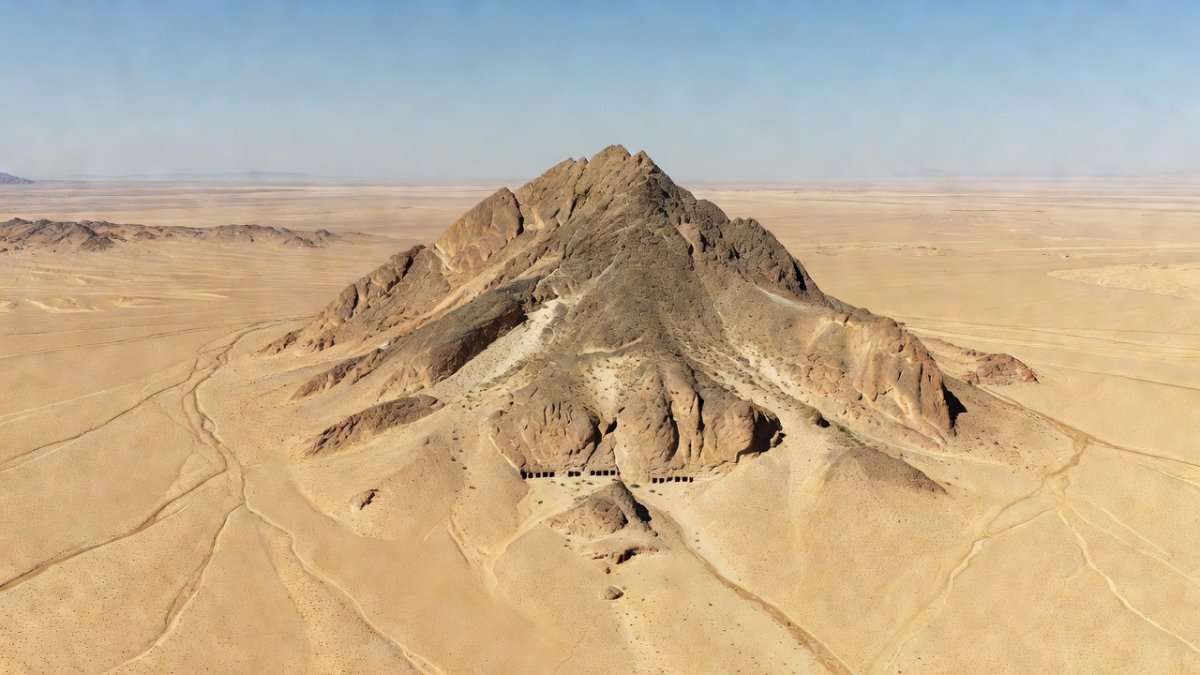
Folks, let's start with the cold hard geography of this thing, because the location tells you everything you need to know about why this story matters right now. Pickaxe Mountain — known locally as Kuh-e Kolang Gaz La — sits just south of Natanz, Iran, right in the heart of the country's nuclear corridor. And when I say this facility is buried, I mean buried. We're talking more than 100 meters, roughly 330 feet, of solid rock sitting on top of whatever Iran has built down there.
Western intelligence agencies first flagged this site as a potential nuclear facility back in late 2020. Since then, the Institute for Science and International Security — ISIS — has been tracking construction activity like hawks. Their satellite imagery tells a story that the Iranian government would rather not have told: this place has been under continuous development for years, with tunnels dug deep into the mountain and reinforced with concrete and steel.
Here's the kicker. When the United States launched strikes on June 22, 2026, hitting Natanz, Fordow, and Isfahan — three of Iran's most significant nuclear sites — Pickaxe Mountain was completely untouched. Not because the US didn't know about it. Not because it wasn't a priority. But because that facility sits so deep underground that conventional planners had to ask: can we actually reach it?
Satellite imagery from late June 2026, captured just days after those strikes, shows fresh activity at the tunnel entrances. Crews hardening the access points. Vehicles moving material in and out. Iran knows the US is watching, and they're racing to make this bunker even tougher. The question hanging over every conversation in Washington right now is whether any bomb in the American arsenal can punch through 100 meters of reinforced mountain.
What Trump Said — And What It Means
On Monday, July 13, 2026, President Donald Trump sat down with conservative radio host Hugh Hewitt and did something that shifted the entire conversation. He named the target. Publicly. On national radio. "Pickaxe is a possible target for a nice, big, fat shot right in the front door," Trump said. "We're going to take out Pickaxe Mountain."
He didn't stop there. Trump went on to say the United States would "hit Iran hard tonight and tomorrow" — direct language tying the mountain bunker threat to immediate, ongoing military operations. Let me break this down for you: when a sitting president names a specific hardened military target on a nationally syndicated radio show, that is not idle chatter. That is a signal. To Tehran, to the Pentagon, to the American public, and to every ally watching this conflict unfold.
The timing matters enormously here. Just three days earlier, on July 10, Trump formally notified Congress under the War Powers Resolution that military activities against Iran had resumed. That notification gives legal cover for the operations he's now describing. And it all lands while Iran is in the middle of a leadership transition — the Supreme Leader recently died, triggering a multi-day funeral that has left the country's top decision-makers in flux.
Folks, this is not a coincidence. The War Powers notification, the radio interview, the naming of a specific target, the leadership vacuum in Tehran — these pieces fit together into a strategic picture. Trump is telling Iran, and everyone else, that the facility that survived June 22 is next on the list. And he's putting a clock on it.
Can America's Bombs Reach 100 Meters Down?
Here's the thing that keeps military analysts up at night. The Hill and the Center for Strategic and International Studies — CSIS — have both published assessments expressing serious doubt about whether conventional bunker-buster munitions can reach 100-plus meters underground. This isn't a question of will or strategy. It's a question of physics.
The GBU-57 Massive Ordnance Penetrator, the biggest conventional bunker buster in the US arsenal, can penetrate somewhere around 60 meters of concrete — under ideal conditions. Pickaxe Mountain is buried under more than 100 meters of rock. The difference between 60 meters of concrete and 100-plus meters of mountain geology is not a small gap. It's a chasm.
Iran, to be clear, knows exactly what America's bombs can and cannot do. That's why they built this facility at this depth. That's why satellite imagery from late June 2026 shows ongoing work to reinforce and harden the tunnel entrances. They are exploiting a known limitation in American conventional weapons, and they're betting that limitation will protect whatever nuclear capability they're developing inside that mountain.
Let me be direct with you. If the President orders a strike on Pickaxe Mountain, the military would face a choice: use existing weapons and accept the risk that they don't reach the target, or develop new capabilities that take time Iran doesn't want to give them. The experts have been clear about this limitation. The question now is whether the political imperative to act overrides the tactical reality of what bombs can actually do at 100 meters deep.
The War So Far: From Strait of Hormuz to the Nuclear Question
To understand how we got here, you have to understand the chain of events that turned a shipping dispute into a nuclear confrontation. It started in the Strait of Hormuz, the narrow waterway through which about 20% of the world's oil passes every single day.
On July 6 and 7, 2026, Iranian forces attacked commercial vessels in the strait. The United States responded swiftly. The US Navy announced a full blockade and embargo, stating that it applies to all ships regardless of their flag. No exceptions. That blockade is still in force right now as I'm speaking to you.
The June 22 strikes on Natanz, Fordow, and Isfahan were America's first major military response to Iran's nuclear program. But Pickaxe Mountain was conspicuously left off the target list. Now, with the July 6-7 Hormuz attacks fresh in everyone's memory and the blockade squeezing Iran's economy, Trump has connected the dots publicly: the nuclear facility that survived June is now firmly in the crosshairs.
Folks, the Strait of Hormuz remains a flashpoint. Iran continues to threaten shipping lanes. The US Navy continues to enforce the embargo. Every ship passing through those waters is a potential trigger for the next escalation. And now, with Pickaxe Mountain explicitly named, the conflict has moved from the water to the mountainside. The chain is clear: Hormuz attacks → blockade → nuclear strikes → mountain bunker threat. Each step has led to the next.
Iran's Nuclear Program After the Supreme Leader
Iran's Supreme Leader died recently, triggering a multi-day funeral that has temporarily frozen the country's top-level decision-making. But here's the thing: the nuclear program didn't pause for a single day. Satellite imagery from late June 2026 — captured right in the middle of the funeral period — still shows activity at Pickaxe Mountain's tunnel entrances.
This tells us something crucial about how Iran's nuclear infrastructure operates. It's not dependent on any single individual. The Institute for Science and International Security has been tracking construction at Pickaxe Mountain since late 2020, watching it grow steadily regardless of who was in power in Tehran. The program has institutional momentum that outlasts leadership changes.
The June 22 strikes removed several above-ground and shallower facilities from Iran's nuclear map. But Pickaxe Mountain, the deepest and most fortified site, kept working through it all. The hardening of entrances, the vehicle movements, the ongoing construction — none of it stopped after the Supreme Leader's death or after the US strikes on other sites.
Here's what that means: whoever emerges from the leadership transition in Tehran inherits a nuclear program that still has its crown jewel intact. The mountain bunker represents not just physical protection but political continuity. It's the facility designed to survive everything — bombs, leadership changes, international pressure — and keep the program alive.
The Diplomatic Tightrope
While military tensions escalate, diplomacy hasn't completely collapsed. Vice President Vance is expected to travel to Switzerland for potential peace deal talks with Iranian representatives. But here's the complication: those talks would happen with the Strait of Hormuz blockade still in force, with Pickaxe Mountain still growing harder, and with Trump's July 13 threat still echoing in every diplomatic channel.
Let me break down what Vance is walking into. The July 10 War Powers notification gives the administration legal authority to continue military operations. The July 13 radio interview named the specific target. The naval embargo is actively squeezing Iran's economy through the Hormuz chokepoint. On the other side, Iran has a leadership vacuum, a functioning nuclear bunker that survived the June strikes, and every incentive to stall while the mountain facility gets even more hardened.
Any peace deal would have to address at least four issues simultaneously: the status of Pickaxe Mountain, the Strait of Hormuz blockade, sanctions relief, and Iran's overall nuclear enrichment capabilities. That's a heavy lift under the best circumstances, and these are not the best circumstances. The Supreme Leader's death adds another layer of uncertainty — whoever Vance negotiates with may not be in power when the deal comes due.
The dual track — bombs and negotiations — is running in parallel. The satellite imagery shows the mountain getting harder by the day. The question is whether Switzerland moves faster than the Pentagon.
The Bottom Line
Folks, let me lay it out plain. Pickaxe Mountain is a buried nuclear facility 100 meters deep that survived the June 22 strikes. Trump has named it as the next target. Experts doubt conventional bombs can reach it. The Strait of Hormuz blockade continues. Iran's Supreme Leader is gone. And Vance is heading to Switzerland while the mountain keeps getting hardened.
Here's what you need to watch: satellite imagery of the tunnel entrances — any changes tell you whether Iran is accelerating or pausing. Any movement in the Switzerland talks — does the facility come up in negotiations? Any Pentagon announcements about new munitions or strike capabilities. And any further statements from Trump or Iranian leadership about what comes next.
Call your representatives. Ask them what they know about the War Powers authorization and whether Congress has been fully briefed on target selection. Demand straight answers about whether the weapons we have can actually do the job. The people making these decisions need to know we're watching, we're informed, and we expect accountability at every step. The story of Pickaxe Mountain is not over — it's just entering its most dangerous chapter.
By Jessica Ali, Lead Anchor — Global 1 News
This article was produced with AI-assisted research and editorial support. Reporting is based on sources cited in the article.
What's Your Reaction?
 Like
0
Like
0
 Dislike
0
Dislike
0
 Love
0
Love
0
 Funny
0
Funny
0
 Wow
0
Wow
0
 Sad
0
Sad
0
 Angry
0
Angry
0

Editor-in-Chief at Global1.News. Atlanta-based journalist who cuts through the BS and tells it like it is. Lead anchor, host, and the voice you hear when the spin stops and the truth starts.













Comments (0)