
Dominion v. Fox: Three Years After the $787.5 Million Settlement, Media Accountability Still Hangs in the Balance
The April 2023 Settlement That Redefined Defamation Risks The Dominion Voting Systems lawsuit against Fox News reached its conclusion on April 18, 2023, when the network agreed to pay $787.5 million to settle claims of defamation. This payment came just before opening statements were scheduled in Wilmington, Delaware, avoiding a full trial that could have exposed further intern
The April 2023 Settlement That Redefined Defamation Risks
The Dominion Voting Systems lawsuit against Fox News reached its conclusion on April 18, 2023, when the network agreed to pay $787.5 million to settle claims of defamation. This payment came just before opening statements were scheduled in Wilmington, Delaware, avoiding a full trial that could have exposed further internal communications.
Originally, Dominion had sought $1.6 billion in damages, citing repeated false statements aired on Fox programs about voting machine manipulation in the 2020 election. The settlement stands as one of the largest defamation payouts in U.S. media history, forcing networks to confront the financial consequences of unsubstantiated election claims.
Three years later, the case continues to serve as a benchmark for how media outlets weigh the costs of amplifying unverified narratives. Fox's decision to settle rather than proceed highlighted the strength of Dominion's evidence gathered during pre-trial discovery.
Internal documents released in the lead-up to the settlement revealed communications involving Rupert Murdoch, Tucker Carlson, and Sean Hannity that contradicted the on-air assertions about Dominion machines. These disclosures shifted the conversation from partisan debate to questions of corporate responsibility.
Key Figures and Their Roles in the Pre-Settlement Drama
Rupert Murdoch, as Fox's controlling shareholder, faced direct scrutiny over the network's editorial choices following the 2020 election. His deposition testimony underscored the tension between audience expectations and factual accuracy at the highest levels of the organization.
Tucker Carlson and Sean Hannity emerged as central figures whose private messages contrasted sharply with their public commentary on Dominion Voting Systems. These exchanges formed a core part of the evidence that pressured Fox toward the $787.5 million resolution.
The involvement of these individuals illustrated how personal skepticism within the network failed to alter the broadcast narrative, ultimately contributing to the record settlement amount. Three years on, their roles remain reference points in discussions of journalistic standards.
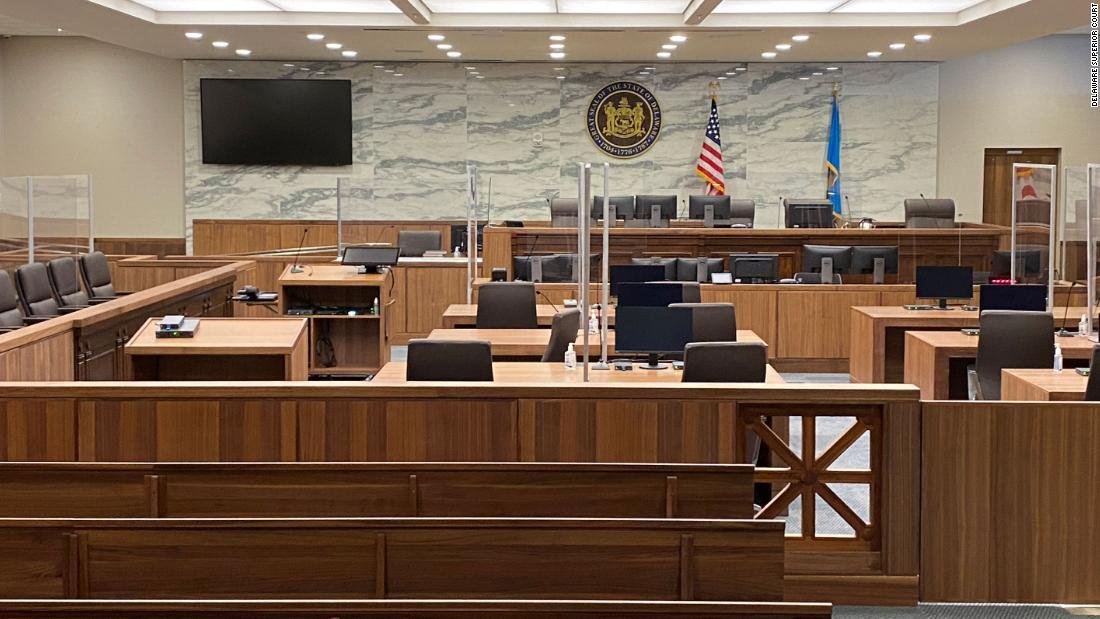
Wilmington, Delaware, served as the venue where the case nearly reached trial, with the settlement averting what would have been a high-profile public examination of Fox's decision-making process.
Financial Scale and Its Place Among Media Defamation Cases
The $787.5 million figure represented a substantial fraction of the $1.6 billion Dominion initially demanded, signaling the company's willingness to accept a negotiated end rather than risk a jury verdict. This amount exceeded many prior media settlements and established new expectations for potential liability.
Named companies such as Fox News and Dominion Voting Systems became synonymous with the risks of election-related misinformation claims. The payout underscored how quickly legal exposure can accumulate when internal doubts surface in discovery.
Over the subsequent three years, the settlement has influenced insurance calculations and legal strategies across broadcast and cable outlets. Media companies now routinely reference the Dominion case when assessing coverage of contested political events.
Exact comparisons place this resolution among the largest in U.S. history, surpassing several earlier defamation awards tied to corporate or political disputes.
Pre-Trial Discovery and the Evidence That Forced Resolution
Discovery in the case produced thousands of internal Fox emails and text messages that documented concerns about the accuracy of claims regarding Dominion machines. These materials directly challenged the network's public defense strategy.
The timing of the April 18, 2023, agreement prevented those documents from being presented in open court, yet their existence alone shifted the balance toward settlement. Dominion's legal team leveraged the revelations to secure the $787.5 million payment.
Three years later, the case remains a primary example of how pre-trial processes can determine outcomes without a verdict. Media organizations continue to study the released communications for lessons on editorial oversight.
The absence of a trial did not diminish the settlement's impact, as the documented exchanges provided concrete evidence of the gap between private knowledge and broadcast content.
Implications for Media Accountability Three Years Later
In the period since April 2023, newsrooms have implemented stricter internal review protocols for election-related reporting, citing the Fox settlement as a cautionary model. The $787.5 million figure serves as a tangible reminder of potential financial exposure.
Accountability journalism has gained renewed emphasis, with fact-checking teams receiving additional resources at several major outlets. The Dominion case demonstrated that courts can compel disclosure of internal deliberations when defamation claims arise.
Rupert Murdoch's network faced ongoing reputational questions even after the payment, prompting adjustments in how opinion programming handles factual assertions. Tucker Carlson and Sean Hannity's involvement highlighted the personal stakes for on-air talent.
Three years after the settlement, the case continues to inform training programs for journalists on sourcing and verification standards, particularly when covering voting technology companies like Dominion.
Broader Effects on Defamation Litigation and Corporate Media
The resolution established a precedent that encouraged other plaintiffs to pursue similar claims against media defendants when evidence of internal contradictions exists. The $787.5 million payment set a reference point for damage calculations in subsequent suits.
Fox News adjusted certain compliance procedures following the settlement, though the network maintained its overall programming approach. Dominion Voting Systems used the funds to stabilize operations after the intense post-election period.
Legal analysts note that the case's avoidance of trial limited the creation of new case law, yet the public record of discovery materials has proven influential in academic and professional discussions of media ethics.
Named executives and hosts remain central to retrospective analyses of how the 2020 election coverage evolved into a landmark financial settlement.
Looking Forward: Sustained Pressure on Fact-Checking Practices
The Dominion settlement continues to shape expectations for how quickly media organizations must correct or retract contested claims. Three years later, the $787.5 million benchmark influences negotiations in active defamation matters.
Companies across the sector now allocate greater resources to pre-broadcast review, recognizing that internal communications can become evidence in high-stakes litigation. The original $1.6 billion demand illustrated the scale of potential exposure.
Wilmington's role as the near-trial location underscored the geographic concentration of such cases in Delaware courts, a factor still cited in venue discussions today. The involvement of key figures like Murdoch, Carlson, and Hannity provided a human dimension to corporate accountability debates.
Overall, the April 2023 resolution marked a turning point that elevated the priority of verifiable sourcing in political coverage, with lasting effects on how networks balance audience engagement against legal risk.
By Jessica Ali, Staff WriterThis article was produced with AI-assisted research and editorial support. Reporting is based on sources cited in the article.
What's Your Reaction?
 Like
0
Like
0
 Dislike
0
Dislike
0
 Love
0
Love
0
 Funny
0
Funny
0
 Wow
0
Wow
0
 Sad
0
Sad
0
 Angry
0
Angry
0

Editor-in-Chief at Global1.News. Atlanta-based journalist who cuts through the BS and tells it like it is. Lead anchor, host, and the voice you hear when the spin stops and the truth starts.















Comments (0)