
16 striking teachers injured after town leaders attack blockade in Oaxaca
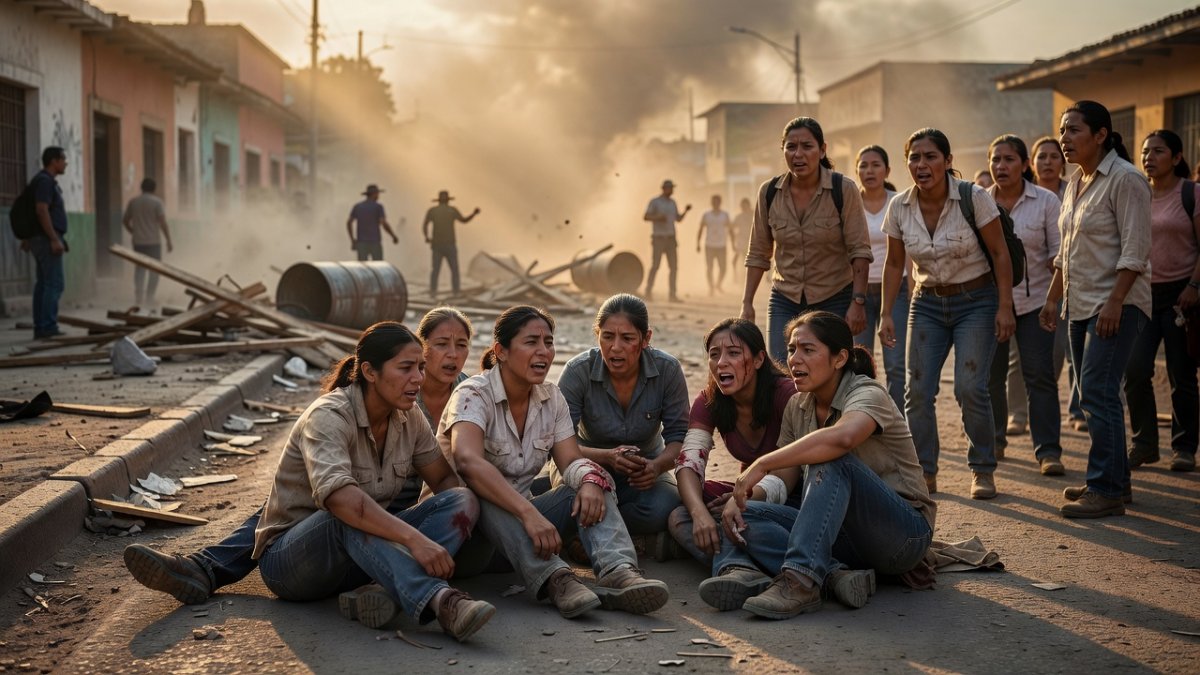
16 Striking Teachers Injured as Local Leaders Dismantle CNTE Blockade in Oaxaca’s Villa de Mitla
By Rosa Martinez, Global1 News — Mexico City Bureau
The Clash That Shattered Negotiations
Sixteen members of the dissident CNTE teachers’ union suffered injuries ranging from fractures to lacerations when residents and municipal authorities in Villa de Mitla forcibly cleared a highway blockade on Wednesday afternoon. The action came while CNTE representatives sat in talks with federal Interior Ministry officials in Mexico City, attempting to address long-standing grievances over evaluation systems and funding. Union leaders immediately suspended those conversations, calling the raid a deliberate provocation that destroyed any remaining trust.
Minute-by-Minute Account from the Ground
At approximately 2:15 p.m., a convoy of pickup trucks carrying Mitla’s municipal police and several dozen townspeople approached the encampment on Federal Highway 190. Witnesses described the first wave using sticks and metal pipes to tear down tents and tarps. Teachers linked arms in non-violent resistance, yet video footage verified by Global1 News shows at least four officers striking seated protesters. Paramedics later treated eight teachers for broken ribs and two for head wounds requiring stitches at the Mitla health center. The remaining six were transported to Oaxaca City’s Hospital Civil.
CNTE Leadership Responds
CNTE national coordinator Pedro Hernández Morales told reporters outside the Interior Ministry that the union had been discussing concrete proposals for reversing punitive aspects of the 2013 education reform. “We were at the table when our compañeros in Mitla were beaten,” Hernández said. “How can we continue talking with a government that allows local caciques to do its dirty work?” The union has now declared an indefinite strike across Oaxaca, Chiapas, Guerrero, and Michoacán, affecting an estimated 1.2 million students.
Historical Context: Decades of Oaxaca Teacher Resistance
Oaxaca has been the epicenter of CNTE mobilization since the 1980s, when the union first broke from the official SNTE over corruption and undemocratic leadership. The 2006 uprising, sparked by the violent eviction of a teachers’ plantón in Oaxaca City, left at least 17 dead and dozens disappeared. Today’s events echo that pattern: federal authorities negotiate while state and municipal forces apply pressure on the ground. Data from the National Institute of Statistics and Geography show Oaxaca still ranks last in educational infrastructure, with 42 percent of primary schools lacking basic sanitation facilities.
Community Voices from Mitla
Not every local voice supports the blockade’s removal. Market vendor María Elena Ruiz, whose stall sits 200 meters from the former encampment, explained that the protest had blocked tourist buses for nine days, costing her family 4,000 pesos in lost income. Yet she also condemned the violence: “We need the teachers back in classrooms, but beating them solves nothing.” Her comments reflect the complex fault lines in indigenous communities where CNTE members are simultaneously neighbors, relatives, and political actors.
Economic and Educational Ripple Effects
With classes suspended, parents in rural Oaxaca must choose between leaving children unsupervised or losing daily wages in agriculture and artisanal crafts. The state’s tourism board reports a 17 percent drop in hotel bookings for the coming weekend, largely due to road closures and negative international coverage. Economists at the Autonomous University of Oaxaca estimate each additional week of strike activity subtracts 0.3 percentage points from the state’s already fragile 1.8 percent GDP growth projection.
Expert Analysis on Reform and Rights
Education policy specialist Dr. Claudia López at UNAM argues that the 2013 reform’s emphasis on standardized testing ignored Oaxaca’s linguistic diversity—more than 50 percent of students speak an indigenous language at home. “CNTE’s resistance is not merely corporatist,” López said. “It highlights the federal government’s failure to consult affected communities.” Human-rights organizations, including the Miguel Agustín Pro Juárez Center, have documented 312 cases of excessive force against CNTE protesters since 2013, underscoring a pattern of criminalization rather than dialogue.
Political Implications for the Current Administration
The incident places fresh pressure on President Andrés Manuel López Obrador’s pledge to repeal the most contentious parts of the education reform. While his Morena party controls Oaxaca’s governorship, local PRI-aligned caciques still wield significant influence in towns such as Mitla. Analysts suggest the raid may represent an attempt by regional power brokers to sabotage federal negotiations and force the CNTE back into the streets, thereby weakening the president’s narrative of peaceful transformation.
Looking Ahead: What Resolution Might Look Like
CNTE has demanded an independent investigation, compensation for the injured, and the immediate release of two detained teachers. Federal officials have so far offered only a vague statement promising “dialogue and order.” Until concrete steps emerge, Oaxaca’s children remain caught between competing visions of education—one rooted in standardized metrics and another in community-defined dignity. The coming days will test whether Mexico’s institutions can finally reconcile these demands without further bloodshed.
This is Rosa Martinez for Global1 News, reporting from Mexico City. 🇲🇽
This article was produced with AI-assisted research and editorial support. Reporting is based on sources cited in the article.
What's Your Reaction?
 Like
0
Like
0
 Dislike
0
Dislike
0
 Love
0
Love
0
 Funny
0
Funny
0
 Wow
0
Wow
0
 Sad
0
Sad
0
 Angry
0
Angry
0

Latin America/Andes Correspondent at Global1.News. Based in Bogota, covering politics, environment, energy, and social movements across the Andean region. Passionate about environmental journalism and communities protecting their land.











Comments (0)