
France vs Spain World Cup 2026 Semifinal Preview: Mbappe and Yamal Set for Dallas Blockbuster
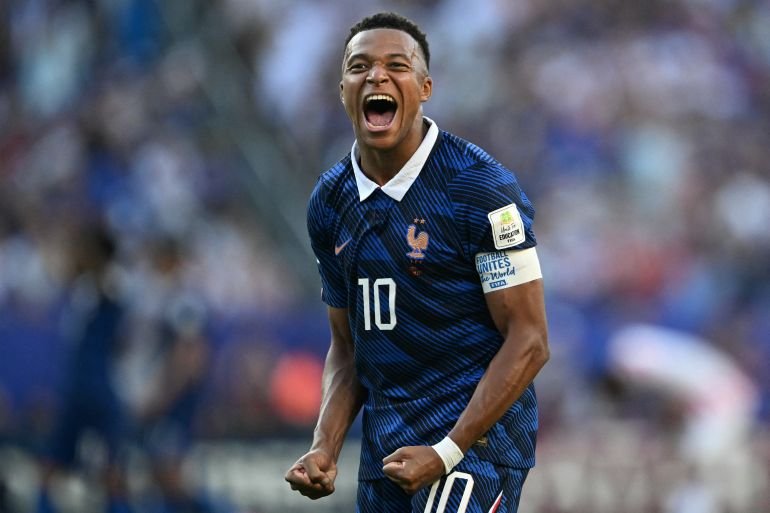
Kylian Mbappe enters Tuesday’s semifinal with eight goals already scored across five matches at the FIFA World Cup 2026, bringing his career World Cup tally to 20 goals in 20 appearances. The French captain’s form has drawn comparisons to the greats, yet he remains focused on the task ahead against a Spain side led by teenage sensation Lamine Yamal, who starred in Euro 2024. Op
Kylian Mbappe enters Tuesday’s semifinal with eight goals already scored across five matches at the FIFA World Cup 2026, bringing his career World Cup tally to 20 goals in 20 appearances. The French captain’s form has drawn comparisons to the greats, yet he remains focused on the task ahead against a Spain side led by teenage sensation Lamine Yamal, who starred in Euro 2024. Opta’s supercomputer gives France a 42.1 percent chance of winning in regulation time, Spain 31.8 percent, and extra time a 26.1 percent probability.
The matchup highlights contrasting styles that South African viewers will recognise from past World Cup encounters, with France’s attacking firepower facing Spain’s measured possession game. Mbappe’s presence alone elevates the stakes, while Yamal’s creativity offers Spain a youthful edge that echoes the flair seen in African teams like Morocco during their 2022 run. Fans in Johannesburg shebeens will debate these matchups long into the night.
Dallas Stadium’s atmosphere promises to be electric, much like the fan parks that sprang up across South Africa during the 2010 FIFA World Cup. The 80,000 capacity venue will test both teams’ resilience under pressure, with every goal carrying weight toward a potential final berth. Mbappe’s eight goals this tournament already place him at the top of the Golden Boot race.
Local flavour in South Africa adds another layer, as PSL supporters compare Mbappe’s finishing to the clinical displays they admire on SuperSport broadcasts. The Opta percentages reflect a tight contest where one moment of brilliance from either Mbappe or Yamal could decide the outcome. This semifinal represents the pinnacle of European football, yet its ripples will reach African shores through shared passion for the game.
Viewers across the continent will tune in via DStv, connecting the Dallas spectacle to South Africa’s own football dreams. The numbers tell a story of two heavyweights, but the human stories of Mbappe and Yamal will captivate audiences from Cape Town to Durban.
France's Dominant Run
France topped Group I with nine points after victories over Norway, Senegal and Iraq, setting the tone for a knockout campaign that has seen them concede very little. In the round of 32 they defeated Sweden 3-0, then edged Paraguay 1-0 in the last 16 before overcoming Morocco 2-0 in the quarterfinals. This marks their fourth appearance in the final four across the last seven World Cups.
Ousmane Dembele has contributed five goals, Bradley Barcola two, and Michael Olise five assists, creating a forward line that has overwhelmed opponents. Captain Kylian Mbappe reminded everyone after the quarterfinal win that “this team has not achieved anything yet,” keeping the squad grounded despite their impressive statistics. The blend of experience and youth has carried Les Bleus to this stage.
South African football enthusiasts will note how France eliminated two African sides, Senegal in the group stage and Morocco in the quarterfinals, highlighting the challenges and opportunities facing Bafana Bafana as they eye 2030 qualification. The disciplined approach shown by France offers lessons for SAFA’s grassroots programmes, which aim to develop similar depth. Mbappe’s 20 goals in 20 World Cup appearances underscore the consistency required at the highest level.
The run to the semifinals has showcased France’s attacking quartet of Mbappe, Dembele, Barcola and Olise, a unit that has produced goals at a remarkable rate. Their four final-four appearances in seven tournaments place them among the modern era’s most consistent nations, comparable to the Springboks’ sustained excellence in rugby World Cups. Every match has built momentum toward Tuesday’s clash.
Coach and players alike have stressed that reaching the semifinal is merely a stepping stone, echoing the relentless drive South African teams aspire to emulate. The 3-0 win over Sweden and the narrow victories that followed demonstrate tactical flexibility that PSL coaches study closely through SuperSport analysis.
Spain's Calculated Control
Spain topped Group H with seven points after beating Saudi Arabia and Uruguay while drawing with Cape Verde, then advanced through the knockout stages with a 3-0 win over Austria, a 1-0 victory against Portugal and a 2-1 defeat of Belgium. Their defence has conceded just one goal across the knockout phase, underlining the control exerted by midfielders Rodri, Pedri and Dani Olmo.
Coach Luis de la Fuente described the semifinal as “a final before the final,” stressing that his side is capable of beating any opponent. Spain’s route has been built on late goals and defensive resilience, qualities that have carried them past strong European sides. The team’s FIFA ranking of third reflects the depth that has made them European champions.
For South African observers, Spain’s ability to maintain structure while facing high-tempo attacks offers parallels to the tactical discipline Bafana Bafana must develop for future campaigns. The single goal conceded in the knockout stage shows how organisation can neutralise even the most potent forwards. Rodri’s dominance in midfield has been central to this success.
De la Fuente’s squad has shown it can adapt, whether grinding out 1-0 wins or responding in a 2-1 thriller against Belgium. This calculated approach contrasts with France’s flair yet promises an intriguing tactical battle on Tuesday. Spanish fans and neutral viewers alike appreciate the blend of youth and experience that has propelled La Roja forward.
The path through Portugal and Belgium has prepared Spain for the intensity of facing France, with every training session now focused solely on that challenge. South African football culture values such composure under pressure, a trait that could help local sides in upcoming qualifiers.
Rivalry History
France and Spain have met 38 times, with Spain holding an 18-13-7 advantage in wins, draws and losses. Recent encounters have favoured Spain, including a 5-4 victory in the 2025 UEFA Nations League semifinals where Lamine Yamal scored a brace, and a 2-1 win in the Euro 2024 semifinals. France’s last victory in the fixture came in the 2006 World Cup round of 16, a 3-1 result.
Spain have now beaten France in two consecutive major tournament semifinals, adding extra motivation for Les Bleus on Tuesday. The head-to-head record shows a rivalry defined by tight contests and memorable goals, with Yamal emerging as a key figure in the most recent meetings. Every clash carries the weight of history.
South African supporters will recognise the passion this fixture generates, similar to the intensity seen when Bafana Bafana face traditional rivals. The 38 meetings provide a rich narrative that broadcasters like SuperSport will highlight during pre-match coverage. Spain’s recent semifinal successes give them psychological momentum heading into Dallas.
France’s 3-1 win in 2006 remains a reference point for Mbappe’s generation, while Spain’s 5-4 thriller last year showcased the attacking quality both teams possess. The rivalry has produced iconic moments that transcend borders and inspire young players across Africa. Tuesday’s match adds another chapter to this storied contest.
Coaches on both sides have acknowledged the familiarity, yet the stakes of a World Cup semifinal ensure fresh intensity. South African fans appreciate how such rivalries fuel national pride, mirroring the unity seen during the 2010 FIFA World Cup hosted on home soil.
African Football and South African Connection
France’s path to the semifinal included victories over Senegal in the group stage and Morocco in the quarterfinals, two African nations that have raised the profile of the continent at recent World Cups. Morocco’s historic run to the 2022 semifinals and Senegal’s presence at this tournament demonstrate the growing strength of African football. South Africa can draw direct lessons from these achievements as Bafana Bafana prepare for 2030 qualification efforts.
SAFA’s structural reforms must focus on the grassroots development models that have propelled Senegal and Morocco forward, creating pathways similar to those seen in France and Spain. The elimination of these teams by France highlights both the challenges and the potential that exists when African sides reach the latter stages. Every goal scored by African players inspires the next generation in townships and rural areas alike.
The 2030 World Cup expansion discussions, including the possibility of 64 teams, offer South Africa renewed hope of greater representation. France’s success against African opposition underscores the need for improved tactical preparation and physical conditioning at home. PSL clubs already study these matches to identify talent that could strengthen local squads.
Morocco’s 2022 campaign and Senegal’s current participation have shown that African teams can compete with the world’s best when given proper support. South African football culture, rooted in community shebeens and passionate fan parks, stands ready to embrace similar success stories. The connection between these nations runs deeper than results, touching on shared aspirations for global recognition.
By analysing how France overcame these African sides, SAFA can refine its approach to youth academies and coaching education. The continent’s progress at the World Cup level provides a blueprint that South Africa is determined to follow in the coming years.

What This Match Means for SA Fans
South Africans will pack shebeens and fan parks across the country to watch the France versus Spain semifinal, continuing a tradition of communal viewing that dates back to the 2010 FIFA World Cup. SuperSport’s DStv coverage will bring every moment into living rooms from Soweto to Stellenbosch, allowing fans to analyse Mbappe’s runs and Yamal’s dribbles in real time. The multiracial fan culture that defines South African football will be on full display as supporters unite behind the beautiful game.
PSL stars and aspiring youngsters will study the technical battles, learning from the world’s best as they dream of emulating such performances on bigger stages. The 2010 hosting legacy continues to inspire infrastructure improvements and youth programmes that aim to produce players capable of reaching World Cup semifinals. This match serves as both entertainment and education for a nation passionate about football.
The Springboks’ rugby World Cup triumphs have shown how South Africa rallies during global tournaments, and the same spirit will surround Tuesday’s fixture. Fan parks will echo with cheers and debates, strengthening community bonds through shared excitement. DStv’s comprehensive broadcast ensures no detail is missed, from set-piece routines to individual duels.
Young players in the MultiChoice Diski Challenge will watch intently, seeing how midfield control and attacking transitions decide high-stakes games. South Africa’s football ethos values resilience and flair, qualities both France and Spain will display. The occasion reinforces the country’s deep connection to the World Cup, a bond forged in 2010 and renewed with every major tournament.
Communal viewing experiences foster the inclusive atmosphere that makes South African sports culture unique, bringing together diverse communities in celebration of excellence. This semifinal offers another opportunity for the nation to engage with the global game at its highest level.
What's at Stake and What to Watch For
The winner of Tuesday’s semifinal will face the victor of England versus Argentina in Sunday’s final on July 19 in New Jersey. France can become the first European team to reach three successive World Cup finals since West Germany, while Spain seek their first final appearance since 2010. The stakes could not be higher for both squads.
Key individual battles will define the outcome, including Mbappe against Marc Cucurella, Lamine Yamal versus Lucas Digne, and the midfield clash between Rodri and France’s combination of Adrien Rabiot and Manu Kone. France’s predicted lineup features Maignan in goal behind a back four of Kounde, Upamecano, Saliba and Digne, with Dembele, Olise and Doue supporting Mbappe. Spain are expected to line up with Simon between the posts, Porro, Cubarsi, Laporte and Cucurella at the back, and Yamal, Olmo and Baena behind Oyarzabal.
South African fans will follow these matchups closely, drawing parallels to domestic rivalries where pace and technique decide games. If the scores remain level after 90 minutes, two 15-minute periods of extra time will follow, with penalties deciding the outcome if necessary. The tactical adjustments made by both coaches will be scrutinised by analysts on SuperSport.
France’s chance to make history adds extra motivation, while Spain’s recent semifinal wins over the same opponent provide confidence. Every substitution and set piece will carry significance in a contest that could shape legacies for Mbappe, Yamal and their teammates. The Dallas crowd will witness a spectacle that resonates far beyond Texas.
For South Africa, the match represents another chapter in the global story of football that began with the 2010 tournament, reminding local supporters of the standards required to compete at the highest level. The final awaits the victor, and the world will be watching.
By Dante Williams, Staff WriterThis article was produced with AI-assisted research and editorial support. Reporting is based on sources cited in the article.
What's Your Reaction?
 Like
0
Like
0
 Dislike
0
Dislike
0
 Love
0
Love
0
 Funny
0
Funny
0
 Wow
0
Wow
0
 Sad
0
Sad
0
 Angry
0
Angry
0

Breaking News and Investigations Correspondent at Global1.News. Based in London, covering global breaking news, security, and investigative stories. Known for digging deeper and connecting the dots across continents.









Comments (0)