
King and Queen at Princess Bajrakitiyabha Funeral Rites
Royal Family Gathers at Grand Palace for Solemn Farewell King Maha Vajiralongkorn and Queen Suthida presided over royal funeral rites for Princess Bajrakitiyabha Narendiradebyavati at Phiman Rattaya Hall in the Grand Palace on the evening of 14 June 2026. At 19:11 Their Majesties arrived by royal vehicle accompanied by Princess Sirivannavari Nariratana Rajakanya, Prince Dipangk
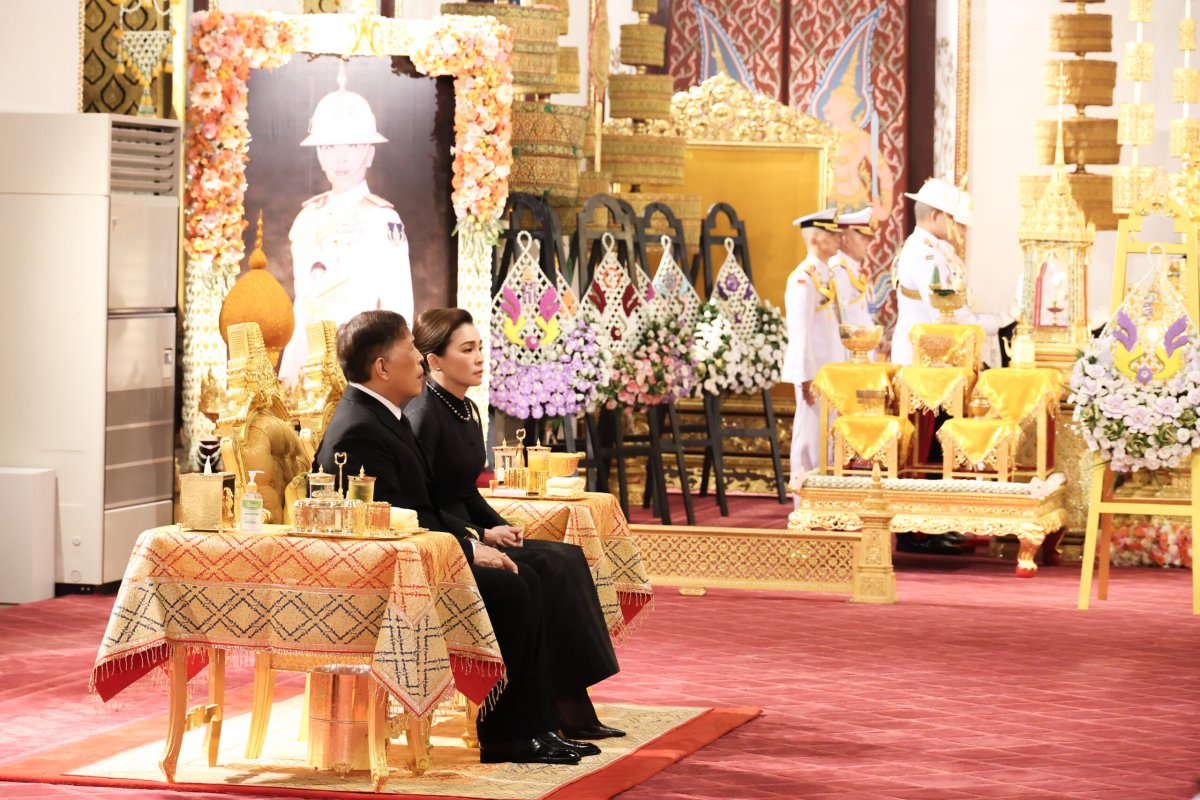
Royal Family Gathers at Grand Palace for Solemn Farewell
King Maha Vajiralongkorn and Queen Suthida presided over royal funeral rites for Princess Bajrakitiyabha Narendiradebyavati at Phiman Rattaya Hall in the Grand Palace on the evening of 14 June 2026. At 19:11 Their Majesties arrived by royal vehicle accompanied by Princess Sirivannavari Nariratana Rajakanya, Prince Dipangkorn Rasmijoti, and Royal Noble Consort Sineenat Bilaskalayani. The gathering brought together key members of the Royal Family in Bangkok to honor the late Princess through traditional Buddhist observances that have long shaped Thai community life.
The presence of these royal figures at the Grand Palace underscores the deep connection between the monarchy and everyday Thai spiritual practices. Residents across Bangkok and beyond often look to such ceremonies for guidance on how to navigate loss with grace and merit-making. The event at Phiman Rattaya Hall reminded many of the enduring role the Royal Family plays in preserving Buddhist customs that support families during times of mourning.
Arrival and Initial Homage Before the Buddha Image
Upon arrival at 19:11, His Majesty paid homage before the Buddha image commemorating the Princess's day of birth by lighting incense and candles and offering a royal salute. This precise sequence of actions at Phiman Rattaya Hall in the Grand Palace followed long-established royal protocol that Thai Buddhists recognize from temple ceremonies in places like Chiang Mai and the Isaan region. Queen Suthida and the accompanying royals stood witness as the King completed these first offerings.
The lighting of incense and candles before the commemorative Buddha image carries particular weight for Thai families who perform similar acts at local temples during Songkran or Loy Krathong. By carrying out these steps in the Grand Palace, the King demonstrated continuity of practice that links the national level of observance with village-level traditions across Thailand. Officials present noted the quiet dignity that marked every movement.
Abhidhamma Chanting Across Ceremonial Platforms
The King then proceeded to the eastern and western ceremonial chanting platforms inside Phiman Rattaya Hall, where incense and candles were lit before the monks conducting the funeral rites. After four rounds of Abhidhamma chanting were completed, court officials invited one senior monk and eight ceremonial monks to take their seats for the next stage of the religious ceremony. Princess Sirivannavari Nariratana Rajakanya, Prince Dipangkorn Rasmijoti, and Royal Noble Consort Sineenat Bilaskalayani remained present throughout.
Abhidhamma chanting forms a core part of Thai Buddhist funeral observances and is performed in temples from Bangkok to Phuket. The four completed rounds at Phiman Rattaya Hall followed the exact structure used in communities throughout the country, allowing participants to accumulate merit for the deceased. The involvement of one senior monk and eight ceremonial monks reflected standard royal ceremony arrangements that the Thai Ministry of Culture has documented for generations.
Presentation of Robes and Merit-Dedication with Lustral Water
His Majesty subsequently presented ceremonial monk robes, after which the monks performed traditional Buddhist funeral rites. The King and Queen then poured lustral water in a merit-dedication ceremony while monks offered blessings and prayers. This act of pouring lustral water at Phiman Rattaya Hall on 14 June 2026 directly mirrored practices carried out by Thai families at Buddhist temples nationwide when dedicating merit to loved ones.
Following the completion of the rites, His Majesty paid respects before the Buddha image once more and received formal greetings from members of the Royal Family and officials in attendance. The careful sequence of robe presentation, water pouring, and final respects reinforced the structured nature of Thai royal funeral observances that help communities process grief through shared ritual. Officials from the Royal Household Bureau coordinated each step with precision.
Cultural Continuity and Daily Life in Thai Communities
The ceremony at the Grand Palace on 14 June 2026 highlighted how royal participation in Abhidhamma chanting strengthens the cultural fabric that supports Thai people during personal loss. Families in Bangkok and the Isaan region often cite such high-profile observances as models for their own temple visits, where lighting incense and offering robes remain central acts. The involvement of Princess Sirivannavari Nariratana Rajakanya and Prince Dipangkorn Rasmijoti illustrated the multi-generational transmission of these customs.
Thai Buddhism teaches that merit dedicated through lustral water ceremonies benefits both the living and the departed. By performing these rites publicly at Phiman Rattaya Hall, the King and Queen provided a visible example that resonates in daily life, from school ceremonies in Chiang Mai to village gatherings in Phuket. The event therefore served as a quiet reminder of shared values that bind communities together.
Regional Perspective and Lasting National Resonance
Thailand's approach to royal funeral rites, as demonstrated at the Grand Palace, continues to draw interest from neighboring ASEAN countries where Buddhist traditions also shape public life. The precise timing at 19:11 and the structured involvement of one senior monk and eight ceremonial monks reflect practices that promote stability and continuity across the region. Observers note that such events can gently influence tourism patterns as visitors seek to understand Thai cultural expressions in Bangkok.
The departure of Their Majesties, accompanied by Princess Sirivannavari, Prince Dipangkorn and Royal Noble Consort Sineenat, by royal vehicle marked the close of the evening's observances. For Thai readers, the ceremony at Phiman Rattaya Hall on 14 June 2026 stands as a clear affirmation of the monarchy's role in upholding Buddhist values that guide both personal conduct and national identity. The details of incense lighting, robe presentation, and lustral water pouring remain etched in collective memory.
By Ann Srisawat, Staff WriterThis article was produced with AI-assisted research and editorial support. Reporting is based on sources cited in the article.
What's Your Reaction?
 Like
0
Like
0
 Dislike
0
Dislike
0
 Love
0
Love
0
 Funny
0
Funny
0
 Wow
0
Wow
0
 Sad
0
Sad
0
 Angry
0
Angry
0

Southeast Asia Correspondent at Global1.News. Based in Bangkok, covering Thai and Southeast Asian politics, economy, technology, and culture. Deep regional perspective on one of the world's most dynamic regions.













Comments (0)