
Peru's Presidential Election: Copper, Climate, and the Battle for Natural Resources
Peru's Electoral Contest and Resource Governance According to BBC Latin America reporting dated June 6, 2026, Peru's presidential election features a contest between right-wing candidate Keiko Fujimori and left-wing candidate Roberto Sánchez. The matchup occurs against a backdrop of Peru's status as a leading global exporter of copper and other critical minerals essential for r
Peru's Electoral Contest and Resource Governance
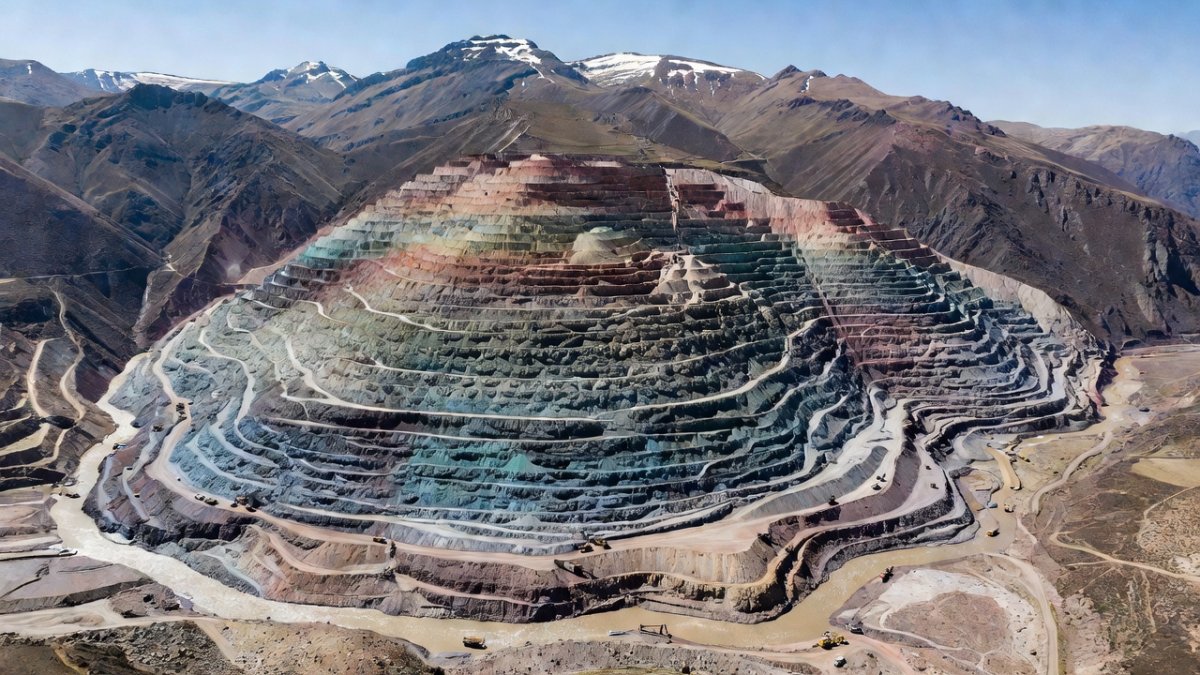
According to BBC Latin America reporting dated June 6, 2026, Peru's presidential election features a contest between right-wing candidate Keiko Fujimori and left-wing candidate Roberto Sánchez. The matchup occurs against a backdrop of Peru's status as a leading global exporter of copper and other critical minerals essential for renewable energy technologies. Both candidates have outlined distinct approaches to natural resource governance that carry direct implications for environmental management in the Andes and Amazon regions.
Peru's mining sector supplies substantial volumes of copper used in electric vehicle batteries, solar panels, and wind turbines, positioning the country within Latin America's broader energy transition dynamics. Policy differences between the candidates center on contract reviews, taxation levels, and the degree of state involvement in resource extraction, with supporters on each side arguing over the distribution of mining revenues to local communities affected by operations.
Political Instability and Electoral Demographics
Peru has experienced eight presidents in the past ten years, creating a pattern of institutional volatility that influences policy continuity on environmental and mining issues. Under-30s constitute 25 percent of the electorate, a demographic segment that participated in Gen Z protests last year focused on crime, corruption, and inequality. These protests highlighted public concerns over how resource wealth translates into tangible benefits for populations near mining sites in the Andes and Amazon.
Fujimori's party holds the largest minority bloc in congress, though no party commands an overall majority. This fragmented legislative environment affects the feasibility of proposed changes to mining regulations or tax structures. The election therefore represents a test of whether voters prioritize market-oriented stability or expanded state oversight of natural resources.
Sánchez's Policy Platform on Mining Contracts and Taxation
Roberto Sánchez has proposed reviewing existing mining contracts, increasing corporate taxes on extractive industries, raising the minimum wage, and expanding state control over natural resources. Supporters of these measures argue that such steps could direct greater portions of mining revenues toward community development and environmental remediation projects in regions impacted by large-scale copper operations.
Proponents contend that strengthened state involvement might address long-standing questions about whether extraction activities adequately compensate for impacts on water resources, biodiversity, and indigenous territories in the Andes and Amazon. The platform connects to wider Latin American debates on resource sovereignty and the equitable sharing of benefits from minerals critical to global decarbonization efforts.
Fujimori's Market-Oriented Approach and Investment Strategy
Keiko Fujimori advocates free-market policies aimed at attracting United States investment in Peru's mining sector. Backers of this stance maintain that streamlined regulations and foreign capital inflows would sustain production levels of copper and critical minerals while generating employment and infrastructure improvements. They point to the need for stable frameworks to maintain Peru's role in supplying materials for the global energy transition.
Supporters emphasize that market-driven expansion could deliver economic growth without abrupt shifts in contract terms, potentially preserving investor confidence in projects operating across environmentally sensitive Andean highlands and Amazonian lowlands. The approach aligns with arguments that consistent policy environments better support long-term environmental management standards within large-scale mining.
Security Concerns, Crime Data, and Campaign Context
Crime and public insecurity rank among the foremost voter priorities. Official reports documented nearly 30,000 extortion incidents in 2025, alongside 239 driver deaths attributed to related violence last year. These figures underscore pressures on daily life that intersect with debates over mining revenues and their allocation to social services or local security measures.
Fujimori spent 18 months in pre-trial detention prior to the campaign, while Sánchez faces separate allegations concerning campaign finance. Both candidates operate within an electorate shaped by recent protests and persistent questions about institutional accountability. These elements frame discussions on how resource governance policies might influence broader stability in mining regions.
Implications for Environmental Justice and Regional Energy Transition
The differing platforms on copper mining and natural resource control carry consequences for environmental outcomes in Peru's Andean and Amazonian territories. Expanded state oversight proposed by one side could prioritize stricter oversight of water usage and habitat protection, while market-focused policies favored by the other side could emphasize operational continuity and foreign capital for mitigation technologies.
Latin American nations supplying critical minerals face parallel choices regarding the balance between extraction volumes and local environmental safeguards. Peru's election results will influence whether mining wealth supports community-level adaptation measures or primarily fuels export-driven growth tied to international clean-energy demand. Voter decisions among younger demographics and those in affected regions will help determine the trajectory of resource governance in this context.
By Elena Vasquez, Staff WriterThis article was produced with AI-assisted research and editorial support. Reporting is based on sources cited in the article.
What's Your Reaction?
 Like
0
Like
0
 Dislike
0
Dislike
0
 Love
0
Love
0
 Funny
0
Funny
0
 Wow
0
Wow
0
 Sad
0
Sad
0
 Angry
0
Angry
0

Latin America Correspondent at Global1.News. Based in Mexico City, covering politics, economics, energy, and culture across the region. Brings an on-the-ground perspective to stories spanning from the Rio Grande to Patagonia.














Comments (0)