
Patagonia in Flames: How Climate Change and Austerity Fueled Argentina's Worst Wildfire Season in Six Decades
The 2025-2026 summer fire season in Argentine Patagonia was unlike anything seen in sixty years. Over 60,000 hectares of native Andean-Patagonian forests went up in flames — roughly ten times the annual average loss, double the worst season in recent memory. And the scars left behind tell a story not just of a warming planet, but of policy choices that left a continent's ancien
The 2025-2026 summer fire season in Argentine Patagonia was unlike anything seen in sixty years. Over 60,000 hectares of native Andean-Patagonian forests went up in flames — roughly ten times the annual average loss, double the worst season in recent memory. And the scars left behind tell a story not just of a warming planet, but of policy choices that left a continent's ancient heritage dangerously exposed.
Patagonia in Flames: How Climate Change and Austerity Fueled Argentina's Worst Wildfire Season in Six Decades
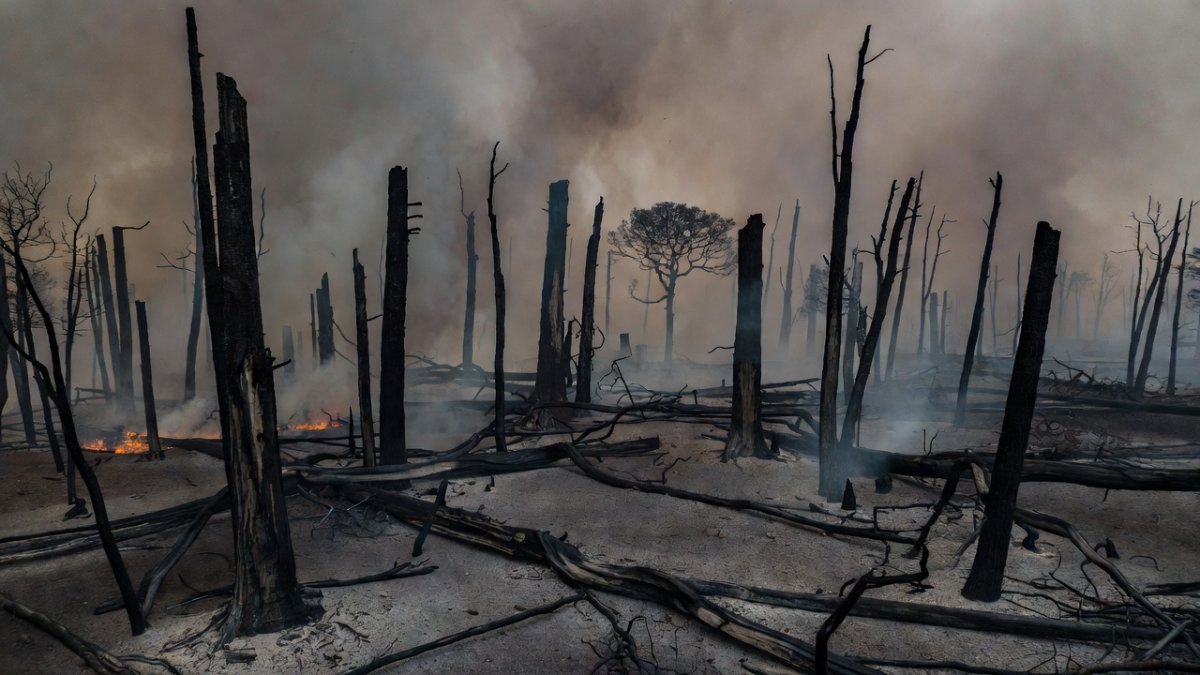
Trevor, Chubut – Argentina — Families watched as flames swallowed their homes and livestock vanished into smoke, leaving more than 3,000 people evacuated across Chubut, Río Negro, Neuquén and Santa Cruz provinces. The inferno that burned for over three and a half months in some areas exposed how austerity and a warming climate have converged to threaten one of Latin America's most iconic landscapes. Ancient Alerce trees — some between 2,000 and 4,000 years old — stood no chance against walls of fire that reduced millennia of growth to ash in a matter of days.
A Season of Record Destruction
The 2025-2026 fire season scorched 60,000 to 70,000 hectares across four Patagonian provinces, erasing roughly ten times the average annual forest loss recorded between 2022 and 2024. Satellite data from CONAE, Argentina's national space agency, tracked blazes that refused to yield for months, with some fronts advancing under extreme drought, record heat and relentless winds. The scale dwarfs anything seen in six decades, turning vast stretches of native forest into ash.
Communities in Chubut bore the heaviest toll, yet the flames crossed provincial lines with terrifying speed. Livestock losses mounted daily while families fled with little more than identity documents and memories. The sheer volume of land consumed underscores how quickly decades of ecological wealth can disappear when prevention systems are underfunded and climate extremes intensify. Patagonia's forests, once resilient, now face a new era of vulnerability that threatens biodiversity across South America.
Los Alerces Under Fire
Los Alerces National Park, a UNESCO World Heritage site, lost between 10,000 and 16,000 hectares inside or adjacent to its boundaries. The park's namesake trees — Fitzroya cupressoides, among the longest-lived species on Earth — were reduced to charred stumps. These ancient giants had stood since before the rise of the Inca Empire. Their destruction represents an irreplaceable biological and cultural archive.
Greenpeace Argentina described the event as an "ecocidio" — an ecocide that Patagonia will feel for generations. Recovery timelines stretch to two centuries because Alerce seedlings grow at an agonizingly slow pace. The loss inside this protected area highlights how even the most treasured natural monuments remain exposed when national fire resources are stretched thin. Latin America's environmental heritage is paying the price for decisions made far from the fire line.
Austerity and the Fire Line
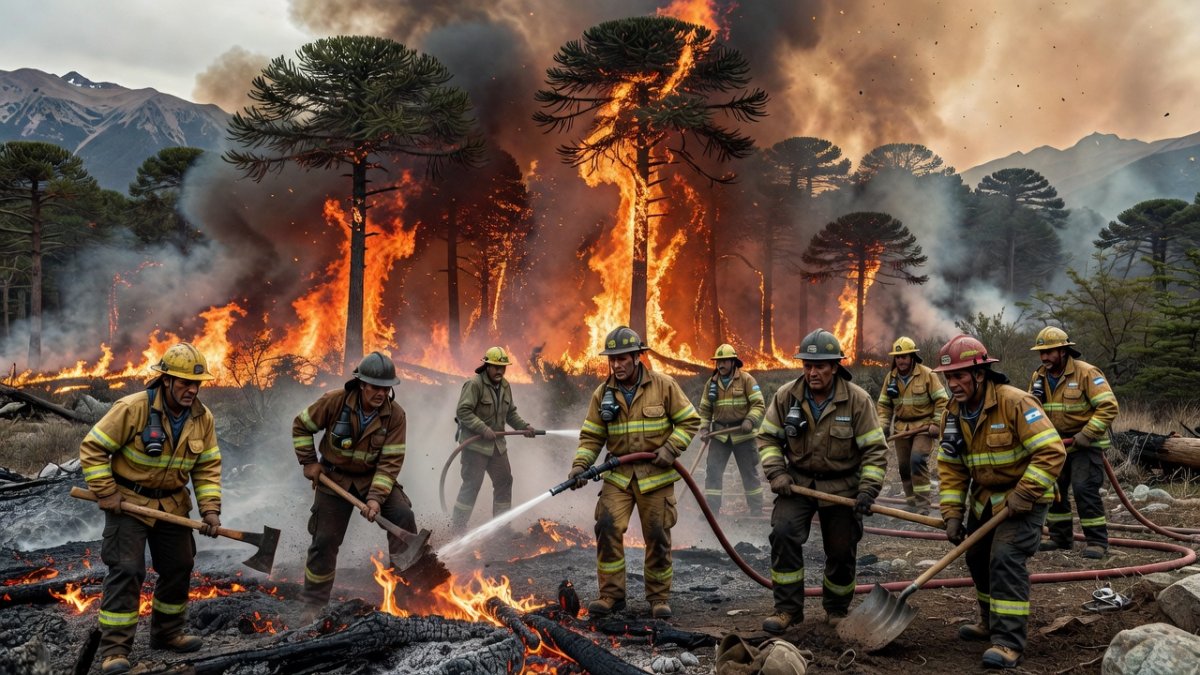
President Javier Milei's austerity measures delivered real-term budget execution cuts of 69 to 81 percent to the National Fire Management Service (Servicio Nacional de Manejo del Fuego) compared with 2023 levels. Brigadistas reported equipment shortages, delayed aerial support and monthly pay hovering around 500 US dollars. These reductions left ground crews under-resourced precisely when the season turned catastrophic.
Critics point to fewer available firefighters and aging vehicles as direct contributors to the fires' unchecked spread. While the administration eventually mobilized 295 brigadistas plus 128 from national parks, supported by 14 aircraft, ground vehicles, drones and Gendarmería units, the initial response gaps proved costly. Chile's cross-border aircraft assistance arrived late, underscoring regional coordination challenges. The human cost of these cuts now lies in blackened valleys and displaced families across Patagonia.
Climate Drivers — Drought, Heat, and a Changing Patagonia
Extreme drought, prolonged heat waves and powerful winds created the ideal conditions for rapid fire growth — conditions scientists link directly to climate change. Patagonia's once predictable summers have grown hotter and drier, turning vegetation into tinder. The 2026 drought pushed moisture levels to historic lows, allowing sparks to explode into infernos that burned for months.
Human factors compounded the crisis. Arson investigations continue in several areas while negligence from abandoned campfires and cigarettes ignited others. These triggers, set against a backdrop of climate-amplified weather, reveal how natural and anthropogenic forces interact with lethal efficiency. For Latin America, the Patagonia fires serve as a stark preview of what awaits other Andean and Amazonian ecosystems if emissions and land-use patterns remain unchecked.
Voices from the Ground
Local residents described nights illuminated by flames that leapt across ridges faster than evacuation orders could reach them. Brigadistas spoke of fighting with outdated tools and insufficient water drops, their exhaustion compounded by months of low pay and limited rest. One firefighter recounted watching an Alerce grove that had survived centuries fall in a single afternoon.
Indigenous communities and small farmers lost not only homes but generational knowledge embedded in the forest. The more than 3,000 evacuees included families who had lived on the land for decades. Their testimonies paint a portrait of resilience strained by systemic neglect. Across Patagonia, the human stories behind the statistics reveal a population bearing the brunt of both climate change and policy choices that prioritized austerity over preparedness.
The Long Recovery
The "Alerces 2026" reconstruction program has begun with 4,000 native trees planted and fee exemptions granted by the Administración de Parques Nacionales (APN) for rebuilding. Satellite monitoring by CONAE continues to map burn scars, guiding restoration priorities. Yet experts warn that even aggressive replanting cannot replace the ecological functions of 2,000-year-old Alerce stands within any human lifetime.
Debates have already surfaced over easing Ley de Bosques protections in burned areas, raising fears of further degradation. Greenpeace and local organizations insist that recovery must prioritize native species and community involvement rather than commercial interests. The two-century timeline for full forest regeneration demands sustained national and regional commitment that extends far beyond the current political cycle.
The Bottom Line — What Comes Next
The Patagonia wildfires of 2026 are a continental alarm. When 60,000 to 70,000 hectares of irreplaceable forest burn in a single season, the message is clear: austerity that slashes fire management by 69 to 81 percent and climate inaction together produce ecocide on a massive scale. Ancient Alerce trees that witnessed millennia are gone, and with them goes a living record of South America's natural history.
Neighboring countries must recognize that fire knows no borders, as Chile's cross-border assistance demonstrated. The crisis demands renewed investment in prevention, cross-border cooperation and honest confrontation with climate drivers. For Latin America, the choice is stark: protect what remains of our natural heritage or watch more ancient forests disappear in flames fueled by policy failure and planetary heating. The embers of Patagonia still glow. The decisions made now will determine whether the continent learns from this tragedy or repeats it.
By Elena Vasquez, Staff Writer
This article was produced with AI-assisted research and editorial support. Reporting is based on sources cited in the article.
What's Your Reaction?
 Like
0
Like
0
 Dislike
0
Dislike
0
 Love
0
Love
0
 Funny
0
Funny
0
 Wow
0
Wow
0
 Sad
0
Sad
0
 Angry
0
Angry
0

Latin America Correspondent at Global1.News. Based in Mexico City, covering politics, economics, energy, and culture across the region. Brings an on-the-ground perspective to stories spanning from the Rio Grande to Patagonia.













Comments (0)