
Houthis Declare Naval Blockade on Saudi Arabia, Threatening Global Oil Supplies Through Bab el-Mandeb
In a stunning escalation that has sent shockwaves through global energy markets, Yemen’s Iran-backed Houthi rebels have declared a full naval blockade on Saudi Arabia via the Bab el-Mandeb Strait—effectively trapping the kingdom between dual maritime chokepoints for the first time in history and threatening 8-10 million barrels of daily crude.
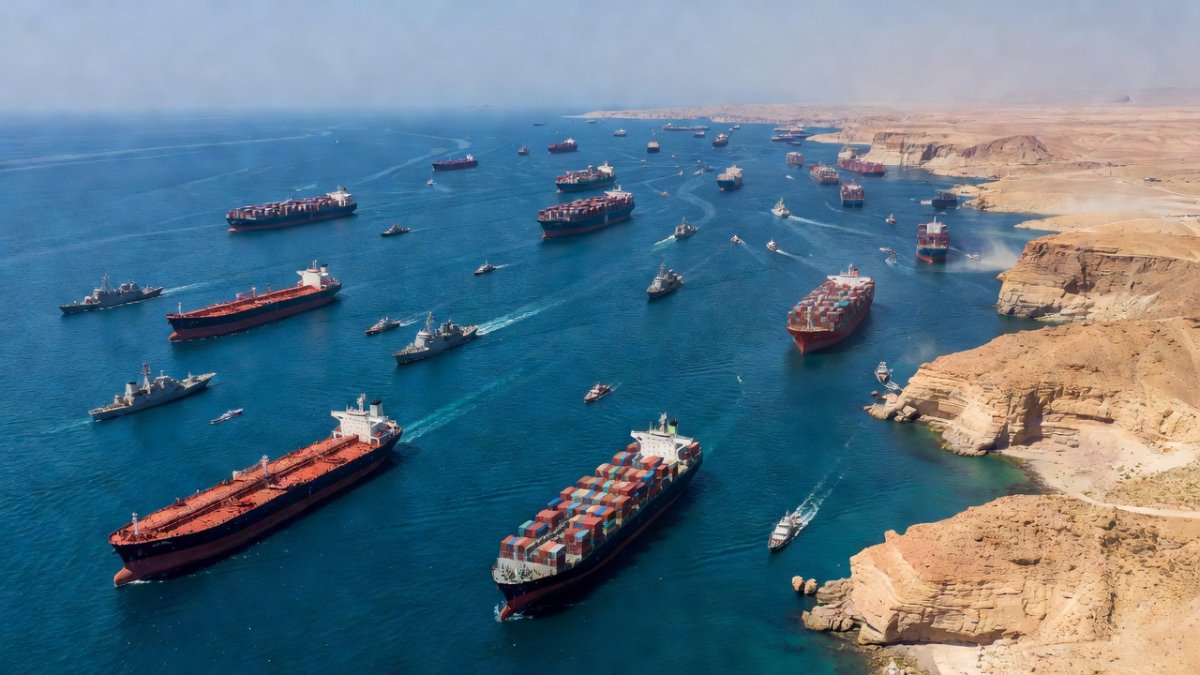
In a stunning escalation that has sent shockwaves through global energy markets, Yemen’s Iran-backed Houthi rebels have declared a full naval blockade on Saudi Arabia via the Bab el-Mandeb Strait—effectively trapping the kingdom between dual maritime chokepoints for the first time in history and threatening 8-10 million barrels of daily crude. This move, announced July 20, 2026, compounds Iran’s pressure on the Strait of Hormuz and risks spiking Brent prices beyond $130 while forcing costly reroutes around Africa. Oil traders and Asian importers are already scrambling as three Saudi-bound tankers divert and war-risk premiums explode.
Houthi Blockade Traps Saudi Arabia: Oil Markets in Chaos as Bab el-Mandeb Closes
Beirut, Lebanon — The Iran-backed Houthi rebels just executed what no Yemeni faction has ever attempted from the Bab el-Mandeb Strait: a full maritime embargo on the Kingdom of Saudi Arabia.
The Blockade Declaration
Houthi military spokesman Yahya Sarea delivered the announcement in a televised statement on July 20. He declared a "maritime embargo" on all vessels loading or discharging at Saudi ports, citing the Saudi-led coalition's ongoing blockade of Houthi-controlled ports and airports since 2015. The group sent direct emails to shipping companies warning against any Saudi-linked cargo. This is no idle threat—Houthis have already struck Abha airport in southern Saudi Arabia, the first direct attack on Saudi soil since early 2022.
Bab el-Mandeb: The World's Most Vulnerable Chokepoint
The Bab el-Mandeb Strait links the Red Sea to the Gulf of Aden. It handles 8-10 million barrels of crude per day, including 4 million from Saudi Arabia alone. Twelve to fifteen percent of global trade flows through this narrow passage. Any sustained closure forces tankers into longer routes around Africa, spiking costs and delays. Three oil tankers bound for China and India already diverted in the Red Sea within days of the declaration.
The Houthi maritime blockade declared on July 20, 2026, builds directly on the group's sustained campaign against Red Sea shipping that began with attacks in November 2023 and persisted through 2025, during which more than 100 commercial vessels were struck or harassed using drones and anti-ship missiles. These earlier operations forced repeated diversions and highlighted the strait’s fragility, as it handles 12-15% of global trade and 8-10 million barrels of oil per day, including roughly 4 million barrels from Saudi Arabia. Historical precedents show that even limited Houthi actions in 2024 prompted the United States and United Kingdom to launch joint strikes on Yemeni targets, yet the group continued operations, demonstrating resilience that now escalates into a full blockade threatening both energy flows and container traffic between Asia and Europe.
Rerouting tankers around the Cape of Good Hope adds 10-14 days to voyages and more than $1 million in extra fuel costs per trip, while war-risk insurance premiums have spiked dramatically since the July 20 declaration. This situation mirrors the March 2021 Suez Canal blockage that halted 12% of global trade for six days, but the current crisis affects a narrower yet more critical chokepoint with fewer immediate alternatives. Three tankers already carrying Saudi crude bound for China and India have altered course, underscoring how quickly the economics of global shipping deteriorate when Bab el-Mandeb becomes contested. The simultaneous Iranian squeeze on Hormuz creates a pincer effect that leaves no short-term escape for Gulf crude heading east or west.
Why Now? The Escalation Timeline
Saudi Arabia struck Houthi-controlled Sanaa International Airport and other targets in north-western Yemen earlier that week. The Houthis responded with the blockade and the Abha airport attack. This tit-for-tat follows years of Saudi coalition restrictions on Houthi ports. The New York Times reported on July 21 that the Houthis are edging closer to entering the broader U.S.-Iran war directly on Iran's side.
Saudi Arabia: Between Two Blockades
Saudi Arabia now faces simultaneous blockades on both its eastern and western sea exits. Iran's closure of the Strait of Hormuz cuts off the east, while the Houthi action seals the Bab el-Mandeb to the west. This is the first time the kingdom confronts dual maritime strangulation. Saudi officials condemned the move as illegal aggression, but the geography leaves limited immediate options for rerouting crude exports.
Saudi Arabia’s long-standing two-oil-route strategy, relying on Arabian Gulf terminals for most exports and Red Sea facilities such as Yanbu for diversification, faces an unprecedented simultaneous threat following Iran’s actions in the Strait of Hormuz and the Houthi blockade of Bab el-Mandeb declared July 20, 2026. Historically, Riyadh maintained the East-West pipeline, also known as the Yanbu pipeline, with a capacity of approximately 5 million barrels per day to bypass Hormuz, yet analysts note that actual throughput rarely exceeds 3.5 million barrels daily due to maintenance and contractual limits. Losing both maritime outlets at once leaves the kingdom with severely constrained options, as Red Sea terminals like Ras Tanura alternatives cannot fully compensate for the combined loss. The Hormuz-Bab el-Mandeb double bind now exposes how fragile that diversification truly is when both chokepoints are contested at the same time.
Saudi Aramco has activated contingency plans that include maximizing the Yanbu pipeline and seeking increased exports via Jordanian and Egyptian routes, but these measures cover only a fraction of normal volumes. The crisis directly threatens Vision 2030 economic diversification goals, as oil revenue shortfalls could delay non-oil sector investments announced by Crown Prince Mohammed bin Salman. With Brent crude already moving from a pre-war $70 to a $126 peak, sustained pressure risks undermining fiscal targets set for 2026-2030.
Global Oil Markets in Turmoil
Brent crude jumped above $90 per barrel, hitting $92 by July 22. Prices sat near $70 before the U.S.-Iran war and peaked at $126 earlier in the conflict. Kpler data shows Saudi oil loadings dropped 36% in the first two weeks. Maritime firms flagged heightened risks for any vessel tied to Saudi ports. Bloomberg noted the unhedged nature of the move, leaving markets exposed without prior protection.
Asian importers face the greatest exposure, with China, India, Japan, and South Korea collectively relying on Saudi crude for 15-25% of their imports; Japan and South Korea in particular hold limited immediate alternatives. The 1973 oil embargo provides a historical parallel, when Arab producers cut supplies and triggered global recession, though today’s market features larger strategic petroleum reserves. OPEC+ has signaled potential output adjustments, yet member states remain divided on whether to release additional barrels amid the July 2026 blockade. The Bab el-Mandeb closure amplifies Hormuz risks, creating a feedback loop that could push prices higher than either strait alone would trigger.
Goldman Sachs forecasts indicate that if the Bab el-Mandeb closure persists for two weeks, Brent could reach $105-110, climbing above $130 if extended to two months, prompting coordinated SPR releases by the United States and IEA members. Such price spikes would feed directly into global inflation, complicating interest-rate decisions by the Federal Reserve and European Central Bank and raising the risk of renewed monetary tightening across developed economies.
Trump and the US Response
President Trump stated on July 20: "If something like that happens, we take care of it." The U.S. has signaled direct action against the Houthi threat amid the wider U.S.-Iran war. This response comes as Houthis edge closer to full involvement, per reporting from multiple outlets including The Guardian and Al Jazeera. No details on specific military steps have been released, but the rhetoric leaves little room for ambiguity.
What Comes Next
The risk of wider war has risen sharply. Yemen faces further humanitarian strain from intensified conflict and restricted aid flows. Asian consumers may turn to the Suez Canal for alternatives, though Al Jazeera analysis on July 22 shows capacity limits and added costs. Shipping companies must now weigh rerouting or halting Saudi calls entirely. Monitor daily tanker movements and official statements from Yahya Sarea and Saudi energy officials for the next escalation signals. Track Brent prices above $90 and any U.S. naval deployments in the region. Diversify energy contracts where possible and review insurance clauses for war-risk premiums immediately. Stay alert to any Houthi strikes beyond Abha airport.
US naval assets in the region include the USS Abraham Lincoln Carrier Strike Group currently positioned near the Gulf of Oman, while UK Prime Minister Burnham has approved British bases for potential American strikes on Iranian targets. Historical Yemen campaigns from 2015 onward demonstrated the limits of air power against Houthi forces, who retain advanced Zulfiqar ballistic missiles and drones that have repeatedly evaded Saudi and US defenses. Nearly 100 US troops were injured in recent Iran-linked strikes, raising the threshold for direct intervention.
The risk of broader regional war drawing in Gulf states remains acute, even as Pakistan attempts to revive ceasefire talks. Yemen’s humanitarian crisis, with more than 24 million people already requiring aid according to UN figures, would deteriorate sharply under intensified conflict. Oman and UN envoys continue quiet diplomacy, but the July 20 blockade has hardened positions on all sides.
By Jessica Ali, Staff Writer
This article was produced with AI-assisted research and editorial support. Reporting is based on sources cited in the article.
What's Your Reaction?
 Like
0
Like
0
 Dislike
0
Dislike
0
 Love
0
Love
0
 Funny
0
Funny
0
 Wow
0
Wow
0
 Sad
0
Sad
0
 Angry
0
Angry
0

Editor-in-Chief at Global1.News. Atlanta-based journalist who cuts through the BS and tells it like it is. Lead anchor, host, and the voice you hear when the spin stops and the truth starts.















Comments (0)