
No Talks, No Endgame: Trump Doubles Down as Iran War Reaches New Phase
launched its 11th consecutive night of airstrikes on Iran as President Donald Trump made clear Tuesday that Washington sees no path to negotiations — even as the war's cost balloons past $37.5 billion and global oil markets face their most severe disruption in decades. No Talks, No Endgame: Trump Doubles Down as Iran War Reaches New Phase Washington, D.C.
The United States launched its 11th consecutive night of airstrikes on Iran as President Donald Trump made clear Tuesday that Washington sees no path to negotiations — even as the war's cost balloons past $37.5 billion and global oil markets face their most severe disruption in decades.
No Talks, No Endgame: Trump Doubles Down as Iran War Reaches New Phase
Washington, D.C. — President Donald Trump dismissed any prospect of immediate talks with Tehran on Tuesday, telling reporters the United States had "wasted time" negotiating with Iran and vowing to continue military operations. The declaration came as Defense Secretary Pete Hegseth told Congress the 145-day conflict has already cost American taxpayers $37.5 billion — and he's asking for billions more.
11th Night of Strikes: War Intensifies on Multiple Fronts
The United States military conducted its 11th straight night of strikes on Iranian targets Tuesday, expanding the campaign that began February 28 after US-Israeli airstrikes killed several Iranian officials, including Supreme Leader Ali Khamenei. What started as targeted strikes has evolved into America's most sustained combat operation since the Iraq War.
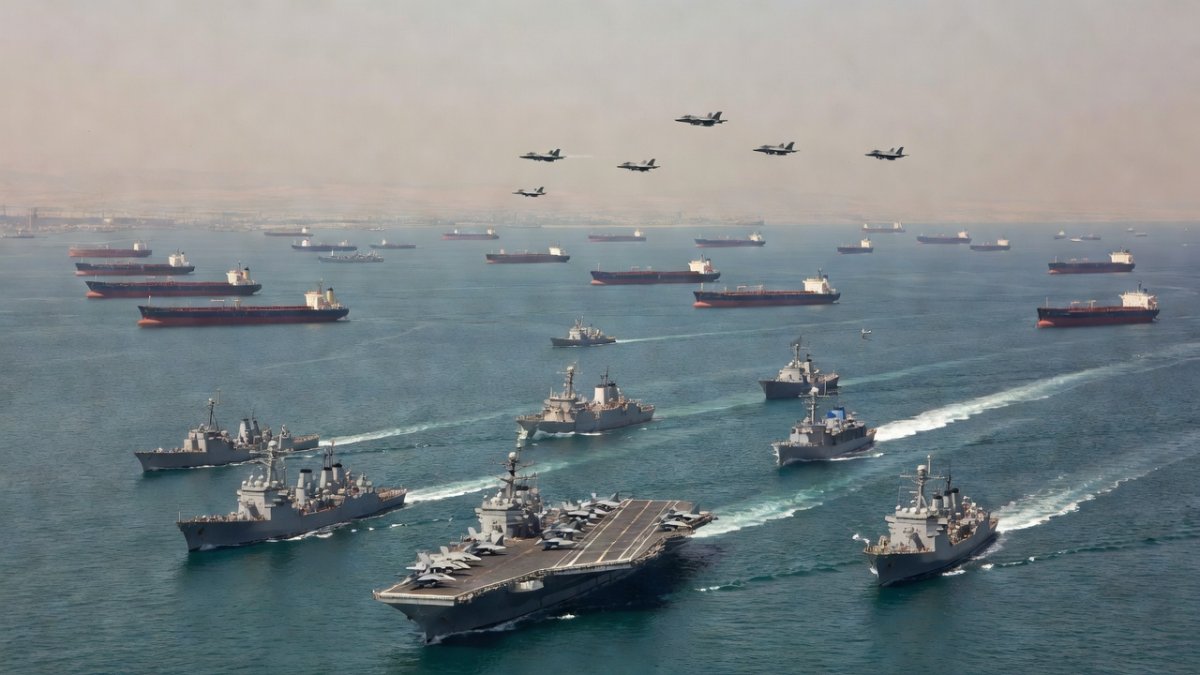
U.S. Central Command confirmed operations continue across multiple theaters, with strikes hitting Iranian military infrastructure, missile batteries, and command-and-control centers. Iran has retaliated by expanding its offensive against Gulf states, widening a conflict that shows no signs of de-escalation.
Hegseth Drops the Number: $37.5 Billion and Counting
In testimony before the Senate Appropriations Committee on Monday, Defense Secretary Pete Hegseth put a staggering price tag on the conflict: $37.5 billion, with no end in sight. His opening remarks were interrupted multiple times by protesters demanding an end to hostilities.
"The cost of this war is mounting by the day," Hegseth told lawmakers, defending his request for additional supplemental funding. The figure represents a sharp increase from earlier estimates, reflecting the escalation from limited airstrikes to sustained combat operations across land, sea, and air.
The price tag covers munitions, troop deployment, naval operations in the Strait of Hormuz, intelligence operations, and support for allied forces. With the 11th night of strikes now in the books, that number is certain to climb higher.
Human Cost: 17 Americans Dead, More Than 420 Wounded
Behind the dollar figures are real families grieving. The Pentagon confirmed 17 US service members have been killed in action since the war began, with at least 420 wounded — though the New York Times reported Sunday that the Pentagon initially withheld dozens of injury cases from public disclosure. At least one service member remains listed as missing.
The latest deaths came from multiple theaters: two Army soldiers killed in Jordan on July 17 during Iranian ballistic missile and drone attacks, and another service member killed in northern Iraq while conducting a controlled detonation of a downed Iranian drone. Each dignified transfer at Dover Air Force Base — the very reason that name is trending — brings the war's reality home.
Iranian casualties are believed to be significantly higher, though independent verification is difficult amid the fog of war. Iranian President Masoud Pezeshkian acknowledged this week that the Islamic Republic is "engaged in a full-scale war" and warned the nation to brace for more strikes.
Strait of Hormuz Cut Off: Global Oil Markets in Turmoil
The Strait of Hormuz — the narrow waterway through which about 20% of the world's oil passes — has been effectively closed since late February. That alone sent shockwaves through global energy markets. Now, the situation has gotten worse.
Yemen's Iran-backed Houthi militants announced a naval blockade of Saudi Arabia, threatening the Bab al-Mandab Strait, the southern gateway to the Red Sea. Together, closing both chokepoints could block an estimated 25% of the world's oil and gas supply. The New York Times reported Tuesday that the threat to Red Sea shipping could force alternative trade routes, driving up costs for consumers worldwide.
Gas prices in the United States have already spiked, and economists warn of prolonged inflationary pressure if the blockade holds. The Saudis — once a reliable US ally — find themselves caught between an Iranian-backed blockade and their security dependence on Washington.
Global Economic Ripple Effects of the Houthi Blockade
The Houthi blockade has triggered cascading disruptions far beyond immediate energy price spikes. Brent crude has surged past $148 per barrel, with analysts at Goldman Sachs projecting potential peaks near $170 if the Bab al-Mandab remains closed for another quarter. Shipping insurance premiums for vessels transiting the Red Sea have increased by 400 percent since March, forcing reroutes around the Cape of Good Hope that add 10 to 14 days to Asia-Europe voyages. European manufacturing sectors, particularly chemicals and automobiles in Germany, face input shortages that could shave 0.8 percent off eurozone GDP this year. In Asia, Japan and South Korea report diesel and LNG shortfalls, pushing consumer energy costs up 22 percent month-over-month. Developing nations in East Africa are experiencing acute food inflation as grain shipments from the Black Sea are delayed, compounding existing vulnerabilities from prior supply shocks. Central banks worldwide are now revising inflation forecasts upward, with the IMF warning of a possible return to 1970s-style stagflation if the dual chokepoint crisis persists into 2027.
Trump's Hard Line vs. Rubio's Open Door
Trump's "no talks" position Tuesday appears to contradict signals from his own administration. Secretary of State Marco Rubio told ASEAN ministers over the weekend that the US is "ready for dialogue if Iran is serious" — a softer stance that suggests internal divisions over war strategy.
"The president has made clear that the previous approach of negotiating with Iran was ineffective," a senior administration official said Tuesday, attempting to square the circle. "But we are always open to genuine de-escalation if Tehran demonstrates seriousness."
So far, Tehran has shown no such willingness. Pezeshkian's "full-scale war" declaration and Iran's expanded offensive against Gulf states indicate the regime is digging in, not looking for an off-ramp.
International Fallout: Pakistan Steps In, Allies Grow Uneasy
As the US-Iran war grinds into its fifth month, diplomatic efforts are scrambling to catch up. Pakistan has stepped up mediation efforts, hoping to salvage an interim deal that could at least de-escalate the conflict's most dangerous flashpoints.
European allies have grown increasingly uneasy with the war's trajectory. NATO members — already strained by the conflict's effect on energy prices and regional stability — are watching nervously as the fighting expands beyond Iran's borders. The House of Representatives is expected to vote Tuesday on the $1.15 trillion National Defense Authorization Act for Fiscal Year 2027, which includes provisions to integrate US and Israeli military technology and supply chains — a measure critics say will lock the United States into an extended conflict.
In the Middle East, the calculus is shifting. Gulf states that initially supported the strikes against Iran are now feeling the pain of the Houthi blockade. Saudi Arabia, in particular, faces an impossible choice: break with Washington to secure Red Sea shipping, or stay the course while its economy takes a hit.
International Diplomatic Maneuvers: Europe, China, and Russia Respond
European Union foreign ministers convened an emergency session in Brussels last week, issuing a joint statement urging an immediate ceasefire and offering to host indirect talks in Geneva. France and Germany have privately conveyed to Washington their unwillingness to commit additional naval assets without a clear exit strategy. China has positioned itself as a potential broker, dispatching a special envoy to Tehran and Riyadh while increasing oil purchases from alternative suppliers to stabilize domestic prices. Beijing's state media has criticized U.S. "hegemonism" but stopped short of material support for Iran. Russia, meanwhile, has leveraged the crisis to deflect attention from Ukraine, supplying Tehran with air-defense components and calling for a multipolar security framework at the UN Security Council. Moscow's diplomatic offensive includes renewed outreach to Gulf monarchies, seeking to erode traditional U.S. influence in the region.
NATO Under Strain: Alliance Fractures Emerge
The prolonged conflict has exposed deepening fissures within NATO. Eastern European members such as Poland and the Baltic states remain focused on the Russian threat and have resisted diverting resources to the Middle East, while southern members like Italy and Spain cite domestic energy crises as reasons to limit involvement. Turkey has openly questioned the legal basis for U.S. operations and threatened to restrict access to Incirlik Air Base. Burden-sharing debates have intensified, with several allies delaying approval of the supplemental funding package tied to the NDAA. Analysts note that the war risks accelerating the alliance's fragmentation, as members weigh transatlantic commitments against immediate national interests in energy security and migration pressures stemming from regional instability.
Domestic Political Impact: War Shapes Midterm Elections
The Iran conflict is rapidly reshaping the U.S. political landscape ahead of the 2026 midterm elections. Recent polling from Gallup and Pew shows President Trump's approval rating on foreign policy slipping to 41 percent, with war fatigue particularly acute among suburban independents and younger voters. Democratic candidates are centering anti-war messaging in key Senate races in Pennsylvania, Arizona, and Georgia, framing the $37.5 billion expenditure as a distraction from domestic priorities. Within the Republican Party, a growing faction of fiscal conservatives and isolationists is challenging defense hawks, threatening primary challenges against incumbents who back further supplemental funding. The NDAA vote itself has become a flashpoint, with progressive Democrats and libertarian-leaning Republicans exploring rare procedural alliances to attach conditions or cuts. Fundraising data indicates a surge in small-dollar donations to anti-interventionist PACs, suggesting the war could drive turnout dynamics that favor challengers in both parties.
The War Nobody Predicted — And Nobody Can End
When the first strikes hit Tehran on February 28, few predicted the conflict would still be raging in late July. The initial operation — framed as targeted decapitation strikes against Iranian leadership — has metastasized into a full-scale war with no clear exit strategy.
Seventeen American families will never see their loved ones again. Hundreds more are caring for wounded veterans. Taxpayers are on the hook for $37.5 billion and counting. Global energy markets are in turmoil. And the commander-in-chief just told the world there will be no talks.
This is not a television drama. This is July 2026 — and the Iran war is the defining story of our time.
The Bottom Line
The Iran war has entered a dangerous new phase. With no diplomatic off-ramp in sight, costs mounting daily, and the Houthi blockade threatening to strangle global energy supplies, the United States is deeper in the Middle East than at any point in the last two decades. The 11th night of strikes is unlikely to be the last.
By Jessica Ali, Staff Writer
This article was produced with AI-assisted research and editorial support. Reporting is based on sources cited in the article.
What's Your Reaction?
 Like
0
Like
0
 Dislike
0
Dislike
0
 Love
0
Love
0
 Funny
0
Funny
0
 Wow
0
Wow
0
 Sad
0
Sad
0
 Angry
0
Angry
0

Editor-in-Chief at Global1.News. Atlanta-based journalist who cuts through the BS and tells it like it is. Lead anchor, host, and the voice you hear when the spin stops and the truth starts.













Comments (0)