
Why Korean Supermarkets Feel Expensive But Restaurants...
The Supermarket Paradox: High Prices in a High-Efficiency Economy Korea's retail food sector presents a clear price divergence. Supermarket shelves display fresh produce at levels approximately 47 percent above the OECD average, yet a full restaurant meal remains accessible at KRW 9,000-11,000. This pattern stems from structural features of Korean agriculture and distribution r
The Supermarket Paradox: High Prices in a High-Efficiency Economy
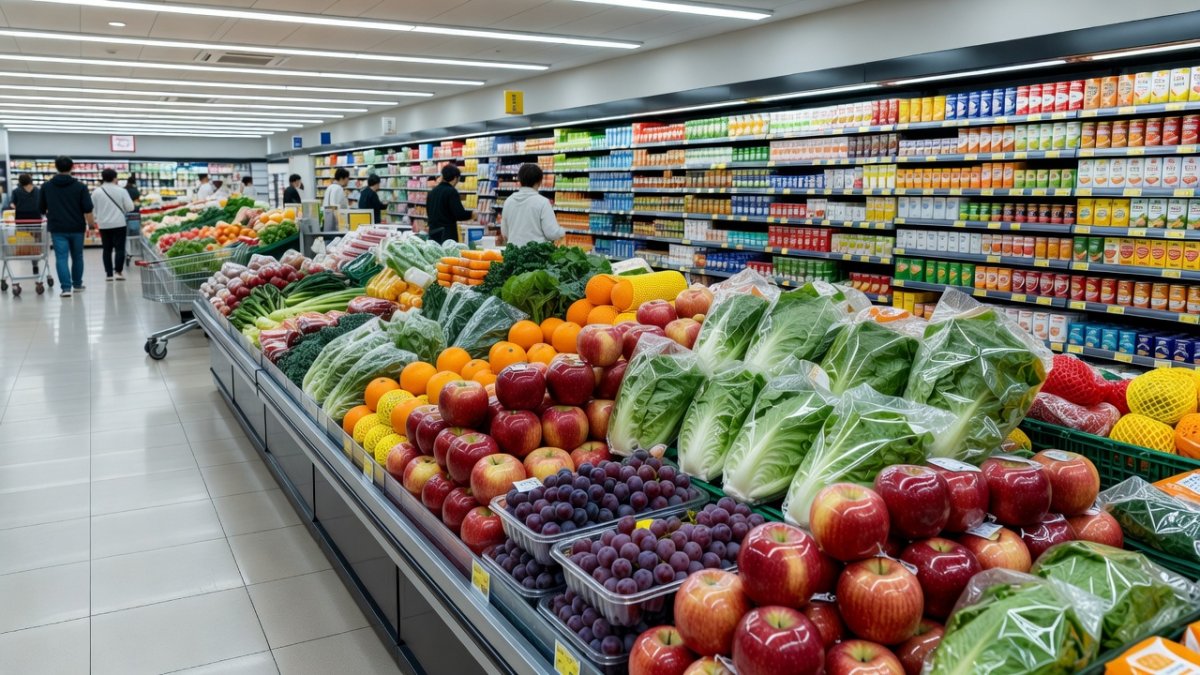
Korea's retail food sector presents a clear price divergence. Supermarket shelves display fresh produce at levels approximately 47 percent above the OECD average, yet a full restaurant meal remains accessible at KRW 9,000-11,000. This pattern stems from structural features of Korean agriculture and distribution rather than temporary market fluctuations.
Three dominant chains—E-Mart of the Shinsegae Group, Lotte Mart of the Lotte Group, and Homeplus under MBK Partners—control roughly half of organized grocery sales. E-Mart alone holds about 30 percent market share. Their pricing reflects both upstream costs and the concentrated retail structure that limits competitive pressure on margins.
Understanding Korea's Agricultural Tariff Structure
High border protection shapes domestic produce costs. Rice faces a 513 percent tariff, beef 40 percent, and pork 25 percent. These rates shield small-scale farmers whose average holding measures only 1.5 hectares. While tariffs support rural incomes, they transmit elevated input costs directly to supermarket consumers.
Korea imports roughly 70 percent of its wheat and corn. Global price movements therefore affect processed foods and livestock feed, adding further upward pressure on supermarket baskets even as fresh vegetables remain the most visible outlier.
The Distribution Labyrinth: From Garak Market to the Supermarket Shelf
Daily price formation occurs at Garak Market, one of Asia's largest agricultural wholesale facilities. Overnight auctions set the next day's reference prices for produce arriving from South Jeolla and other growing regions. The supply chain typically involves only one or two intermediaries between farm and retail shelf, enabling rapid movement yet preserving high mark-ups once goods reach supermarket distribution centers.
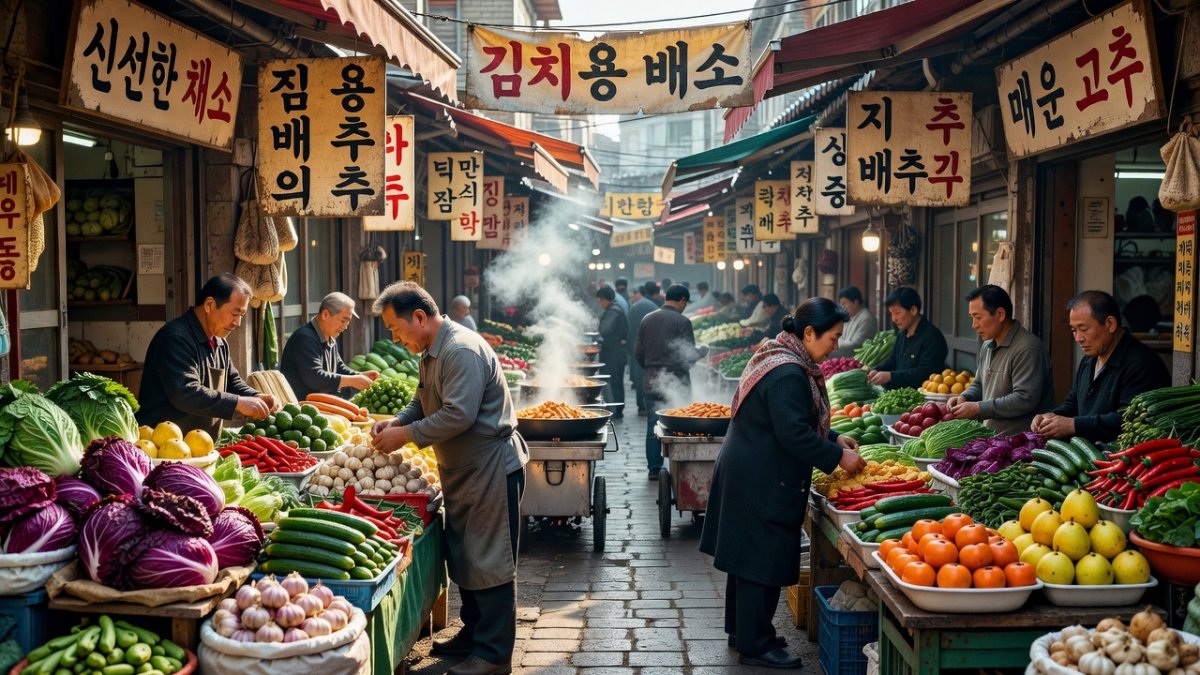
Traditional markets such as Gwangjang and Namdaemun continue to offer lower prices for comparable items because they operate with thinner margins and direct vendor relationships. Supermarket chains, by contrast, incur additional costs for cold-chain infrastructure, packaging, and centralized procurement that serve urban convenience but raise final shelf prices.
Why Restaurants Feel Cheap: The Economics of Korean Dining
Restaurant density in Seoul is exceptionally high, making eating out the default rather than a special occasion. Everyday dishes such as kalguksu, sundubu jjigae, and doenjang jjigae are priced between KRW 9,000 and 11,000, with rice and banchan included. This pricing reflects intense competition among small operators and the cultural expectation that a meal constitutes a complete, shared experience.
Seoul subway base fares range from KRW 1,250 to 1,350. A typical restaurant meal therefore costs less than ten subway rides, reinforcing the perception that dining out delivers strong value relative to other daily expenditures.
The Complete Meal Advantage: Banchan and the Structure of Value
The inclusion of multiple banchan transforms the economics of restaurant pricing. Customers receive a nutritionally balanced spread without additional purchases, lowering the perceived per-item cost. This model allows restaurants to maintain modest menu prices while covering ingredient and labor expenses through high table turnover.
Supermarkets, by comparison, sell individual ingredients that require further home preparation and additional side dishes. The absence of the assembled meal format makes grocery totals appear disproportionately high even when raw material costs are comparable.
Transport Costs and the Eating-Out Default
Urban transport expenses further tilt the balance toward restaurants. A liter of milk priced near KRW 2,800 already equals roughly twice the subway base fare. When households factor in time, energy, and additional ingredients needed for home cooking, the marginal cost of eating out declines. OECD data recorded a 3.2 percent year-over-year rise in South Korea's food-at-home prices during Q1 2026, widening this calculus.
Chosun Ilbo reported that Korea's overall dining-out expenditure declined in the first half of 2026—the first such drop since 2020—yet the structural preference for restaurant meals persists among younger urban residents who value convenience over home preparation.
Looking Ahead: Will the Gap Narrow?
Any narrowing of the supermarket-restaurant price gap would require coordinated changes in tariff policy, farm consolidation, and retail competition. Current small-farm structures and chaebol dominance in organized retail suggest that produce prices will remain elevated relative to OECD peers. Restaurant pricing, sustained by high density and the banchan model, is likely to stay competitive even if overall consumer spending on dining experiences softens.
Policy discussions continue around gradual tariff adjustments and support for larger-scale farming, yet implementation timelines remain uncertain. Until structural reforms alter upstream costs or distribution margins, the observed divergence between supermarket and restaurant prices will continue to characterize Korea's food economy.
By Prof. David Park, Staff Writer
This article was produced with AI-assisted research and editorial support. Reporting is based on sources cited in the article.
What's Your Reaction?
 Like
0
Like
0
 Dislike
0
Dislike
0
 Love
0
Love
0
 Funny
0
Funny
0
 Wow
0
Wow
0
 Sad
0
Sad
0
 Angry
0
Angry
0

East Asia/Technology Correspondent at Global1.News. Seoul-based voice covering Korean politics, technology, business, and culture. Analyzes how technology and geopolitics intersect across East Asia.















Comments (0)