
Oh Se-hoon's Fifth Term: Seoul Mayor Conservative Resilience
Oh Se-hoon's Fifth Term: Analyzing the Resilience of Conservative Local Leadership in Seoul The June 2026 Mayoral Outcome and Its Immediate Context The recent mayoral election in Seoul concluded with incumbent Oh Se-hoon securing another term on June 3. This result marked his fifth period in the office, though the terms have not been consecutive. Official tallies showed Oh prev
The June 2026 Mayoral Outcome and Its Immediate Context
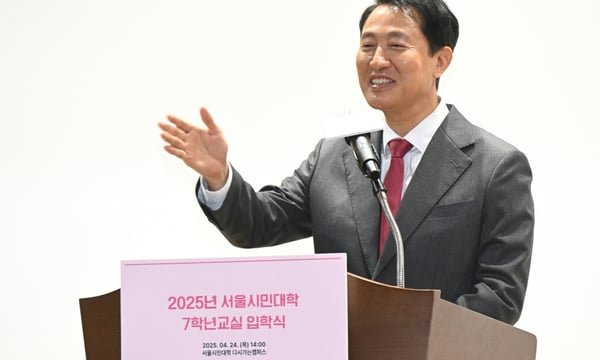
The recent mayoral election in Seoul concluded with incumbent Oh Se-hoon securing another term on June 3. This result marked his fifth period in the office, though the terms have not been consecutive. Official tallies showed Oh prevailing by approximately one percent, equivalent to roughly 60,000 votes over his Democratic Party opponent. The margin emerged only after extended counting that continued into the morning of June 4.
Exit polls and earlier surveys had projected a different result, placing Oh behind until late in the process. Such a reversal underscores the volatility that can characterize urban electoral contests in South Korea when national political alignments intersect with local concerns. The outcome preserved conservative control over the capital at a moment when the Democratic Party maintained a substantial presence in the National Assembly.
Early Political Trajectory and Urban Design Initiatives
Oh Se-hoon entered national politics in 2000 through the conservative lineage that later became the People Power Party. Prior to that step, he had practiced environmental law, bringing a technocratic profile to legislative work. His first mayoral victory occurred in 2006 at age 45, establishing him as the youngest individual to hold the post.
During the initial term, emphasis fell on reshaping Seoul's physical environment. Projects aimed at elevating architectural standards and infrastructure quality contributed to UNESCO's 2010 designation of the city as a Creative City of Design. These efforts reflected a broader strategy of positioning Seoul as a globally competitive urban center through aesthetic and functional upgrades.
The 2010 Referendum Episode and Its Lasting Symbolism
Oh's second term encountered direct confrontation with the Seoul Council over a proposed ordinance for universal free lunches in elementary schools. He characterized the measure as an unsustainable expansion of welfare and responded by calling a referendum while pledging resignation if the vote went against his position.
The August 2011 press conference, during which Oh became visibly emotional and performed a formal bow, crystallized public memory of the episode. Although turnout proved insufficient to validate the referendum, Oh honored his commitment and stepped down. This sequence illustrated the personal stakes that local leaders sometimes attach to policy disputes in Korean municipal governance.
Period of Withdrawal and Subsequent Re-entry Challenges
Following resignation, Oh maintained distance from electoral politics between 2012 and 2016. Activities during this interval included academic lectures on public policy and advisory roles in urban administration and environmental planning in Peru and Rwanda. These international engagements provided comparative perspectives on city management that later informed his domestic approach.
Attempts to return through parliamentary contests in 2016 and 2020 proved unsuccessful, as did a 2019 bid for party leadership. The pattern of setbacks highlighted the difficulties of re-establishing momentum within a competitive conservative field after an earlier departure from office.
The 2021 By-Election and Consolidation Through 2022
Oh regained the mayoralty in the 2021 by-election that followed the death of predecessor Park Won-soon. The timing coincided with the height of COVID-19 restrictions and a series of difficulties facing the Democratic Party. Re-election at the close of the original term in 2022 extended the tenure into a fourth period overall.
Policy activity during these years encompassed standard transportation upgrades and social care measures alongside more costly environmental initiatives. The period also included criticism over Oh's absence from Seoul during the October 2022 Itaewon incident, when he was traveling in Europe.
Campaign Framing and Positioning Relative to National Parties
Victory in the most recent contest relied heavily on rhetorical positioning rather than claims of personal administrative superiority. Oh repeatedly urged voters to maintain Seoul as the final conservative stronghold against perceived overreach by the executive and legislative branches under the Lee Jae-myung administration. This message resonated in a context where the Democratic Party appeared positioned to dominate most other local contests outside the southeast.
Additional tactical distance from People Power Party leadership preceded the vote. Oh signaled reluctance to run under the party label and advocated separation from former President Yoon Suk-yeol following the events of the self-coup attempt. Such moves allowed him to present a distinct variant of conservatism centered on Seoul as a platform for renewal.
Strategic Significance for Inter-Korean and Domestic Political Dynamics
Retention of the Seoul mayoralty carries implications that extend beyond municipal administration. As the capital remains the primary interface for national policy execution and international engagement, continued conservative stewardship there can shape the tone of responses to peninsula-wide issues. Historical precedents show that local control in Seoul has often served as a counterweight when national legislative majorities favor the opposing camp.
Oh's emphasis on rational conservatism and institutional separation from recent party controversies suggests an attempt to recalibrate the ideological boundaries of the opposition. Whether this approach influences longer-term party reconstruction or inter-Korean policy coordination will depend on subsequent electoral cycles and alliance patterns within the conservative spectrum.
By Prof. David Park, Staff WriterThis article was produced with AI-assisted research and editorial support. Reporting is based on sources cited in the article.
What's Your Reaction?
 Like
0
Like
0
 Dislike
0
Dislike
0
 Love
0
Love
0
 Funny
0
Funny
0
 Wow
0
Wow
0
 Sad
0
Sad
0
 Angry
0
Angry
0

East Asia/Technology Correspondent at Global1.News. Seoul-based voice covering Korean politics, technology, business, and culture. Analyzes how technology and geopolitics intersect across East Asia.











Comments (0)