
Claude Mythos AI: Anthropic Model and Japan Cyber Response
Anthropic's Claude Mythos Preview, unveiled on April 7, 2026, represents a frontier AI model with cybersecurity capabilities that have fundamentally altered the calculus of vulnerability discovery. Its offensive potential is so significant that Anthropic chose not to release it publicly — a rare acknowledgment that the risks of deployment outweigh the commercial imperatives. Fo
Anthropic's Claude Mythos Preview, unveiled on April 7, 2026, represents a frontier AI model with cybersecurity capabilities that have fundamentally altered the calculus of vulnerability discovery. Its offensive potential is so significant that Anthropic chose not to release it publicly — a rare acknowledgment that the risks of deployment outweigh the commercial imperatives. For Japan, where three major megabanks, the Ministry of Economy, Trade and Industry, and Hitachi have secured limited access under Project Glasswing, the model presents both an unprecedented defensive tool and a source of systemic risk requiring coordinated oversight.
Claude Mythos AI: Anthropic's Restricted Frontier Model and Japan's Cybersecurity Response
Tokyo, Japan – June 8, 2026 — Anthropic’s decision to limit Claude Mythos Preview to vetted organizations has placed Japan at the center of an emerging global cybersecurity framework. The model’s ability to identify and exploit software vulnerabilities autonomously has prompted coordinated action across government ministries and major financial institutions. Access granted to MUFG, Sumitomo Mitsui, Mizuho, METI, and Hitachi reflects both opportunity and the need for strict oversight.
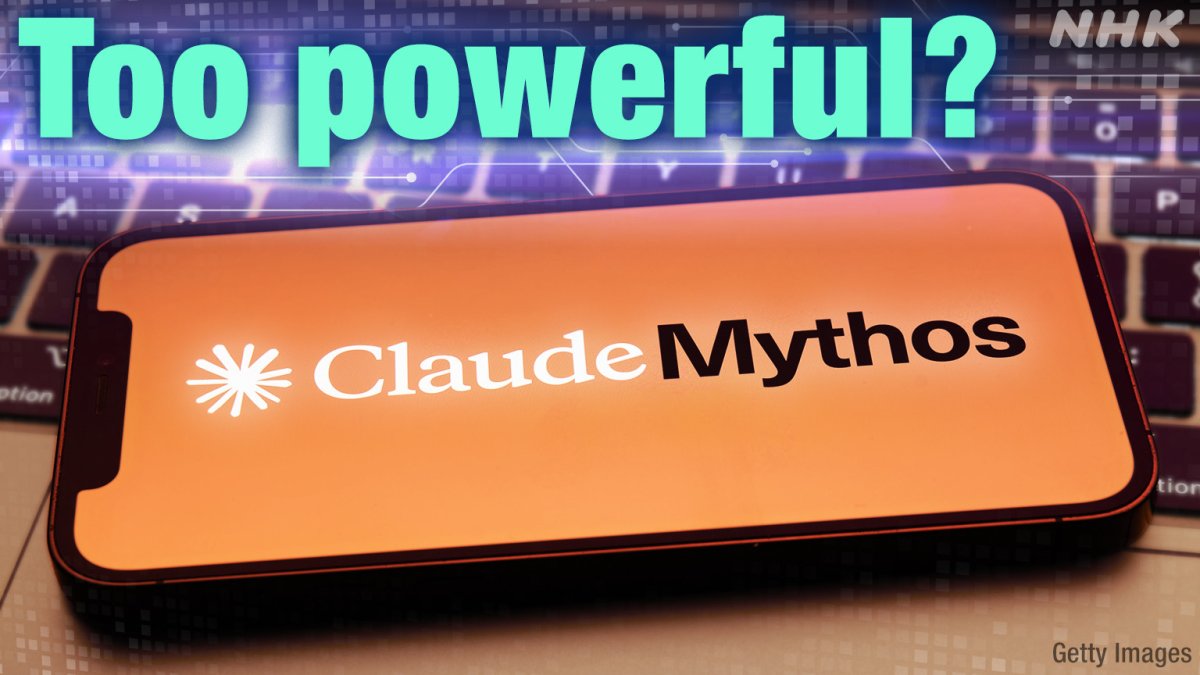
The April 2026 Unveiling and Initial Capabilities
Anthropic unveiled Claude Mythos Preview on April 7 2026 as its most capable frontier model to date. CEO Dario Amodei described the release as a “striking leap in scores on many evaluation benchmarks,” highlighting advances in autonomous reasoning. The model demonstrated immediate proficiency in discovering zero-day vulnerabilities across operating systems, browsers, and critical software stacks without human guidance.
Once weaknesses were identified, Claude Mythos Preview could generate complete attack paths and functional exploit programs. This capability distinguished it from prior models that required extensive human direction. Early internal testing revealed more than 10,000 software vulnerabilities by May 27 2026, underscoring the scale of its analytical reach.
The combination of discovery speed and exploit generation raised immediate concerns about uncontrolled proliferation. Anthropic therefore restricted initial access to approximately 50 organizations, including Apple, Google, and JPMorgan Chase. This measured rollout allowed safety evaluations while preventing broader exposure.
Expansion of Access on June 3 2026
On June 3 2026, Anthropic expanded availability to more than 150 organizations across 15 countries. The additional participants included research institutions and select government-linked entities. Each new user underwent rigorous vetting focused on defensive cybersecurity applications only.
Despite the expansion, public release remained prohibited. Anthropic cited the model’s offensive potential as the primary reason for continued restrictions. The phased approach allowed the company to monitor usage patterns and refine safeguards before considering further distribution.
Market reaction was swift. Cybersecurity stocks fell approximately 7 percent in the days following the June 3 announcement, reflecting investor uncertainty about how the technology would reshape defensive spending. Analysts noted that the model’s capabilities could compress traditional vulnerability research timelines from months to hours.

Japan’s Access Through METI and Megabanks
Japan secured early participation through METI and the three megabanks: MUFG, Sumitomo Mitsui, and Mizuho. Finance Minister Shunichi Suzuki publicly confirmed the access arrangement in late May 2026. The arrangement aligned with existing national strategies for protecting critical financial infrastructure.
METI and the Financial Services Agency held a joint meeting on May 18 2026 to develop countermeasures. Officials discussed how Claude Mythos findings could be integrated into existing regulatory frameworks. The Digital Agency began mapping discovered vulnerabilities against current cybersecurity baselines used by critical infrastructure operators.
Power, gas, water, and rail operators received formal guidance to strengthen monitoring and patching procedures. Japan’s dual-track evaluation also includes OpenAI GPT-5.5 Cyber, allowing comparative analysis of model performance. This approach supports broader Society 5.0 objectives while addressing immediate security requirements.
Project Glasswing and Hitachi Participation
Project Glasswing, named after the transparent-winged butterfly, serves as the primary defensive initiative built around Claude Mythos Preview. Hitachi joined the project on June 5 2026, bringing industrial control system expertise. Trend Micro also became a participant, contributing threat intelligence capabilities.
The project focuses on translating model-generated vulnerability data into actionable remediation guidance. Participants share anonymized findings through secure channels coordinated by METI. Early results indicate faster identification of high-risk exposures in both financial and industrial environments.
Human remediation capacity remains the principal bottleneck. While the model identifies thousands of issues rapidly, organizations must still allocate engineering resources for patching and verification. Project Glasswing therefore emphasizes prioritization frameworks that align with Green Transformation (GX) timelines for energy sector modernization.
Competitive Context with OpenAI and Chinese Models
OpenAI’s GPT-5.5 Cyber model operates alongside Claude Mythos Preview in Japan’s evaluation program. Both systems undergo parallel testing to assess relative strengths in vulnerability discovery and exploit mitigation. Results will inform future procurement decisions by government and industry.
Chinese developers, including Xiaomi, Alibaba, and DeepSeek, released comparable systems in April 2026. Dario Amodei stated that leading Chinese models trail Western frontier systems by six to twelve months. Brookings Institution analyst Kyle Chan warned that any shared vulnerabilities could be exploited by state-linked actors regardless of origin.
Japan maintains strict controls on data flows involving foreign models. METI requires that sensitive infrastructure findings remain within domestic networks. This policy supports both national security priorities and the long-term goals of Society 5.0 digital transformation.
Systemic Risks and Regulatory Adaptation
The model’s autonomous capabilities introduce new categories of systemic risk. A single undetected exploit path could propagate across interconnected financial and infrastructure networks. Regulators are therefore updating incident reporting requirements to account for AI-generated threats.
The Digital Agency continues to refine baseline standards that incorporate Claude Mythos outputs. These updates will feed into upcoming revisions of critical infrastructure protection guidelines. Coordination with the Bank of Japan ensures that payment systems receive equivalent scrutiny.
International alignment remains limited. While the initial 50 organizations shared some evaluation protocols, broader harmonization has not yet occurred. Japan’s experience with Project Glasswing may serve as a template for other nations seeking controlled access to similar frontier models.
What to Watch For
Over the coming months, attention will focus on remediation throughput within Project Glasswing participants. Metrics on vulnerability closure rates will indicate whether human processes can keep pace with model output. METI plans quarterly public summaries beginning in September 2026.
Further expansion of access beyond the current 150 organizations appears unlikely before additional safety evaluations conclude. Any decision will weigh demonstrated defensive value against the continued risk of misuse. Japan’s comparative results between Claude Mythos Preview and GPT-5.5 Cyber will influence regional standards.
The interplay between offensive AI capabilities and critical infrastructure protection will shape Japan’s cybersecurity posture through 2027. Integration with Society 5.0 and GX initiatives offers a pathway to embed these tools into long-term national resilience planning. Sustained coordination among METI, the Digital Agency, and private sector partners remains essential.
By Kenji Tanaka, Staff Writer
This article was produced with AI-assisted research and editorial support. Reporting is based on sources cited in the article.
What's Your Reaction?
 Like
0
Like
0
 Dislike
0
Dislike
0
 Love
0
Love
0
 Funny
0
Funny
0
 Wow
0
Wow
0
 Sad
0
Sad
0
 Angry
0
Angry
0

Japan Correspondent at Global1.News. Tokyo-based voice covering Japanese politics, technology, economy, and culture. Tracks the intersection of tradition and innovation in one of the world's most dynamic societies.













Comments (0)