
Oh Se-hoon's Fifth Term as Seoul Mayor: Resilience of Conservative Local Governance
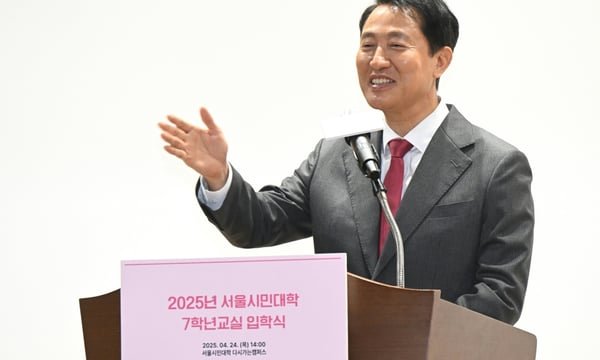
The Unexpected Electoral Outcome and Its Immediate Context The June 3 mayoral contest produced a narrow victory for incumbent Oh Se-hoon, who secured re-election by roughly 60,000 votes, or one percentage point, after trailing his Democratic Party opponent until the early hours of June 4. Official tallies confirmed the result only after extended counting, underscoring how exit
The Unexpected Electoral Outcome and Its Immediate Context
The June 3 mayoral contest produced a narrow victory for incumbent Oh Se-hoon, who secured re-election by roughly 60,000 votes, or one percentage point, after trailing his Democratic Party opponent until the early hours of June 4. Official tallies confirmed the result only after extended counting, underscoring how exit polls had projected a different outcome. This margin, while modest, delivered Oh a nonconsecutive fifth term and preserved conservative control over South Korea's capital at a moment when the Democratic Party appeared positioned to dominate most other local contests.
The result highlights the structural importance of Seoul within Korea's unitary political system. As the seat of national administration, finance, and media, the city functions as a critical counterweight when the National Assembly holds a large Democratic majority. Oh's campaign rhetoric framed the contest explicitly in these terms, urging voters to treat Seoul as the final institutional barrier against unified executive and legislative power.
Oh Se-hoon's Career Trajectory and Administrative Record
Oh entered national politics in 2000 after a career as an environmental lawyer and won the Seoul mayoralty in 2006 at age 45, becoming the youngest person to hold the office. His first term emphasized urban design and infrastructure, culminating in UNESCO's 2010 designation of Seoul as a Creative City of Design. These initiatives reflected a technocratic approach that sought to elevate the city's global profile through aesthetic and planning reforms.
The second term, however, exposed the limits of that style. The 2010 Seoul Council ordinance providing universal free school lunches prompted Oh to call a referendum and pledge resignation if defeated. When turnout requirements were not met, he honored the commitment and stepped down. Subsequent years outside elective office included academic appointments and advisory work on urban policy in Peru and Rwanda, experiences that later informed his emphasis on administrative competence over partisan loyalty.
Strategic Positioning Against Party Leadership
Before the June election, Oh publicly distanced himself from People Power Party headquarters. He declined to campaign under the party label without conditions and called for the severance of formal ties with former President Yoon Suk-yeol following the failed self-coup attempt. By labeling himself a "rational conservative," Oh sought to redefine the party's Seoul base as an independent platform for rebuilding conservatism rather than an extension of national leadership structures.
This maneuver carried institutional significance. The People Power Party's historical strength in the southeast has not always translated into durable metropolitan leadership. Oh's insistence on autonomy signaled an attempt to insulate Seoul governance from national scandals while still relying on the party's organizational machinery for turnout. Such intra-party friction reveals ongoing tensions between local executives and central party organizations in Korea's candidate-centered system.
Implications for the Lee Jae-myung Administration and National Assembly
With the Democratic Party controlling both the presidency and a commanding Assembly majority, Oh's continued tenure creates a visible institutional check at the local level. Seoul's budget, regulatory authority, and symbolic status allow the mayor to influence policy implementation in housing, transportation, and public safety even when national legislation originates from the opposite party. The narrow margin suggests that voters responded to this separation-of-powers argument rather than to Oh's personal popularity alone.
Historical precedent supports this reading. Previous periods of divided government, such as the later years of the Roh Moo-hyun administration, demonstrated how control of Seoul can constrain national policy agendas. Oh's victory therefore extends a pattern in which metropolitan governance serves as a partial counterbalance to unified national power, though the mechanism remains informal and subject to fiscal and legal constraints imposed by the central government.
Consequences for Korean Democratic Accountability
The election also illustrates the resilience of personality-driven local contests within Korea's party system. Despite repeated national defeats and internal party turmoil, Oh rebuilt support by combining administrative experience with explicit appeals to institutional balance. This approach echoes earlier mayoral figures who leveraged Seoul's resources to project national influence, yet it simultaneously exposes the fragility of party discipline when local leaders prioritize personal branding.
Democratic theorists have long noted that strong local executives can either deepen accountability or fragment national coalitions. In the present case, Oh's success appears to rest on the latter dynamic: voters endorsed a visible opposition figure even as they accepted Democratic dominance elsewhere. Whether this pattern strengthens or weakens long-term party institutionalization remains an open question for Korean political development.
Prospects for Seoul Governance and Conservative Realignment
Looking ahead, Oh's fifth term will test whether a self-styled rational conservative can translate rhetorical positioning into durable policy outcomes. Environmental and transportation initiatives inherited from prior terms will continue alongside new pressures arising from intergovernmental relations with the Lee administration. The mayor's earlier absence during the Itaewon tragedy already demonstrated how personal decisions can affect public trust, suggesting that administrative visibility will remain a central performance metric.
More broadly, the result offers a case study in how Korean conservatism may adapt after national reversals. By claiming Seoul as autonomous territory for ideological reconstruction, Oh has signaled a possible shift away from reliance on any single national leader. The durability of this strategy will depend on whether subsequent local and national contests reward similar distancing tactics or revert to centralized party control.
By Prof. David Park, Staff WriterThis article was produced with AI-assisted research and editorial support. Reporting is based on sources cited in the article.
What's Your Reaction?
 Like
0
Like
0
 Dislike
0
Dislike
0
 Love
0
Love
0
 Funny
0
Funny
0
 Wow
0
Wow
0
 Sad
0
Sad
0
 Angry
0
Angry
0

East Asia/Technology Correspondent at Global1.News. Seoul-based voice covering Korean politics, technology, business, and culture. Analyzes how technology and geopolitics intersect across East Asia.













Comments (0)