
US-Iran Escalation in the Strait of Hormuz Tests Beijing's Energy Security and Multilateral Diplomacy
US-Iran conflict over the Strait of Hormuz escalates as US launches a sixth consecutive night of strikes, hitting civilian infrastructure including bridges and airports. Chinese Foreign Minister Wang Yi calls for ceasefire as 40% of China's oil imports transit the blocked waterway, threatening gl...
The Strait of Hormuz as a Chokepoint in Great-Power Competition
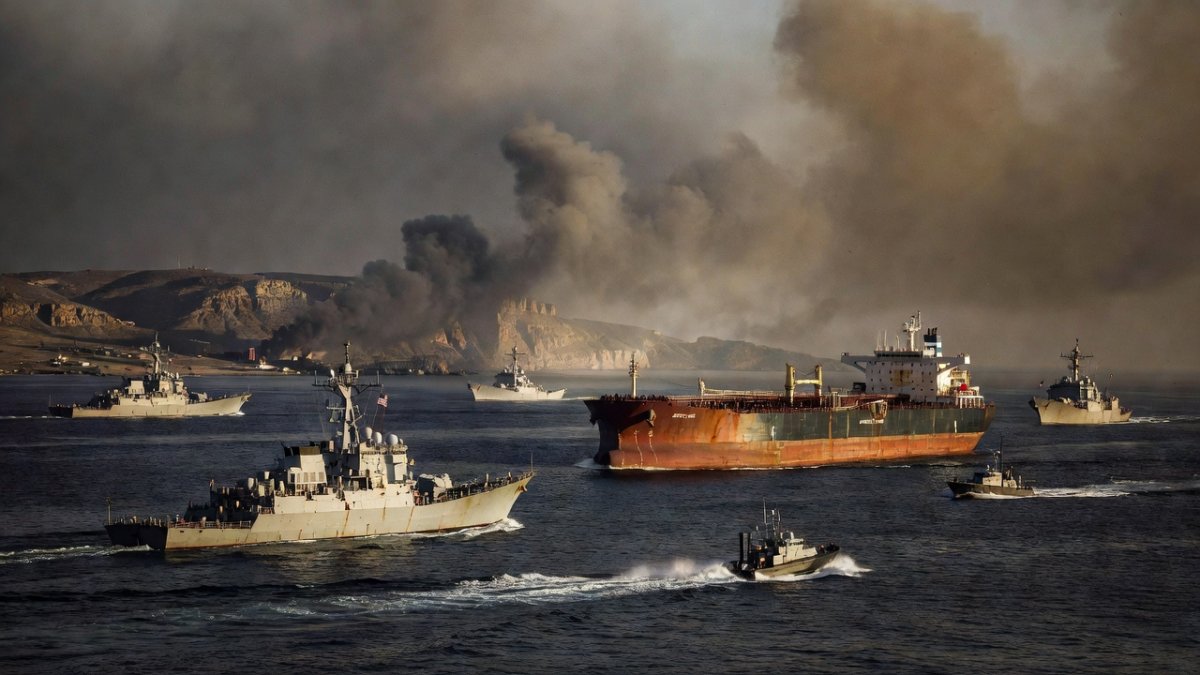
The closure of the Strait of Hormuz by Iran in response to sustained US and Israeli military operations has thrust one of the world's most critical energy arteries into the centre of escalating conflict. According to data from the International Energy Agency, roughly one-fifth of global seaborne oil trade normally passes through this narrow waterway between the Persian Gulf and the Gulf of Oman. For China, the world's largest crude oil importer, the stakes are particularly high: approximately 40 percent of its oil imports transit the strait. Any prolonged disruption directly challenges Beijing's long-standing objective of securing reliable overseas energy supplies while advancing technological self-sufficiency under the Dual Circulation strategy outlined in the 14th Five-Year Plan.
The latest round of hostilities, which entered its sixth consecutive night of US strikes by 17 July 2026, reflects deeper geopolitical tensions. The United States Central Command stated that its operations were designed to degrade Iranian military capabilities, including coastal surveillance, air defence sites, logistics networks and maritime assets. Iran, in turn, has blocked the strait, retaliated against US-linked targets in Oman, Kuwait and Bahrain, and claimed strikes on American positions in Syria. These actions have produced a cascade of regional incidents, from missile interceptions by Jordan to civilian casualties in Iraqi Kurdistan.
Immediate Military Dynamics and Civilian Impact
US forces have conducted strikes near Qeshm Island, Bandar Abbas and the vicinity of the Bushehr nuclear power plant site. Centcom reported hitting dozens of Iranian military targets, while Iranian state media and independent verification, including by the BBC, confirmed damage to civilian infrastructure such as bridges, a train station and an airport. A bridge west of Bandar Abbas in Hormozgan province was among the verified targets. The UN human rights chief, Volker Turk, described deliberate attacks on civilian infrastructure as potential war crimes.
Iran's Islamic Revolutionary Guard Corps responded by targeting US maritime surveillance radar sites in three Gulf Cooperation Council countries and claimed an attack on a US special operations command centre at al-Tanf in Syria near the Jordanian border. Jordanian forces intercepted three Iranian missiles, and eight people were reported killed in Sulaymaniyah in Iraqi Kurdistan, with local authorities attributing the strikes to Iran. Eight drones were also shot down over Erbil. These exchanges illustrate how the conflict is rapidly regionalising, drawing in multiple actors and complicating any efforts at containment.
Casualty figures released by Iranian sources and international monitors indicate at least seven people killed in the latest strikes, bringing the total to 38 dead and more than 400 injured since the current phase of fighting resumed. The human cost adds urgency to diplomatic initiatives, particularly those advanced by actors seeking to prevent further escalation.
US Blockade Tactics and Maritime Disruption
Compounding the closure of the strait, the United States has renewed a naval blockade of Iranian ports that began on Tuesday night. US Marines boarded an oil tanker in the Gulf of Oman, and American forces redirected three commercial vessels attempting to run the blockade. A tanker near Khasab in Oman was hit by an unknown projectile, though the crew was reported safe. These actions echo an earlier US blockade between April and June 2026 that disabled nine ships and redirected more than 140 vessels.
President Trump had previously warned that failure to return to negotiations could result in strikes on Iranian bridges and power plants. The current military campaign appears to combine kinetic strikes with economic pressure through maritime interdiction. From Beijing's perspective, such tactics raise concerns about freedom of navigation, a principle China has consistently emphasised in its own maritime disputes in the South and East China Seas. Any precedent that allows unilateral blockade of critical sea lanes could eventually affect Chinese interests in other regions.
China's Strategic Energy Vulnerability
As the largest buyer of Iranian and broader Middle Eastern crude, China faces immediate risks to its energy security. The International Energy Agency's executive director, Fatih Birol, warned that if the situation does not improve within the next few weeks, global markets could face severe disruption. Brent crude prices are already surging and are expected to surpass $100 per barrel, with analysts suggesting they could exceed $120 if the strait remains closed for an extended period.
Beijing's response has combined public diplomacy with quiet engagement. Chinese Foreign Minister Wang Yi has repeatedly called for the restoration of normal navigation through the strait. Together with his Pakistani counterpart, Wang Yi put forward a five-point proposal that urges an immediate ceasefire, de-escalation, protection of civilian infrastructure, and the resumption of safe maritime traffic. This initiative reflects China's broader foreign policy doctrine of positioning itself as a responsible major power and advocate for multilateral solutions.
Iran's envoy to China has reportedly discussed possible Hormuz-related concessions with Beijing, signalling that Tehran recognises China's leverage as its most important economic partner. At the same time, China maintains diplomatic relations with the United States and has engaged in energy security discussions with Saudi Aramco. These parallel channels illustrate Beijing's hedging strategy: preserving ties with all major parties while protecting its core interests in stable energy flows and Belt and Road Initiative investments across the wider region.
Beijing's Diplomatic Positioning and Mediation Ambitions
China's approach to the current crisis builds on its successful brokering of the 2023 rapprochement between Iran and Saudi Arabia. By maintaining open lines with both Tehran and Washington, Beijing seeks to present itself as a potential mediator rather than a partisan actor. The joint China-Pakistan proposal is carefully framed in the language of the United Nations Charter and emphasises dialogue over confrontation, aligning with Beijing's preference for multilateral institution-building over unilateral military action.
This positioning serves multiple strategic purposes. First, it protects China's substantial Belt and Road investments in ports, pipelines and infrastructure projects stretching from Gwadar in Pakistan to various Gulf and Central Asian nodes. Second, it reinforces Beijing's narrative of offering a non-Western model of international relations based on mutual respect and economic cooperation. Third, it allows China to critique US military operations without directly confronting Washington, thereby avoiding a level of escalation that could damage broader Sino-American economic ties.
The existence of a dedicated Wikipedia page titled "China in the 2026 Iran war" already indicates the extent to which international observers view Beijing's role as pivotal. Chinese diplomats have used this attention to reiterate calls for restraint and warn that further military action could produce second-order effects harmful to global economic recovery.
Regional Repercussions for ASEAN, the EU and the Global South
The conflict's impact extends well beyond the Middle East. For ASEAN nations, many of which are net energy importers, sustained high oil prices threaten inflation, slower growth and increased fiscal pressure. European Union members, already navigating the energy consequences of the Ukraine conflict, face renewed challenges to their diversification efforts. The Global South, including numerous African and Latin American countries, risks being squeezed by higher commodity prices and reduced fiscal space for development projects.
From Beijing's vantage point, these effects reinforce the importance of its Dual Circulation strategy, which seeks to reduce dependence on volatile external markets by boosting domestic innovation and consumption. At the same time, China continues to expand its influence through initiatives such as the Belt and Road and its growing role in institutions like the Shanghai Cooperation Organisation and the BRICS mechanism. The current crisis thus offers Beijing an opportunity to demonstrate that its vision of a multipolar world can deliver stability where unilateral approaches have faltered.
Saudi Arabia's discussions with China on energy security cooperation further illustrate shifting regional alignments. Riyadh appears keen to diversify its partnerships beyond traditional Western allies, creating additional diplomatic space for Beijing to deepen its Gulf engagement without necessarily alienating the United States.
Strategic Calculus: What Each Side Wants and Their Leverage
The United States seeks to reassert deterrence against Iran, prevent Tehran from advancing its nuclear programme, and maintain freedom of navigation on terms favourable to its allies. Washington's leverage rests on its unmatched military projection capabilities, its network of regional bases, and its influence over global financial systems that can enforce sanctions.
Iran aims to survive the current pressure campaign, preserve its regional proxy network, and force the lifting of sanctions by demonstrating the high costs of continued confrontation. Its primary leverage is geographic: control over the Strait of Hormuz and the ability to disrupt energy flows, combined with asymmetric warfare capabilities including missiles, drones and naval mines.
China's objectives are more nuanced. Beijing wants secure energy supplies, the protection of its overseas investments, and the enhancement of its international image as a peacemaker. Its leverage derives from its position as Iran's largest oil customer, its growing economic weight in the Gulf, and its ability to coordinate with partners such as Pakistan and Russia within broader multilateral frameworks. Unlike the United States, China has no desire for regime change in Tehran; it prefers a stable, if constrained, Iranian state that can serve as a node in its Eurasian connectivity projects.
Second-order effects are already visible. The crisis is accelerating global energy transition debates in Europe while pushing Asian economies to accelerate diversification of supply routes, including through pipelines and liquefied natural gas imports. For the Global South, higher energy prices may increase reliance on Chinese development financing, further expanding Beijing's influence.
Longer-Term Implications for China's Foreign Policy Doctrine
The events of July 2026 are likely to reinforce several core elements of Chinese strategic thinking. First, the vulnerability of maritime chokepoints underscores the importance of overland energy corridors such as those developed under the Belt and Road Initiative. Second, the limitations of military power in delivering lasting stability validate Beijing's preference for political solutions and economic statecraft. Third, the crisis highlights the value of maintaining diplomatic relations with all parties, allowing China to remain relevant even as conflict intensifies.
Looking ahead, Chinese policymakers are expected to continue advocating for de-escalation while quietly expanding their regional footprint. This may include enhanced naval presence for protecting commercial shipping, increased investment in alternative energy routes, and further diplomatic initiatives aimed at multilateralising security governance in the Gulf.
The current situation thus represents both risk and opportunity for Beijing. While the immediate economic costs are significant, the conflict also allows China to demonstrate the practical value of its vision of international relations based on sovereignty, non-interference and win-win cooperation. How effectively Beijing navigates this latest Middle East crisis may well shape its global standing for years to come.
The coming weeks will prove decisive. Should the strait remain closed and oil prices continue their upward trajectory, pressure for diplomatic intervention will intensify. In that environment, China's carefully calibrated calls for ceasefire and negotiations may find a more receptive international audience, further elevating Beijing's role in shaping the future security architecture of West Asia.
By Prof. Marcus Chen, Staff Writer
This article was produced with AI-assisted research and editorial support. Reporting is based on sources cited in the article.
What's Your Reaction?
 Like
0
Like
0
 Dislike
0
Dislike
0
 Love
0
Love
0
 Funny
0
Funny
0
 Wow
0
Wow
0
 Sad
0
Sad
0
 Angry
0
Angry
0

World Politics Analyst at Global1.News. Based in Beijing, covering US-China relations, global trade, and geopolitical strategy. Brings deep analytical perspective to the power dynamics shaping international affairs.













Comments (0)