
Zelensky's Sacking of Reformist Defence Minister Sparks Nationwide Protests Across Ukraine
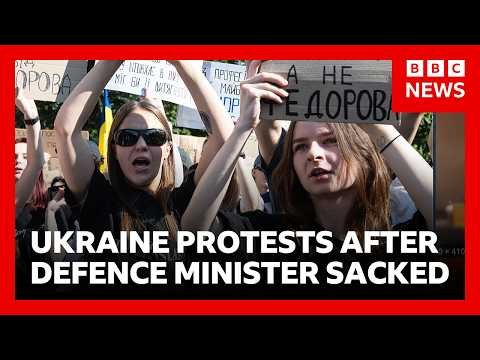
In a recent BBC News report, Ukrainians across the country have taken to the streets in rare public protests after President Volodymyr Zelensky's surprise decision to dismiss his popular Defence Minister Mykhailo Fedorov.
In a recent BBC News report, Ukrainians across the country have taken to the streets in rare public protests after President Volodymyr Zelensky's surprise decision to dismiss his popular Defence Minister Mykhailo Fedorov. The move, announced this week as part of a broader cabinet reshuffle, has triggered an outpouring of anger from civil society and exposed deepening rifts between Ukraine's military leadership and its reformist defence ministry.
Zelensky's Sacking of Reformist Defence Minister Sparks Nationwide Protests Across Ukraine
Kyiv, Ukraine — 17 July 2026 — Thousands of Ukrainians flooded the streets of eleven cities this week in spontaneous protest against President Volodymyr Zelensky's dismissal of Defence Minister Mykhailo Fedorov, a 35-year-old technocrat widely credited with modernising Ukraine's military through drone warfare and cyber operations. The sacking, announced on Thursday, has sparked a political crisis at a critical juncture in the war with Russia, with opposition politicians, soldiers, and civil society leaders condemning the decision as Zelensky's "worst mistake" since taking office.
The Dismissal — A Widening Rift Between Reformers and Military Command
Mykhailo Fedorov, appointed only in January 2026, was dismissed by President Zelensky on 16 July as part of a broader government reshuffle that also saw state oil and gas boss Serhiy Koretsky appointed as Prime Minister following Yuliia Svyrydenko's resignation. The defence minister's removal was reportedly unexpected even within government circles, as Fedorov had been widely regarded as one of the most effective and popular members of Zelensky's cabinet. According to BBC News reporting, the dismissal stemmed from a long-running conflict between Fedorov and Commander-in-Chief Oleksandr Syrskyi. Fedorov had reportedly suggested that Zelensky replace both Syrskyi and Chief of the General Staff Andrii Hnatov — a proposal the president ultimately rejected. Instead, Zelensky chose to remove Fedorov. Speaking at a joint press conference with UK Prime Minister Keir Starmer, Zelensky acknowledged that tensions between the defence ministry and the General Staff had become "systemic", requiring his personal mediation. As acting defence minister, Zelensky appointed Major-General Yevhenii Khmara, the former head of the SBU's Alpha Group, praising his "unprecedented experience with technological combat operations."The underlying friction reflected deeper divisions within Ukraine's wartime leadership structures. Fedorov, drawing from his background in digital transformation, pushed for accelerated integration of commercial technologies into frontline operations, often bypassing slower bureaucratic channels within the General Staff. Syrskyi, by contrast, emphasised conventional command hierarchies honed during earlier phases of the conflict. Zelensky's choice to retain the military commander while removing the civilian minister signals a deliberate recalibration toward established chains of command. Russian observers have noted similar patterns in past Ukrainian leadership adjustments, where internal realignments occasionally preceded shifts in negotiation postures. European diplomats monitoring the situation have expressed quiet concern that such personnel changes could complicate ongoing coordination on weapons deliveries and training programmes coordinated through NATO structures.
The Protests — Unprecedented Public Outcry in Wartime Ukraine
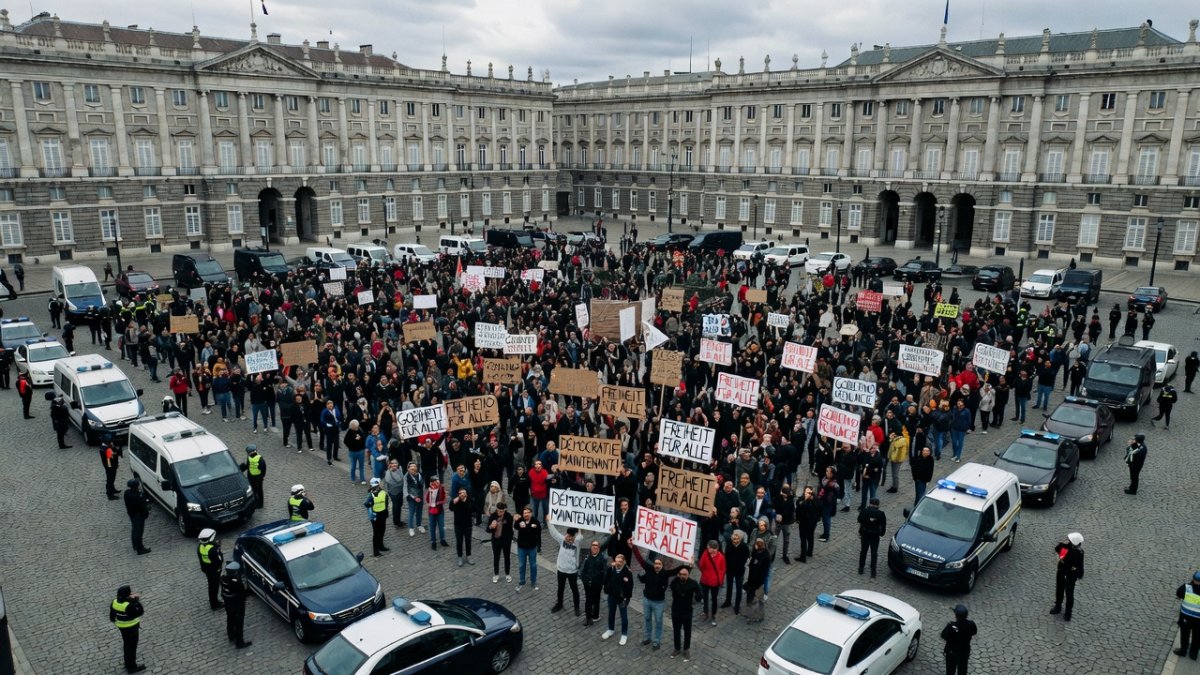
Spontaneous demonstrations erupted across Ukraine within hours of the announcement, with protests reported in Kyiv, Dnipro, Kharkiv, Lutsk, Lviv, Mykolaiv, Odesa, Poltava, Rivne, Ternopil, and Zhytomyr. Such widespread public protest is highly unusual during wartime, when Ukraine has maintained strict limits on public assembly under martial law. In the capital Kyiv, more than a thousand demonstrators gathered near the Office of the President, holding signs reading "Hands off Fedorov", "Stop sabotaging victory!", and "What are you doing, you idiot?" Protesters chanted "Shame!" and demanded Zelensky reverse his decision. Among the demonstrators was Maria Lavrynets, 31, who told the BBC: "I have lots of friends in the military. Lots of them died. I don't want this to go on. We see Fedorov's results. We see the motivation of the soldiers, we should stand for them." The protests reflect a rare moment of public discontent with Zelensky's leadership, which has largely remained unchallenged since the full-scale Russian invasion began in 2022. Analysts suggest the demonstrations represent a growing unease with the president's handling of internal military politics at a time when Ukraine faces sustained Russian offensives across multiple front-line sectors.Local authorities in several cities permitted the gatherings to proceed without immediate dispersal, a departure from earlier enforcement patterns under martial law. In Lviv and Odesa, veterans' organisations joined the crowds, underscoring the breadth of support for Fedorov's initiatives among those directly involved in drone and reconnaissance units. Opposition figures from multiple parties framed the events as evidence that public tolerance for top-down decisions has limits even amid active hostilities. Ukrainian civil society groups have historically mobilised around issues of transparency and reform, and this week's actions echo earlier campaigns that pressured authorities on procurement and anti-corruption measures. The scale of participation across eleven cities indicates coordinated messaging through social media channels that Fedorov himself had helped develop during his earlier ministerial role.
Fedorov's Legacy — A Reformist Technocrat at War
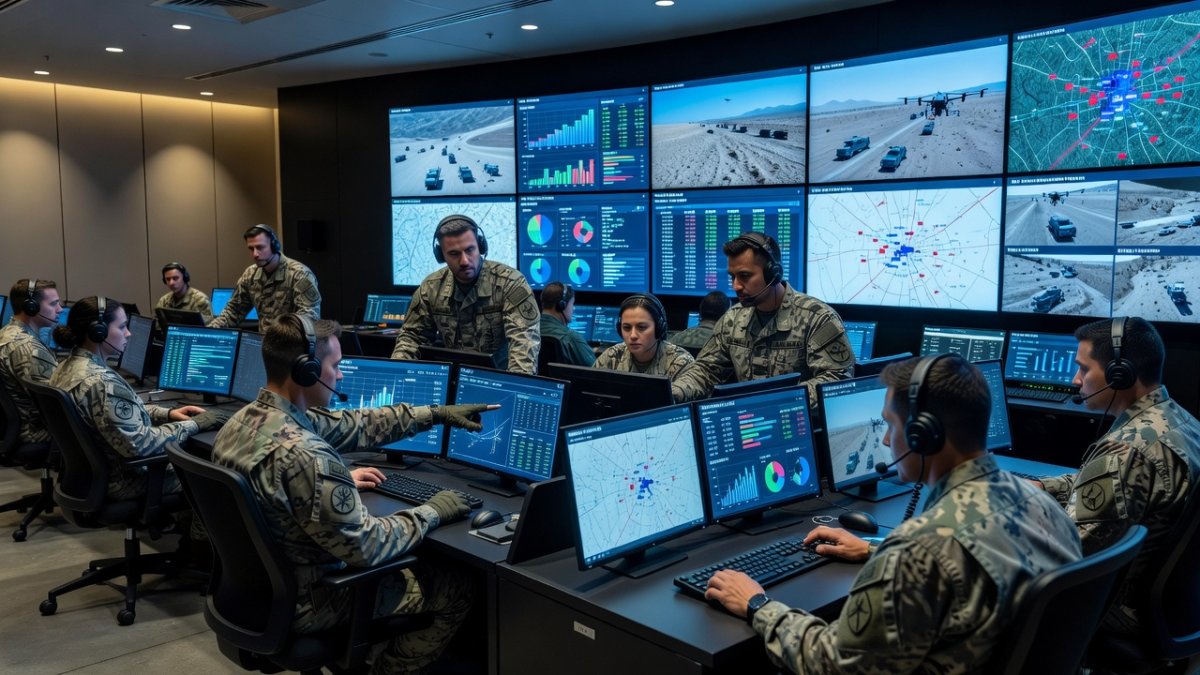
Before his dismissal, Fedorov had completed only six months as defence minister, but his impact had been substantial. A former Minister of Digital Transformation, he was the driving force behind Ukraine's innovative approach to modern warfare. He founded the volunteer IT Army of Ukraine in the early days of Russia's full-scale invasion, launched the Army of Drones fundraising campaign, and established the Defense AI Center A1 to integrate artificial intelligence into military operations. According to official ministry figures, Fedorov's tenure produced 22 key achievements, including restricting Russian access to Starlink satellite communications — a move that caused significant disruption to Russian frontline operations — and dramatically expanding Ukraine's domestic drone production capability. He introduced elements of "gamification" to warfare, designing a system that awarded Ukrainian military units with credits for hitting Russian assets. However, critics note that Fedorov fell short of his pledge to reform Ukraine's troubled conscription system and address the recruitment crisis that has plagued the armed forces. A June 2026 poll by the Kyiv International Institute of Sociology ranked Fedorov among the most trusted public figures in Ukraine, underscoring the gap between his public standing and the president's decision to remove him.Fedorov's approach drew heavily on post-Soviet experiences with rapid technological adaptation, positioning Ukraine as an exporter of battlefield innovations to partner nations. His programmes emphasised open-source collaboration and private-sector involvement, contrasting with more centralised procurement models favoured by traditional defence establishments. Western military analysts have credited these efforts with accelerating Ukraine's asymmetric capabilities against a numerically superior adversary. At the same time, the recruitment shortfalls he inherited highlighted structural challenges rooted in demographic trends and public fatigue after years of conflict. The minister's emphasis on measurable performance metrics through gamified incentives represented an attempt to sustain morale without resorting to coercive measures that risk eroding domestic support.
Resignations and Fallout — The Human Cost of Political Division
The dismissal triggered immediate resignations from within Ukraine's military and government apparatus. Pavlo Yelizarov, the Deputy Commander of the Ukrainian Air Force and a renowned drone unit commander, resigned in protest, calling Fedorov's removal "a great evil for the country's defence capability." Prominent activist and presidential adviser Serhii Sternenko hailed Fedorov as "the best minister of defence in our entire history" and condemned the bureaucratic obstacles that had prevented deeper reform. A tech expert known as "Flash", a former adviser to Fedorov, said being part of the minister's team had provided access to intelligence systems that allowed Ukraine to analyse and predict enemy movements, noting that this capability would now be lost. In parliament, opposition MP Iryna Herashchenko of European Solidarity questioned Zelensky's decision, describing Fedorov as the president's "only sensible appointment." Ukrainian soldier Oleksandr, who joined the army earlier this year because he trusted Fedorov's team, told the BBC: "This is the worst mistake Zelensky has made during his entire presidency. I don't know anyone who supports the decision to replace him. Not within the army, not in society."These departures have created immediate gaps in technical expertise at a moment when Ukraine relies on continuous innovation to offset Russian artillery and manpower advantages. Parliamentary debates have intensified scrutiny of the broader cabinet reshuffle, with questions raised about continuity in arms procurement and international partnerships. Families of serving personnel have voiced particular alarm, citing the personal trust many soldiers placed in Fedorov's public communications and reform promises. The episode illustrates how personnel decisions at the apex of power can reverberate through operational units and civilian networks alike, potentially affecting recruitment pipelines that depend on perceived competence at the ministerial level.
International Reactions — From Moscow to Brussels
The response from Russia was predictably measured but revealing. Kremlin Press Secretary Dmitry Peskov stated that the dismissal would not affect Russia unless the replacement was someone willing to "make the responsible decision" towards a peaceful settlement, adding that Moscow was "monitoring" the situation. The European Union's reaction was notably more concerned. Andrius Kubilius, the European Commissioner for Defence and Space, stated that the announcement came as a surprise and raised concerns, particularly as the EU had only hours earlier negotiated a deal with Ukraine to increase domestic drone production. In Washington, former US Ambassador to Russia Michael McFaul issued a direct appeal to Zelensky urging the reinstatement of Fedorov. Alex Karp, the American billionaire CEO of Palantir Technologies, reportedly sent Fedorov a supportive message and offered him a job, which the former minister declined. The international dimension underscores how Fedorov's reform agenda had positioned Ukraine as a testbed for Western defence technology integration — a trajectory now thrown into uncertainty.NATO officials have refrained from public commentary while privately assessing implications for joint planning cycles. Russian state media have amplified the protests as evidence of internal Ukrainian fractures, though without claiming direct influence over the outcome. Brussels-based diplomats note that the timing coincides with renewed discussions on long-term security guarantees, where ministerial stability factors into confidence-building measures. The episode has prompted some European parliamentarians to call for clearer benchmarks on Ukrainian governance reforms as a condition for further assistance packages.
Analysis — What Zelensky's Decision Means for the War Effort
This dismissal represents a significant gamble by President Zelensky at a critical moment in the war. With Russian forces maintaining pressure across multiple fronts and Ukraine's summer counteroffensive preparations underway, the disruption at the top of the defence ministry could have tangible consequences for battlefield coordination. Analysts suggest that by choosing to retain Commander-in-Chief Syrskyi over Minister Fedorov, Zelensky has signalled a preference for traditional military hierarchy over the kind of rapid, technology-driven innovation that defined Fedorov's approach. The question now is whether Khmara, a security service veteran rather than a defence technologist, can maintain the momentum of Ukraine's drone and cyber warfare programmes. For Moscow, the timing could not be better: internal political discord in Kyiv presents an opportunity that the Kremlin is unlikely to ignore. For Ukraine's Western partners, the episode raises uncomfortable questions about the cohesion of Zelensky's war cabinet and the sustainability of reform in a country fighting for its survival.Power dynamics within the presidential administration appear to have favoured continuity in senior military appointments, reflecting longstanding post-Soviet patterns where civilian oversight of uniformed services remains contested. The coming weeks will test whether the new acting minister can preserve institutional knowledge accumulated under Fedorov while navigating renewed Russian probing actions. Sustained public attention on these personnel matters may also influence parliamentary oversight mechanisms in the months ahead.
By Irina Volkov, Staff Writer
This article was produced with AI-assisted research and editorial support. Reporting is based on sources cited in the article.
What's Your Reaction?
 Like
0
Like
0
 Dislike
0
Dislike
0
 Love
0
Love
0
 Funny
0
Funny
0
 Wow
0
Wow
0
 Sad
0
Sad
0
 Angry
0
Angry
0
Russia/Eastern Europe Correspondent at Global1.News. Covering Russian politics, energy, security, and the shifting dynamics of the post-Soviet space. Provides clear-eyed analysis on one of the world's most opaque regions.









Comments (0)