
New Springtail Species Discovered in Thailand’s Rama IX Forest
Discovery at Rama IX Museum Forest Park On Wednesday, 10 June 2026, Acting National Science Museum director Suwarong Wongsiri announced that a joint team from the National Science Museum, Thaksin University, and Prince of Songkla University identified the new Rama IX Springtail at the Rama IX Museum’s forest park in Pathum Thani province. The species, formally named Alloscopus
Discovery at Rama IX Museum Forest Park
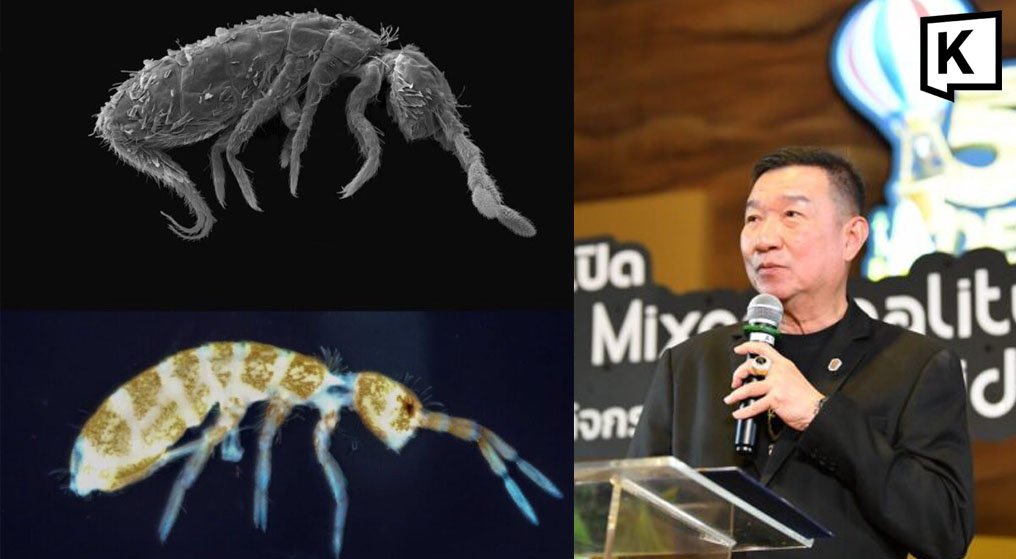
On Wednesday, 10 June 2026, Acting National Science Museum director Suwarong Wongsiri announced that a joint team from the National Science Museum, Thaksin University, and Prince of Songkla University identified the new Rama IX Springtail at the Rama IX Museum’s forest park in Pathum Thani province.
The species, formally named Alloscopus ramani sp. nov., belongs to the subfamily Heteromurinae in the family Orchesellidae and was found only in this single location within Khlong Ha sub-district, Khlong Luang district.
Researchers recorded the insect measuring between 1.1 and 1.4 millimetres, with a slender white body marked by orange-brown bands and distinct eye patches on the head.
Distinguishing Features from Related Species
The Rama IX Springtail closely resembles Alloscopus tetracanthus first described by Börner in 1906, yet differs through the specific arrangement of body hairs that researchers used for identification.
Current data from the National Science Museum team shows the species remains known solely from Pathum Thani province, confirming its status as endemic to this one documented site in Thailand.
Seventeen species in the same genus have been reported worldwide, with seven previously recorded in Thailand before this addition.
Ecological Role Highlighted by Suwarong Wongsiri
Suwarong Wongsiri emphasised that more than 9,000 springtail species exist globally and occupy environments ranging from forest floors in Pathum Thani to volcanic craters and deep cave systems.
He described springtails as ecosystem housekeepers that break down organic matter into soil nutrients while regulating microbes and fungi populations.
The National Science Museum statement noted these organisms form vital links that maintain the food chain cycle in Thai forest habitats near Bangkok.
Link to Thai Royal Heritage and Local Identity
The naming of Alloscopus ramani sp. nov. after the Rama IX Museum connects the discovery directly to the legacy of King Bhumibol Adulyadej in Pathum Thani province.
The forest park surrounding the museum building in Khlong Luang district now gains recognition as the sole known habitat for this endemic insect.
Thai communities in the central region have long valued such green spaces for their connection to national history and everyday environmental stewardship.
Institutional Collaboration Strengthens Research
The partnership among the National Science Museum, Thaksin University in Songkhla, and Prince of Songkla University produced the taxonomic description published through Khaosod English on 10 June 2026.
Suwarong Wongsiri stated that this joint effort expands knowledge of Thailand’s smallest organisms and supports protection of their specific homes in Pathum Thani.
The collaboration demonstrates how Thai academic institutions combine resources to document biodiversity within the country’s central provinces.
Public Exhibition at National Science Museum Complex
The Rama IX Springtail specimen is now displayed in the Hidden Paradise exhibition at the Rama IX Museum inside the National Science Museum complex in Khlong Ha sub-district.
Visitors can view the exhibit from Tuesday to Friday between 09:30 and 15:00, and from 09:30 to 17:00 on weekends and public holidays.
The display allows residents of Bangkok and nearby provinces to observe the 1.1 to 1.4 millimetre insect that researchers identified only weeks earlier.
Importance for Thailand and ASEAN Biodiversity
The discovery reinforces Thailand’s position in documenting unique species that support regional ecosystems shared across ASEAN member states.
Pathum Thani province’s forest park contributes to the broader network of protected green areas that sustain tourism and scientific interest in Southeast Asia.
Suwarong Wongsiri noted that recognising these near-invisible creatures helps Thai society appreciate the biodiversity present in everyday damp ground near major urban centres.
Continued Focus on Local Conservation
Researchers from the three institutions continue to monitor the Rama IX Museum forest park to gather further data on the species found exclusively in this Pathum Thani location.
The National Science Museum encourages visitors to consider the role of springtails when walking through Thai temple grounds or community forests during festivals such as Loy Krathong.
This find serves as a reminder that Thailand’s central provinces hold scientific value that extends beyond the capital region into national environmental planning.
By Ann Srisawat, Staff WriterThis article was produced with AI-assisted research and editorial support. Reporting is based on sources cited in the article.
What's Your Reaction?
 Like
0
Like
0
 Dislike
0
Dislike
0
 Love
0
Love
0
 Funny
0
Funny
0
 Wow
0
Wow
0
 Sad
0
Sad
0
 Angry
0
Angry
0

Southeast Asia Correspondent at Global1.News. Based in Bangkok, covering Thai and Southeast Asian politics, economy, technology, and culture. Deep regional perspective on one of the world's most dynamic regions.















Comments (0)