
Myanmar's Military Government Revives the Myitsone Dam: China's Leverage and the Fragility of Energy Geopolitics in Southeast Asia
Myanmar's Military Government Revives the Myitsone Dam: China's Leverage and the Fragility of Energy Geopolitics in Southeast Asia Historical Context of the Myitsone Dam Agreement The Myitsone dam project originated from an agreement signed in 2006 between Myanmar's previous military junta and Chinese partners. Located at the confluence of the Mali and N'Mai rivers in Kachin St
Historical Context of the Myitsone Dam Agreement
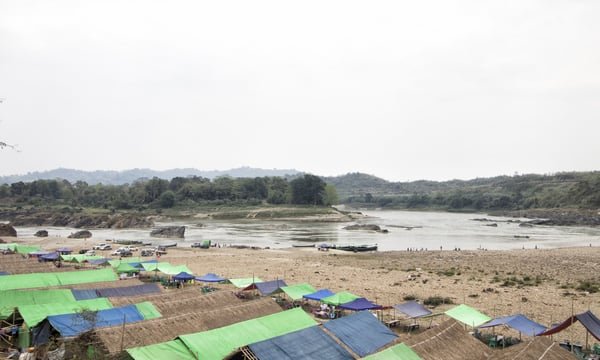
The Myitsone dam project originated from an agreement signed in 2006 between Myanmar's previous military junta and Chinese partners. Located at the confluence of the Mali and N'Mai rivers in Kachin State, the facility was designed to generate substantial hydroelectric power, with reports indicating that approximately 90 percent of the output would be directed toward China. The $3.6 billion initiative reflected early patterns of Chinese infrastructure investment in Myanmar, emphasizing export-oriented energy development over domestic needs.
This arrangement aligned with broader Chinese strategies for securing resource access across its southern periphery. For Myanmar, the project represented a means to attract foreign capital during a period of international isolation, though it quickly generated local concerns over environmental disruption and displacement in the Irrawaddy River basin.
The 2011 Suspension and Its Catalytic Effects
In 2011, President Thein Sein suspended construction, explicitly citing the wishes of the people amid widespread public opposition. The decision halted progress on a project already advanced in its preparatory phases and marked a notable departure from prior junta commitments. This move contributed to a sequence of economic and political reforms that opened Myanmar to greater international engagement in subsequent years.
The suspension underscored the influence of domestic sentiment on infrastructure policy, even under military-backed governance. It also strained relations with Beijing, which had viewed the dam as a key component of its regional energy network. The episode illustrated how localized environmental and social objections could intersect with national-level strategic calculations in Myanmar's evolving political landscape.
Revival Efforts Under the Post-2021 Military Administration
Following the 2021 coup, Myanmar's military government has signaled renewed commitment to the Myitsone project. In April 2024, authorities established a new leadership team responsible for research, technical assessments, and public relations in coordination with the Chinese developer SPIC Yunnan International Power Investment Company. Chief Minister Khet Htein Nan of Kachin State has conducted public meetings since January to build support, reversing his earlier stance against the dam.
Statements from officials, including presidential spokesperson Khaing Khaing Soe, indicate that Min Aung Hlaing has referenced the project in cabinet discussions, suggesting that earlier implementation might have expanded national electricity access. The administration has acknowledged the need to evaluate benefits against negative impacts and to secure broader public consent, though no revised contractual details have been disclosed.
China's Leverage and the Junta's Strategic Calculations
China's sustained advocacy for resumption reflects its interest in completing stalled Belt and Road initiatives along the Myanmar border. The junta's growing dependence on Beijing, particularly for managing conflicts with ethnic armed groups near the frontier, has heightened the importance of accommodating Chinese priorities. Discussions during Min Aung Hlaing's recent state visit to China further embedded the dam within bilateral diplomatic exchanges.
This dynamic reveals the asymmetric nature of the relationship, where Myanmar's military leadership possesses limited room to maneuver on issues of direct concern to Beijing. Resumption of the project appears tied to maintaining productive channels with China amid ongoing internal security challenges.
Connections to Northeast Asian Geopolitics and Korean Interests
Developments surrounding the Myitsone dam extend beyond Southeast Asia into Northeast Asian strategic calculations. China's assertive pursuit of energy infrastructure in Myanmar forms part of a wider pattern that influences how regional powers, including the Republic of Korea, assess their engagement with both Beijing and ASEAN member states. Korean policymakers have historically balanced economic ties with China against diversification efforts through initiatives such as the New Southern Policy, which seeks stronger links with Southeast Asian economies.
Should the dam proceed, it could reinforce Chinese influence over critical river systems and energy flows, potentially affecting Korean companies involved in regional power projects or supply chains that intersect with Myanmar. Historical precedents, such as Korea's navigation of Chinese economic leverage during past inter-Korean tensions, suggest that Seoul will monitor these shifts for implications on its own energy security and diplomatic flexibility in contested border regions.
Security Risks Posed by Ongoing Conflict in Kachin State
Resumption faces substantial obstacles from the Kachin Independence Army, which maintains opposition to the project and has expanded territorial control in northern Myanmar since 2021. Although the immediate dam site remains outside current KIA holdings, renewed hostilities could disrupt construction activities and supply lines. The chief minister's public outreach efforts occur against this backdrop of fluid military realities.
These conditions highlight the vulnerability of large-scale infrastructure to localized armed conflict, particularly in areas where central authority remains contested. Any acceleration of work would require sustained stability that current battlefield trends do not guarantee.
Analytical Implications for Energy Geopolitics
The trajectory of the Myitsone project demonstrates how energy infrastructure decisions in Myanmar serve as proxies for broader power asymmetries involving China. The absence of finalized ownership or operational frameworks leaves open questions about revenue distribution and long-term control. For external observers, including those in Northeast Asia, the case offers insight into the limits of leverage available to governments balancing domestic opposition against external dependencies.
Ultimately, the interplay between junta priorities, Chinese expectations, and ethnic armed group resistance will determine whether the dam advances within the projected eight-to-ten-year timeframe or encounters renewed interruption.
By Prof. David Park, Staff WriterThis article was produced with AI-assisted research and editorial support. Reporting is based on sources cited in the article.
What's Your Reaction?
 Like
0
Like
0
 Dislike
0
Dislike
0
 Love
0
Love
0
 Funny
0
Funny
0
 Wow
0
Wow
0
 Sad
0
Sad
0
 Angry
0
Angry
0

East Asia/Technology Correspondent at Global1.News. Seoul-based voice covering Korean politics, technology, business, and culture. Analyzes how technology and geopolitics intersect across East Asia.














Comments (0)