
Mumbai Concert Death: Alcohol-Energy Drink Mix Risks for Youth
The death of 28-year-old Vrushabh Mahendra Gangurde at a packed techno music event in Mumbai's NSCI Dome has triggered a parallel investigation by the Tardeo Police and the Crime Branch into the lethal combination of alcohol and energy drinks. A 31-year-old woman who attended the same event remains hospitalised in stable condition at Jaslok Hospital after telling investigators
The death of 28-year-old Vrushabh Mahendra Gangurde at a packed techno music event in Mumbai's NSCI Dome has triggered a parallel investigation by the Tardeo Police and the Crime Branch into the lethal combination of alcohol and energy drinks. A 31-year-old woman who attended the same event remains hospitalised in stable condition at Jaslok Hospital after telling investigators she consumed alcohol mixed with energy drinks. No evidence of drug use has been found so far, yet the case has opened a critical public health conversation about binge drinking patterns among India's urban youth.
Mumbai Techno Concert Death: Police Probe Deadly Alcohol-Energy Drink Mix as Urban Youth Binge Drinking Crisis Deepens
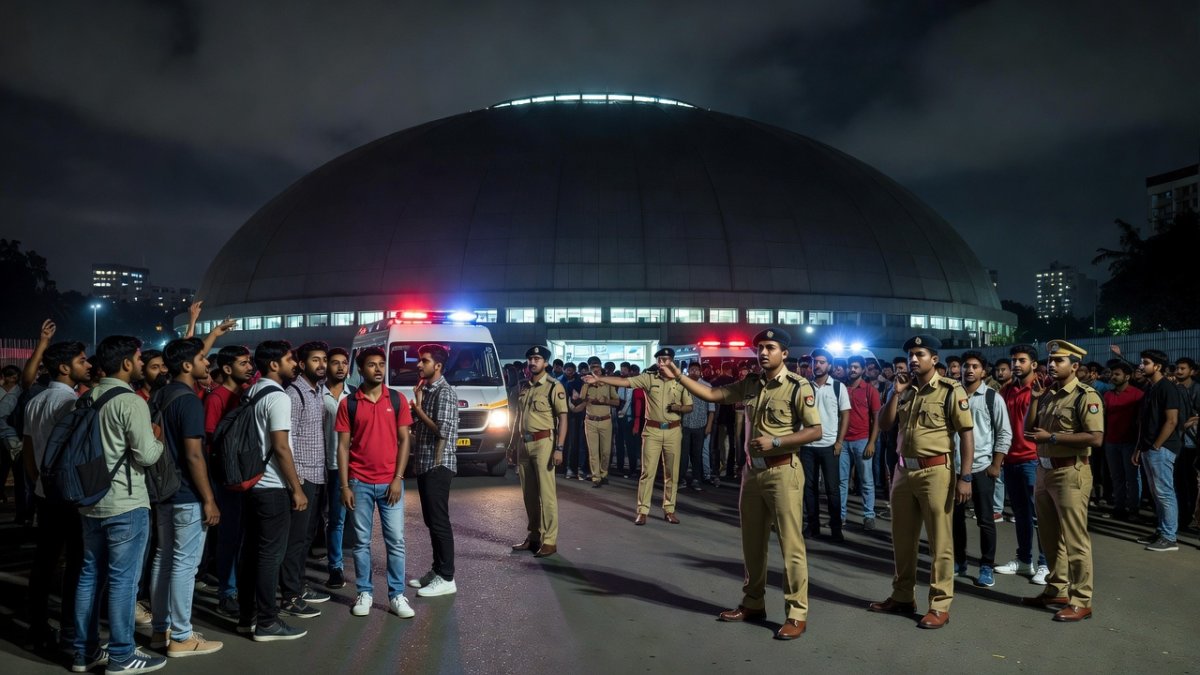
Mumbai, Maharashtra – June 7, 2026 — A 28-year-old man collapsed and died during the Klangkuenstler All Night Long techno event at the NSCI Dome in Worli in the early hours of Sunday, June 7, 2026. Vrushabh Mahendra Gangurde, a resident of Mahim, was declared dead on arrival at Breach Candy Hospital in Malabar Hill. A 31-year-old woman who attended the same OUTWORLD Mumbai event, featuring internationally acclaimed German DJ Klangkuenstler, was admitted to Jaslok Hospital in a stable condition after complaining of complications. She told Tardeo Police she had consumed alcohol along with energy drinks during the event.
Physiological Mechanism: Why Alcohol and Energy Drinks Are a Dangerous Combination
The mixing of alcohol — a central nervous system depressant — with energy drinks high in caffeine creates a well-documented masking effect. Caffeine stimulates the central nervous system, counteracting the sedative effects of alcohol and making individuals feel less intoxicated than they actually are. This false sense of sobriety leads to higher overall alcohol consumption, as the drinker fails to recognise how impaired they have become. The result is a significantly elevated risk of cardiac arrhythmias, severe dehydration, hypertensive crisis, and acute alcohol poisoning.
In Gangurde's case, dehydration compounded by this stimulant-depressant interaction is the leading suspected mechanism under investigation. Prolonged dancing in a crowded indoor venue, combined with inadequate fluid intake and the diuretic effect of both alcohol and caffeine, creates a perfect physiological storm. According to the Indian Council of Medical Research (ICMR), alcohol-induced dehydration can lead to electrolyte imbalances that trigger fatal cardiac events, even in otherwise healthy young adults.
Data on Urban Youth Binge Drinking in India
Studies published by the Ministry of Health and Family Welfare and the National Institute of Mental Health and Neuro-Sciences (NIMHANS) indicate that binge drinking rates among India's 25-34 age group have risen by an estimated 15 to 20 per cent over the past five years. Mumbai, Bengaluru, Delhi, and Pune have reported the sharpest increases, driven by expanding nightlife economies and changing social habits among young professionals in IT, finance, and media sectors.
A 2025 NIMHANS survey of 8,400 urban respondents found that 23 per cent of men and 8 per cent of women in the 25-34 bracket reported consuming more than five standard drinks in a single sitting at least once in the preceding month. The cohort that mixed alcohol with caffeinated beverages was 2.7 times more likely to report symptoms consistent with alcohol poisoning than those who consumed alcohol alone.
Regulatory Gaps: NDPS Act, Maharashtra Excise Rules, and Venue Licensing
India's Narcotic Drugs and Psychotropic Substances (NDPS) Act, 1985, along with the Maharashtra Excise Regulations, governs the sale of alcohol at licensed premises. However, neither framework contains specific provisions addressing the sale of caffeinated alcoholic mixtures — such as pre-mixed energy drink-and-alcohol cocktails that are increasingly common at large-scale music events. Ministry of Health and Family Welfare guidelines recommend a maximum of two standard drinks per day for men and one for women, but these remain advisory rather than enforceable licensing conditions.
Public health experts argue that current licensing conditions for venues such as the NSCI Dome do not mandate on-site medical teams, hydration stations, or crowd-density protocols proportionate to event duration and anticipated alcohol consumption. An all-night techno performance attracting thousands of attendees operates under the same general licensing framework as a two-hour restaurant service. This regulatory gap leaves attendees exposed during prolonged, high-intensity events.
Recurring Pattern: Previous Incidents in Mumbai Nightlife
In April 2026, two MBA students died after attending a comparable music event in Mumbai. Both cases involved extended physical activity on the dance floor, significant alcohol consumption, and delayed medical attention. The recurrence of similar fatalities within a two-month window at licensed venues across Maharashtra signals a systemic failure in harm-reduction standards rather than isolated individual tragedies.
Emergency admissions data from the Brihanmumbai Municipal Corporation (BMC) shows a 12 per cent year-on-year increase in cases involving young adults presenting with alcohol-related cardiac complications at public hospitals. These figures include Breach Candy Hospital, Jaslok Hospital, and KEM Hospital, all of which have reported rising weekend admissions linked to nightlife events.
What This Means for Indian Citizens, Taxpayers, and Healthcare
Each preventable death places additional strain on already stretched public hospital resources. The cost of emergency care, intensive care, investigation by multiple police agencies, and autopsy procedures is borne by the state. For the thousands of young professionals in Mumbai's IT, finance, and media sectors who regularly attend events such as OUTWORLD Mumbai, the incident underscores the urgent need for both personal risk awareness and regulatory reform.
Broader economic trends show Mumbai's night-time economy contributing significantly to the city's GDP, with the hospitality and events sector employing an estimated 450,000 people. Balancing this economic contribution with evidence-based safety standards — mandatory hydration breaks, on-site medical teams with defibrillators, enforceable drink limits, and clear labelling of alcohol-and-energy-drink combinations — is a policy challenge that now demands action from the Maharashtra Excise Department, the Ministry of Health and Family Welfare, and municipal licensing authorities.
Expert Perspectives
Dr. Sanjay Agarwal, head of cardiology at KEM Hospital, Mumbai, told India Today that the combination of alcohol, energy drinks, and sustained physical exertion at high-crowd-density events creates a "triple risk" for young adults with undiagnosed cardiac vulnerabilities. "A person may have a perfectly normal resting ECG and still be at risk when these three factors converge," he said.
Public health researcher Dr. Meena Deshmukh from the Tata Institute of Social Sciences noted that regulatory frameworks have not kept pace with the rapid evolution of nightlife culture in Indian metros. "We are seeing a public health problem that falls between excise policy, health regulation, and urban planning. No single authority takes ownership, and that is costing lives," she stated.
The Bottom Line
The death of Vrushabh Mahendra Gangurde is not an isolated tragedy but a data point in a larger public health trend that current Indian regulatory frameworks are failing to address. With binge drinking rates among young urban Indians rising by 15-20 per cent over five years and alcohol-energy drink combinations becoming a standard feature of nightlife events, the absence of targeted regulations, mandatory venue-level medical protocols, and public awareness campaigns represents a growing gap between India's expanding night-time economy and its duty of care to citizens. Immediate reforms to the NDPS Act licensing conditions and Maharashtra Excise Rules for large-scale music events are no longer optional — they are a matter of preventable loss of life.
— By Dr. Raj Patel, Staff Writer
This article was produced with AI-assisted research and editorial support. Reporting is based on sources cited in the article.
What's Your Reaction?
 Like
0
Like
0
 Dislike
0
Dislike
0
 Love
0
Love
0
 Funny
0
Funny
0
 Wow
0
Wow
0
 Sad
0
Sad
0
 Angry
0
Angry
0

India/South Asia Correspondent at Global1.News. Analytical voice with a background in science and health journalism. Based in New Delhi, covering Indian politics, education, healthcare, technology, and policy. Breaks down complex data into clear, actionable reporting.











Comments (0)