
Georgia's Parliament Speaker Reinforces Commitment to BRI and the Middle Corridor as China-Europe Connectivity Takes Center Stage
In the CGTN exclusive interview aired on June 12, 2026, Georgian Parliament Speaker Shalva Papuashvili elaborated on his country's longstanding position as a bridge between continents during discussions that highlighted ongoing cooperation with Chinese partners. Georgia occupies a pivotal geographic position between the Black Sea and the Caspian Sea which has historically facil
Georgia's Historic Role as a Eurasian Connector
Georgia's strategic location continues to attract attention from multiple global actors seeking reliable transit options across challenging terrains. The country's leadership has consistently emphasized how historical trade corridors inform contemporary policy decisions focused on infrastructure modernization. Political debates within Tbilisi often center on balancing sovereignty with the economic benefits derived from international connectivity projects. Alignment with China's 14th Five-Year Plan provides a framework for coordinated planning that prioritizes sustainable growth and technological integration. High-level signaling through visits by figures such as Zhao Leji underscores the mutual recognition of Georgia's role in advancing shared connectivity goals. This diplomatic engagement helps mitigate risks associated with regional instability by promoting dialogue and joint initiatives. Georgian officials view these partnerships as essential for elevating the nation's profile in global supply chains.
Further examination reveals how Georgia's internal consensus on connectivity serves as a stabilizing factor amid fluctuating international relations. Policymakers integrate lessons from the ancient Silk Road to justify investments in modern transport networks that span the Black Sea and Caspian Sea basins. National strategy documents increasingly reference alignment with external plans like China's 14th Five-Year Plan to attract technical expertise and funding. The role of Zhao Leji in these discussions highlights the importance of legislative exchanges in building trust and operational frameworks. Georgia positions itself as an indispensable node that enhances China's outreach to European markets through diversified pathways. This positioning requires careful navigation of domestic political dynamics to maintain broad support for such initiatives. Ultimately these efforts reinforce Georgia's identity as a reliable Eurasian connector with implications for regional stability and economic integration.
The Middle Corridor Gains Strategic Prominence
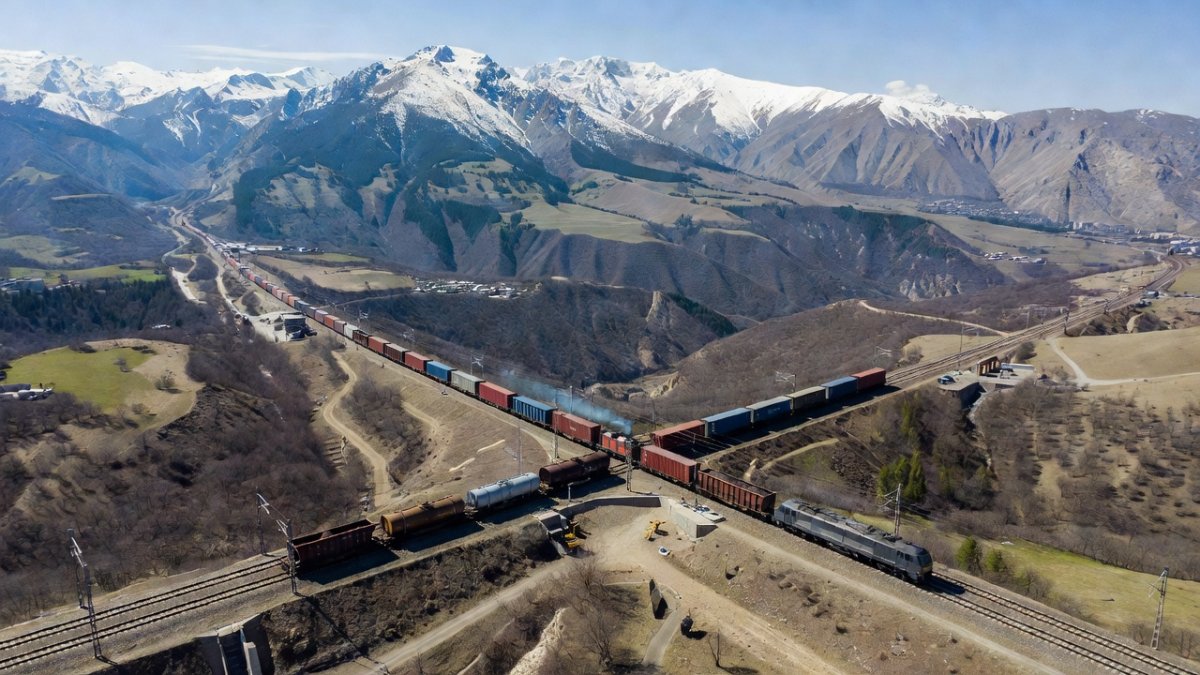
The Trans-Caspian International Transport Route commonly known as the Middle Corridor has emerged as a focal point in discussions between Georgian and Chinese officials seeking resilient trade pathways. This route offers viable alternatives to the northern corridors through Russia and the southern routes affected by Red Sea disruptions providing enhanced security for cargo movements. Coordination through China's NDRC plays a central role in aligning infrastructure standards and operational protocols across participating nations. China's broader diversification strategy benefits from these developments as it reduces reliance on singular transit options vulnerable to geopolitical tensions. Available data on transit times indicate that the Middle Corridor can achieve competitive logistics performance when supported by upgraded facilities and streamlined customs procedures. Georgian Parliament Speaker Shalva Papuashvili has noted in recent interviews the potential for this corridor to transform regional economies through increased throughput.
Strategic calculations by Chinese authorities underscore the value of the Middle Corridor in mitigating risks associated with concentrated trade routes. The NDRC has facilitated technical dialogues aimed at harmonizing regulations and improving interoperability among the involved countries. Diversification efforts gain momentum as the corridor demonstrates capacity to handle growing volumes of goods between Asia and Europe. Transit time advantages become particularly evident during periods of instability elsewhere allowing shippers to maintain supply chain continuity. Georgia's involvement strengthens the corridor's viability by providing critical land bridges that complement maritime segments. This configuration aligns with China's long-term goals of building redundant pathways that enhance overall resilience. The prominence of the Middle Corridor thus reflects a convergence of interests that prioritizes practical connectivity over exclusive alignments.
Logistics competitiveness along the Middle Corridor continues to improve through targeted policy measures and infrastructure planning coordinated at multiple levels. China's diversification strategy explicitly incorporates such routes to safeguard against external shocks that could disrupt established flows. Georgian authorities have engaged actively with NDRC counterparts to address bottlenecks and promote seamless operations. The resulting framework supports broader Eurasian integration that benefits developing economies along the pathway. Speaker Papuashvili's comments in the CGTN interview reinforced Georgia's readiness to contribute to these enhancements through legislative and regulatory support. This collaborative dynamic illustrates how middle corridors serve as strategic assets in an era of shifting global trade patterns.
Infrastructure Foundations: The Baku-Tbilisi-Kars Railway
The Baku-Tbilisi-Kars Railway stands as a cornerstone infrastructure project linking Azerbaijan Georgia and Turkey while facilitating broader connectivity across the South Caucasus. Recent meetings in Beijing during May 2026 addressed capacity upgrades necessary to handle increased freight volumes along this vital artery. Discussions included advancements in signaling systems designed to improve safety and operational efficiency across the network. Interoperability standards remain a key challenge given the varying rail gauges employed by different countries along the route requiring technical harmonization efforts. Financing for these enhancements draws from a mix of multilateral development banks and bilateral arrangements guided by MOFCOM principles on sustainable debt profiles.
Capacity upgrades discussed in the May 2026 Beijing sessions focused on modernizing track conditions and expanding terminal facilities to accommodate growing demand. MOFCOM guidelines emphasize careful assessment of debt sustainability ensuring that participating nations like Georgia can manage obligations without compromising sovereignty. Signaling system improvements promise to reduce transit delays and enhance coordination between operators from multiple jurisdictions. Interoperability across different rail gauges necessitates ongoing technical cooperation that draws on expertise from Chinese and regional partners. The financing mix incorporates contributions from international institutions alongside targeted bilateral support to distribute risks appropriately. Georgia views these investments as strategic steps toward integrating more deeply into Eurasian supply chains.
Operational enhancements to the Baku-Tbilisi-Kars Railway reflect broader Chinese priorities for resilient and efficient transport networks spanning multiple continents. MOFCOM oversight helps shape financing structures that prioritize viability and minimize exposure to external economic fluctuations. Gauge interoperability issues require phased solutions that balance technical feasibility with cost considerations across borders. The resulting infrastructure supports China's diversification of trade routes by providing reliable overland options less susceptible to maritime disruptions. Georgian parliamentary perspectives as articulated by Speaker Papuashvili highlight the project's role in national development strategies. This approach fosters incremental progress that builds confidence among stakeholders and encourages further collaboration.
Balancing EU Candidate Status with Chinese Economic Ties
Georgia received EU candidate status in 2023 which introduced new regulatory alignment requirements that influence its approach to international partnerships including those with China. Officials pursue a dual-track diplomacy that maintains engagement with European institutions while advancing economic cooperation under the Belt and Road Initiative. European monitoring of Chinese infrastructure projects adds layers of scrutiny particularly concerning procurement rules and environmental norms that must be reconciled with national priorities. Georgia's messaging strategy emphasizes transparency and mutual benefit to navigate these overlapping frameworks effectively. Speaker Shalva Papuashvili has underscored in public statements the need for balanced policies that safeguard sovereignty amid external pressures.
Regulatory alignment with EU requirements necessitates ongoing adjustments to Georgia's legal and administrative systems which in turn shape interactions with Chinese investors. Dual-track diplomacy allows Georgian leaders to leverage economic opportunities from BRI projects while progressing toward European integration milestones. Monitoring mechanisms established by European bodies focus on ensuring that infrastructure initiatives meet established procurement and environmental benchmarks. Georgia communicates its commitment to these standards through proactive engagement with all partners involved. The resulting framework supports diversified economic growth that draws on both Chinese capital and European regulatory expertise. Parliamentary debates often center on how best to integrate these elements without compromising core national interests.
Georgia's messaging strategy plays a crucial role in reassuring European partners about the compatibility of Chinese economic ties with EU aspirations. Environmental norms and procurement rules receive particular attention in project planning to align with candidate status obligations. Chinese counterparts through entities like MOFCOM demonstrate flexibility in adapting to these regulatory contexts. The overall balance contributes to Georgia's positioning as a constructive actor in Eurasian affairs. Speaker Papuashvili's interventions highlight the pragmatic considerations guiding these policies amid evolving international expectations. This careful navigation fosters an environment where economic ties can flourish alongside institutional reforms.
Regional Competition in the South Caucasus
Overlapping interests of China the EU Turkey and Russia create a dynamic competitive landscape in the South Caucasus where each actor deploys distinct instruments to advance its objectives. China emphasizes infrastructure financing and trade facilitation through BRI frameworks while the EU focuses on regulatory convergence and institutional support. Turkey leverages geographic proximity and energy linkages whereas Russia maintains influence through historical ties and security arrangements. These varied approaches affect Armenia and Azerbaijan by shaping their own connectivity options and alliance choices. Chinese diplomacy consistently frames the Middle Corridor as a public good that delivers shared prosperity rather than exclusive advantage.
Effects on Armenia and Azerbaijan demonstrate how corridor initiatives can alter economic trajectories and political alignments in the South Caucasus. Chinese framing of these projects as public goods helps build broader acceptance among local populations and governments. EU instruments such as association agreements provide alternative pathways that complement rather than contradict BRI engagements. Turkish involvement adds momentum through cross-border energy and transport links that enhance overall corridor viability. Russian strategies often emphasize bilateral security pacts that influence regional stability calculations. Georgian parliamentary discussions frequently address these intersecting influences to formulate coherent national responses.
Chinese diplomacy in the region prioritizes narratives of mutual benefit to differentiate its approach from more conditional offerings by other powers. Domestic debates in Georgia serve as a barometer for public sentiment regarding the balance of external influences. Armenia and Azerbaijan navigate these currents by selectively engaging with partners that align with their specific development needs. Georgian officials including Speaker Papuashvili advocate for policies that harness these dynamics for national advancement. Regional competition thus acts as a catalyst for improved connectivity infrastructure and policy frameworks. Sustained engagement across multiple fronts helps mitigate risks of dominance by any single external player.
BRI Phase 2 and 'Small but Beautiful' Projects
The evolution of the Belt and Road Initiative toward Phase 2 emphasizes targeted infrastructure over expansive mega-projects reflecting lessons from earlier implementation phases. MOFCOM prioritization now favors initiatives that deliver measurable local impacts while aligning with host country capacities. This shift incorporates insights gained from previous BRI experiences to enhance sustainability and reduce political friction. Replicability for Global South countries becomes a key consideration as smaller-scale interventions prove more adaptable to diverse contexts. Managing political resistance through these measured approaches allows for smoother project rollout and stronger community buy-in.
Lessons learned from earlier BRI phases inform current guidelines that stress environmental assessments and debt sustainability under MOFCOM frameworks. Smaller interventions enable quicker implementation and visible results that build public confidence in international cooperation. Replicability across Global South settings arises from the modular nature of these projects which can be scaled according to local needs. Political resistance diminishes when projects avoid perceptions of overreach or external imposition. Georgia benefits from this evolution by accessing support for specific connectivity enhancements that complement larger corridor ambitions.
Targeted projects under BRI Phase 2 facilitate technology transfer and capacity building that empower local institutions in partner countries. MOFCOM guidelines ensure that financing remains aligned with realistic economic projections to prevent future complications. Global South nations gain from replicable models that address immediate infrastructure gaps without requiring massive upfront commitments. Georgia's experience demonstrates the value of integrating these smaller initiatives into national development plans. The overall framework supports China's interest in cultivating enduring economic linkages across Eurasia. Parliamentary engagement in Georgia reinforces domestic ownership of these collaborative efforts.
Broader Implications for Global Trade and Supply Chains
Supply chain diversification emerges as a primary outcome of enhanced Middle Corridor operations which offer alternatives that strengthen global trade resilience. Developing nations along these routes serve as instructive case studies for how connectivity investments can catalyze broader economic transformation. Technology transfer in logistics sectors accelerates as Chinese expertise combines with regional knowledge to modernize operations. Customs modernization efforts supported through bilateral channels improve efficiency and reduce delays at border crossings. Georgia's role in these dynamics positions it as a contributor to more robust international supply networks.
Developing nations benefit from observing Georgia's navigation of connectivity partnerships which provide models for balancing external engagements with internal priorities. Technology transfer initiatives focus on logistics innovations that enhance competitiveness in global markets. Customs modernization reduces transaction costs and fosters greater integration into international value chains. Sovereignty considerations remain paramount as nations evaluate the terms of capital inflows associated with infrastructure projects. Supply chain diversification gains traction as corridors like the Middle Corridor demonstrate reliability under varied conditions.
Global supply chains stand to gain from the cumulative effects of corridor enhancements that distribute risks across multiple pathways. Case studies from developing nations highlight successful strategies for leveraging Chinese cooperation while advancing domestic reforms. Logistics technology transfers build local capabilities that sustain long-term operational improvements. Customs procedures evolve through collaborative frameworks that align with international best practices. Georgia exemplifies how middle powers can influence these processes through strategic positioning. Ultimately these trends point toward a more interconnected and resilient global economy shaped by diversified connectivity initiatives.
By Prof. Marcus Chen, Staff Writer
This article was produced with AI-assisted research and editorial support. Reporting is based on sources cited in the article.
What's Your Reaction?
 Like
0
Like
0
 Dislike
0
Dislike
0
 Love
0
Love
0
 Funny
0
Funny
0
 Wow
0
Wow
0
 Sad
0
Sad
0
 Angry
0
Angry
0

World Politics Analyst at Global1.News. Based in Beijing, covering US-China relations, global trade, and geopolitical strategy. Brings deep analytical perspective to the power dynamics shaping international affairs.













Comments (0)