
Moscow Drone Attack: UK Sends 150,000 Drones in 752m Aid
**Keywords:** Ukraine war, Moscow drone attack, UK defence aid, Treasury ERA loan, Russian oil crisis, Ramstein Contact Group, Ministry of Defence, British public opinion Aerial assault — scale of the attack Thick black smoke blanketed southern Moscow on 18 June 2026 after nearly 200 Ukrainian drones struck the Kapotnya oil refinery for the second time in a week. Moscow Mayor S
**Keywords:** Ukraine war, Moscow drone attack, UK defence aid, Treasury ERA loan, Russian oil crisis, Ramstein Contact Group, Ministry of Defence, British public opinion
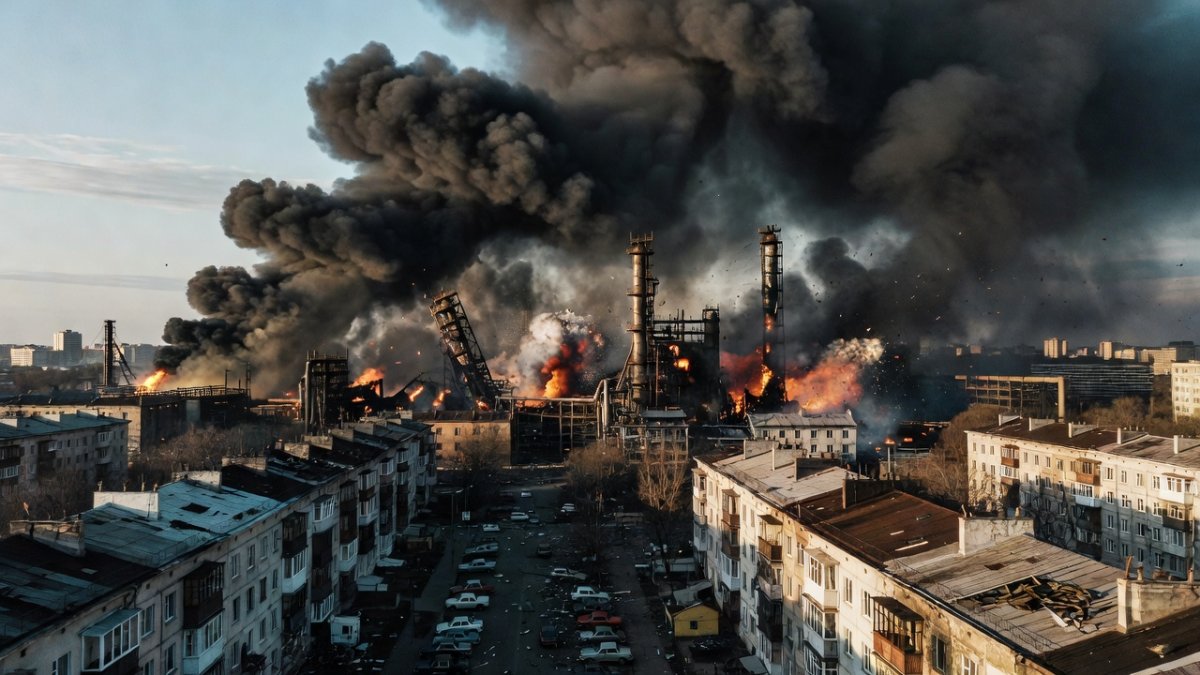 Thick black smoke blanketed southern Moscow on 18 June 2026 after nearly 200 Ukrainian drones struck the Kapotnya oil refinery for the second time in a week. Moscow Mayor Sergei Sobyanin confirmed the unprecedented scale of the attack, which forced the temporary closure of Sheremetyevo International Airport and triggered evacuations across affected districts. Residents reported "oil rain" falling on nearby streets as fires burned through the night, painting an apocalyptic scene over a city that Vladimir Putin once promised would never see war.
The strike marked the largest Ukrainian drone operation against the Russian capital since February 2022. Official Russian statements recorded 187 drones reaching the target zone, overwhelming local air defences. Kapotnya, one of Moscow’s largest refining facilities, processes 12 million tonnes of crude annually. Its repeated targeting has already cut output by an estimated 40 percent this month. The resulting smoke plume stretched 40 kilometres, forcing the closure of three major roads and the evacuation of 12,000 residents from the Maryino and Lyublino districts.
For British observers the images carry direct resonance. The Ministry of Defence has long warned that sustained pressure on Russian energy infrastructure accelerates Moscow’s economic strain. RUSI analysts note that each successful strike on refining capacity reduces Russia’s ability to finance its war effort by hundreds of millions of dollars per week. The human cost remains stark: more than one million casualties have been recorded across both sides since the full-scale invasion began.
Thick black smoke blanketed southern Moscow on 18 June 2026 after nearly 200 Ukrainian drones struck the Kapotnya oil refinery for the second time in a week. Moscow Mayor Sergei Sobyanin confirmed the unprecedented scale of the attack, which forced the temporary closure of Sheremetyevo International Airport and triggered evacuations across affected districts. Residents reported "oil rain" falling on nearby streets as fires burned through the night, painting an apocalyptic scene over a city that Vladimir Putin once promised would never see war.
The strike marked the largest Ukrainian drone operation against the Russian capital since February 2022. Official Russian statements recorded 187 drones reaching the target zone, overwhelming local air defences. Kapotnya, one of Moscow’s largest refining facilities, processes 12 million tonnes of crude annually. Its repeated targeting has already cut output by an estimated 40 percent this month. The resulting smoke plume stretched 40 kilometres, forcing the closure of three major roads and the evacuation of 12,000 residents from the Maryino and Lyublino districts.
For British observers the images carry direct resonance. The Ministry of Defence has long warned that sustained pressure on Russian energy infrastructure accelerates Moscow’s economic strain. RUSI analysts note that each successful strike on refining capacity reduces Russia’s ability to finance its war effort by hundreds of millions of dollars per week. The human cost remains stark: more than one million casualties have been recorded across both sides since the full-scale invasion began.
Aerial assault — scale of the attack
Thick black smoke blanketed southern Moscow on 18 June 2026 after nearly 200 Ukrainian drones struck the Kapotnya oil refinery for the second time in a week. Moscow Mayor Sergei Sobyanin confirmed the unprecedented scale of the attack, which forced the temporary closure of Sheremetyevo International Airport and triggered evacuations across affected districts. Residents reported "oil rain" falling on nearby streets as fires burned through the night, painting an apocalyptic scene over a city that Vladimir Putin once promised would never see war.
The strike marked the largest Ukrainian drone operation against the Russian capital since February 2022. Official Russian statements recorded 187 drones reaching the target zone, overwhelming local air defences. Kapotnya, one of Moscow’s largest refining facilities, processes 12 million tonnes of crude annually. Its repeated targeting has already cut output by an estimated 40 percent this month. The resulting smoke plume stretched 40 kilometres, forcing the closure of three major roads and the evacuation of 12,000 residents from the Maryino and Lyublino districts.
For British observers the images carry direct resonance. The Ministry of Defence has long warned that sustained pressure on Russian energy infrastructure accelerates Moscow’s economic strain. RUSI analysts note that each successful strike on refining capacity reduces Russia’s ability to finance its war effort by hundreds of millions of dollars per week. The human cost remains stark: more than one million casualties have been recorded across both sides since the full-scale invasion began.
The Ramstein response — UK £752m package details
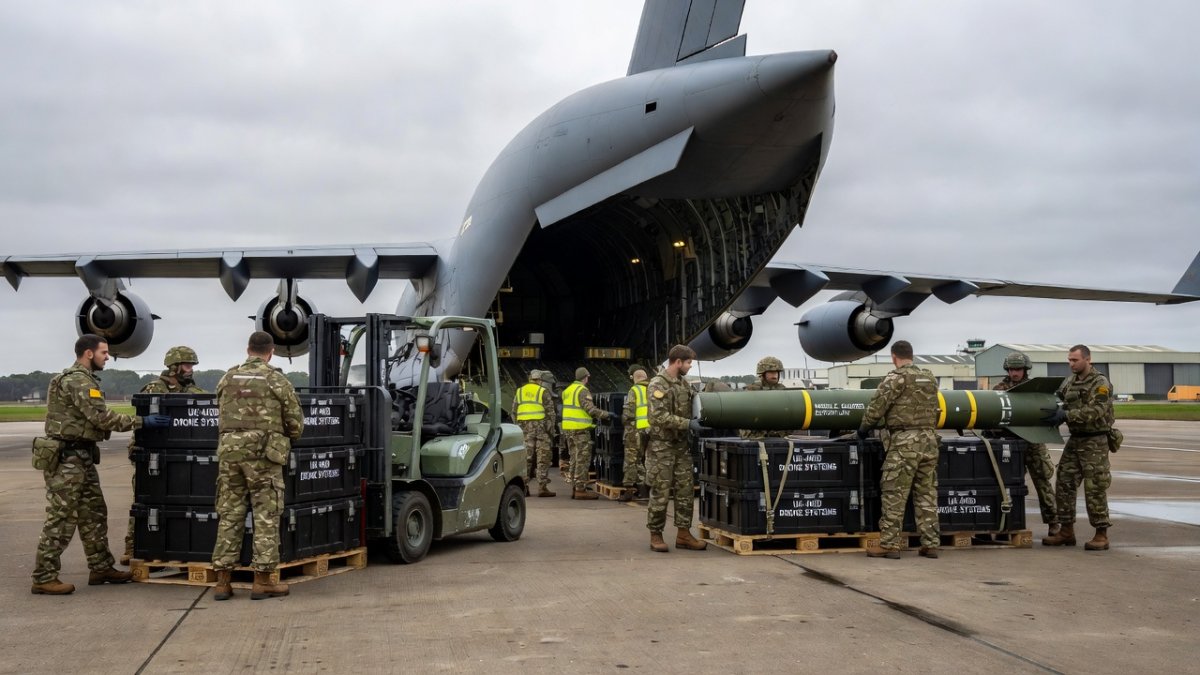
Western allies meeting at the Ramstein Contact Group in Brussels on 18 June announced a fresh $1 billion support tranche. The United Kingdom’s share totals £752 million, delivered through the Ministry of Defence and drawn from the Treasury’s Extraordinary Revenue Acceleration facility. The package comprises 150,000 drones, 350 air-defence missiles and associated radar systems destined for Ukrainian forces within eight weeks. Defence Secretary John Healey confirmed the numbers during a joint statement with NATO Secretary General Mark Rutte. The drones, manufactured under contracts awarded to firms in the North West and West Midlands, will begin shipping from RAF Brize Norton by the end of June. Missile deliveries will be coordinated through the NATO Support and Procurement Agency in Luxembourg. The timing is deliberate. With Russian forces attempting to regroup after the loss of the Kapotnya facility, the new systems are intended to maintain Ukrainian pressure on supply lines. Ministry of Defence sources indicate the radar component will enhance detection of Iranian-supplied Shahed drones, a threat that has grown markedly since March. British personnel will provide training at the Joint Expeditionary Force headquarters in Suffolk.Treasury strategy — ERA loan mechanism
The £752 million commitment is financed through the Treasury’s £2.26 billion Extraordinary Revenue Acceleration loan, itself funded by interest earned on immobilised Russian central-bank assets held in Belgium and France. Chancellor Rachel Reeves authorised the drawdown on 17 June following legal clearance from the Attorney General’s Office. This mechanism allows the United Kingdom to support Ukraine without adding to domestic borrowing. The Treasury has ring-fenced the funds so that repayments flow directly from sanctioned assets rather than UK taxpayers. Officials estimate the loan will generate £180 million in annual interest for the ERA facility, sufficient to sustain similar packages into 2027. The approach has drawn quiet approval from the Office for Budget Responsibility, which views it as fiscally neutral. It also aligns with G7 commitments made at the 2024 summit in Puglia. Treasury briefings emphasise that the strategy avoids direct seizure of principal, thereby reducing legal risk while still delivering tangible military effect.What This Means for the UK — defence industry and opinion
Contracts for the 150,000 drones have already been allocated to BAE Systems facilities in Preston and to smaller suppliers in the West Midlands. The Ministry of Defence expects these orders to sustain 2,400 jobs through 2027. In the North West, union representatives report renewed confidence after years of uncertainty at the Warton site. Public opinion remains broadly supportive. A YouGov poll published on 17 June found 58 percent of British voters favour continued military aid, though concern over cost-of-living pressures persists in the North East and South Wales. Focus groups conducted by the same organisation show that voters distinguish between humanitarian assistance and direct military spending, with the latter receiving stronger backing when tied to British manufacturing. Energy security considerations also feature. The Home Office is monitoring potential hybrid threats to UK critical infrastructure, particularly liquefied natural gas terminals at Milford Haven and the Isle of Grain. Officials note that any further disruption to Russian refining capacity could indirectly affect global diesel prices, with knock-on effects for hauliers across the Midlands.
Russia’s fuel crisis — importing and rationing
Russia, the world’s third-largest oil producer, has become a net fuel importer for the first time in decades. The Kapotnya outage has compounded existing shortfalls, prompting the Kremlin to arrange emergency sea-borne deliveries from India and China. Domestic queues have formed in 14 regions, with petrol rationing introduced in Belgorod and Kursk oblasts. The economic consequences are immediate. Diesel prices in European Russia rose 23 percent between 10 and 18 June. Independent economists at the Gaidar Institute calculate that sustained strikes on refining infrastructure could reduce Moscow’s war budget by up to 15 percent by September. The rouble has already depreciated 4 percent against the dollar since the first Kapotnya attack last week. For British households the linkage is indirect but real. Higher global diesel costs feed into supermarket supply chains and agricultural fuel bills. The Department for Energy Security and Net Zero continues to model scenarios in which Russian export restrictions push Brent crude above $95 a barrel by autumn.Implications for British Security — hybrid threats and NATO
RUSI analysts argue that the pattern of Ukrainian strikes demonstrates the vulnerability of concentrated energy assets to low-cost drones. The Home Office has accordingly increased protective security assessments for UK oil terminals and power stations. Classified guidance issued to critical national infrastructure operators on 16 June recommends enhanced drone-detection capabilities at 17 priority sites. NATO’s eastern flank remains the immediate focus. The Ministry of Defence has confirmed that additional RAF Typhoons will rotate through Estonia later this month as part of the alliance’s enhanced vigilance measures. Officials stress that the UK package does not alter Britain’s own force posture but does reinforce collective deterrence. Hybrid risks extend beyond energy. The National Cyber Security Centre has raised the threat level for transport and logistics networks following reports of increased Russian reconnaissance activity around UK ports. Ministers are expected to update Parliament on these assessments before the summer recess.Zelenskyy’s diplomatic push — sovereignty and talks
President Zelenskyy used the aftermath of the Moscow strike to renew calls for negotiations, stating that “it is time the war ended.” His office has sought fresh diplomatic engagement from both Washington and European capitals, while insisting that any settlement must preserve Ukrainian sovereignty and territorial integrity. The Foreign Office has reiterated its position that the United Kingdom will not press Kyiv into concessions. Foreign Secretary David Lammy spoke with Ukrainian counterpart Dmytro Kuleba on 18 June, confirming continued political support alongside the military package. Downing Street sources indicate that Prime Minister Keir Starmer will raise the issue at the forthcoming European Political Community summit in Copenhagen. British diplomats remain cautious about timelines. They note that Russian battlefield losses and domestic fuel shortages may eventually alter Moscow’s calculus, yet no immediate breakthrough is anticipated. The emphasis remains on enabling Ukraine to negotiate from a position of strength.The Bottom Line — What Comes Next
The 18 June attack and the British response crystallise a new phase in the conflict. Ukraine has demonstrated the capacity to strike deep into Russian territory with growing precision. The United Kingdom has matched that pressure with targeted, fiscally ring-fenced support that also sustains domestic industry. Attention now turns to whether Russia can restore refining capacity before winter heating demand peaks. For British citizens the consequences will appear in fuel prices, manufacturing employment and the broader trajectory of European security. The Ministry of Defence and Treasury have signalled that further packages remain available should the strategic situation require them. The war’s economic and military dynamics are shifting in real time; the UK’s calibrated involvement continues to track those changes. By Erica Thornton, Staff WriterThis article was produced with AI-assisted research and editorial support. Reporting is based on sources cited in the article.
What's Your Reaction?
 Like
0
Like
0
 Dislike
0
Dislike
0
 Love
0
Love
0
 Funny
0
Funny
0
 Wow
0
Wow
0
 Sad
0
Sad
0
 Angry
0
Angry
0

Erica Thornton
US Politics and Policy Correspondent at Global1.News. Based in Washington DC, covering American politics, policy, elections, and the courts. Knows how the system works and tells you what it actually means.











Comments (0)