
Russia Fuel Crisis Threatens Harvest as Refinery Strikes Hit Farms
Russian agriculture now faces an acute threat as Ukrainian strikes on domestic oil refineries have ignited widespread fuel shortages that are already disrupting planting schedules and harvest operations across key grain-producing regions.
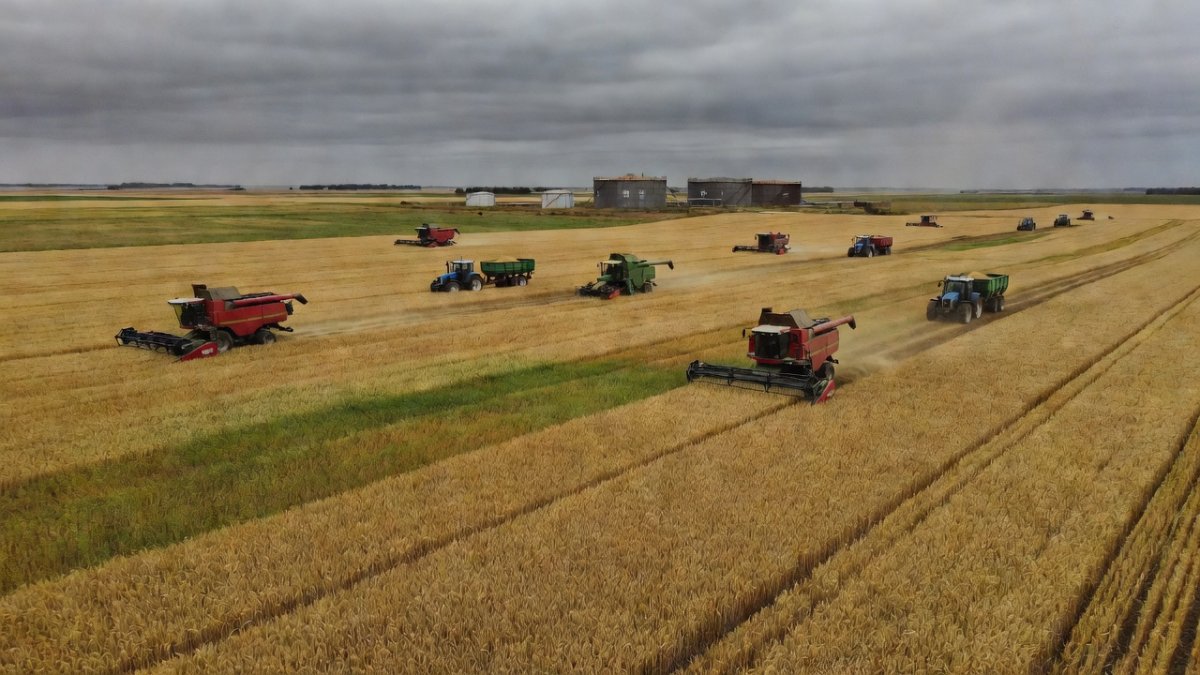
Russian agriculture now faces an acute threat as Ukrainian strikes on domestic oil refineries have ignited widespread fuel shortages that are already disrupting planting schedules and harvest operations across key grain-producing regions. What began as targeted energy infrastructure attacks has rapidly evolved into a systemic crisis, forcing farmers to confront soaring diesel costs and logistical bottlenecks at the worst possible moment in the agricultural calendar. Government efforts to prioritize fuel deliveries have so far failed to fully insulate the sector from these mounting pressures.
Russia Fuel Crisis Threatens Harvest as Refinery Strikes Hit Farms
Moscow, Russia — The ripple effects of refinery disruptions have now reached Russia’s vast farmlands, where fuel scarcity is colliding with weather challenges and export constraints to jeopardize this season’s grain output and long-term food security.
Fuel Shortages Strain Russian Farms Amid Refinery Attacks
Ukrainian strikes on oil refineries have triggered nationwide fuel shortages that now directly threaten planting and harvesting cycles. Agriculture Minister Oksana Lut described the situation as containing “rough patches” that persist despite earlier government interventions. The shortages have forced many operators to confront higher costs and delayed field work at a critical time of year. These disruptions have exposed the fragile interdependence between Russia’s energy infrastructure and its agricultural backbone, where even brief interruptions in diesel supply can cascade into missed planting windows and reduced yields. Regional reports indicate that transport companies serving rural areas are rationing fuel, leaving some cooperatives unable to move equipment between fields in a timely manner.
Putin’s Directive on Fuel Delivery Schedules
Last month President Vladimir Putin ordered strict fuel delivery schedules specifically for agricultural enterprises. The directive aimed to shield farms from market volatility by mandating prioritized allocations through state channels. Implementation has proven uneven, with reports indicating that supplies have not reached all intended recipients on time. In practice, the centralized distribution system has encountered bottlenecks at regional depots, where competing demands from industrial users have diluted the intended priority for farmers. Smaller operators in remote districts have been particularly affected, as paperwork requirements and allocation quotas create additional layers of delay.
Minister Lut Details Sector Difficulties
Oksana Lut, speaking this week, acknowledged ongoing problems in the agricultural sector while urging producers to accelerate the shift toward hybrid and natural-gas-powered machinery. Her remarks highlighted both weather-related setbacks and fuel-access issues as compounding factors. The ministry has not released updated delivery statistics since the directive was issued. This reticence has fueled speculation among analysts that the true scale of the shortfall may be larger than officially admitted, prompting some regional governors to seek emergency imports from neighboring CSTO partners.
Harvest Progress Falls Behind Schedule
Russian farmers have so far harvested 21 million metric tons of grain. Field operations remain 2.5 million hectares behind schedule, representing roughly 12 percent of the sown area. Southern Russia has experienced harvest delays of up to two weeks, with cold spring temperatures and prolonged rains adding further pressure on timelines. These cumulative setbacks threaten to compress the remaining harvest window, raising the risk that late-season crops may be left vulnerable to early autumn frosts. Agronomists note that the combination of fuel scarcity and adverse weather has already reduced daily harvesting capacity in several oblasts by as much as 15 percent.
Uneven Burden on Large and Small Producers
Large agricultural holdings entered the current period with substantial fuel reserves already stockpiled. Smaller farms, lacking similar buffers, have been compelled to purchase diesel on the spot market at sharply elevated prices. This disparity has widened the competitive gap between industrial-scale operations and family-run enterprises across multiple regions. The resulting market distortion favors vertically integrated companies that can absorb higher input costs, while independent producers face the prospect of reduced margins or even insolvency if prices remain elevated through the autumn.
In the Central Black Earth region and Volga district, spot-market diesel has climbed to 78 rubles per liter against the 52-ruble subsidized rate still available to priority state contractors. Rosstat data for Q2 show a 37 percent year-on-year rise in small-farm insolvencies in Voronezh and Saratov oblasts, with 1,240 holdings liquidated or absorbed since March. Analysts at the Institute for Agricultural Market Studies note that these transfers are accelerating consolidation: the five largest agro-holdings now control 28 percent of sown area in the affected districts, up from 19 percent in 2022.
Sea of Azov Shipping Limits Affect Grain Exports
Ukrainian attacks on shipping vessels prompted Russian authorities to impose restrictions on movements through the Sea of Azov. The waterway accounts for approximately one quarter of Russia’s grain export capacity. Reduced throughput has already contributed to upward pressure on global wheat prices in recent trading sessions. Port operators in the region report that vessel queues have lengthened, forcing exporters to reroute shipments through more distant Black Sea terminals at higher logistical expense. These constraints are expected to tighten further if security conditions do not improve.
Benchmark Black Sea wheat futures have risen 14 percent since the Azov restrictions took effect, reaching $248 per tonne on the FOB Novorossiysk basis according to SovEcon. Rerouting via the Kerch Strait and Caucasus ports adds an estimated $18–22 per tonne in freight and insurance, while shipments to Egypt and Turkey—the largest buyers—have fallen 19 percent month-on-month. Turkish Grain Board tenders now include explicit clauses allowing substitution from Romanian or Bulgarian origins if Russian volumes are delayed beyond contractual windows.
Broader Energy and Economic Consequences
The combination of refinery disruptions, export constraints, and uneven fuel distribution points to deeper vulnerabilities in Russia’s energy-agriculture linkage. Officials in the Defense Ministry and the Foreign Ministry have framed the shipping restrictions as necessary security measures, while trading partners in the European Union and CSTO member states monitor price volatility. For ordinary Russian consumers and regional economies dependent on stable grain flows, the current pressures risk translating into higher food costs in the months ahead. Economists warn that sustained fuel inflation could feed into broader consumer price indices, particularly in rural districts where transport costs already constitute a significant share of household budgets.
Defense Ministry allocations for 2024 now exceed 6.8 trillion rubles, crowding out capital repairs at refineries already under Western sanctions that restrict access to catalysts and specialized steel. Rosneft and Gazprom Neft have postponed 11 scheduled maintenance turnarounds this year. The resulting supply squeeze has pushed the food component of the CPI to 9.4 percent year-on-year in July, with bread and cereal prices rising fastest in non-black-earth regions. Rural governors in Orel and Tambov have quietly requested additional Interior Ministry deployments ahead of the autumn sowing season amid reports of localized protests over fuel queues.
Calls for Equipment Modernization
Minister Lut has repeatedly encouraged farmers to adopt hybrid-engine and natural-gas-powered equipment as a longer-term hedge against diesel volatility. The proposal aligns with broader Kremlin efforts to diversify energy use in strategic sectors. Adoption rates remain modest, however, given the capital requirements involved for smaller operators. Without targeted subsidies or leasing programs, the transition is likely to remain confined to larger holdings that already possess the financial flexibility to invest in new technology.
By Irina Volkov, Staff WriterThis article was produced with AI-assisted research and editorial support. Reporting is based on sources cited in the article.
What's Your Reaction?
 Like
0
Like
0
 Dislike
0
Dislike
0
 Love
0
Love
0
 Funny
0
Funny
0
 Wow
0
Wow
0
 Sad
0
Sad
0
 Angry
0
Angry
0

Russia/Eastern Europe Correspondent at Global1.News. Covering Russian politics, energy, security, and the shifting dynamics of the post-Soviet space. Provides clear-eyed analysis on one of the world's most opaque regions.













Comments (0)