
US Strike on Darkhovin Nuclear Plant Intensifies Broader Conflict with Iran
The United States has struck Iran's under-construction Darkhovin nuclear plant in Khuzestan province as part of the eighth straight night of attacks, after the June ceasefire collapsed on July 8. With the Strait of Hormuz effectively closed, Brent crude above $92 per barrel, and casualties mounting on both sides, the US-Iran confrontation threatens to reshape Gulf security dynamics. Gulf states hedge their bets between Washington and Beijing as Washington seeks to degrade IRGC capabilities while Tehran demonstrates its nuclear programme cannot be bombed into submission.
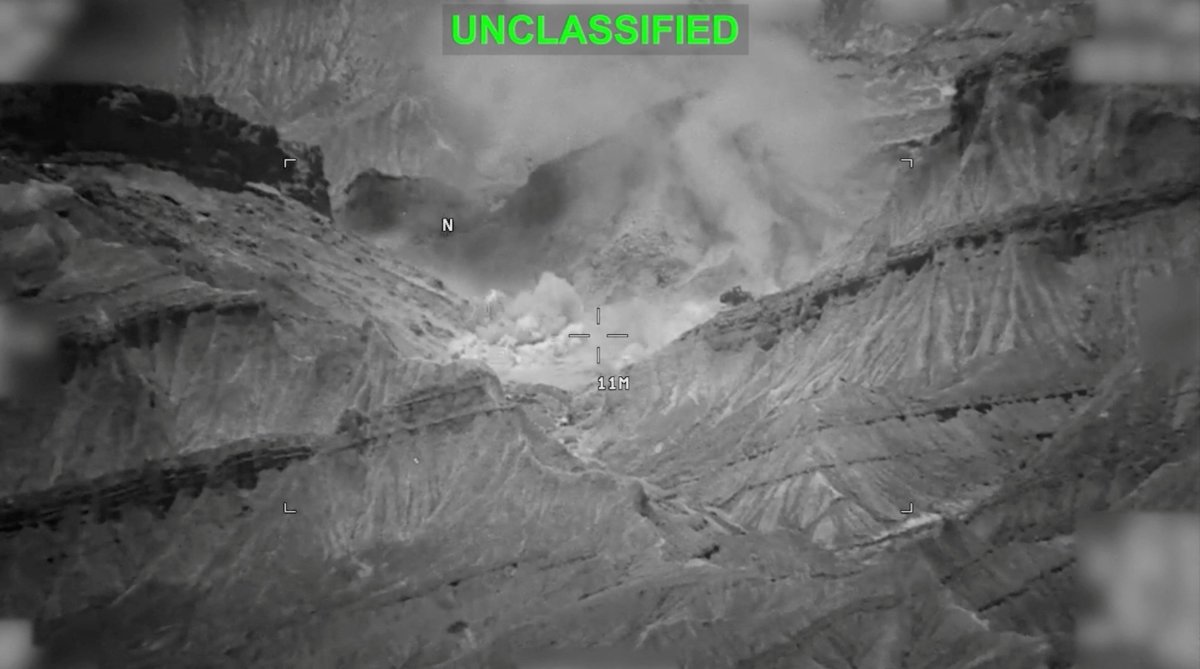
The Darkhovin Nuclear Strike
The United States carried out attacks on the site of the under-construction Darkhovin nuclear power plant in Iran's southwestern Khuzestan province. Construction of the facility began in 2022. Iran's Atomic Energy Organization condemned the strike through Mehr news agency, describing it as a violation of international law. The action forms part of the eighth successive night of US operations that also targeted coastal surveillance and air defence facilities.
Darkhovin represents one of Iran's planned nuclear power projects outside the more widely discussed Bushehr facility. Strikes on such sites carry risks of radioactive release and long-term environmental damage, though Iranian officials have not yet released detailed assessments of the physical impact.
The targeting of Darkhovin fits into a longer pattern of US-Iran nuclear friction that stretches back to the 2015 JCPOA and Washington's 2018 withdrawal. Prior episodes, including the 2020 killing of Qasem Soleimani, showed how nuclear infrastructure can quickly become entangled with broader deterrence calculations. Carnegie Middle East Center analysts note that strikes on civilian nuclear sites risk accelerating Iran's enrichment decisions rather than constraining them.
Strategically, Washington seeks to degrade Tehran's ability to sustain a latent nuclear breakout while signalling resolve to Gulf partners. Tehran, by contrast, appears determined to demonstrate that its nuclear programme cannot be bombed into submission. Second-order effects include renewed pressure on IAEA inspectors and possible acceleration of covert enrichment activities at sites such as Natanz and Fordow.
Collapse of the Ceasefire and Escalation Timeline
A preliminary deal to end hostilities was reached in June. On 8 July, President Trump declared the agreement over. Since that announcement, the United States and Iran have exchanged strikes on critical infrastructure. Washington reimposed its blockade of Iranian ports, while Tehran declared the Strait of Hormuz closed. The sequence has produced eight consecutive nights of US air operations aimed at degrading Iran's capacity to threaten commercial shipping.
The collapse occurred less than a month after the initial ceasefire took shape. Each side accuses the other of violating the terms, with Iran describing the memorandum of understanding as effectively suspended.
Historical precedent shows that US-Iran de-escalation windows have repeatedly narrowed after brief lulls. The 2025-2026 war cycle echoes earlier rounds in 2019-2020, when tanker attacks and proxy strikes followed the US maximum-pressure campaign. International Crisis Group reports indicate that both capitals entered the June talks with maximalist demands that left little margin for enforcement disputes.
Washington's core objective remains restoring credible deterrence after the Jordan casualties, while Tehran aims to impose asymmetric costs that force a negotiated lifting of the renewed blockade. Domestic economic strain inside Iran, with inflation above 35 percent and rial depreciation accelerating, limits the regime's tolerance for prolonged confrontation yet also raises the political price of appearing weak.
Strait of Hormuz and Energy Security Implications
Iran's declaration that the Strait of Hormuz is closed directly affects roughly one-fifth of global oil trade. The Islamic Revolutionary Guard Corps reported that two vessels ignored warnings and suffered an accident while attempting transit. These developments have prompted immediate concerns among energy importers in Asia and Europe about supply disruptions and price volatility.
The reimposition of the US port blockade compounds the pressure on Iranian oil exports. Shipping companies are reassessing routes, and some Gulf producers are evaluating alternative export terminals outside the strait. The situation remains fluid, with enforcement measures still being clarified by both sides.
Closure mechanics involve layered IRGC naval assets, including fast-attack boats and anti-ship missiles positioned along the 21-mile-wide chokepoint. Brent crude has already spiked above $92 per barrel, with Asian refiners in South Korea and India facing the sharpest exposure given their heavy reliance on Gulf crude. Chatham House energy analysts estimate that a sustained 30-day closure could add 0.8-1.2 percentage points to global inflation.
Second-order market effects include accelerated drawdowns from strategic petroleum reserves in Japan and China, alongside renewed interest in longer-haul LNG routes that bypass the strait entirely. Saudi Arabia and the UAE have quietly activated contingency plans to shift some exports through the East-West pipeline to Yanbu, illustrating their hedging between US security guarantees and continued commercial ties with Beijing.
US-Iran Military Calculus and Casualties
US Central Command stated that the latest strikes targeted IRGC units responsible for the attack that killed two American troops in Jordan on the preceding Friday. American officials have reported a total of 16 military personnel killed since the escalation intensified. Iranian health ministry figures indicate at least 50 people killed and more than 500 injured in US strikes between 27 June and 18 July.
Washington's stated objective is to reduce Iran's ability to project force through the strait and against regional shipping. Tehran, for its part, has conducted its own strikes on infrastructure, including a Kuwaiti electricity and water plant hit for the second time in two days. Both sides appear to be calibrating operations to impose costs while avoiding an all-out conventional war.
Deeper analysis reveals Washington's intent to degrade IRGC naval and air-defence nodes without triggering a wider regional war that would draw in Hezbollah or Iraqi militias at scale. Tehran's calculus centres on preserving enough retaliatory capacity to deter further escalation while testing the limits of US domestic political tolerance. Casualty breakdowns show the majority of Iranian deaths concentrated in Khuzestan and Bushehr coastal facilities, according to local hospital reports cited by Iranian state media.
Israel's parallel operations against Iranian-linked targets in Syria have added another layer of complexity, raising the risk that miscalculation could expand the conflict horizontally. Both sides continue to signal through third-party channels that they seek a controlled exchange rather than decisive victory.
Gulf State Reactions and GCC Position
The Gulf Cooperation Council has accused Tehran of targeting civilian infrastructure following the repeated strikes on the Kuwaiti power and water facility. Kuwaiti officials confirmed the damage but have not detailed the extent of outages. Jordanian authorities denied reports that the US embassy in Amman requested evacuation of Aqaba airport and seaport, despite the embassy citing a specific and credible threat.
Saudi Arabia and the United Arab Emirates have so far avoided direct involvement while reinforcing their own air defences. These states continue to balance security cooperation with Washington against the need to maintain stable energy revenues and avoid becoming direct targets.
Gulf hedging strategies have intensified. Riyadh and Abu Dhabi have increased quiet economic engagement with China even as they host additional US air-defence assets. This dual-track approach reflects lessons from 2019's Abqaiq attacks, when Gulf states discovered the limits of relying solely on Washington for protection.
Public sentiment across the GCC remains wary of entanglement, with Kuwaiti and Bahraini officials particularly concerned about domestic stability should Iranian missile or proxy retaliation intensify. Energy revenue calculations now factor in higher risk premiums that could reach $15-20 per barrel if Hormuz disruptions persist.
Regional Implications and What Comes Next
The renewed fighting risks drawing in additional actors across the Levant and the Arabian Peninsula. Hezbollah and Hamas maintain close ties with Iran, while Turkey watches developments along its southern border with concern. The strikes on a nuclear-related site introduce a new layer of uncertainty regarding Iran's nuclear programme and potential IAEA access.
Further escalation could accelerate arms acquisitions by Gulf states and deepen Sunni-Shia geopolitical competition. Energy markets are already pricing in higher risk premiums, and any sustained closure of the strait would affect global inflation and growth trajectories.
Proxy network dynamics suggest Hezbollah may increase harassment along the Israel-Lebanon frontier to divert Israeli attention, while Iraqi militias could resume attacks on US positions if Tehran signals approval. Turkey's muted response so far masks Ankara's calculation that prolonged instability could strengthen Kurdish groups along its border.
Longer-term, the episode is likely to reinforce Gulf states' pursuit of diversified security partnerships, including expanded Chinese and European arms deals, while Iran's domestic economic pressures may constrain the regime's ability to sustain high-tempo operations beyond the coming weeks.
Great Power Dynamics
Russia and China maintain diplomatic and economic channels with Tehran. Moscow has historically supplied military equipment to Iran, while Beijing remains the largest purchaser of Iranian crude. Neither power has indicated willingness to intervene militarily, yet both have called for restraint to protect their own regional interests.
Washington's actions occur against the backdrop of great-power competition in the Middle East. Beijing's mediation role in earlier Saudi-Iran talks has been sidelined, and Moscow's focus remains on Ukraine. The current trajectory suggests that external powers will continue to exert influence primarily through diplomatic statements and selective economic support rather than direct involvement.
China's exposure is particularly acute: it imported roughly 1.1 million barrels per day of Iranian oil in the first half of 2025, much of it now at risk. Beijing has therefore quietly urged de-escalation through back channels while avoiding any public break with Washington. Russia's leverage is more limited, centred on spare parts and diplomatic cover at the UN.
Neither power appears prepared to trade its broader relationship with the United States for deeper entanglement in a conflict whose outcome remains uncertain. This restraint reinforces the bilateral character of the current US-Iran confrontation.
By Malik Hassan, Staff Writer
This article was produced with AI-assisted research and editorial support. Reporting is based on sources cited in the article.
What's Your Reaction?
 Like
0
Like
0
 Dislike
0
Dislike
0
 Love
0
Love
0
 Funny
0
Funny
0
 Wow
0
Wow
0
 Sad
0
Sad
0
 Angry
0
Angry
0

Middle East Correspondent at Global1.News. Based in Beirut, covering politics, conflict, energy, and society across the Middle East. Brings context and depth to a region often reduced to headlines.












Comments (0)