
Lebanon's Aoun Meets Trump: Hezbollah Disarmament Plan
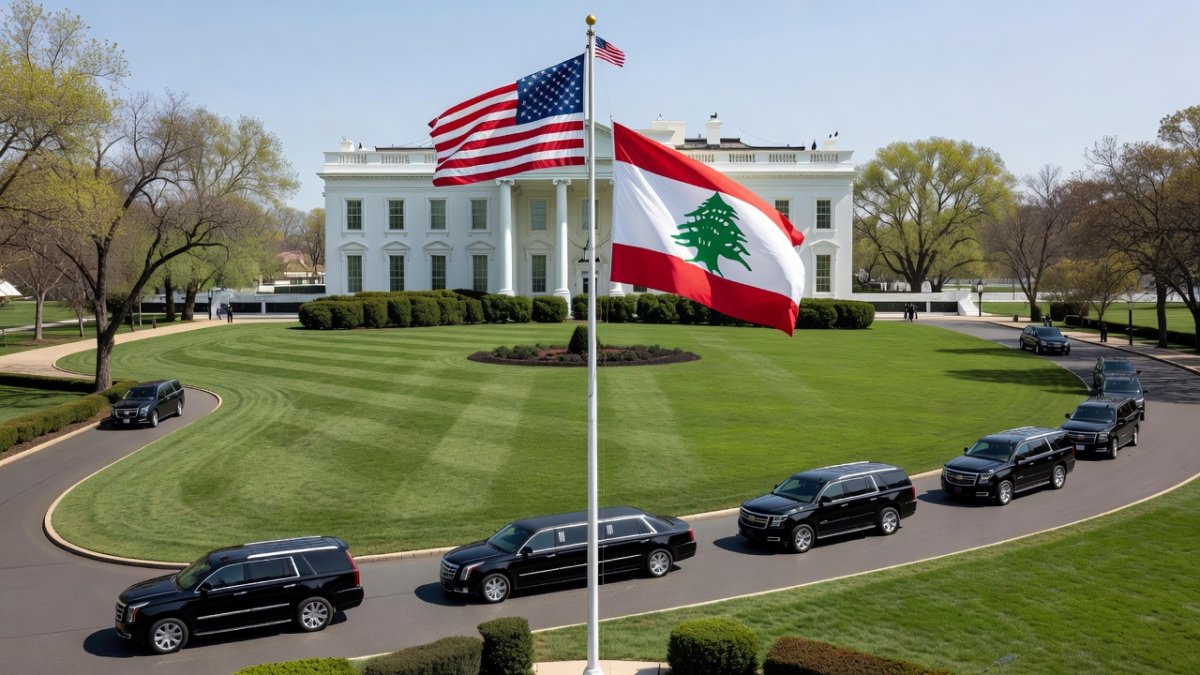
Lebanese President Joseph Aoun arrived in Washington this weekend for a landmark diplomatic mission that could reshape Lebanon’s relations with the United States and the wider region. The former army commander, elected in 2025 after years of political paralysis, carries an ambitious plan to disarm Hezbollah, restore state authority, and unlock economic support from the Trump administration. His meetings with President Donald Trump and Secretary of State Marco Rubio represent
Lebanese President Joseph Aoun arrived in Washington this weekend for a landmark diplomatic mission that could reshape Lebanon’s relations with the United States and the wider region. The former army commander, elected in 2025 after years of political paralysis, carries an ambitious plan to disarm Hezbollah, restore state authority, and unlock economic support from the Trump administration. His meetings with President Donald Trump and Secretary of State Marco Rubio represent the first official Lebanese presidential visit to the White House since 2009.
Joseph Aoun Meets Trump: Lebanon's Bid to Disarm Hezbollah and Secure US Support
Beirut, Lebanon – July 19, 2026 — Article continues...
Arrival in Washington Signals New Chapter
Lebanese President Joseph Aoun touched down in Washington on July 19, 2026, marking the first official visit by a Lebanese head of state to the White House since 2009. The former Lebanese Armed Forces commander, who became the country’s 14th president in 2025, will meet President Donald Trump on July 21 and Secretary of State Marco Rubio on July 20. Aoun carries a detailed plan to disarm Hezbollah and secure Israel’s withdrawal from remaining Lebanese territory.
Lebanese President Joseph Aoun’s arrival in Washington marks a pivotal diplomatic reset after years of isolation. Aoun is scheduled to meet U.S. Secretary of State Marco Rubio on Sunday to discuss immediate security coordination and economic stabilization packages, followed by a Tuesday Oval Office session with President Trump focused on bilateral military aid and regional de-escalation. Speaking to Al Arabiya ahead of the trip, Aoun expressed optimism that the meetings would yield “positive outcomes” for Lebanon’s sovereignty and reconstruction. This visit represents the first official presidential trip to Washington since Michel Suleiman’s 2009 engagement, underscoring how Lebanon’s prolonged political vacuum had severed high-level channels with the United States.
Aoun’s trajectory from Lebanese Armed Forces commander since 2017 to head of state in June 2025 after a two-year deadlock positions him uniquely to bridge military and political spheres. His election ended twelve failed parliamentary sessions and reflected rare consensus among rival factions weary of economic freefall. Analysts note that Aoun’s non-sectarian military pedigree may allow him to advance U.S. priorities on Hezbollah disarmament without immediate domestic backlash. The timing coincides with shifting regional dynamics, offering Washington a potential partner less beholden to Iranian influence than previous caretaker governments.
Security Plan and Pilot Deployments
Aoun’s proposal centers on phased Lebanese Armed Forces deployments in designated pilot zones. LAF command has already positioned units near the southern border following the army’s entry into a Palestinian camp ahead of the trip. These steps aim to demonstrate Beirut’s capacity to fill security vacuums once Hezbollah withdraws heavy weapons. US State Department officials described recent Lebanon-Israel talks concluded in Italy as “productive and positive,” providing diplomatic cover for the Washington meetings.
Under the new security framework, the Lebanese Armed Forces will initiate pilot deployments in the southern Litani River zone and key border crossings with Syria to reassert state authority. These movements directly support implementation of UN Security Council Resolution 1701, which called for Hezbollah’s withdrawal north of the Litani following the 2006 war. UNIFIL peacekeepers have coordinated joint patrols with LAF units, providing logistical cover while the army establishes observation posts previously dominated by Hezbollah. The recent LAF incursion into Ain al-Hilweh Palestinian camp further signals intent to extend control over non-state armed actors operating inside Lebanese territory.
Despite these steps, the LAF remains severely outmatched by Hezbollah’s arsenal and parallel command structures. While the army fields roughly 60,000 personnel with aging U.S. and French equipment, Hezbollah retains an estimated 120,000–150,000 rockets and precision-guided missiles even after 2024–2025 losses. Aoun’s plan therefore hinges on incremental expansion backed by sustained American training and funding rather than outright confrontation. Success will depend on whether the LAF can gradually fill vacuums left by Hezbollah’s retrenchment without triggering internal clashes.
Critique of Iranian Interference
In a June 2026 CNN interview with Christiane Amanpour, Aoun stated: “We seek a good relationship with Iran based on mutual respect, not interference.” Iran’s Foreign Ministry has rejected the framing, insisting its support for Lebanese factions remains legitimate. Hezbollah leadership, meanwhile, continues to receive Iranian drones and missiles despite battlefield losses sustained during the 2024-2025 border escalation. Aoun’s public stance tests whether Washington will reward Lebanese efforts to reduce Tehran’s leverage.
In a recent CNN interview with Christiane Amanpour, President Aoun directly condemned Iranian interference in Lebanese affairs, accusing Tehran of prolonging domestic instability through proxy networks. Iran’s Foreign Ministry spokesperson swiftly rejected the remarks, labeling them “American-scripted” and warning of consequences for regional stability. Hezbollah leaders Hassan Fadlallah and Naim Qassem echoed this line, framing Aoun’s comments as a betrayal of the “resistance axis.” These exchanges highlight deepening fissures as Lebanon seeks to rebalance its foreign relations away from Tehran.
Iran has historically sustained Hezbollah through smuggling corridors via Syria, delivering cash, weapons components, and technical expertise despite Israeli interdiction efforts. The current context is sharpened by eight consecutive nights of U.S. retaliatory strikes on Iranian targets, which have disrupted command nodes and supply planning. Aoun’s public critique therefore arrives at a moment when Tehran’s logistical reach appears temporarily constrained, potentially creating space for Lebanese state institutions to reclaim ground. Regional observers view the Washington visit as an attempt to lock in this window before Iranian networks can reconstitute.
Historical Context and Institutional Weakness
Lebanon’s modern trajectory—from the 1975-1990 civil war through Syrian occupation, Hezbollah’s rise after 2000, the 2006 war, the 2019 protests, and the 2020 Beirut port explosion—has left state institutions hollowed out. The 2025 presidential election that elevated Aoun occurred against this backdrop of economic collapse and political paralysis. Gulf states, particularly Saudi Arabia’s Ministry of Foreign Affairs, view the current visit as an opportunity to counter Iranian influence and stabilize a country whose instability has repeatedly exported refugees and militancy.
Lebanon’s structural fragility provides essential backdrop to Aoun’s diplomacy. The country’s GDP has collapsed from approximately $55 billion in 2019 to roughly $20 billion today, accompanied by a 98 percent depreciation of the Lebanese pound and a banking-sector meltdown that wiped out middle-class savings. The August 2020 Beirut port explosion exposed governance failure on a catastrophic scale, killing more than 200 people and destroying large swaths of the capital. Between 2022 and 2025, parliament conducted twelve unsuccessful presidential ballots, leaving the country without an executive for over two years and accelerating civil-service atrophy, electricity blackouts, and emigration.
These crises compound legacies of external domination, including the Syrian occupation from 1976 to 2005 and the February 2005 assassination of Rafik Hariri that triggered the Cedar Revolution. Decades of patronage politics and sectarian power-sharing have hollowed out state capacity, leaving the LAF as one of the few functional national institutions. Aoun’s election thus represents both an opportunity and a narrow window: any failure to deliver tangible security or economic gains risks renewed paralysis and renewed external meddling.
Regional Calculus: Iran, Israel, and Energy Routes
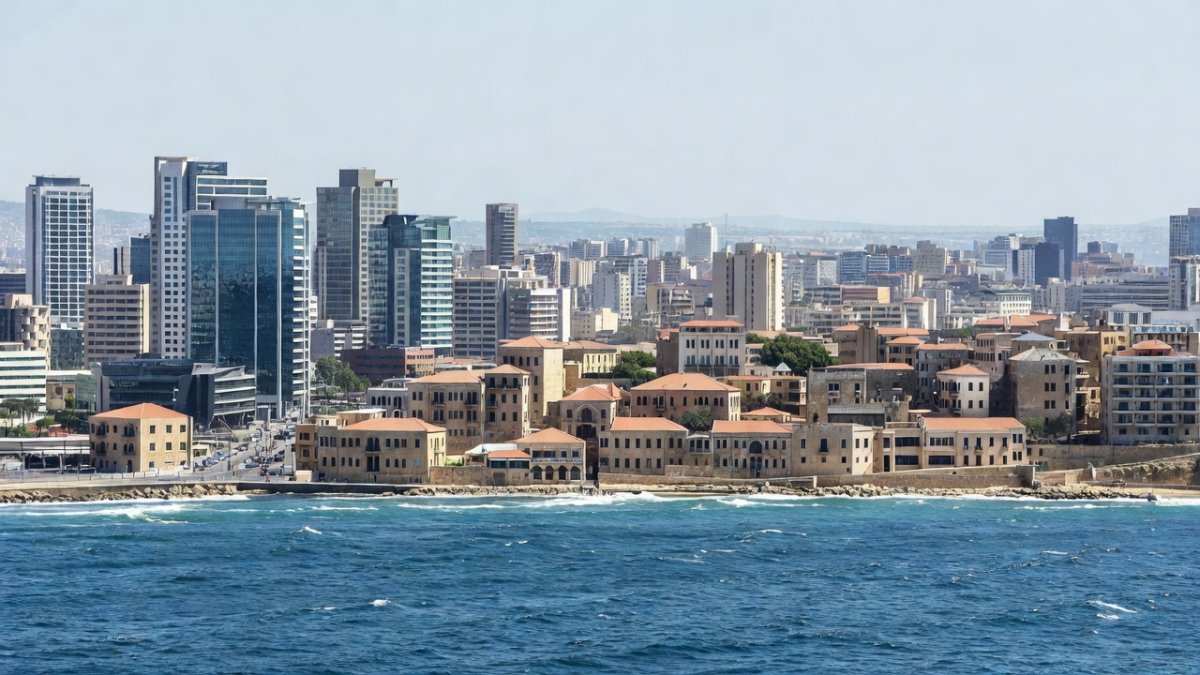
The timing coincides with the eighth consecutive night of US retaliatory strikes on Iranian targets. Israeli Prime Minister’s Office sources emphasize that any Hezbollah disarmament must be verifiable before troops fully exit Lebanese soil. Saudi Arabia and other Gulf actors calculate that a functional Lebanese state could open Mediterranean energy corridors less vulnerable to Iranian disruption. Aoun’s earlier remarks to Al Arabiya this month, in which he anticipated “positive outcomes” from the Trump meeting, reflect Beirut’s hope that American pressure on Iran can translate into concrete security guarantees.
The 2022 U.S.-brokered maritime border agreement between Lebanon and Israel opened possibilities for Eastern Mediterranean gas development, particularly in Block 9 adjacent to the Israeli Leviathan and Tamar fields. Saudi Arabia’s Vision 2030 envisions potential Lebanese participation in regional energy and tourism corridors, while the UAE has signaled post-normalization investment interest contingent on political stabilization. Qatar has played a parallel mediation role, channeling funds and diplomatic cover to prevent total state collapse. Aoun’s Washington meetings aim to translate these overlapping interests into concrete commitments that dilute Iranian leverage.
Energy economics intersect directly with security calculations. Stable Lebanese waters and functional state institutions are prerequisites for international companies to proceed with exploration. By positioning the LAF as the primary security guarantor in the south, Aoun seeks to reassure investors and Gulf partners that Lebanon can honor contractual obligations without Hezbollah veto. Success could unlock revenue streams capable of easing the fiscal crisis, yet any renewed cross-border tensions would immediately jeopardize these prospects.
Strategic Risks and Limited Leverage
Despite Hezbollah’s weakened position, the group retains significant military capacity and domestic political weight. Israeli forces remain on Lebanese territory, creating a flashpoint that could derail the plan if clashes resume. Lebanon’s divided political class and struggling economy limit Aoun’s ability to deliver rapid results. US officials have signaled interest in supporting LAF expansion, yet concrete funding commitments remain tied to measurable progress on disarmament.
Israeli officials have conditioned any further withdrawal or de-escalation on verifiable Hezbollah disarmament south of the Litani, a demand that exposes deep internal Lebanese divisions. The Free Patriotic Movement and Amal movement remain skeptical of rapid disarmament, while the Lebanese Forces and Progressive Socialist Party advocate stricter timelines. Hezbollah’s pre-2024 rocket and missile inventory exceeded 150,000 pieces; even after significant 2024–2025 attrition, residual capabilities continue to deter full LAF deployment in sensitive areas. Aoun must therefore navigate these domestic fault lines while managing expectations in Washington.
U.S. congressional funding for the LAF has historically faced Leahy Law restrictions tied to human-rights vetting, limiting the scale and speed of assistance. Without predictable multi-year appropriations and political cover from the White House, the army’s ability to expand its footprint remains constrained. Aoun’s visit therefore carries substantial downside risk: overpromising on security deliverables could fracture his fragile domestic coalition, while under-delivering may forfeit the diplomatic momentum currently aligned in Washington.
Outlook for Broader Middle East Stability
Success in Washington would strengthen the hand of Arab states seeking to contain Iranian projection while addressing Israeli security concerns. Failure risks renewed border fighting and further erosion of Lebanese sovereignty. Aoun’s visit therefore tests whether sustained US engagement, combined with Gulf financial incentives, can finally translate battlefield realities into a durable political settlement.
By Malik Hassan, Staff Writer
This article was produced with AI-assisted research and editorial support. Reporting is based on sources cited in the article.
What's Your Reaction?
 Like
0
Like
0
 Dislike
0
Dislike
0
 Love
0
Love
0
 Funny
0
Funny
0
 Wow
0
Wow
0
 Sad
0
Sad
0
 Angry
0
Angry
0

Middle East Correspondent at Global1.News. Based in Beirut, covering politics, conflict, energy, and society across the Middle East. Brings context and depth to a region often reduced to headlines.












Comments (0)