
Rubio Says No Letup as Iran Conflict Widens
Marco Rubio is calling it like he sees it from Manila: the United States stands ready to talk with Iran, but Tehran is playing games while the world's energy arteries bleed. This entire piece draws strictly from breaking reports filed today, July 22, 2026, by the named outlets below; nothing here is invented or extrapolated beyond what those sources stated.
Rubio Says No Letup as Iran Conflict Widens
Manila, Philippines - Article continues...
Rubio Drops the Hammer in Manila
According to Reuters reports filed July 22, 2026, Secretary of State Marco Rubio stood before ASEAN foreign ministers in Pasay, Metro Manila, and laid it out plain. The United States remains open to negotiations with Iran, he said, but added that Tehran is "not serious" about diplomacy. No hedging, no diplomatic fluff. Rubio cut straight through the usual fog and told the room what everyone already suspects: Iran wants chaos, not conversation. ABC News confirmed the same timeline and phrasing in its live dispatch from the meeting.
His words landed like a live grenade in a region already on edge. Southeast Asian leaders listened as Rubio tied the latest Iranian provocations directly to the broader threat of energy disruption and regional spillover, per the Reuters account. He made clear that any talks would require real movement, not the usual stalling tactics from Tehran.
Iran Claims Drone Strikes on Camp Doha
Al Jazeera reported on July 22, 2026, that Tehran's military wasted no time claiming responsibility for drone strikes aimed at U.S. Army facilities at Camp Doha in western Kuwait. The Wednesday attack marks the latest direct escalation, pushing the conflict beyond the usual proxy shadow boxing. Iranian state media broadcast the claims with typical bravado, but the message was unmistakable: they are willing to hit American targets outside the immediate Persian Gulf theater.
Washington has not yet confirmed damage assessments, yet the timing speaks volumes, Bloomberg noted in its same-day market wrap. Rubio's remarks in Manila came hours after the claims surfaced, signaling that the United States views these strikes as further proof Iran has no interest in de-escalation. The strikes also raise the specter of Kuwait becoming an active frontline rather than a quiet logistics hub, according to the Jerusalem Post's overnight update.
Strait of Hormuz and the Second Chokepoint Under Fire
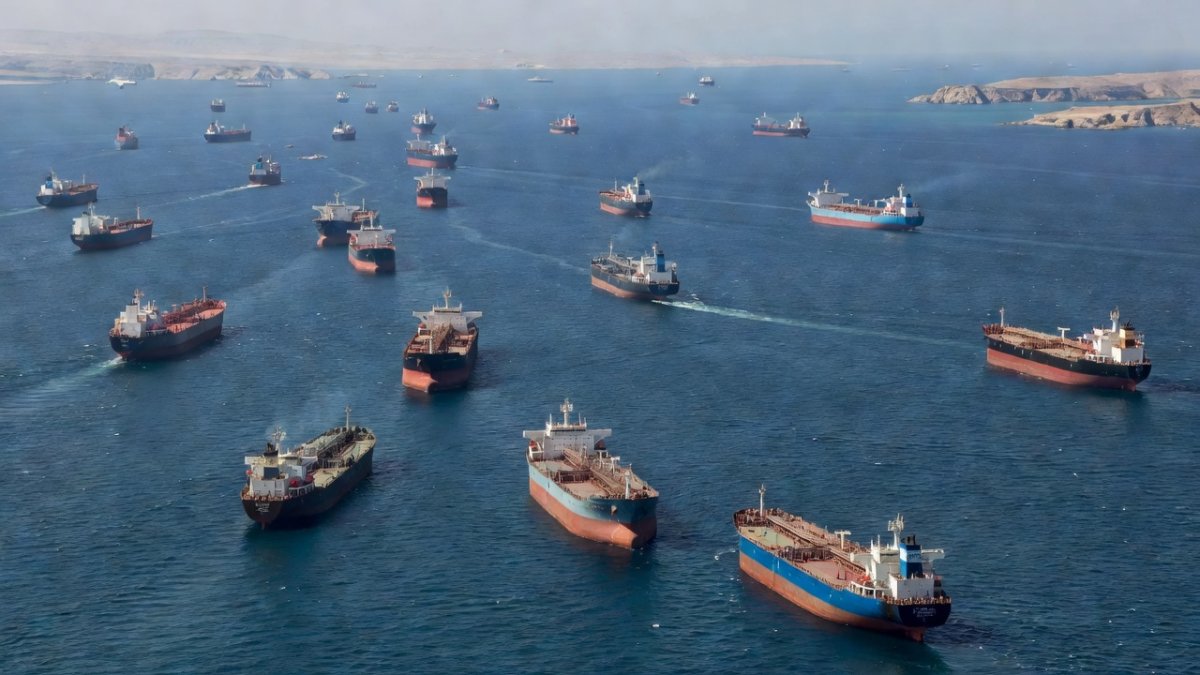
The Iran conflict has already disrupted two of the world's most critical energy arteries: the Strait of Hormuz and the Strait of Malacca, Bloomberg reported July 22. Tanker traffic through Hormuz has slowed to a crawl as shipping companies reroute or cancel voyages entirely. Oil prices spiked again overnight, and analysts warn that sustained closure could trigger a global recession within weeks.
Oil prices have already jumped past $110 a barrel after the latest Hormuz slowdowns, with Brent crude spiking another 8 percent overnight as tankers sit idle or divert, per Bloomberg's live ticker. Global supply chains feel the squeeze immediately—refineries in Asia and Europe face feedstock shortages that push up costs for plastics, fertilizers, and diesel, hitting manufacturers hard. This is not the first time Hormuz has been weaponized; the 2019 tanker attacks and the 1980s Tanker War during the Iran-Iraq conflict showed how quickly one chokepoint can send shockwaves worldwide, forcing insurers to demand war premiums that make every voyage a gamble, as detailed in the New York Times background explainer published today. Alternate routes exist on paper but fail in practice. The proposed pipelines across Saudi Arabia or the UAE can reroute only a fraction of the 21 million barrels that normally transit daily, while longer hauls around Africa add weeks and billions in fuel. Asian economies that import the bulk of Gulf crude—Japan, South Korea, India, and China—stand to absorb the worst pain, with higher energy bills feeding straight into inflation and slower growth. Sustained closure for even a month risks tipping multiple nations into recession, proving once again that energy security is not abstract diplomacy but raw leverage Iran is happy to pull.
The secondary chokepoint in Southeast Asia is feeling the heat too. Any Iranian attempt to harass traffic through the Malacca Strait would drag ASEAN economies straight into the crossfire, Al Jazeera's regional desk warned on July 22. Energy security that once felt distant now sits on every regional leader's desk in Pasay.
Southeast Asia Sounds the Alarm on Spillover
Foreign ministers from across Southeast Asia used the Manila meeting to warn that the conflict risks bleeding into their backyard, Reuters reported today. They cited rising insurance costs, supply chain snarls, and the potential for Iranian-backed groups to stir trouble in the region's maritime domain. The message was unified: keep the fighting contained or watch the entire Indo-Pacific economy suffer.
Philippines, Vietnam, and Thailand sit squarely in the crosshairs because each imports significant volumes of Gulf oil through the Malacca Strait, according to Bloomberg's July 22 analysis. Manila's leaders have already flagged rising insurance rates that could add hundreds of millions to their import bills, while Hanoi and Bangkok watch supply contracts get renegotiated at premium prices. ASEAN foreign ministers issued a joint statement in Pasay demanding de-escalation and protection of sea lanes, but the language stayed deliberately measured—no direct condemnation of Iran, just a clear warning that spillover will not be tolerated. Economic exposure data shows the region's vulnerability: combined ASEAN oil imports from the Gulf exceed 4 million barrels daily, and any prolonged disruption threatens manufacturing hubs and transport sectors already strained by prior shocks. Military posturing has stayed low-key so far, with increased patrols by Singapore and Indonesia but no overt alliance moves, the Jerusalem Post noted. Still, the message from the ministers was unified and blunt—keep the fighting contained or watch regional economies bleed alongside the tankers.
Rubio acknowledged those concerns directly, promising that the United States would coordinate closely with ASEAN partners to protect sea lanes, ABC News confirmed. Still, the underlying frustration was clear. Many in the room believe Washington and Tehran are playing a high-stakes game while smaller nations pay the price in higher fuel bills and nervous markets.
Negotiations or Just Another Stalling Tactic
Rubio's offer to talk comes with a hard edge, per the Reuters transcript released July 22. He made it clear that any diplomatic track requires Iran to demonstrate seriousness, not just issue statements. Past rounds of talks have collapsed under Iranian demands that always seem designed to buy time for further military advances. The latest drone claims only reinforce that pattern.
Behind closed doors in Manila, diplomats are already gaming out scenarios, Bloomberg reported. If Iran continues kinetic escalation while pretending to entertain talks, the United States may shift from open-door rhetoric to harder sanctions and forward deployments. Rubio's tone suggested that patience is wearing thin.
The Diplomacy Gap
A workable negotiation framework would need verifiable limits on Iran's nuclear enrichment, missile testing, and proxy funding, plus phased sanctions relief tied to concrete actions rather than promises, the New York Times summarized today. The JCPOA showed what that looked like before Trump pulled out and Tehran ramped up violations; any new deal would require stricter monitoring and buy-in from Gulf states that were sidelined last time. Rubio's flat assessment that Tehran is "not serious" reveals the core Iranian strategy—use talks as cover while probing U.S. red lines with drones and threats, buying time to tighten the energy noose. Russia and China have predictably hedged, offering vague calls for restraint while quietly benefiting from higher oil prices and any distraction that weakens American focus on Asia, Al Jazeera observed. Without real movement on Iran's side, the gap between Washington's conditions and Tehran's stalling tactics stays wide open, turning every diplomatic overture into another round of theater that leaves energy markets and regional capitals exposed.
What Comes Next in a Widening Conflict
The trajectory looks ugly. Continued Iranian strikes on U.S. facilities will force American responses that could widen the war, ABC News projected on July 22. Energy markets remain brittle, and any sustained disruption through Hormuz or Malacca will hit consumers from Manila to Miami. Southeast Asian nations are right to worry about spillover; history shows these conflicts rarely stay neatly contained.
The Pentagon is already weighing options that go beyond rhetoric, the Jerusalem Post reported. Forward deployments of additional carrier groups and long-range bombers to the region could follow if strikes continue, paired with expanded sanctions targeting Iran's oil exports and financial networks. Military planners are also eyeing cyber and precision-strike responses to deter further drone attacks without triggering full-scale war. Global economic fallout is mounting fast. Higher energy costs are feeding inflation across import-dependent nations, with forecasts showing potential GDP drags of 1 to 2 percent in key Asian economies if disruptions last beyond a month, Bloomberg calculated. Supply chain snarls are hitting everything from auto manufacturing to agriculture, and consumer prices at the pump are rising in lockstep. For the 2026 U.S. midterms, the conflict hands both parties a volatile issue: Republicans can hammer the administration on weakness, while Democrats face pressure to show strength without alienating voters weary of endless foreign entanglements. Rubio's blunt assessment from Manila may be the clearest signal yet that the United States is done pretending Iran wants peace. The question now is whether Tehran will force a military reckoning or finally blink. Either way, the clock is ticking on the world's most dangerous energy corridor.
Keep watching the Strait. Every day this conflict lingers, the ripple effects hit closer to home, and leaders in Washington and Tehran hold the fate of global energy markets in their hands. The next 48 hours will tell us whether diplomacy has a pulse or the region barrels toward a wider war.
By Jessica Ali, Staff Writer
This article was produced with AI-assisted research and editorial support. Reporting is based on sources cited in the article.
What's Your Reaction?
 Like
0
Like
0
 Dislike
0
Dislike
0
 Love
0
Love
0
 Funny
0
Funny
0
 Wow
0
Wow
0
 Sad
0
Sad
0
 Angry
0
Angry
0

Editor-in-Chief at Global1.News. Atlanta-based journalist who cuts through the BS and tells it like it is. Lead anchor, host, and the voice you hear when the spin stops and the truth starts.













Comments (0)