
Mexico Teacher Protests Disrupt 2026 World Cup Plans
The DW News video "FIFA wanted football, not politics — but the 2026 World Cup is both" details how the CNTE national strike that began June 1, 2026, has blocked preparations for the tournament co-hosted by Mexico, the United States and Canada. CNTE Strike Timeline and Core Demands Mexico City, Mexico — The Coordinadora Nacional de Trabajadores de la Educación declared a nation
The DW News video "FIFA wanted football, not politics — but the 2026 World Cup is both" details how the CNTE national strike that began June 1, 2026, has blocked preparations for the tournament co-hosted by Mexico, the United States and Canada.
CNTE Strike Timeline and Core Demands
Mexico City, Mexico — The Coordinadora Nacional de Trabajadores de la Educación declared a national strike on June 1, 2026, demanding a 100 percent salary increase and reversal of pension reforms enacted under prior administrations. Current teacher pay in states such as Oaxaca and Chiapas ranges from 8,000 to 14,000 pesos per month, equivalent to 460 to 800 United States dollars. The Secretaría de Hacienda ruled out the full demand as incompatible with the federal budget for fiscal year 2026.
The rival Sindicato Nacional de Trabajadores de la Educación proposed a 13 percent raise instead. Government negotiators offered a 10 percent increase effective September 2026, which CNTE rejected during talks at the Secretaría de Gobernación. Teachers from rural ejidos in Guerrero and Michoacán joined marches that reached the capital by late May.
Zócalo Occupation and Street Blockades
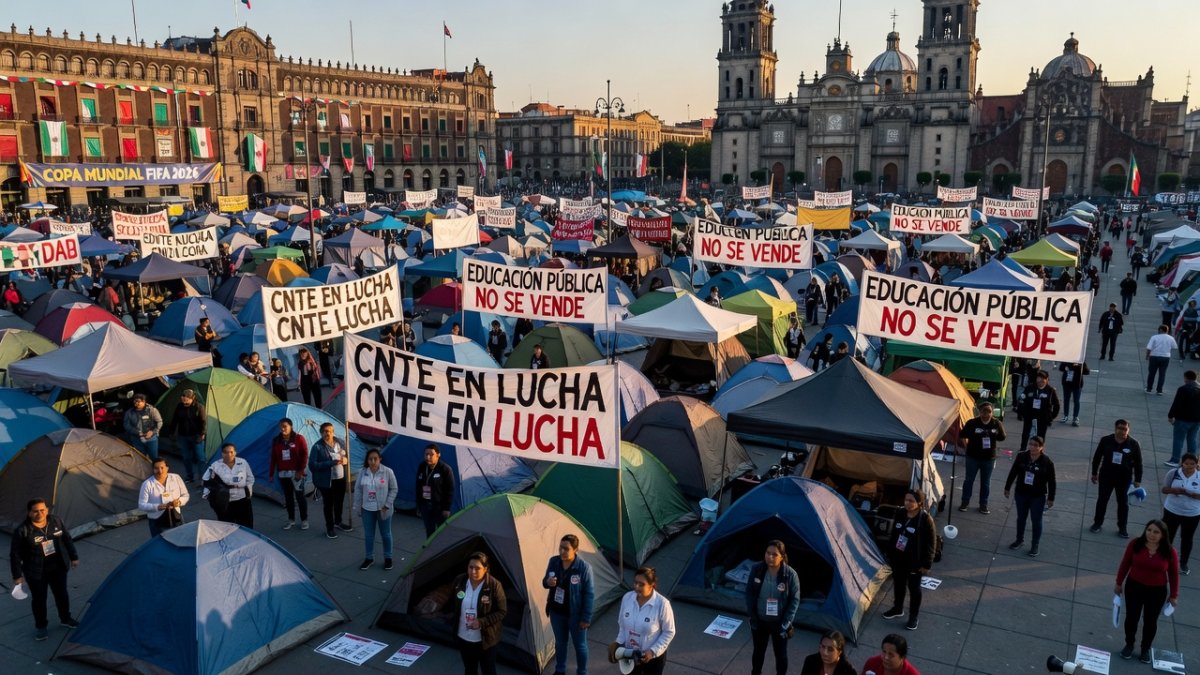
Thousands of CNTE members established a protest camp in the Zócalo, whose public viewing capacity stands at 55,000 people. The occupation forced FIFA to cancel scheduled volunteer training sessions originally planned for the historic plaza. Teachers also blocked major intersections along Avenida Juárez and Eje Central, halting traffic for hours each day.
Marches moved daily through colonias such as Roma Norte and Condesa, with participants carrying banners referencing the upcoming matches at Estadio Azteca. The camp remains in place as of mid-June 2026, limiting access for vendors who normally set up tianguis stalls around the central square.
Vandalism on Paseo de la Reforma and Security Response
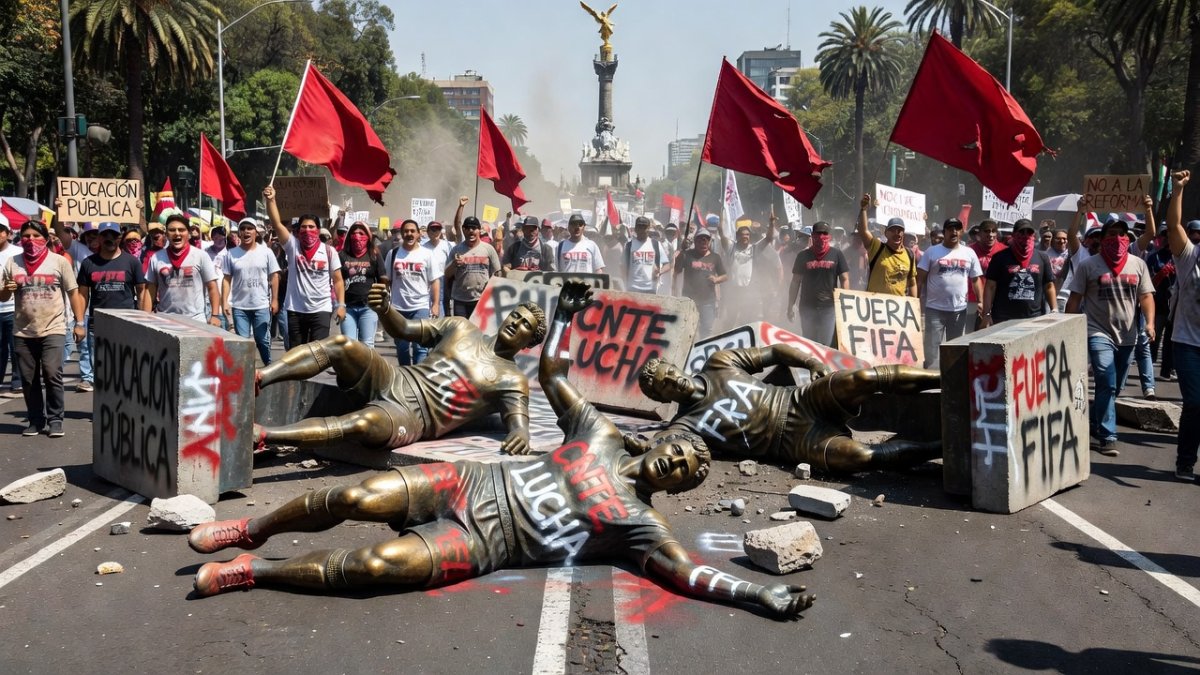
Protesters tore down meter-tall soccer player statues installed along Paseo de la Reforma and spray-painted the phrase "Without a solution, the ball won't roll" on remaining monuments. Police deployed tear gas when groups attempted to occupy the Secretaría de Educación Pública building on June 4. A small fire broke out inside the ministry but was extinguished within thirty minutes by bomberos from the Mexico City fire department.
Authorities reported no arrests tied directly to the statue damage. The Secretaría de Seguridad y Protección Ciudadana increased patrols around the route leading to Estadio Azteca in preparation for the June 11 opening match between Mexico and South Africa.
Economic Impact on Small Businesses and Tourism
The Cámara de Comercio de la Ciudad de México estimated that street disruptions have cost the private sector nearly 20 million euros since the strike began. Taquerías and tortillerías near the Zócalo reported daily revenue drops of 60 percent because customers cannot reach their locations. Maquiladora suppliers transporting goods through blocked avenues in Iztapalapa faced similar delays.
With five million international tourists expected in Mexico during June and July 2026, hotel associations in Roma and Polanco warned of potential cancellations. Street vendors selling lucha libre masks and mariachi souvenirs around the monuments have seen foot traffic fall sharply since the statues were damaged.
President Sheinbaum Administration Response
President Claudia Sheinbaum, successor to Andrés Manuel López Obrador and Morena founder, stated on June 5 that the government would not fall for provocations. She issued a work-from-home decree for federal employees on June 11 to reduce traffic around Estadio Azteca. Sheinbaum added that she did not believe rank-and-file teachers were responsible for the most serious acts of vandalism.
Officials from the Secretaría de Hacienda indicated that a compromise package combining modest salary raises with pension adjustments remains under discussion. The Secretaría de Relaciones Exteriores continued coordination with FIFA despite the unrest.
Effects on Teacher Families and Rural Communities
Teachers from indigenous communities in Oaxaca and rural ejidos in Puebla have left their schools unattended for weeks, affecting thousands of students preparing for the new school year. Families in these areas rely on the 8,000 to 14,000 peso monthly salaries to cover basic expenses at local mercados.
Healthcare workers at IMSS clinics in the same regions noted increased visits from teachers reporting stress-related conditions after prolonged marches. Students in secondary schools in Chiapas have missed classes, raising concerns among parents about lost instructional time ahead of national evaluations.
World Cup Security Operation and Cartel Concerns
SEDENA and Guardia Nacional units have been deployed along the perimeter of Estadio Azteca and major fan zones in Mexico City. The Secretaría de Seguridad Ciudadana coordinates with FIFA security teams to protect the June 11 opening match. Additional checkpoints operate on highways connecting the capital to Puebla and Toluca.
Officials also monitor cartel-related violence risks in border states that could affect fan travel. The combination of teacher protests and security alerts has prompted some tour operators in Cancún to adjust itineraries for groups planning to attend matches in Mexico City.
Political Implications and Path Forward
Columnist Héctor Aguilar Camín of Milenio described the protests as a "pedagogy of violence," while some residents in affected colonias said they felt taken hostage by the ongoing actions. Opposition parties including PAN and PRI have called for stronger enforcement of public space rules.
Negotiations between CNTE and the Secretaría de Gobernación continue, with both sides indicating that a combined salary and pension package could be announced before the group stage concludes. The outcome will determine whether further disruptions affect remaining matches hosted in Guadalajara and Monterrey.
Daily Life in Mexico City Under Protest Conditions
Residents of the Centro Histórico navigate around barricades each morning to reach jobs at the Palacio Nacional and surrounding offices. Commuters on the Metro system report longer waits because several surface bus routes have been rerouted. Families planning quinceañera celebrations near the Zócalo have moved events to alternative venues in Coyoacán.
Despite the tension, some local taquerías continue limited service by delivering orders to nearby offices. The contrast between the protest camp and the colorful Día de Muertos altars still visible in nearby plazas underscores how ordinary routines persist amid the national dispute.
By Rosa Martinez, Staff WriterThis article was produced with AI-assisted research and editorial support. Reporting is based on sources cited in the article.
What's Your Reaction?
 Like
0
Like
0
 Dislike
0
Dislike
0
 Love
0
Love
0
 Funny
0
Funny
0
 Wow
0
Wow
0
 Sad
0
Sad
0
 Angry
0
Angry
0
Latin America/Andes Correspondent at Global1.News. Based in Bogota, covering politics, environment, energy, and social movements across the Andean region. Passionate about environmental journalism and communities protecting their land.











Comments (0)