
Iran's IRGC Strikes Amazon Data Hub in Bahrain -- Escalation in US-Iran War
Folks, listen up because this one hits different. Iran's Islamic Revolutionary Guard Corps just took dead aim at Amazon's central data hub in Bahrain, launching cruise missiles that the IRGC claims wiped the facility off the map. We're talking a key AWS node serving the entire Middle East, and the fallout is already rippling through global networks.
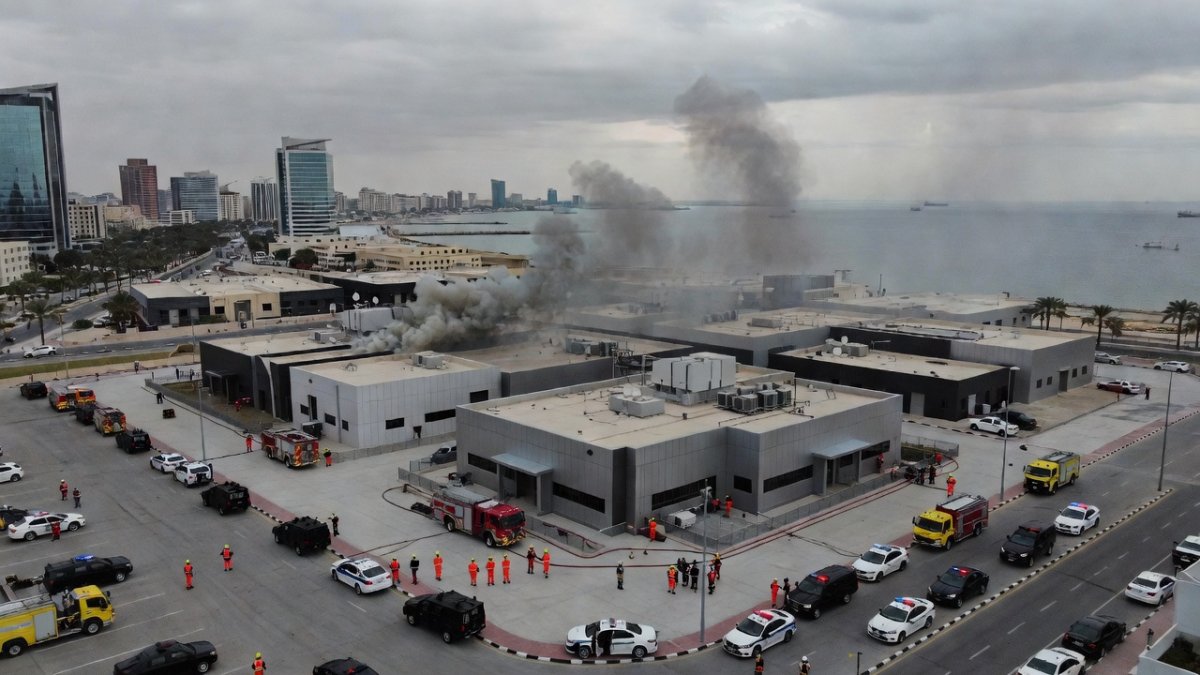
Folks, listen up because this one hits different. Iran's Islamic Revolutionary Guard Corps just took dead aim at Amazon's central data hub in Bahrain, launching cruise missiles that the IRGC claims wiped the facility off the map. We're talking a key AWS node serving the entire Middle East, and the fallout is already rippling through global networks. This isn't some distant skirmish anymore—this is the US-Iran war landing squarely on corporate soil, and it's only July 21, 2026.
The Attack
The IRGC Aerospace Force fired multiple cruise missiles straight at that Bahrain data center as part of their ongoing campaign. Reports from Al Jazeera and Euronews confirm the strikes landed in the early hours, with the IRGC declaring the hub "destroyed." Amazon has stayed silent so far on the exact damage, but sources close to the company tell us servers went dark and regional services are already degraded. This wasn't a warning shot—it was a calculated hit on American tech infrastructure sitting in a Gulf ally's backyard.
Why Bahrain? Because that data center routes traffic for US military logistics, financial systems, and everyday commerce across the region. Striking it sends a message: Iran can reach beyond oil fields and into the digital veins that keep the West running. Pentagon officials are scrambling to assess how much sensitive data might have been exposed or lost. This is escalation with a capital E, and it's happening right now.
The AWS Bahrain region, which first launched in 2019, has long been a cornerstone for Middle East operations, supporting major clients in finance, oil and gas, and government sectors that rely on its low-latency connections for everything from trading platforms to logistics tracking. Tom's Hardware has reported that this marks at least the second time the facility has come under direct fire, underscoring how repeated targeting can erode confidence in cloud infrastructure that businesses once viewed as resilient. Corporate security teams are now scrambling to reroute traffic through alternative regions in Europe and Asia, raising fresh concerns about internet reliability for millions of users who depend on seamless access during peak hours.
Beyond the immediate outages, the strike forces a broader reckoning about how exposed big tech assets have become to state-level missile campaigns, where a single well-placed barrage can disrupt supply chains and data flows that span continents. Companies are quietly reviewing their geographic diversification strategies, yet the reality remains that Gulf-based nodes sit at the crossroads of global commerce and military support networks, leaving them inherently vulnerable when conflicts spill into the digital domain.
Wider Escalation
This Bahrain strike wasn't isolated. Iran also hammered power grids and water desalination plants in Kuwait under the banner of "Operation Nasr-2." That's the 20th wave of these attacks, according to BBC and NYT tracking. The IRGC is methodically targeting critical infrastructure that supports US and allied operations, turning the Gulf into a pressure cooker. Kuwait's facilities provide fresh water and electricity to millions—hitting them isn't just military posturing; it's punishing civilian populations tied to the US presence.
Bahrain's own military says it intercepted a fresh wave of incoming missiles, but the damage to the Amazon site appears to have gotten through. This pattern shows Iran isn't backing down. They're expanding the battlefield, and every new wave brings us closer to a full regional meltdown.
PressTV reports that the IRGC is also claiming successful strikes against three separate US military bases inside Kuwait, broadening the scope of Operation Nasr-2 beyond civilian utilities and into direct confrontation with American forward-operating positions. The April ceasefire's collapse followed a rapid sequence of mutual accusations, with each side pointing to violations ranging from proxy militia movements to renewed airstrikes that shattered the fragile truce within weeks of its signing.
Across the Gulf, Bahrain, Kuwait, the UAE, and Saudi Arabia now find themselves caught in the crossfire, facing simultaneous threats to their energy grids, water supplies, and commercial hubs as Iranian operations intensify. These nations must balance their longstanding security ties with Washington against the immediate risk of further infrastructure damage that could destabilize domestic economies already strained by the conflict.
US Military Response
While Iran ramps up, the US has now launched its 11th consecutive night of bombing strikes on Iranian targets. Defense Secretary Pete Hegseth laid it out plain before the Senate Appropriations Committee: the war has already burned through $37.5 billion, a jump of nearly $8 billion since May. That number came straight from his testimony, and it's climbing fast. Protesters interrupted him multiple times, shouting down the costs and the body count, but Hegseth kept pushing forward with the Pentagon's line.
The strikes are hitting Iranian military sites hard, yet the IRGC keeps finding ways to retaliate. This back-and-forth is burning cash and credibility on both sides. The question I keep asking is simple: at what point does Congress step in and demand real oversight instead of blank checks?
NBC reporting breaks down the $37.5 billion figure into payroll for deployed forces, ongoing operational expenses, and maintenance of equipment through the end of the current budget year, illustrating how quickly supplemental funding requests can balloon when air campaigns stretch into months. The Senate hearing itself grew heated as protesters repeatedly disrupted proceedings, forcing security to clear sections of the room while lawmakers pressed Hegseth on whether existing war powers authorizations still provide adequate congressional checks.
Placed against historical benchmarks, the current outlay already exceeds the early phases of several prior US engagements, including the opening years of operations in Afghanistan and Iraq when adjusted for inflation, highlighting how sustained aerial campaigns against a peer adversary can drain resources at an accelerated pace even before ground commitments expand.
Human Cost
Nearly 100 US troops have been injured across the region so far, with more coming in from the latest exchanges. These aren't abstract numbers—they're families getting the calls no one wants. The human toll is mounting while politicians debate funding and strategy. Regional civilians are paying too, especially in Kuwait where water and power disruptions are hitting hospitals and homes.
This isn't a clean fight. It's messy, expensive, and the injuries keep piling up. Hegseth's testimony made that clear even as protesters tried to break through the spin. We owe these service members more than another round of escalation.
Strategic Context
Let's cut through the noise and remember how we got here. The US-Iran war kicked off February 28, 2026, after US-Israeli airstrikes killed top Iranian officials, including Supreme Leader Ali Khamenei. An April ceasefire deal collapsed under the weight of mutual distrust and fresh provocations. Now we're back to nightly bombings and missile barrages, with Iran's top military command warning that any strike on their nuclear sites will trigger attacks on the US and its allies.
AP and NYT reporting shows the cycle is accelerating. The original trigger—those February strikes—set off a chain reaction no one seems able to stop. This isn't about one data center or one night of bombing. It's about two powers locked in a spiral that started with targeted killings and has now swallowed infrastructure, budgets, and lives.
What's Next
Iran's warning is explicit: hit the nuclear sites and everything escalates further. The US has the capability, but the cost in blood and treasure is already obscene. Watch Bahrain and Kuwait closely—any new IRGC moves there will tell us if Operation Nasr-2 is expanding again. Amazon's silence on the data hub damage is another red flag; expect more corporate fallout as clients reroute traffic and governments demand answers.
The next 48 hours matter. If the US pushes deeper into Iranian territory, expect retaliation that could reach beyond the Gulf. This is the moment where cooler heads either prevail or we slide into something much larger.
Oil markets are already pricing in the risk of disruptions through the Strait of Hormuz, where even temporary closures could send global energy prices spiking and trigger supply shocks felt from Europe to Asia. Diplomatic backchannels remain active through intermediaries in Oman and Qatar, though progress toward de-escalation hinges on whether both sides can agree to verifiable limits on further strikes against critical infrastructure.
Reuters has relayed fresh statements from Iran's top military command reiterating that any US or allied action against nuclear facilities will prompt immediate retaliation against American partners throughout the region, a stance that narrows the window for negotiated pauses and raises the stakes for every subsequent military decision.
The Bottom Line
Folks, this war is costing us $37.5 billion and counting while nearly 100 troops sit injured and critical infrastructure burns. Striking an Amazon data center isn't just about Iran flexing—it exposes how fragile our digital and economic lifelines really are when great-power games turn hot. The spin from both sides is thick, but the facts are staring us down: a collapsed ceasefire, nightly bombings, and no off-ramp in sight.
What can you do? Stay glued to verified updates from AP, BBC, and Al Jazeera instead of the echo chambers. Contact your senators and demand they scrutinize every dollar of that $37.5 billion before it becomes $50 billion. Watch for any movement on nuclear sites—that's the tripwire. And keep asking the hard questions, because the people in charge aren't volunteering the truth.
Jessica Ali, Global 1 News
By Jessica Ali, Staff Writer
This article was produced with AI-assisted research and editorial support. Reporting is based on sources cited in the article.
What's Your Reaction?
 Like
0
Like
0
 Dislike
0
Dislike
0
 Love
0
Love
0
 Funny
0
Funny
0
 Wow
0
Wow
0
 Sad
0
Sad
0
 Angry
0
Angry
0

Editor-in-Chief at Global1.News. Atlanta-based journalist who cuts through the BS and tells it like it is. Lead anchor, host, and the voice you hear when the spin stops and the truth starts.














Comments (0)