
Ford government advised its MPPs they could use hotel benefit for night sittings
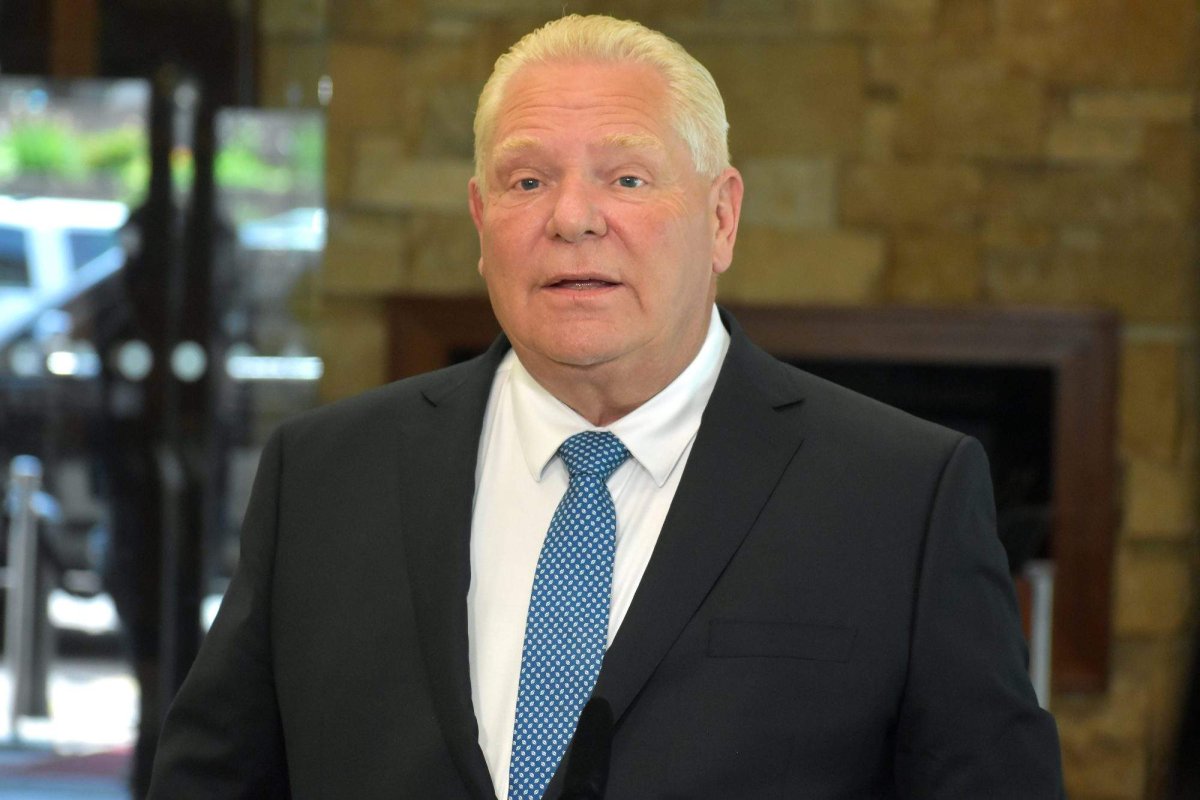
Scrutiny Over MPP Hotel Expenses at Queen’s Park The Ontario Progressive Conservative caucus received internal direction permitting the use of taxpayer-funded hotel rooms in downtown Toronto during scheduled night sittings, Global News has learned. This guidance came even as Premier Doug Ford publicly described such expenses as unacceptable.
Scrutiny Over MPP Hotel Expenses at Queen’s Park
The Ontario Progressive Conservative caucus received internal direction permitting the use of taxpayer-funded hotel rooms in downtown Toronto during scheduled night sittings, Global News has learned. This guidance came even as Premier Doug Ford publicly described such expenses as unacceptable.
Over recent weeks, several Progressive Conservative MPPs have faced questions about charging hotel stays to the legislature rather than commuting home from the Ontario Legislature. Former tourism minister Stan Cho resigned after claiming $16,000 over three years despite living six kilometres from Queen’s Park. Three Peel Region MPPs billed a combined $50,000 over two years for similar stays.
Ontario has a long record of expense controversies at Queen’s Park that provide useful context for the current hotel claims. The 2012-2013 gas plant cancellation scandal under the previous Liberal government involved hundreds of millions in public funds and led to criminal charges against staff, yet it centred on policy decisions rather than routine accommodation. Earlier episodes, such as the 1990s scrutiny of MPP travel and constituency office spending, prompted the creation of the Board of Internal Economy’s current oversight framework. The present situation differs because the expenses were authorised through an internal caucus directive and later ratified by the board, rather than arising from outright concealment.
Comparisons with the 2015-2016 expense review under Premier Kathleen Wynne are also instructive. That review tightened rules after several Liberal and NDP members were found to have claimed questionable meals and mileage, resulting in repayments and public apologies. Unlike those cases, the night-sitting hotel allowances were explicitly approved in November 2025, giving members a colour of legitimacy until political pressure forced repayment. This distinction has allowed the Ford government to argue that the claims were procedurally correct even while acknowledging they now appear politically untenable.
The scale of the current claims—$16,000 for one member and $50,000 across three others—remains modest beside the multi-million-dollar figures of past scandals. Nevertheless, the optics are damaging because they involve daily living costs in the province’s largest city, an issue voters encounter in their own household budgets. Historical precedent suggests that even smaller, recurring expenses can erode public trust more steadily than one-time large outlays when they appear to benefit legislators directly.
Internal Direction Provided to Caucus Members
An email sent in late 2025 by the Progressive Conservative whip’s office advised caucus members on options for accommodation when legislative sessions extended into the evening. The message noted that members without a Toronto accommodation allowance could book a hotel room downtown for the two days of night sittings.
Sources indicated the direction responded to the practical need for members to remain near Queen’s Park to maintain the government’s majority presence during extended debates. Without sufficient numbers, the risk of being outvoted by opposition members increased. The email framed the hotel option as available for those ineligible for other allowances.
Internal government communications at Queen’s Park have frequently shaped the boundaries of acceptable behaviour, sometimes creating tension with later public accountability standards. Previous Progressive Conservative directives on constituency office staffing and advertising, issued between 2018 and 2022, similarly provided operational latitude that later required clarification when opposition members raised questions. The late-2025 email on hotel bookings follows this pattern: it offered a practical solution for maintaining attendance during extended sittings while remaining silent on the political risk of public disclosure.
Such directives often rely on the assumption that caucus members will exercise restraint. In the 2019-2020 period, similar internal guidance on virtual meeting allowances during the pandemic was later adjusted after the Board of Internal Economy received complaints about inconsistent application across parties. The hotel email appears to have been drafted with the same narrow operational focus, emphasising majority presence rather than broader taxpayer perception. This approach can insulate day-to-day legislative management from immediate scrutiny but leaves the government exposed when the documents surface.
The precedent also illustrates how whip’s-office communications can inadvertently establish new norms. Once an email frames hotel stays as an available option for members without a Toronto allowance, subsequent claims gain an internal legitimacy that is difficult to retract without appearing to penalise members retroactively. Past Ontario governments have encountered comparable difficulties when attempting to walk back caucus guidance on per diems or mileage, often resulting in uneven repayment demands that fuel accusations of selective enforcement.
Motions at the Board of Internal Economy
The categories governing hotel expenses fall under the Board of Internal Economy, the legislative body that includes members from all official parties along with the Speaker and oversees financial matters at Queen’s Park. The government first raised the issue of hotel expenses at the board in May 2024 through a motion to update the allowance.
In November 2025, Education Minister Paul Calandra and House Leader Steve Clark moved a further motion at the board. The motion proposed that members ineligible for accommodations be reimbursed for actual accommodation costs on days when the Assembly is authorized to sit until midnight. The motion carried, creating a special circumstance designation for night sittings.
These sittings allow extended debate to advance legislation within set timeframes, with their frequency determined by the government. One month after the motion passed, Minister Cho submitted more than $6,000 in hotel expenses, which were approved by the legislature.
Premier Ford’s Public Statements and Subsequent Apology
At a news conference on Monday, Premier Doug Ford stated that the expenses were unacceptable and that all MPPs would repay the amounts. He expressed frustration and indicated the government would examine the matter closely to prevent recurrence.
The premier’s office later confirmed that the premier had been clear all MPPs would reimburse the legislature in full. This public position followed earlier internal communications that had outlined the hotel option for caucus members during night sittings.
Premier Ford’s rapid shift from internal authorisation to public condemnation has raised questions about message discipline within the Progressive Conservative caucus. The premier’s Monday statement that the expenses were “unacceptable” contrasted sharply with the November 2025 motion moved by two senior cabinet ministers that explicitly created the night-sitting reimbursement category. This reversal echoes earlier instances in the Ford government where initial defence of a policy gave way to reversal under media pressure, including the 2022 decision to pause the Greenbelt development plan.
The credibility impact is likely to be felt most acutely among suburban voters who have formed the core of the government’s support since 2018. Repeated cycles of internal permission followed by public apology can reinforce perceptions that Queen’s Park rules are applied differently for elected officials than for ordinary residents. With the next provincial election scheduled for 2026, opposition parties will have ample time to frame the episode as evidence of entitlement, a narrative that historically resonates in Ontario when expense stories receive sustained coverage.
Future implications include heightened sensitivity around any future Board of Internal Economy motions that expand allowances. The premier’s office has already signalled tighter oversight, yet the underlying tension between operational needs during night sittings and public expectations of frugality remains unresolved. If similar directives are issued before the 2026 campaign, they will almost certainly be viewed through the lens of this controversy rather than on their procedural merits alone.
Resignations, Repayments and Caucus Discussions
Stan Cho’s resignation marked the most visible consequence of the scrutiny. The three Peel Region MPPs also faced questions over their combined $50,000 in claims. Premier Ford held a virtual meeting with caucus shortly after the story emerged, adopting an angry tone and urging members to avoid further harm to the party.
Discussions around repayment appear to have been nuanced. Multiple sources indicated that the meeting did not specify exact dollar amounts or impose a clear obligation on all members to return funds. The premier’s public insistence on full repayment therefore marked a shift from the tone conveyed in that closed-door session.
Political Implications for Ontario Accountability
The episode highlights ongoing taxpayer scrutiny of expenses at Queen’s Park and the role of the Board of Internal Economy in setting rules that apply across parties. The tension between internal guidance provided to government members and the premier’s later public statements has drawn attention to questions of consistency in legislative spending practices.
Observers note that night sittings remain a tool used by governments to advance legislation efficiently, yet the associated accommodation costs have now become a focal point for accountability discussions. The Board of Internal Economy’s decisions in May 2024 and November 2025 illustrate how procedural changes can affect expense patterns over time.
Ontario taxpayers have consistently expressed low tolerance for legislator expenses that appear disconnected from direct constituency service. Polling conducted after previous Queen’s Park controversies showed that more than 70 percent of respondents believed MPPs should absorb routine accommodation costs when their ridings lie within commuting distance of Toronto. The current episode risks reinforcing that sentiment, particularly among residents in the Greater Toronto Area who face their own housing and commuting pressures.
Comparisons with other provinces highlight differing approaches. Alberta’s Legislative Assembly allows limited hotel reimbursement only for members whose ridings are more than 60 kilometres from Edmonton and requires pre-approval, while British Columbia ties accommodation allowances to a strict overnight-stay test tied to sitting hours. Quebec’s National Assembly provides a flat per diem rather than itemised hotel claims, reducing the scope for individual variation. Ontario’s reliance on the Board of Internal Economy to create special circumstance categories has produced more flexibility but also greater potential for inconsistency across members.
Looking ahead, the Board of Internal Economy is expected to review the special circumstance designation for night sittings at its next scheduled meeting. Any tightening of the rules would likely require cross-party agreement, given the board’s composition. Should the board maintain the current framework, the government may face continued opposition scrutiny in the legislature and renewed public debate about whether night sittings justify additional taxpayer-funded accommodation. The outcome will influence not only expense practices but also the broader perception of whether Queen’s Park can self-regulate effectively before the 2026 election.
With the matter still under review, the government has signalled tighter oversight going forward. The situation underscores the expectations placed on elected officials at the Ontario Legislature to balance operational needs with careful stewardship of public resources. Further details may emerge as the Board of Internal Economy examines the special circumstance provisions and as individual MPPs address their specific claims.
Tags: Doug Ford, Ontario politics, Queen’s Park, hotel expenses, Board of Internal Economy, night sittings, Stan Cho, Progressive Conservative MPPs, taxpayer accountability, Ontario Legislature, Paul Calandra, Steve Clark, expense repayments, legislative scrutiny
By Alex Thompson, Staff Writer
This article was produced with AI-assisted research and editorial support. Reporting is based on sources cited in the article.
What's Your Reaction?
 Like
0
Like
0
 Dislike
0
Dislike
0
 Love
0
Love
0
 Funny
0
Funny
0
 Wow
0
Wow
0
 Sad
0
Sad
0
 Angry
0
Angry
0

Canada Correspondent at Global1.News. Based in Toronto, covering Canadian politics, energy, trade, and US-Canada relations. Provides the Canadian perspective on North American and global affairs.











Comments (0)