
Trump's 50% Canada Tariffs: What It Means for Mexico
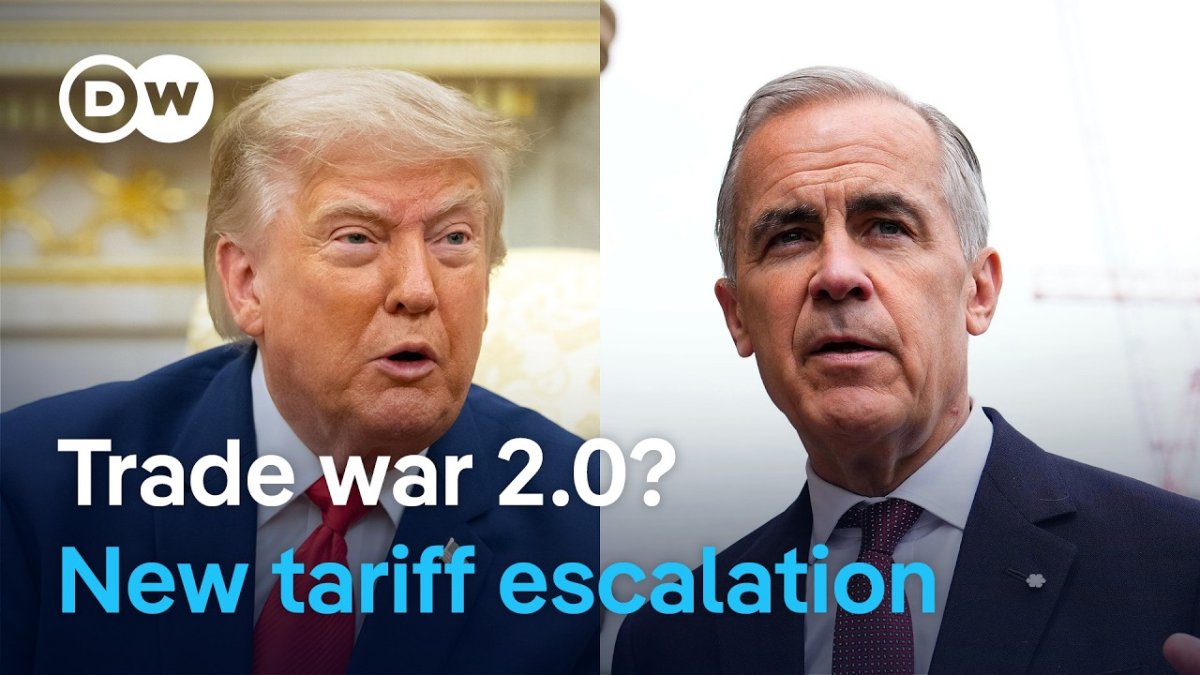
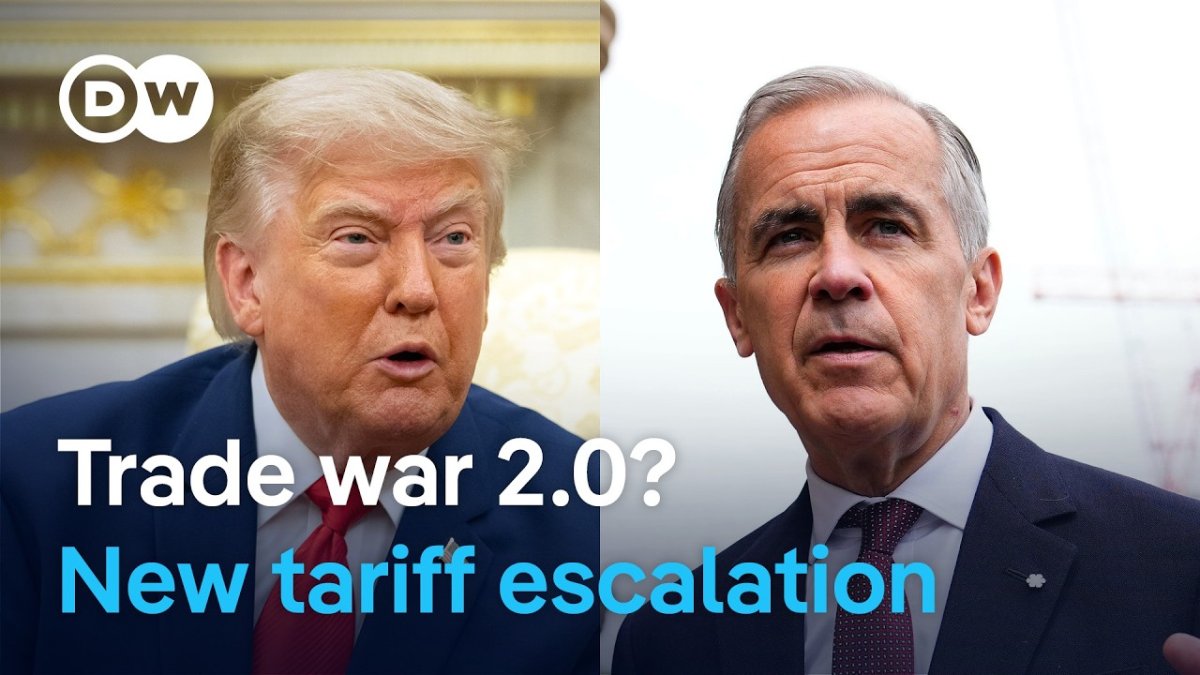
On a day that started like any other in the colonias of Ciudad Juarez and the avocado orchards of Michoacan, a trade bombshell from Washington sent ripples across North America. In a recent DW News report, the world learned that President Donald Trump had signed three proclamations imposing 50 percent tariffs on $20 billion worth of Canadian goods — a move that, while not targeting Mexico directly, has put every Mexican family closely watching the border on notice. Trump's 50% Canada Tariffs:...
On a day that started like any other in the colonias of Ciudad Juarez and the avocado orchards of Michoacan, a trade bombshell from Washington sent ripples across North America. In a recent DW News report, the world learned that President Donald Trump had signed three proclamations imposing 50 percent tariffs on $20 billion worth of Canadian goods — a move that, while not targeting Mexico directly, has put every Mexican family closely watching the border on notice.
Trump's 50% Canada Tariffs: What It Means for Mexico
Mexico City, Mexico — The tariffs signed by President Trump on July 20, 2026, invoke Section 338 of the Tariff Act of 1930, a law so obscure it has not been used in nearly a century. The 50 percent duties target Canadian automobiles, dairy products, cheese, wine, and alcohol. Energy products, potash, fish, and critical minerals were excluded. The measures take effect August 19, 2026.
The timing could hardly be more consequential. This week marks the six-year joint review of the United States-Mexico-Canada Agreement — known in Mexico as T-MEC — and the three countries are in the middle of their third round of negotiations. The USMCA review is the single most important economic event for Mexico this year, and Trump's aggressive use of tariff authority has fundamentally changed the stakes.
USMCA Review: Mexico's Economic Future on the Line
Mexico is now the United States' number-one trading partner, with $1.6 million in goods crossing the border every minute. Total bilateral trade reached $791 billion last year, surpassing China. Every provision of the USMCA is under examination during this review — rules of origin for autos, digital trade, agricultural quotas, energy provisions, and dispute resolution mechanisms. The decision to renew the agreement for a full 16-year term or let provisions lapse will shape Mexico's economic trajectory for a generation.
The USMCA requires a joint review with all three parties needing to agree on continuation. If any party dissents, the agreement enters a renegotiation period. Trump's willingness to use Section 338 — which permits tariffs of up to 50 percent on countries that "discriminate" against US commerce — signals that the administration is prepared to act unilaterally if the review does not produce the outcomes Washington wants.
In Mexican communities, the USMCA renewal feels like a family gathering where everyone must agree on the future of the dinner table. Without agreement, tariffs could snap back to pre-2020 levels, raising costs on everything from auto parts to fresh produce and hitting border towns like Tijuana and Ciudad Juarez hardest. Mexico's negotiating team, led by Economy Secretary Marcelo Ebrard, pushes for stronger labor protections and digital trade rules while firmly rejecting any energy chapter changes that would limit Mexico's right to prioritize Pemex and CFE. If talks stall, analysts warn of a 2-3 percent GDP hit, yet community leaders in the north remind us that shared supply chains have woven our fates together like the threads of a rebozo.
Section 338: A Dangerous Precedent for Mexico
The legal mechanism Trump used against Canada matters enormously for Mexico. Section 338 of the Tariff Act of 1930 allows the US president to impose additional duties of up to 50 percent on imports from any country found to impose "unreasonable" or "discriminatory" trade barriers against US goods. The provision has sat unused for decades — until now.
Mexico's own trade practices could potentially fall under similar scrutiny. Mexican tariffs on US corn, wheat, and other agricultural products, as well as state-level procurement preferences and energy policies, have been sources of friction. If the Trump administration is willing to use Section 338 against a NATO ally and USMCA partner like Canada, Mexican officials recognize that their country could be next — especially if USMCA negotiations do not go smoothly.
Take Mexico's clean-energy push in states like Oaxaca and Tamaulipas, where community wind and solar projects now power thousands of rural homes. These could face scrutiny as "unfair subsidies" under Section 338, much like the corn tariffs Mexico placed on US yellow corn to protect smallholder farmers in Sinaloa and Jalisco. State procurement rules favoring local suppliers for Pemex equipment have also drawn early US complaints. In the plazas of these towns, families who have tended the same fields for generations worry that such measures would punish the very policies keeping their communities fed and employed.
Auto Workers in Puebla and the Northern Border Corridor
The Mexican auto industry, which directly employs over one million workers, has the most at stake. Assembly plants in Puebla, Aguascalientes, Guanajuato, and the northern border cities of Monterrey, Tijuana, and Ciudad Juarez operate deeply integrated North American supply chains. A single parts disruption — including Canadian components — can slow assembly lines and reduce shifts.
Drive through the factory towns surrounding Puebla — San Martin Texmelucan or Cuautlancingo — and you see the IMMEX program at work: assembly plants humming with workers stitching together wiring harnesses and transmissions for US and Canadian brands. Many of these employees, like 42-year-old Maria Lopez whose three children attend the local technical school, credit the program with lifting their families from informal street vending into steady paychecks with health benefits. Yet they also speak openly about the strain of 10-hour shifts and the fear that tariff threats could shutter lines overnight. "We build the cars that move America," Maria tells neighbors at the Sunday market, "but we want fair rules that keep our communities strong, not just the profits flowing north."
For families living in the colonias surrounding these plants, every trade announcement carries immediate consequences. The nearshoring boom of the past three years brought new investment, new jobs, and hope to communities that had long struggled with economic uncertainty. A prolonged trade dispute threatens those gains.
Avocado Farmers in Michoacan and Jalisco's Tequila Producers
Mexico's agricultural exports to the United States — avocados, tomatoes, berries, beer, and tequila — represent billions of dollars in annual trade and support millions of rural families. Michoacan avocado growers alone ship over 2 million tons annually to the US market. The Section 338 precedent means these products could theoretically face the same 50 percent tariffs that Canada's dairy and alcohol sectors now confront.
In the misty highlands of Michoacan, avocado orchards stretch across former ejido lands where families once grew corn and beans for their own tables. The ejido system — communal land ownership rooted in the Mexican Revolution — allowed smallholders to pool resources and secure export certifications, turning the region into the world's top avocado supplier and generating over $3 billion in annual sales. What began as a handful of cooperatives in the 1990s has become a source of pride, funding new schools and clinics in towns like Uruapan and Tancitaro.
For small farmers in Michoacan's ejidos — communal landholdings where families have grown avocados for generations — the threat is deeply personal. A 50 percent tariff on avocados would devastate rural communities that depend almost entirely on US demand. The same is true for tequila producers in Jalisco and tomato growers in Sinaloa.
Sheinbaum's Strategic Response and Diplomatic Tightrope
President Claudia Sheinbaum and her administration have navigated the Trump trade environment with a combination of diplomatic engagement and strategic preparation. Sheinbaum has made clear that Mexico would retaliate with its own tariffs if the US imposed duties on Mexican goods. Mexico has also proactively raised tariffs on Chinese vehicle imports to demonstrate cooperation with Washington's concerns about Chinese transshipment through Mexican ports.
President Sheinbaum's approach draws on the deep diplomatic trust built during the third USMCA review round, where Mexico secured commitments on labor monitoring without conceding ground on energy sovereignty. Her team has quietly strengthened ties with Beijing, welcoming measured Chinese investment in electric-vehicle battery plants while reminding Washington that Mexico will not be forced to choose between partners. She stresses that Mexico's southern border with Guatemala and its Pacific ports give the country unique leverage in any trade negotiation.
Sheinbaum's ability to maintain a working relationship with Trump while protecting Mexican interests is perhaps the most critical variable in the USMCA review. Her administration has emphasized sovereignty and mutual respect, pushing back against US proposals for military intervention against cartels while cooperating on border security and immigration enforcement.
The Nearshoring Paradox
The nearshoring wave has poured more than $30 billion in fresh foreign direct investment into Mexico, yet the same tariff clouds now threaten to stall the next wave. Nowhere is this tension clearer than in Nuevo Leon, where Monterrey's industrial parks have welcomed dozens of new suppliers for US automakers and appliance makers. Local business owners describe the excitement of seeing young engineers return from Texas to build careers at home. Still, without stable USMCA rules, those same companies could pause expansions, leaving new housing developments and technical colleges half-empty.
Mexico confronts ongoing challenges with Chinese transshipment through its ports and stricter IMMEX audits. Water scarcity in northern border states further complicates manufacturing expansion. These domestic issues intersect with the USMCA review, making the renewal decision the largest economic question facing Mexico this year.
What This Means for Everyday Mexican Families
For the families that make Mexico run — the maquiladora worker in Ciudad Juarez, the auto assembler in Puebla, the avocado farmer in Michoacan, the small business owner in Mexico City's mercados — the USMCA review is not an abstract diplomatic exercise. It determines whether their jobs are secure, whether their exports can cross the border, and whether the peso maintains its purchasing power.
The peso has been sensitive to every trade announcement from Washington. A protracted trade dispute could weaken the currency, raise the cost of imported goods, and squeeze household budgets in a country where inflation has already strained family finances. The stakes could not be higher.
What to Watch For
The next 90 days will be decisive. The Canada tariffs take effect August 19. The USMCA review rounds continue through July and August. Mexico must walk a diplomatic tightrope — cooperating on Chinese transshipment and border security while guarding against the same tariffs that now target Canada. The Section 338 precedent is the most significant legal development in North American trade policy in years. Its full implications for Mexico are only beginning to emerge.
In the taquerias and tortillerias of Mexico City, in the maquiladoras of Juarez, in the ejidos of Michoacan, people are watching. They know that what happens in Washington and Ottawa in the coming weeks will arrive at their doorstep soon enough.
By Rosa Martinez, Staff Writer
This article was produced with AI-assisted research and editorial support. Reporting is based on sources cited in the article.
What's Your Reaction?
 Like
0
Like
0
 Dislike
0
Dislike
0
 Love
0
Love
0
 Funny
0
Funny
0
 Wow
0
Wow
0
 Sad
0
Sad
0
 Angry
0
Angry
0

Latin America/Andes Correspondent at Global1.News. Based in Bogota, covering politics, environment, energy, and social movements across the Andean region. Passionate about environmental journalism and communities protecting their land.













Comments (0)