
Mexico 1971: When Women's Football Drew 110,000 Fans and Then Vanished from History
The Day 110,000 Packed the Azteca On 5 September 1971 Denmark defeated Mexico 3-0 in the final of the Copa 71 at Estadio Azteca in Mexico City before approximately 110,000 spectators, the largest crowd ever recorded for a women's sporting event at that time. The roar that shook the vast bowl echoed across the high-altitude plateau as Danish striker Lis Lene Nielsen converted th
The Day 110,000 Packed the Azteca
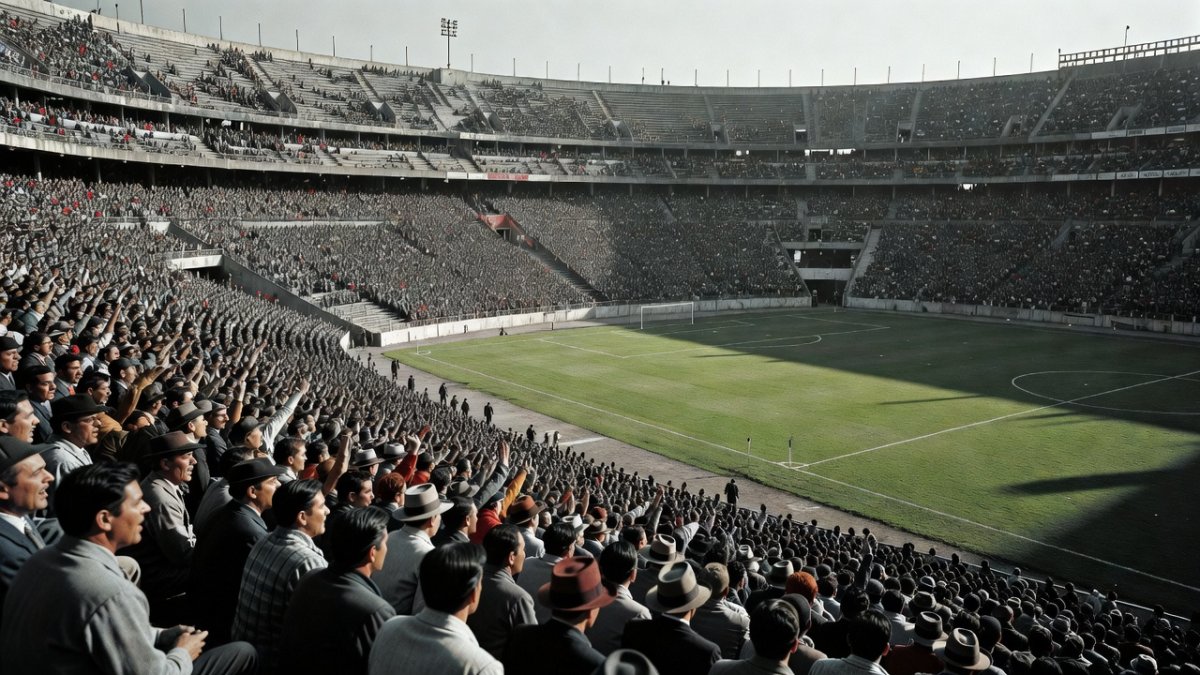
On 5 September 1971 Denmark defeated Mexico 3-0 in the final of the Copa 71 at Estadio Azteca in Mexico City before approximately 110,000 spectators, the largest crowd ever recorded for a women's sporting event at that time. The roar that shook the vast bowl echoed across the high-altitude plateau as Danish striker Lis Lene Nielsen converted the opening goal in the 18th minute, sending waves of pink and green scarves waving from the upper tiers. That single afternoon at the Azteca still stands as a benchmark for what women's football could draw when given proper backing, a fact that resonates today as Banyana Banyana prepare for their next Hollywoodbets Super League campaign under SAFA oversight.
The match formed the climax of a tournament staged from 15 August to 5 September 1971 that featured six national teams and eleven matches in which 39 goals were scored at an average of 3.55 per game. Fans poured through the turnstiles from early morning, many arriving by bus from Guadalajara and Puebla, clutching programmes featuring the mascot Xochitl. The concrete numbers from Mexico City, 110,000 spectators, 39 goals and six determined teams, remain the clearest proof that women's football has always possessed the capacity to command attention when given the stage.
The 1971 Copa 71 Tournament Unfolds
The Federation of Independent European Female Football organised the event, not FIFA, with matches hosted at Estadio Azteca in Mexico City and Estadio Jalisco in Guadalajara. Six teams competed: hosts Mexico, Denmark, England, France, Italy and Argentina, with Martini & Rossi as main sponsor alongside Carta Blanca beer, Dietafiel slimming drink and Lagg's tea. Ticket prices ranged from 30 to 80 pesos, roughly £1.15 to £3, while goalposts carried painted pink hoops and the mascot Xochitl appeared on pin badges, t-shirts, bags, dolls and programmes to attract families. Mexico defeated England 4-1 in the group stage before 80,000 fans at the Azteca, and Argentina later beat England 2-1 to finish third, showing the depth already present in the women's game two decades before FIFA's first official Women's World Cup in 1991.
Denmark had already claimed the 1970 FIEFF title in Italy, beating the hosts 2-0 in the Turin final, which gave the Danish squad vital momentum heading into Mexico. In the 1971 group phase Mexico edged France 2-1 at Jalisco while Italy overcame Argentina 3-0. The semi-finals delivered drama: Denmark defeated Italy 4-1 with Nielsen scoring twice, and Mexico overcame England 2-0 in front of another 90,000 crowd at the Azteca. These results set up the all-or-nothing final that would etch itself into sporting legend.
The atmosphere inside the Azteca felt electric long before kick-off. Vendors sold roasted corn and cold Carta Blanca while mariachi bands played between the stands. South African supporters watching archive footage decades later recognise the same surge of national pride that filled FNB Stadium during Banyana Banyana's 2019 and 2023 FIFA Women's World Cup campaigns.
Players Who Lit Up the Pitch
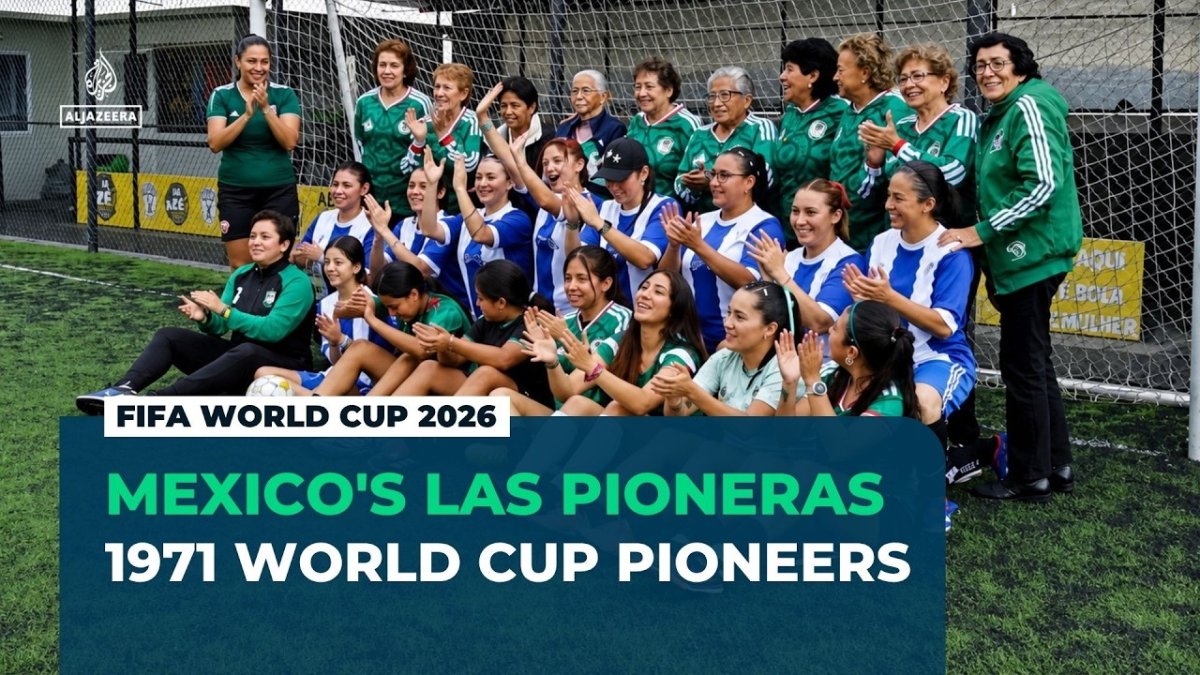
Danish forward Lis Lene Nielsen finished as top scorer with five goals, driving her side through the knockout stages to the final victory. Her clinical finishing in the semi-final against Italy and the final against Mexico showcased the technical quality that would later become standard in professional leagues. England's left midfielder Chris Lockwood, aged just 15 during the tournament, featured in the group matches and later reflected on the professional organisation that surrounded the event, noting the medical staff and proper changing facilities that felt revolutionary at the time.
Most participants returned to everyday life after the final whistle, denied any sustained professional pathway because the tournament lacked FIFA recognition and domestic structures to build upon. The same pattern of talent emerging then fading without support mirrors the early struggles faced by South African players such as Janine van Wyk, who went on to earn 185 caps and become Africa's most-capped footballer, and forward Thembi Kgatlana before the Sasol National Women's League provided a clearer route. Banyana Banyana coach Desiree Ellis has often spoken of these parallels, stressing that structured pathways must remain open for the next generation of South African talent.
Erased from the Record Books
FIFA refused to recognise the 1970 and 1971 tournaments run by FIEFF, allowing the results, attendances and player stories to slip from official histories for decades. The 2023 documentary Copa 71 by Rachel Ramsay and James Erskine brought the footage and testimonies back into public view, followed by an Al Jazeera English feature published on 5 July 2026 that revisited the original match reports and participant interviews. Without institutional memory, generations of South African girls growing up after the 2010 FIFA World Cup missed the knowledge that women's football had once filled the world's largest stadium, a gap SAFA has since tried to close through structured youth programmes.
The erasure meant that when Banyana Banyana qualified for their first FIFA Women's World Cup in 2019, few local fans realised the historical precedent of massive crowds supporting women's matches. SAFA's subsequent investment in provincial academies and the Hollywoodbets Super League now works to ensure that future stars never face the same institutional silence.
Parallels with Banyana Banyana's Journey
Banyana Banyana claimed their first WAFCON title in Morocco in 2022 under coach Desiree Ellis, who has led the side since 2018, yet the team still battles for consistent domestic visibility despite the Hollywoodbets Super League platform. Ellis's philosophy centres on high pressing and quick transitions, tactics that delivered memorable results at the 2019 and 2023 FIFA Women's World Cups where South Africa earned hard-fought draws against China and Argentina. Players such as Amanda Dlamini and Thembi Kgatlana have spoken of the same marginalisation that confronted the 1971 participants, where talent existed but sustained investment and media coverage did not.
The 2010 FIFA World Cup hosted on South African soil lifted the profile of the women's game locally, yet the structural challenges that followed the Mexico tournament remain familiar to SAFA administrators working to expand grassroots participation across provinces. The Hollywoodbets Super League now runs with 16 teams and live broadcasts on SuperSport, giving young girls in Soweto, Durban and Cape Town visible role models every weekend.
Lessons for Women's Football Today
The 110,000 crowd at the Azteca proved that audiences will turn out when matches receive proper promotion, sponsorship and stadium access, a lesson currently being applied in the MultiChoice Diski Challenge and the Hollywoodbets Super League. Transformation targets set by the South African Sports Ministry gain sharper focus when measured against the 1971 example, where early momentum was lost because governing bodies chose not to build on what had already succeeded. National pride generated by Banyana Banyana's World Cup appearances in 2019 and 2023 shows the unifying power sport can wield, provided the same level of organisation once extended to the Copa 71 is maintained year after year.
Looking Ahead in the Game
With the next WAFCON cycle approaching and SAFA continuing to invest in the Sasol National Women's League, the story of the 1971 final offers both warning and encouragement for administrators and fans alike. Supporters packing stadiums for Banyana Banyana matches today carry forward the same energy that filled the Azteca more than fifty years ago, demanding that history not repeat itself through neglect. The concrete numbers from Mexico City, 110,000 spectators, 39 goals and six determined teams, remain the clearest proof that women's football has always possessed the capacity to command attention when given the stage.
What to Watch For
The 2024 WAFCON qualifiers already show Banyana Banyana building depth across the Hollywoodbets Super League, with young midfielders from the University of Johannesburg and JVW FC pushing for national call-ups. SAFA's grassroots programmes in Limpopo and the Eastern Cape now feed directly into the national under-17 and under-20 squads, creating the sustained pathway missing after 1971. Fans should watch for Thembi Kgatlana's continued influence as she mentors the next generation ahead of the 2027 FIFA Women's World Cup qualifiers. The energy that once shook the Azteca is alive in South African stadiums every weekend; the task now is to keep the lights on and the turnstiles turning for decades to come.
By Dante Williams, Staff WriterThis article was produced with AI-assisted research and editorial support. Reporting is based on sources cited in the article.
What's Your Reaction?
 Like
0
Like
0
 Dislike
0
Dislike
0
 Love
0
Love
0
 Funny
0
Funny
0
 Wow
0
Wow
0
 Sad
0
Sad
0
 Angry
0
Angry
0

Breaking News and Investigations Correspondent at Global1.News. Based in London, covering global breaking news, security, and investigative stories. Known for digging deeper and connecting the dots across continents.














Comments (0)