
Trump Accounts Launch: $1,000 for Every Newborn on July 4
A Historic Launch on America’s 250th Birthday Folks, if you’re as fired up as I am about this moment, you know July 4, 2026, wasn’t just another fireworks night. It marked the official launch of Trump Accounts on America’s 250th birthday, a move that hands every eligible child born between January 1, 2025, and December 31, 2028, a $1,000 seed deposit from the Treasury Departmen
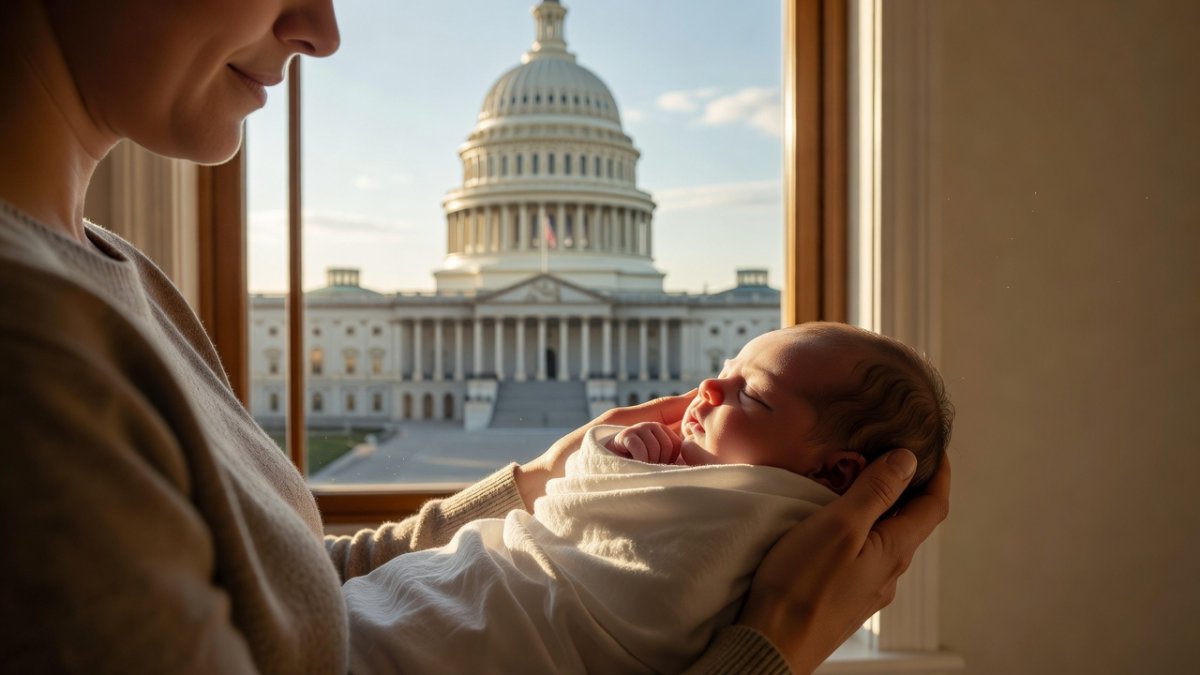
A Historic Launch on America’s 250th Birthday
Folks, if you’re as fired up as I am about this moment, you know July 4, 2026, wasn’t just another fireworks night. It marked the official launch of Trump Accounts on America’s 250th birthday, a move that hands every eligible child born between January 1, 2025, and December 31, 2028, a $1,000 seed deposit from the Treasury Department. That’s roughly 1.5 million newborns getting an automatic stake in the American Dream before they even learn to walk. Treasury Secretary Scott Bessent put it plainly: “Trump Accounts are now live, giving every child a stake in the American Dream from day one.”
More than 600,000 families pre-registered before the doors opened, according to Treasury Department figures released that day. This isn’t some feel-good pilot that fades away. It’s a custodial traditional IRA built for long-term retirement savings, with tax-deferred growth that can compound for decades. AP and NPR both noted the timing was deliberate, tying national independence to financial independence for the next generation.
If you’re wondering why this matters right now, consider the scale. The pilot covers only births in that four-year window, but the structure allows parents, relatives, and employers to keep pouring in up to $5,000 annually. That’s real money growing tax-deferred, and it’s already drawing billions in private pledges on top of the government seed.
What Exactly Are Trump Accounts
Trump Accounts function as custodial traditional IRAs for children under 18. The Treasury deposits the initial $1,000 for every child born in the 2025-2028 window, then steps back while families and employers can contribute up to the $5,000 annual limit. All growth stays tax-deferred until withdrawal in retirement, exactly like any other traditional IRA, according to official guidance posted on IRS.gov and Investor.gov.
Once the child turns 18, the account can be rolled over into a private financial institution of the family’s choosing. That flexibility was built in from the start so parents aren’t locked into a government platform forever. CNBC reported that early modeling shows even modest annual contributions could turn the $1,000 seed into six figures by retirement age for many families.
The accounts are strictly retirement vehicles, not 529 college savings plans. That distinction matters because the tax treatment and withdrawal rules follow IRA statutes rather than education-specific rules. Treasury officials emphasized this point repeatedly in the launch materials.
The 2025 Working Families Tax Cuts Law
Everything traces back to the Working Families Tax Cuts law that President Trump signed in 2025. That legislation created the legal framework for these custodial IRAs and authorized the Treasury to run the $1,000 seed pilot. USA Today highlighted how the bill passed with bipartisan support in key committees before final approval.
The law limits the government match to children born in the 2025-2028 window, making this a true pilot rather than an open-ended entitlement. After 2028, new births won’t receive the automatic $1,000, though the contribution rules remain available for anyone who already has an account. Treasury Department briefings made clear the four-year cap was intentional to measure results before expanding.
Supporters inside the administration argue the law represents the most significant child savings policy since 529 plans debuted decades ago. The structure encourages long-term thinking by tying every contribution to retirement rather than short-term spending.
Corporate America Steps Up Big
Michael and Susan Dell pledged $6.25 billion on launch day—enough to add $250 to the account of each of the first 25 million children who qualify. That single commitment dwarfs the government’s initial outlay and signals how seriously major philanthropists are taking the program. The Dell gift was announced jointly with Treasury officials and will be distributed through the new philanthropic stock contribution channel the Treasury opened in June 2026.
Micron Technology followed with its own $250 million commitment on June 30, 2026, targeting one million children. Company statements tied the investment directly to workforce development, noting that early retirement savings could help future employees build stability. Both pledges were reported across CNBC and AP as evidence that private capital is moving faster than many expected.
These corporate and philanthropic commitments are in addition to the annual $5,000 family contribution limit. That means some children could see their accounts grow by thousands of dollars in the first year alone, all while staying tax-deferred under the IRA rules.
The Trump Accounts App and Financial Literacy Push
Treasury didn’t just open accounts; it launched a dedicated Trump Accounts app containing eight financial literacy modules. Parents and older children can work through lessons on compounding, risk, and long-term planning while managing the account. The modules were developed with input from Investor.gov and are required viewing for families who want to unlock certain contribution features.
Early user data shared by Treasury shows strong engagement in the first week, with thousands completing at least the first three modules. Officials believe the app will help prevent the accounts from becoming forgotten “set it and forget it” vehicles. NPR coverage noted that similar financial education requirements have boosted participation rates in other government savings programs.
The app also serves as the primary portal for tracking contributions from employers and relatives. Real-time balance updates and projection tools are built in, giving families a clear picture of how today’s decisions affect retirement decades from now.
Melania Trump’s Foster Care Initiative
First Lady Melania Trump launched “Fostering the Future Accounts” as a direct spinoff on the same day. These accounts mirror the standard Trump Accounts but target children in the foster care system, ensuring they receive the $1,000 seed and the same contribution rules. The initiative pairs each account with a dedicated mentor through partner nonprofits.
Treasury confirmed that foster children born in the eligible window automatically qualify, removing the need for parental registration in many cases. Caseworkers can initiate the process through a simplified IRS channel. Early estimates suggest several thousand foster children will be enrolled in the first month alone.
Advocates praised the move for addressing a population often left out of wealth-building programs. The First Lady’s office stated the goal is to give every child exiting foster care at 18 a meaningful financial foundation rather than starting from zero.
The Political Debate Heats Up
Supporters call Trump Accounts the biggest advance in child savings since 529 plans, pointing to the combination of government seed money, private philanthropy, and tax-deferred growth. Treasury Secretary Bessent and congressional backers argue the program will create trillions in new retirement capital over the coming decades. USA Today quoted several economists who agree the long-term compounding effect could be substantial.
Critics, however, note that the $5,000 annual contribution limit favors wealthier families who can max it out every year. Lower-income households may only manage smaller contributions, widening the gap rather than closing it. NPR and AP both aired these concerns from policy analysts who worry the program’s benefits skew upward.
Despite the criticism, early polling shared by CNBC showed majority support among parents with young children. The debate now centers on whether future Congresses will expand the seed amount or raise income limits on contributions.
How Families Can Sign Up Today
Parents start by logging into their existing IRS online account or creating one at IRS.gov. From there they complete Form 4547, the official Trump Accounts registration document. The form asks for basic child information and confirms eligibility based on birth date. Processing typically takes five to seven business days before the $1,000 seed appears.
Once the account is active, families can link it to bank accounts for contributions or invite employers and relatives to contribute directly through the app. Fidelity, Investor.gov, and IRS.gov all host step-by-step guides that match the official Treasury instructions. Families who prefer not to keep the account at Treasury can initiate a rollover to a private custodian after the initial setup.
Important note: only children born in the 2025-2028 window receive the government $1,000. Families with children born outside that range can still open accounts but won’t receive the seed funding under the current pilot rules.
Long-Term Implications for Retirement Savings
Economists at the Treasury Department project that even conservative contribution patterns could generate trillions in new retirement capital by 2070. The combination of the $1,000 seed, annual family contributions, and major philanthropic pledges creates a compounding engine that previous generations never had. Investor.gov modeling shows median accounts reaching six figures by retirement for children who receive steady contributions.
The program also introduces millions of young people to IRA mechanics early, potentially shifting behavior around saving and investing. Because the accounts are portable after age 18, they could become a standard part of financial onboarding for new adults entering the workforce.
Private financial institutions are already preparing rollover products and low-cost investment options tailored to these accounts. The long-term effect on national savings rates remains to be measured, but the infrastructure is now in place.
What Families Should Do Right Now
If your child was born between January 1, 2025, and December 31, 2028, log into IRS.gov today and start the Form 4547 process. The sooner the account is open, the sooner the $1,000 seed begins compounding. Don’t wait for the app to remind you—early registration also positions you to accept contributions from grandparents or employers who may be ready to move.
Review the eight financial literacy modules in the Trump Accounts app even if your child is still an infant. Understanding the rules now will help you make smarter contribution decisions later. Fidelity and Investor.gov both offer additional resources that complement the official Treasury content.
Finally, talk to your employer’s benefits team. Several large companies have already announced matching programs, and more are expected. The $5,000 annual limit is generous, but it only works if families actually use it. This is one policy where acting early genuinely changes the math for an entire lifetime.
By Jessica Ali, Global 1 NewsThis article was produced with AI-assisted research and editorial support. Reporting is based on sources cited in the article.
What's Your Reaction?
 Like
0
Like
0
 Dislike
0
Dislike
0
 Love
0
Love
0
 Funny
0
Funny
0
 Wow
0
Wow
0
 Sad
0
Sad
0
 Angry
0
Angry
0

Editor-in-Chief at Global1.News. Atlanta-based journalist who cuts through the BS and tells it like it is. Lead anchor, host, and the voice you hear when the spin stops and the truth starts.














Comments (0)