
Boks Demolish England 45-21 in Ellis Park Thriller
The roar at Ellis Park on July 4 2026 will echo through South African rugby history for years. The Springboks dismantled England 45-21 in the Nations Championship opener, but the real story was the calm emergence of a 23-year-old flank from George who stepped into the boots of legends. With Siya Kolisi ruled out by hamstring trouble and Eben Etzebeth nursing a head knock, Paul

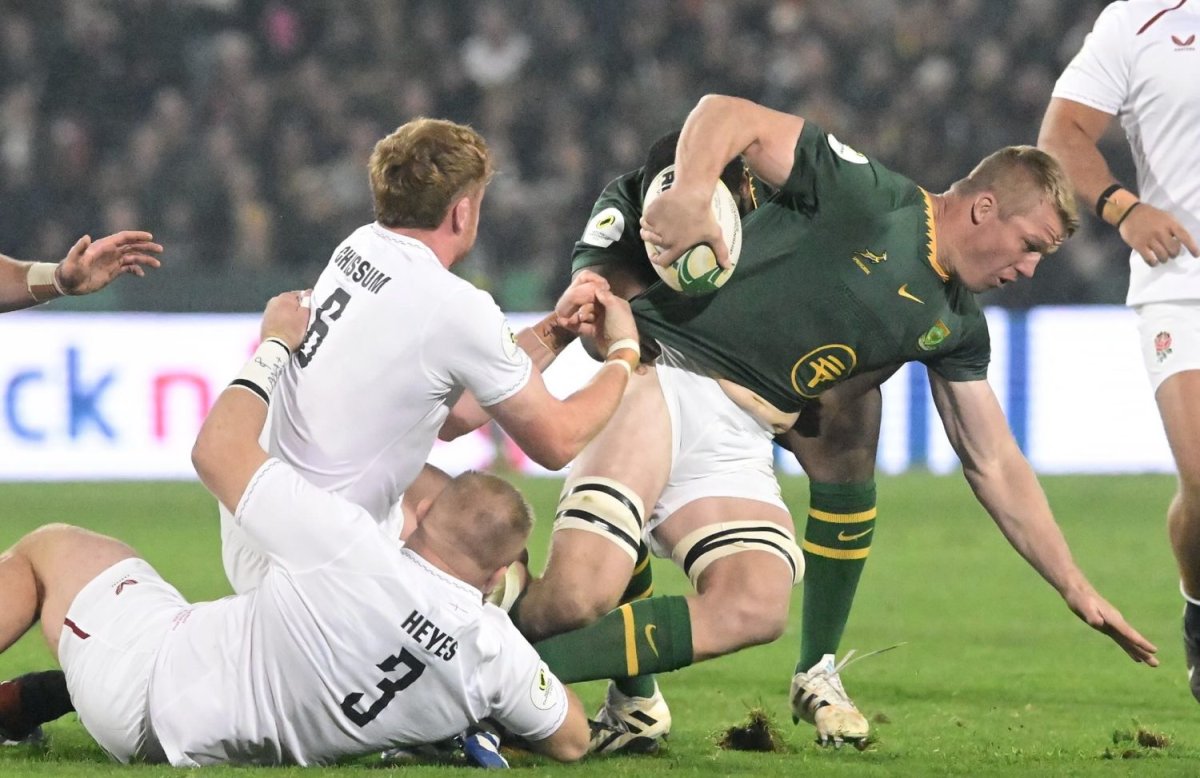
The roar at Ellis Park on July 4 2026 will echo through South African rugby history for years. The Springboks dismantled England 45-21 in the Nations Championship opener, but the real story was the calm emergence of a 23-year-old flank from George who stepped into the boots of legends. With Siya Kolisi ruled out by hamstring trouble and Eben Etzebeth nursing a head knock, Paul de Villiers earned Bok number 954 and delivered a performance that blended raw power with street-smart reading of the game. Attendance hit 52 790, and every soul felt the shift in momentum from the opening whistle.
Paul de Villiers' Shock Debut Steals the Show
Paul de Villiers walked into Ellis Park knowing the weight on his shoulders. At 23, the Hoër Landbouskool Oakdale product had already captained the Junior Springboks in 2023, tasted Currie Cup action against the Sharks, and earned his place in the Stormers squad through the Western Province academy. Yet nothing prepared him for replacing Siya Kolisi at flank in a Test match. The young man from George handled the moment with the quiet assurance that has marked his rise. He carried hard in the opening exchanges, secured turnovers at the breakdown, and linked smoothly with Cameron Hanekom, who started alongside him. Pieter-Steph du Toit shifted to lock and took the captaincy, but de Villiers never looked like a passenger. Kolisi sent a voice note the night before, urging him to play his natural game and trust the system Rassie Erasmus has built. That message clearly landed. De Villiers finished with a high work rate, multiple carries, and defensive reads that belied his inexperience. His debut reminded everyone that the Springbok pipeline, nurtured through SARU's transformation programmes and grassroots clubs across the Western Cape, continues to deliver. The crowd chanted his name late in the game, a fitting tribute to a player who represents the next generation of Bok flankers ready to step up when the established stars are sidelined. This performance sets the tone for a long career in green and gold.
Erasmus' Game Plan Shines Through Set Piece Dominance
Rassie Erasmus crafted a blueprint that exploited England's lineout vulnerabilities from the first minute. With Etzebeth absent, Ruan Nortje and the newly capped captain Pieter-Steph du Toit controlled the set piece with clinical precision. The Boks won 85 percent of their own lineout ball and stole three English throws, turning pressure into points. Thomas du Toit crossed early after a driving maul that started from a perfectly executed lineout on the English 22. The scrum remained a weapon too, with Ox Nche and the front row pinning England back repeatedly. Defensively, the Springboks maintained a narrow shape that funneled carriers into contact areas where Malcolm Marx and Jasper Wiese could dominate. Even after Kurt-Lee Arendse received a yellow card, the defensive system held firm, forcing England into errors. Erasmus' emphasis on high-tempo ball movement and quick ruck speed allowed Manie Libbok to dictate tempo, while the bench impact of Ben-Jason Dixon and Marco van Staden added fresh legs in the final quarter. This performance underscored how the Springbok coaching group has evolved the game plan to blend traditional power with modern attacking width, a philosophy that has roots in the successful 2023 World Cup campaign and continues to adapt under pressure. The set-piece edge proved decisive in building the 17-0 lead inside 12 minutes.
Damian Willemse Orchestrates a Masterclass from the Back
Damian Willemse reached his 50th Test cap and delivered a performance that blended vision, boot accuracy, and defensive steel. Operating at fullback, he orchestrated the backline with the calm authority of a seasoned general. His cross-field kicks pinned England in their own half, while his distribution from broken play created space for Cheslin Kolbe and Jesse Kriel to exploit. Willemse's 50th appearance also highlighted the depth at the number 15 jersey, a position once considered a weakness but now a strength thanks to consistent investment in multi-skilled players through the provincial system. He linked seamlessly with Grant Williams, whose bonus-point try after a 20-phase attack owed much to Willemse's quick ball from the ruck. Defensively, Willemse read England's wide attacks perfectly, making several try-saving tackles. His partnership with the returning Canan Moodie off the bench added another layer of attacking threat late on. In the broader South African context, Willemse embodies the modern Springbok who can play multiple positions, a direct result of SARU's focus on versatile athletes emerging from strong school and university programmes. His masterclass at Ellis Park showed why he remains central to Erasmus' plans for the rest of the Nations Championship and beyond.
Cheslin Kolbe's 50th Cap Ignites the Crowd
Cheslin Kolbe celebrated his 50th Test in trademark fashion, scoring a brilliant individual try that brought Ellis Park to its feet. The diminutive winger used his trademark footwork to beat three defenders after a quick tap from a penalty, finishing under the posts to extend the lead to 17-0. Kolbe's milestone moment captured the spirit of Springbok rugby, where small-town heroes rise through the ranks to become world-class performers. His work rate off the ball, chasing kicks and pressuring England's back three, set the tone for the entire backline. Even when England mounted their fightback through Genge and Martin tries, Kolbe remained a constant threat on the counter. His 50th cap also carried emotional weight, coming in the same match where de Villiers earned his first. Together they symbolised the passing of the torch within the squad. Kolbe's presence on SuperSport highlights has inspired countless young players in the townships and rural areas to dream of wearing the green and gold. His performance against England reinforced why he remains one of the most dangerous finishers in world rugby, blending speed, skill, and an unquenchable competitive fire that defines Springbok culture.
What the Nations Championship Means for South African Rugby
The launch of the Nations Championship represents a new chapter for South African rugby, offering consistent high-level competition that strengthens the Springboks' preparation for future World Cups. Hosting England at Ellis Park delivered the perfect statement of intent, with the 45-21 scoreline sending a message across the rugby world. The competition format allows emerging players like de Villiers to gain valuable experience while established stars manage workload. For SARU, the tournament provides crucial revenue and exposure that supports grassroots development programmes across all provinces. The passionate crowd at Ellis Park demonstrated the enduring love South Africans have for Test rugby, a passion that fuels transformation initiatives aimed at broadening participation at school and club level. This victory also highlighted how the Springboks continue to evolve their identity, blending the physicality associated with Kolisi-era leadership with the tactical flexibility demanded by modern rugby. The Nations Championship stands as a platform where depth can be tested and new combinations forged, ensuring the national team remains competitive on the global stage for years to come.
Depth and Resilience: Kolisi and Etzebeth's Absence Tested
Losing both Siya Kolisi and Eben Etzebeth before kick-off would have derailed many teams, yet the Springboks responded with maturity and cohesion. Pieter-Steph du Toit stepped into the captaincy with authority, leading by example in the lineout and carrying. Cameron Hanekom started at flank and formed a promising partnership with de Villiers, showing the next generation is ready. The bench, featuring Ben-Jason Dixon who scored late, provided the impact needed to pull away in the final quarter. This resilience speaks to the depth built through consistent provincial competition and the Stormers' successful United Rugby Championship campaigns. The absence of two talismanic leaders forced others to grow, a process that strengthens the squad for the return fixtures. Erasmus' rotation policy, supported by SuperSport's coverage that keeps fans engaged with emerging talent, ensures no single player becomes indispensable. The 45-21 result proved that Springbok culture, rooted in collective responsibility and high standards, survives when star names are missing. This depth will prove vital as the series continues and the physical demands increase.
Transformation Pipeline Fuels the Springboks' Future
Paul de Villiers' debut forms part of a broader transformation story that SARU has championed for over a decade. From grassroots clubs in the Western Cape to the WP academy and U20 structures, the pathway has produced players who combine athletic excellence with cultural awareness. De Villiers, the fifth Oakdale alumnus to wear the green and gold, represents the success of targeted development programmes that identify talent early and provide structured support. The presence of players like Malcolm Marx, Grant Williams, and Cheslin Kolbe in the same match further illustrates how transformation has enriched the squad without compromising performance. These initiatives, backed by government and private partnerships, ensure rugby remains accessible across communities. The Ellis Park crowd reflected this diversity, celebrating every Springbok try with unified passion. As the Nations Championship unfolds, the continued integration of players from varied backgrounds will keep the Springboks dynamic and representative of the nation they serve. This pipeline is not just about numbers; it is about sustaining excellence while honouring the inclusive values that define modern South African sport.
Eyes on the Horizon: The Rest of the Series Awaits
With the opening victory secured, attention turns to the remaining Nations Championship fixtures. The return of Kolisi and Etzebeth will add leadership and physicality, but the emergence of de Villiers and the continued form of Hanekom provide exciting selection dilemmas. Erasmus will likely use the series to blood more fringe players while maintaining the high-tempo style that dismantled England. The 45-21 scoreline, built on tries from du Toit, Kolbe, Arendse, Williams, Marx, and Dixon, sets a benchmark for attacking output. Defensively, the yellow cards to Arendse, Freeman, and Pepper offered lessons that must be addressed. South African rugby fans, glued to SuperSport broadcasts, will watch with anticipation as the squad balances experience and youth. The Ellis Park triumph has ignited belief that this group can challenge for major honours. The journey continues, and the Springboks look ready to write another proud chapter in their storied history.
Tags: Springboks, England rugby, Paul de Villiers, Ellis Park, Nations Championship, Siya Kolisi, Pieter-Steph du Toit, Manie Libbok, transformation in rugby, SuperSport, SARU, Springbok depth, July 4 2026, Cameron Hanekom
By Dante Williams, Staff Writer
This article was produced with AI-assisted research and editorial support. Reporting is based on sources cited in the article.
What's Your Reaction?
 Like
0
Like
0
 Dislike
0
Dislike
0
 Love
0
Love
0
 Funny
0
Funny
0
 Wow
0
Wow
0
 Sad
0
Sad
0
 Angry
0
Angry
0

Breaking News and Investigations Correspondent at Global1.News. Based in London, covering global breaking news, security, and investigative stories. Known for digging deeper and connecting the dots across continents.













Comments (0)