
Eight Arab Teams Make History at 2026 World Cup — A New Era for Regional Football
The Historic Arab Surge at the 2026 World Cup Eight Arab nations have qualified for the 2026 FIFA World Cup, the largest contingent in the tournament's history. Algeria, Egypt, Iraq, Jordan, Morocco, Qatar, Saudi Arabia and Tunisia earned their places on merit in the expanded 48-team format. This doubles the four Arab teams that reached the 2018 and 2022 editions. The achievement reflects genuine progress across the region rather than simple expansion luck.
The Historic Arab Surge at the 2026 World Cup
Eight Arab nations have qualified for the 2026 FIFA World Cup, the largest contingent in the tournament's history. Algeria, Egypt, Iraq, Jordan, Morocco, Qatar, Saudi Arabia and Tunisia earned their places on merit in the expanded 48-team format. This doubles the four Arab teams that reached the 2018 and 2022 editions. The achievement reflects genuine progress across the region rather than simple expansion luck.
Former Qatar goalkeeper Ahmed Khalil captured the moment when he said the eight teams represent a true honour for regional football. He stressed that participation alone is not enough and called for every side to succeed inside their groups. Khalil pointed to rising playing standards, matured administrative structures and stronger financial support as proof that a system is working across the Arab world.
Qatar 2022 as the Turning Point
Qatar's hosting of the 2022 World Cup marked the decisive shift. Morocco became the first Arab and African side to reach the semi-finals that year, proving the region's competitive depth. The tournament also showed that Arab nations could stage events at the highest global standards. A knowledge transfer agreement between Qatar's Supreme Committee and FIFA sent Qatari experts to host cities in the United States and Canada, directly shaping preparations for 2026.
These steps created momentum that carried into the current cycle. The eight qualified teams now carry forward the confidence built in Qatar. Khalil credited the 2022 experience with lifting the entire region's football ecosystem, from youth development to senior national team structures.
Standout Results in the 2026 Tournament
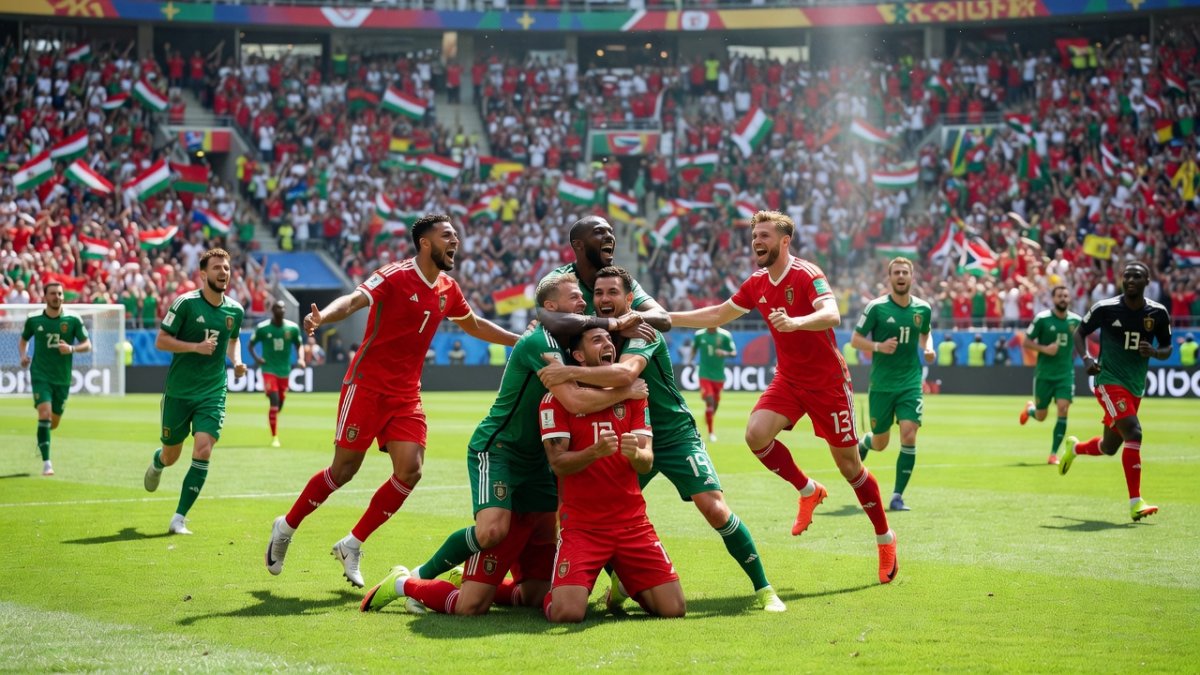
Morocco reached the quarter-finals before losing 2-0 to France on July 9, with Kylian Mbappé and Ousmane Dembélé scoring. The Atlas Lions had earlier beaten the Netherlands on penalties in the Round of 32 and defeated Canada 3-0 in the Round of 16. Egypt advanced to the Round of 16 and fell 3-2 to Argentina on July 7. Algeria also progressed to the Round of 16 before exiting.
The remaining Arab sides, Qatar, Saudi Arabia, Tunisia, Iraq and Jordan, left the competition in the group stage. The 2026 tournament runs from June 11 to July 19 across the United States, Canada and Mexico. Semi-finals feature France against Spain today on July 14 and England against Argentina on July 15, with the final set for July 19 at MetLife Stadium in New Jersey.
Relevance to South African Football
South Africa hosted the first African World Cup in 2010, creating infrastructure and national pride that still echoes today. Bafana Bafana failed to qualify for 2026 despite the expanded field. The 48-team format did not translate into an automatic berth for the nation that once welcomed the world. The tragic death of Bafana midfielder Jayden Adams at age 25 after the qualifiers added further pain to the campaign.
Yet the Arab success story carries direct lessons for South African football. Morocco, Egypt and Algeria all represent African nations that have invested consistently in structures and coaching. CAF sides overall performed strongly, with Morocco in the quarter-finals, Egypt and Algeria in the Round of 16, and Nigeria reaching the group stage. SAFA and the broader South African sports ecosystem can study how these federations built sustained progress.
Comparing Legacies: 2010 and Qatar 2022
South Africa's 2010 World Cup left stadiums, transport links and a generation inspired by the event. Qatar's 2022 edition delivered similar infrastructure gains plus targeted knowledge transfer to future hosts. Both tournaments proved that emerging football regions can deliver world-class events when governance and investment align. The Arab model shows how hosting can accelerate domestic league standards and national team results.
Bafana Bafana supporters know the frustration of missing out. The Arab eight's achievement highlights what consistent federation work can produce. South African fans can draw motivation from seeing fellow African and Arab nations advance deep into the knockout stages.
Fan Culture and the Call for Continued Growth
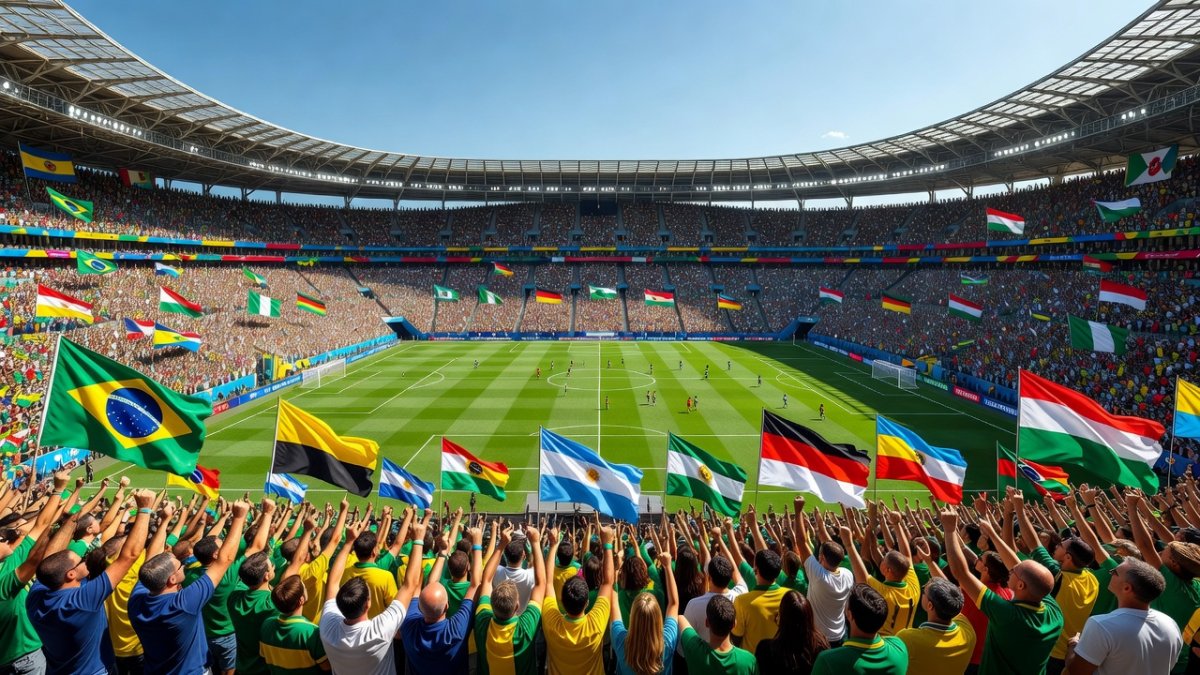
Stadium atmospheres at the 2026 tournament reflect the passion that Arab supporters bring to every match. The eight-team presence has created visible regional unity and pride. Khalil warned against stopping at mere qualification and urged the teams to convert opportunity into results on the pitch.
South African football culture shares this hunger for success. The 2010 legacy showed how a World Cup can unite a nation. Now the Arab contingent offers a fresh benchmark. SAFA can examine youth pathways, coaching education and administrative stability that helped Algeria, Egypt and Morocco reach the knockout rounds. The message from Khalil remains clear: eight teams at the World Cup is evidence of progress, but the real test lies in what happens next on the field.
By Dante Williams, Staff WriterThis article was produced with AI-assisted research and editorial support. Reporting is based on sources cited in the article.
What's Your Reaction?
 Like
0
Like
0
 Dislike
0
Dislike
0
 Love
0
Love
0
 Funny
0
Funny
0
 Wow
0
Wow
0
 Sad
0
Sad
0
 Angry
0
Angry
0

Breaking News and Investigations Correspondent at Global1.News. Based in London, covering global breaking news, security, and investigative stories. Known for digging deeper and connecting the dots across continents.









Comments (0)