
Lebanon First Billboards Defaced After US-Israel Framework Pact
Defacement Incident on the Airport Road On June 28, 2026, billboards displaying the Lebanese flag alongside the slogan “Lebanon First” were defaced along the highway leading to Beirut-Rafic Hariri International Airport. The road passes directly through Dahieh, Hezbollah’s stronghold in Beirut’s southern suburbs. Spray-painted slogans and torn posters appeared within hours of th
Defacement Incident on the Airport Road
On June 28, 2026, billboards displaying the Lebanese flag alongside the slogan “Lebanon First” were defaced along the highway leading to Beirut-Rafic Hariri International Airport. The road passes directly through Dahieh, Hezbollah’s stronghold in Beirut’s southern suburbs. Spray-painted slogans and torn posters appeared within hours of the billboards’ installation, with footage showing masked individuals targeting the displays near the airport exit. The incident occurred two days after the signing of the trilateral framework agreement in Washington.
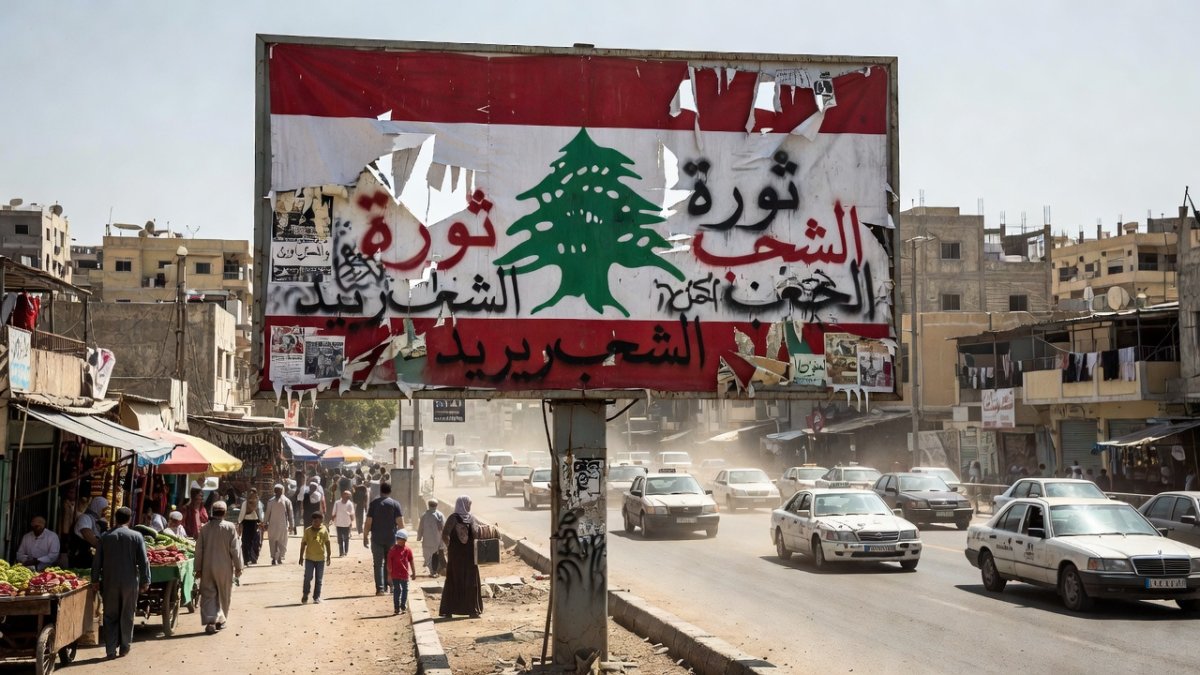
Local residents reported that the defacement took place overnight, coinciding with increased Hezbollah patrols in the area. The billboards had been erected by civil society groups advocating for Lebanese sovereignty and reduced foreign influence. No arrests were made, and Lebanese security forces maintained a limited presence. The airport road has historically served as a site for political messaging, with previous campaigns targeting sectarian symbols and foreign flags.
The June 26 Framework Agreement
The trilateral framework agreement between Lebanon, Israel, and the United States was signed in Washington on June 26, 2026. It establishes the first formal diplomatic structure linking Beirut and Jerusalem under American auspices. The accord outlines mechanisms for maritime boundary demarcation and potential energy cooperation in the Eastern Mediterranean, where untapped gas reserves are estimated at 1.7 trillion cubic meters. US Special Envoy Amos Hochstein facilitated the talks, building on earlier indirect negotiations.
Lebanese officials, including Prime Minister Najib Mikati, described the agreement as a step toward economic recovery. Israeli Energy Minister Eli Cohen emphasized security guarantees tied to any future gas development. The framework does not constitute full normalization but creates a standing committee for technical discussions. Hezbollah immediately rejected the deal, labeling it a violation of Lebanese sovereignty.
Hezbollah’s Position and Local Reaction
Hezbollah Secretary-General Hassan Nasrallah condemned the framework agreement in a June 27 speech, stating that any direct engagement with Israel undermines the “resistance axis.” The group’s supporters in Dahieh quickly mobilized against the “Lebanon First” campaign, viewing the slogan as a direct challenge to Hezbollah’s narrative of perpetual confrontation. Local reactions in the southern suburbs ranged from quiet approval of the defacement to open criticism from residents weary of economic isolation.
Iran’s continued financial and military support, estimated at $700 million annually, underpins Hezbollah’s ability to sustain operations despite Lebanon’s banking crisis. Community leaders in Dahieh noted that the billboards appeared shortly after the March-June 2026 conflict with Israel, which caused an estimated $3.2 billion in damages. Many residents expressed frustration that political messaging overshadowed urgent needs for reconstruction and electricity.
“Lebanon First” Versus the Resistance Narrative
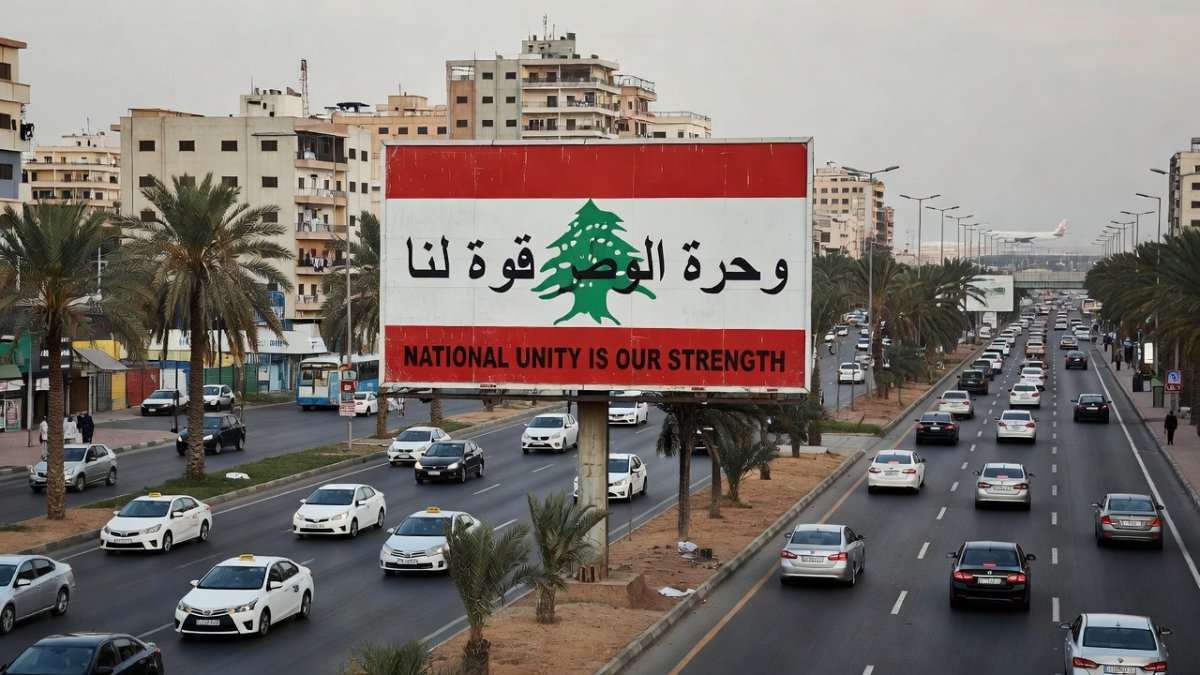
The “Lebanon First” slogan promotes national sovereignty and prioritizes domestic interests over regional ideological commitments. It directly contests Hezbollah’s framing of Lebanon as a frontline state in the struggle against Israel. Proponents argue that the slogan aligns with the 1989 Taif Agreement’s emphasis on ending sectarian militias and restoring state authority. Critics within Hezbollah circles claim the campaign is funded by Gulf states seeking to replicate the Abraham Accords model in Lebanon.
Public opinion polls conducted in May 2026 showed 48 percent of Lebanese respondents favoring reduced Hezbollah influence in foreign policy. The slogan has gained traction among Christian and Sunni communities, while support remains low in Shia-majority areas. The defacement incident illustrates the depth of this divide, with physical attacks on messaging reflecting broader struggles over Lebanon’s strategic orientation.
Historical Background: From Taif to the 2026 War
Lebanon’s sectarian political system was reshaped by the 1989 Taif Agreement, which ended the 1975-1990 civil war and redistributed power among religious communities. The accord failed to disarm non-state actors, allowing Hezbollah to retain its arsenal after Israel’s 2000 withdrawal from southern Lebanon. The 2006 war with Israel further entrenched Hezbollah’s military role, resulting in over 1,200 Lebanese deaths and widespread infrastructure destruction.
Tensions escalated again in early 2026, with clashes from March to June causing additional casualties and displacing 85,000 people. The conflict coincided with renewed US efforts to mediate maritime disputes. Iran’s role as Hezbollah’s primary backer has remained consistent since the 1980s, providing training and advanced weaponry. These historical patterns explain why the June 2026 framework agreement triggered immediate backlash in Hezbollah-controlled areas.
Strategic Calculus for Key Actors
Hezbollah calculates that rejecting the framework agreement preserves its deterrence posture and Iranian funding streams. Any perceived acceptance risks eroding its domestic legitimacy among core supporters. Iran views the accord as an American attempt to weaken the axis of resistance and limit Hezbollah’s operational freedom near the Israeli border. Tehran has signaled continued arms shipments despite international sanctions.
Lebanon’s government, constrained by the Taif system and economic collapse, sees the agreement as a potential revenue source from gas fields that could generate $4-6 billion annually. Israel seeks stable maritime boundaries and reduced Hezbollah rocket threats. The United States aims to advance Arab-Israeli normalization while containing Iranian influence. Gulf states, particularly Saudi Arabia and the UAE, monitor the developments for signs that Lebanon might eventually join broader normalization frameworks.
Regional Implications and Energy Dimensions
The Eastern Mediterranean gas discoveries have intensified competition among Lebanon, Israel, Cyprus, and Turkey. Successful implementation of the framework could unlock joint development of the Qana prospect, with estimated reserves of 100 billion cubic meters. European energy firms have expressed interest in exploration licenses once security arrangements are finalized. Hezbollah’s opposition raises risks of renewed maritime incidents.
Broader regional dynamics include ongoing Gulf engagement with Israel through the Abraham Accords. Saudi Arabia has conditioned further economic support to Lebanon on reduced Hezbollah dominance. The defacement of “Lebanon First” billboards signals that domestic actors aligned with Iran intend to block any shift toward pragmatic diplomacy. Energy revenues remain a key variable in Lebanon’s path to fiscal stabilization.
What Comes Next
Lebanese authorities have not announced plans to repair or replace the defaced billboards. Civil society groups behind the campaign are considering legal complaints, though enforcement in Dahieh remains uncertain. US diplomats continue quiet consultations with all parties to prevent escalation. Hezbollah’s next political moves will likely focus on parliamentary pressure against the framework’s implementation committees.
Regional observers expect further messaging battles along the airport road as both sides test public tolerance for confrontation. The interplay between energy interests, sectarian politics, and Iranian influence will determine whether the June 2026 agreement produces tangible outcomes or remains a symbolic flashpoint.
By Malik Hassan, Staff WriterThis article was produced with AI-assisted research and editorial support. Reporting is based on sources cited in the article.
What's Your Reaction?
 Like
0
Like
0
 Dislike
0
Dislike
0
 Love
0
Love
0
 Funny
0
Funny
0
 Wow
0
Wow
0
 Sad
0
Sad
0
 Angry
0
Angry
0
Middle East Correspondent at Global1.News. Based in Beirut, covering politics, conflict, energy, and society across the Middle East. Brings context and depth to a region often reduced to headlines.











Comments (0)