
Israel Marks 1,000 Days Since October 7 With Nationwide Protests and Demands for Accountability
In a recent i24NEWS English report from Jerusalem, footage captured the precise moment at 6:29 AM on Thursday when sirens wailed across Israel to mark 1,000 days since the October 7, 2023 Hamas-led terror attack that killed 1,200 people and saw 251 taken hostage into Gaza. The day has become a national milestone of grief, protest, and unresolved questions about accountability a
In a recent i24NEWS English report from Jerusalem, footage captured the precise moment at 6:29 AM on Thursday when sirens wailed across Israel to mark 1,000 days since the October 7, 2023 Hamas-led terror attack that killed 1,200 people and saw 251 taken hostage into Gaza. The day has become a national milestone of grief, protest, and unresolved questions about accountability as bereaved families, survivors, and political leaders confront the legacy of the worst terror attack in Israeli history.
Israel Marks 1,000 Days Since October 7 With Nationwide Protests and Demands for Accountability
Jerusalem, Israel – July 2, 2026 —
Nationwide Protests and Memorial Events
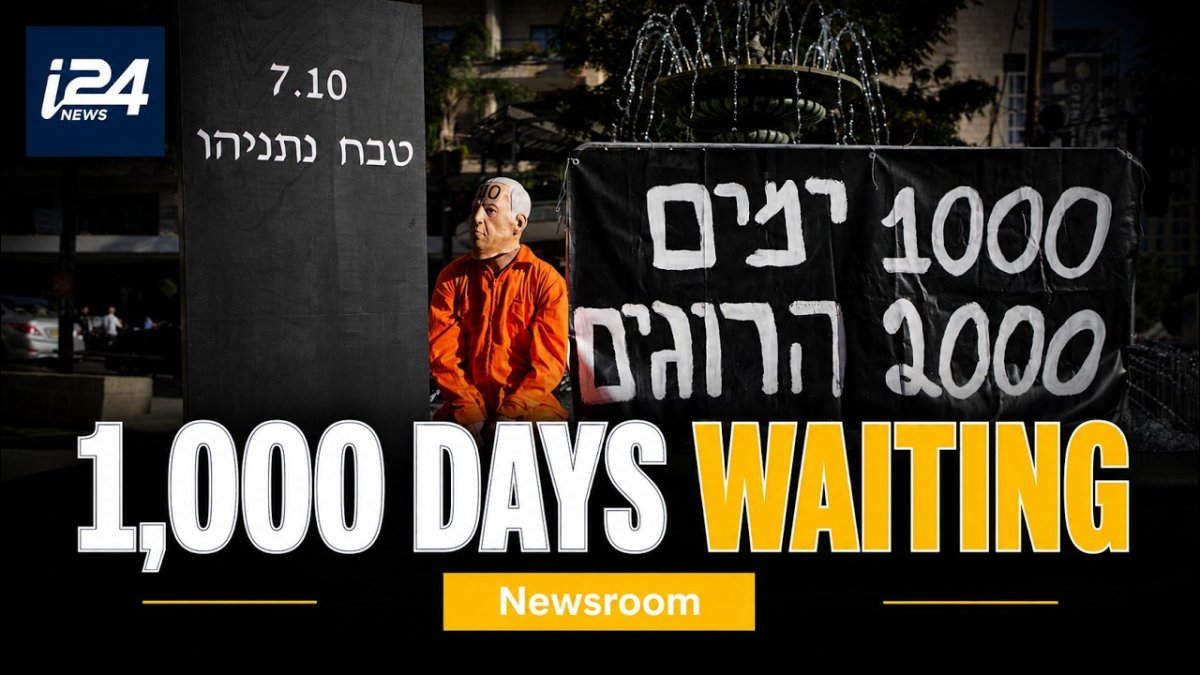
As shown in the i24NEWS English video coverage of today's events, Israel marks exactly 1,000 days since the October 7, 2023 Hamas-led terror attack that killed 1,200 people, mostly civilians, and saw 251 taken hostage into Gaza. The October Council, representing more than 1,500 bereaved families, survivors, and former hostages, coordinated nationwide protests starting at 6:29 AM at Goma Junction, Karkur Junction, the entrance to Gedera, French Hill in Jerusalem, and the Prime Minister's Residence in Jerusalem.
A memorial convoy toured the worst-hit sites including the Nova festival grounds near Kibbutz Re'im, Nir Oz, Kissufim, Be'eri, Nahal Oz, and Kfar Aza before ending at a memorial site near Sderot. A nationwide moment of silence was held at 10:00 AM, while families of Nova victims held a separate memorial at the Re'im parking lot with a minute of silence.
The "One Thousand Memories" exhibition opened at the Tel Aviv Museum of Art, displaying personal items belonging to murdered civilians, fallen soldiers, and hostages for the first time. Organization Testimony 710 uploaded new online video testimonies of October 7 survivors, with a screening scheduled at the Tel Aviv Museum of Art on Thursday.
Freed hostage Rom Braslavski, who was held in Gaza for 737 days before his release in October 2025, is expected to speak at the main evening rally at Hostages Square near Kirya IDF HQ. The Kumu organization, a group of survivors and bereaved families, held its own memorial in Tel Aviv's Yarkon Park apart from the state-sponsored ceremony.
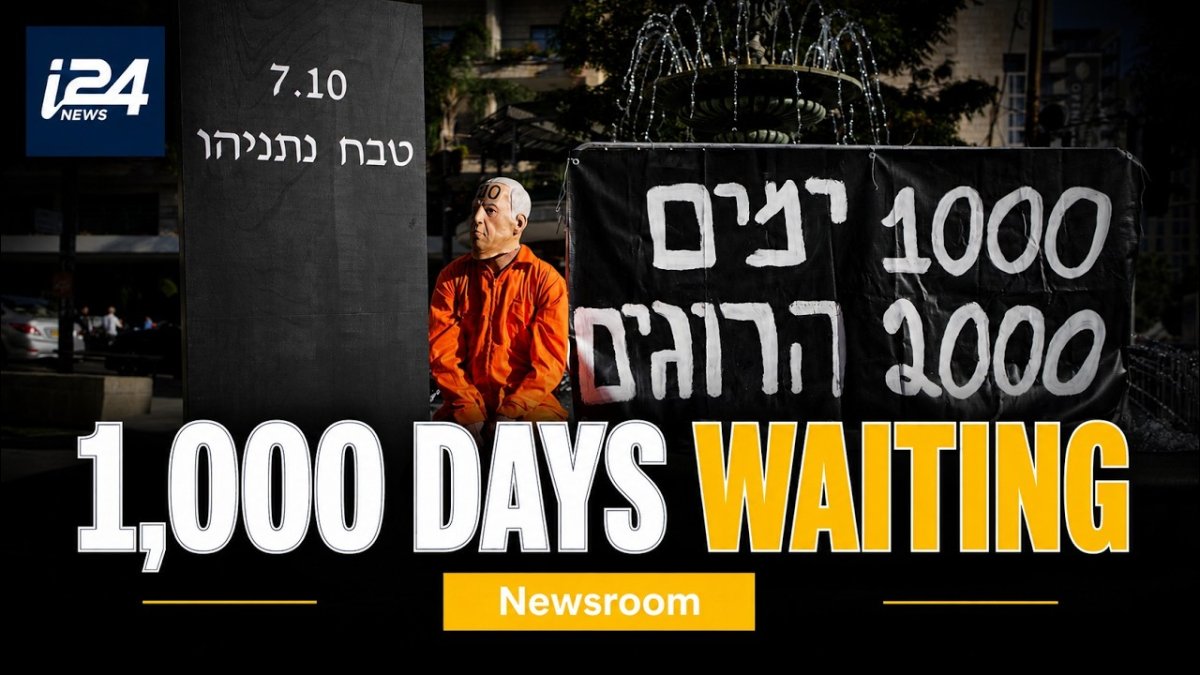
Voices of the Families: Demanding Accountability
Danny Miran, father of former hostage Omri Miran, spoke at Amiad Junction in Upper Galilee and stated that this was not a war of revival but a war of bloodshed. He accused Finance Minister Bezalel Smotrich and National Security Minister Itamar Ben Gvir of pressuring Prime Minister Benjamin Netanyahu not to agree to hostage deals, noting that 50 more hostages could have returned alive. Smotrich claimed on Monday that thanks to him all the hostages are here.
Danny Elgarat, brother of murdered hostage Itzik Elgarat, said that for a thousand days he has heard people saying the hostages have returned, yet not all of them have returned. He emphasized that his brother Itzik was kidnapped alive from their home and could have come back alive but was abandoned to die in captivity. Esther Buchshtab, mother of Yagev killed in Hamas captivity, recalled that 251 hostages including her son Yagev and his wife were kidnapped from their home 1,000 days ago.
Omri Miran told Kan News that on the national level there is no change in how things are being handled and that the lesson has not been learned. Military officers tell him they are sorry and ashamed, but he does not see that from the leadership, which instead focuses on the draft exemption law for Torah scholars to buy another two weeks in power. Sharon Sharabi, whose brothers Yossi was killed in captivity and Eli was released emaciated while his wife Lian and daughters Noya and Yahel were killed on October 7, questioned how after 1,000 days Hamas is still standing.
Former hostage pointman Maj.-Gen. (res.) Nitzan Alon told the Herzliya Conference at Reichman University that in certain cases with different conduct and decisions or different negotiations more hostages might have been brought back alive. These statements from families and officials highlight ongoing grief tied directly to decisions made in the Prime Minister's Office and the Knesset.
The Demand for a State Commission of Inquiry
Protesters set up a large coffin near the Knesset in Jerusalem and staged a mock funeral procession in Paris Square with participants wearing orange jumpsuits. Signs criticized the moral, leadership, and strategic failure of the coalition government, while a sand display on Tel Aviv beach read that their blood cries out from the ground after days of failure, abandonment, and bereavement.
Vigils took place at Prime Minister Netanyahu's private residence in Caesarea and the homes of ministers Miki Zohar and Yoav Kish. Police confronted demonstrators near the Knesset as the key demand remained the establishment of a state commission of inquiry into the October 7 failures, which the government has not voted to establish.
The October Council coordinated these actions across multiple junctions and sites to press for accountability from the IDF and Shin Bet leadership. Families continue to link the absence of such an inquiry to the continued political survival of the current coalition in the Knesset.
These protest actions underscore the direct connection between the lack of a formal investigation and daily security concerns in communities from the Gaza border to Tel Aviv. Organizers insist that without a state commission the failures that allowed the Hamas assault to succeed will not be addressed by the relevant Israeli institutions.
Political Fallout and the Election Context
Yisrael Beiteinu Chairman Avigdor Liberman visited Kfar Aza and stated that this should never have happened because the writing was on the wall. He personally laid out all the alerts and warnings on the decision-makers' table, yet since then efforts have been made to make people forget so responsibility can be evaded ahead of upcoming Israeli elections.
Criticism from families targets Netanyahu's focus on the draft exemption law for Torah scholars as a tactic to remain in power. Public figures marking the 1,000-day milestone have tied the absence of accountability directly to the political calculations of the coalition ahead of the next elections.
The political dimension adds pressure on the Prime Minister's Office and the Foreign Ministry as voters in Jerusalem and Tel Aviv weigh the government's handling of security failures. Several officials have used the occasion to call for changes in leadership before the elections.
These messages from opposition figures and bereaved families connect the October 7 failures to broader questions about governance in the Knesset and the future direction of Israeli politics in the coming months.
The Broader Regional Picture: A Thousand Days of War
The October 7 attack triggered a war that spread to multiple fronts involving Hezbollah in Lebanon, Houthis in Yemen, both Iran-backed, and direct conflict between Israel and Iran. Fighting has largely subsided across these fronts, but no permanent ceasefire has been reached and sporadic clashes continue near the northern border and in the Red Sea.
The IDF has maintained operations against remaining threats from Gaza while coordinating with the Mossad on intelligence matters related to Iran. Regional dynamics continue to affect daily life in Tel Aviv and Jerusalem as diplomatic efforts through the Foreign Ministry seek to stabilize relations with neighboring states.
Security concerns from the multi-front war remain central to Israeli politics as the government balances military pressure with hostage negotiations. The absence of permanent agreements leaves communities in the south and north vulnerable to renewed attacks from Iranian proxies.
These developments tie directly to the original Hamas assault and the subsequent decisions made in the Prime Minister's Office regarding the scope of operations against Hezbollah and Iranian targets.
What Comes Next for Israel
With 1,000 days passed since the attack, attention turns to whether a state commission of inquiry will finally be established before the upcoming elections. Families and survivors continue to press the Knesset and the government for answers on how the failures occurred and why not all hostages returned alive.
The ongoing multi-front tensions require sustained involvement from the IDF and Shin Bet to prevent further escalation with Iran-backed groups. Political messages from figures like Avigdor Liberman indicate that accountability will remain a central issue in the election campaign.
Communities near the Gaza border and in the north continue to face uncertainty as no permanent ceasefire exists. The Tel Aviv Museum of Art exhibition and the rallies at Hostages Square reflect the enduring public demand for both remembrance and concrete policy changes.
Israeli institutions must now address the lessons from October 7 to restore public confidence ahead of the elections and any future negotiations involving the Foreign Ministry.
Esther Buchshtab described the unbearable wait that followed the kidnapping of her son Yagev and his wife from their home, noting that every passing day without a deal compounded the sense of abandonment felt by families who had already lost loved ones to the initial assault. She stressed that the 251 hostages taken that morning represented not abstract numbers but entire families torn apart, with some later returned through negotiated deals, others rescued in daring operations, and still others killed while held in captivity.
Sharon Sharabi expanded on her earlier remarks by recounting the loss of four family members in a single day: her brother Yossi murdered in captivity, her other brother Eli released severely emaciated, and her sister-in-law Lian along with nieces Noya and Yahel killed during the attack on their community. She questioned how, after a thousand days, the same leadership that failed to prevent the massacre continues to delay any formal reckoning while focusing instead on coalition survival tactics.
Memorial Exhibitions and Cultural Remembrance
The "One Thousand Memories" exhibition at the Tel Aviv Museum of Art features carefully preserved personal items belonging to murdered civilians, fallen soldiers, and hostages, offering visitors an intimate glimpse into lives cut short on October 7. Curators worked closely with bereaved families to select objects ranging from everyday clothing to handwritten notes, ensuring each display honors individual stories rather than presenting a generalized narrative of loss.
Organization Testimony 710 uploaded dozens of new video testimonies from survivors in the days leading up to the milestone, capturing raw accounts of the attack that had not previously been made public. A special screening of selected clips is scheduled at the Tel Aviv Museum of Art on Thursday evening, allowing the broader public to hear directly from those who lived through the events at the Nova festival grounds and surrounding kibbutzim.
Separately, the Kumu organization of survivors and bereaved families organized its own memorial gathering in Tel Aviv's Yarkon Park, deliberately held apart from the state-sponsored ceremony to emphasize grassroots remembrance over official proceedings. Participants lit candles and shared personal reflections, underscoring that many families seek spaces for mourning free from political overtones.
The Human Cost: Stories from the Front Lines
Liberman, who served as Defense Minister prior to the attack, reiterated during his visit to Kfar Aza that he had personally placed all available intelligence alerts and warnings on the desks of senior decision-makers months in advance. He described the subsequent efforts to downplay those warnings as a deliberate attempt to evade responsibility ahead of upcoming elections, insisting that the massacre should never have occurred given the clear indicators available at the time.
Additional family members at roadside vigils recounted how the absence of a comprehensive hostage agreement has left dozens still unaccounted for, with some confirmed killed in captivity after failed rescue attempts or prolonged negotiations. These accounts highlight the varied paths taken by the 251 hostages: a portion returned through phased deals, others freed in military operations, and an unknown number who perished while held underground in Gaza.
Communities along the Gaza border continue to grapple with the psychological toll of sporadic clashes that persist despite the broader subsidence of multi-front fighting, as residents await permanent security guarantees that have yet to materialize. The ongoing uncertainty has prompted renewed calls for policy shifts that prioritize both military deterrence and diplomatic stabilization with neighboring states.
By Hannah Berg, Staff Writer
This article was produced with AI-assisted research and editorial support. Reporting is based on sources cited in the article.
What's Your Reaction?
 Like
1
Like
1
 Dislike
0
Dislike
0
 Love
0
Love
0
 Funny
0
Funny
0
 Wow
0
Wow
0
 Sad
0
Sad
0
 Angry
0
Angry
0
Israel Correspondent at Global1.News. Based in Tel Aviv, covering Israeli politics, security, technology, and society. Provides balanced, deeply-sourced reporting on one of the most closely-watched regions in the world.













Comments (0)