
Is the Militia Age in Iraq Coming to an End?
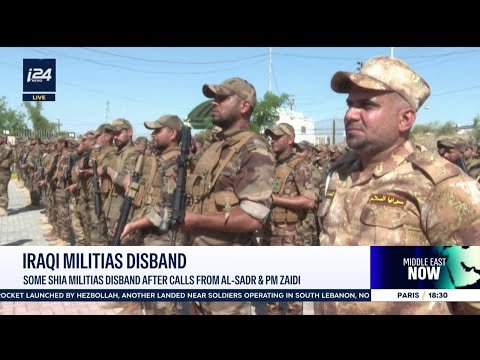
In a recent i24NEWS English report, the question of whether Iraq's era of powerful, semi-autonomous militias is drawing to a close took center stage. The government in Baghdad is advancing plans to disarm and integrate the Popular Mobilization Forces (PMF) — a sprawling network of predominantly Iran-backed militia groups — after several key factions signaled readiness to place
In a recent i24NEWS English report, the question of whether Iraq's era of powerful, semi-autonomous militias is drawing to a close took center stage. The government in Baghdad is advancing plans to disarm and integrate the Popular Mobilization Forces (PMF) — a sprawling network of predominantly Iran-backed militia groups — after several key factions signaled readiness to place their weapons under state authority for the first time in years.
Is the Militia Age in Iraq Coming to an End?
Jerusalem — The push to dismantle Iraq's parallel militia structures has gained unprecedented momentum in recent weeks, raising expectations that the country could be on the verge of a fundamental shift in its security landscape. Saraya al-Salam, the militia affiliated with populist cleric Muqtada al-Sadr, completed the first major handover of weapons to Iraqi authorities, marking a concrete step toward reducing the autonomy of the Popular Mobilization Forces, which were formally placed under the prime minister's command in 2016 but continued to operate with significant independence.
The Push for Disarmament in Baghdad
The Iraqi government withdrew the Popular Mobilization Authority bill from parliamentary consideration after direct pressure from Washington, halting legislation that would have expanded the legal powers of the militias. Prime Minister Mohammed Shia al-Sudani has instead focused on administrative measures to fold selected PMF units into the regular security forces. Reports indicate that certain PMF factions have begun withdrawing from forward positions in western and northern Iraq, reducing their visible presence along key supply routes that previously connected Iran-backed groups across the border with Syria.
Internal divisions have surfaced in several PMF brigades, with some commanders advocating full absorption into the Iraqi army and others insisting on preserving separate command structures funded and directed from Tehran. The Imam Ali Brigades announced their disaffiliation from the PMF umbrella in recent days, creating a split that weakens the unified command structure Iran has relied upon to direct operations across multiple fronts.
Iran's Regional Network from Tehran to Baghdad
The Popular Mobilization Forces form a critical link in Iran's proxy chain that stretches from Tehran through Baghdad to Beirut, where Hezbollah maintains operational coordination with Iraqi factions. This network has allowed Tehran to project power across the region without deploying Islamic Revolutionary Guard Corps units on foreign soil. Hardline PMF commanders have conditioned any further disarmament on a complete withdrawal of U.S. troops from Iraqi bases, a demand that aligns with Iranian strategic goals of removing American forces from the region.
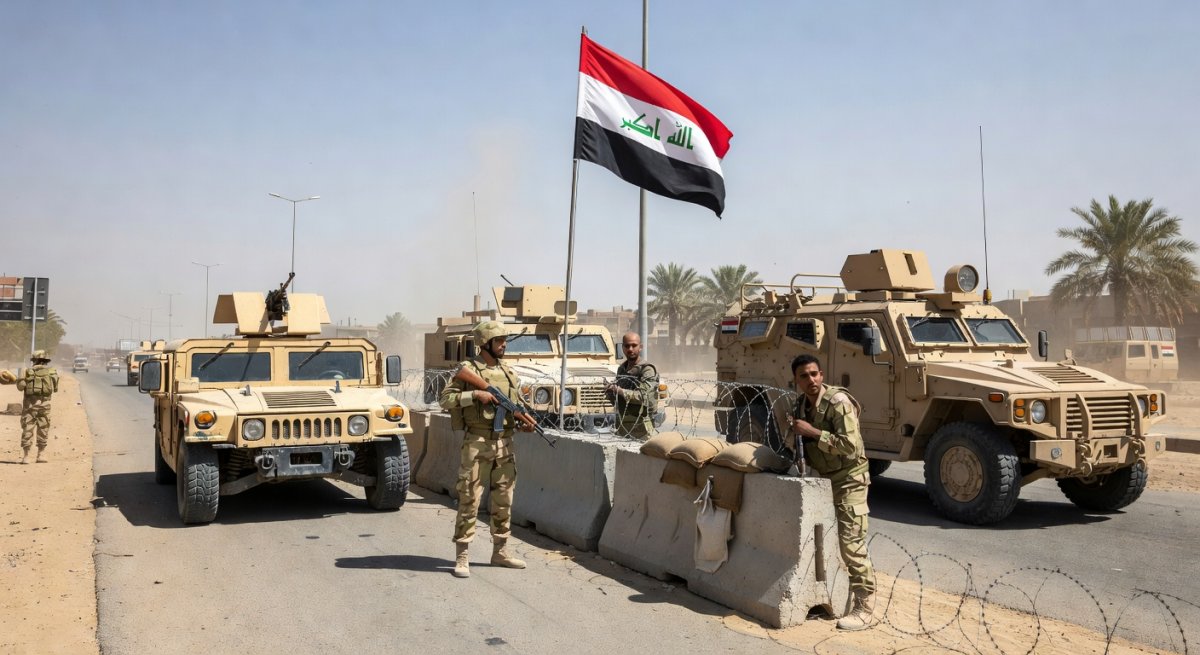
The militia issue has become a central point of tension between Washington and Baghdad. U.S. officials have indicated that 2026 should mark the effective end of independent militia operations in Iraq, tying future security assistance to measurable reductions in PMF autonomy. This timeline has accelerated internal debates within the PMF and created a sense of urgency among factions that have operated with near-total impunity for nearly a decade.
Direct Threats to Israeli Security
Iran-backed PMF units have launched drones and missiles toward Israeli territory on multiple occasions since October 2023, using Iraqi territory as a launch platform within the broader "axis of resistance" coordinated from Tehran. These attacks have required the Israeli Air Force to conduct long-range strikes on militia infrastructure inside Iraq to disrupt launch capabilities. Israeli security assessments view any reduction in PMF autonomy as a potential narrowing of Iran's ability to open a sustained eastern front against Israel, complementing the pressure already faced from Hezbollah in Lebanon and Hamas in Gaza.
The IDF's Northern Command and Air Force have tracked these Iraqi-origin threats as part of the same operational theater. Shin Bet and Mossad reporting has highlighted the transfer of Iranian drone technology and missile components through PMF networks into Iraq, enabling strikes that bypass traditional border defenses and reach deeper into Israeli airspace than previously possible.
Sudani's Balancing Act Between Washington and Tehran
Prime Minister Mohammed Shia al-Sudani has pursued parallel diplomatic channels with both the United States and Iran, seeking economic support from Washington while avoiding direct confrontation with Tehran-backed factions inside his own governing coalition. This approach has produced incremental progress on militia integration without triggering open conflict with hardline PMF elements. The delicate balance reflects the reality that Iran maintains significant influence over several PMF factions through financial backing, weapons supplies, and ideological alignment with the Islamic Revolution.
Internal splits have already led to localized withdrawals from contested areas in Anbar and Nineveh provinces, where PMF units previously maintained near-total control. These withdrawals have created security vacuums that Iraqi army units have moved to fill, though the transition has not been seamless. Reports of friction between regular forces and former militia elements highlight the challenges ahead.
Forward-Looking Implications for Regional Stability
If the current disarmament momentum continues, Israel could see a measurable decline in cross-border drone and missile threats originating from western Iraq, freeing resources currently allocated to monitoring the eastern front. Successful integration would also weaken Iran's ability to coordinate simultaneous operations across Lebanon, Syria, and Iraq — a strategic nightmare that Israeli defense planners have long feared.
Failure to enforce integration could instead entrench the PMF as a permanent parallel force, preserving Tehran's launch platforms and supply lines for future confrontations with Israel. Israeli planners are already modeling scenarios in which residual militia units retain strike capabilities even after nominal state oversight, a concern echoed by U.S. intelligence assessments.
The coming months will test whether Prime Minister al-Sudani can convert recent symbolic handovers into lasting structural change, or whether hardline factions will reassert autonomy once external pressure from Washington eases. The outcome will directly shape the threat environment facing Israel's northern and eastern borders through 2026 and beyond, making this one of the most closely watched developments in the Middle East today.
By Hannah Berg, Staff Writer
This article was produced with AI-assisted research and editorial support. Reporting is based on sources cited in the article.
What's Your Reaction?
 Like
0
Like
0
 Dislike
0
Dislike
0
 Love
0
Love
0
 Funny
0
Funny
0
 Wow
0
Wow
0
 Sad
0
Sad
0
 Angry
0
Angry
0

Israel Correspondent at Global1.News. Based in Tel Aviv, covering Israeli politics, security, technology, and society. Provides balanced, deeply-sourced reporting on one of the most closely-watched regions in the world.











Comments (0)