
Venezuela's Executive Vice President Strengthens Oil Ties with India
Introduction The arrival of Venezuela’s Executive Vice President in New Delhi this week has drawn fresh attention to the shifting energy ties between Latin America and Asia. At a moment when global oil routes face disruption, the visit underscores how South American producers are being drawn into India’s search for reliable crude supplies. For countries across the region, the d
Introduction
The arrival of Venezuela’s Executive Vice President in New Delhi this week has drawn fresh attention to the shifting energy ties between Latin America and Asia. At a moment when global oil routes face disruption, the visit underscores how South American producers are being drawn into India’s search for reliable crude supplies. For countries across the region, the development carries direct implications for trade balances, investment flows, and the difficult balance between resource revenues and climate goals.
Brazil, as Latin America’s largest oil exporter, watches these developments closely. Pre-salt fields off the coast of Rio de Janeiro and São Paulo continue to increase output, yet competition from Venezuelan barrels in the Indian market could affect future pricing and contract negotiations. The stakes extend beyond commercial calculations to questions of regional influence and the long-term viability of fossil-fuel dependence in an era of accelerating energy transition.
Venezuela's Executive Vice President in India
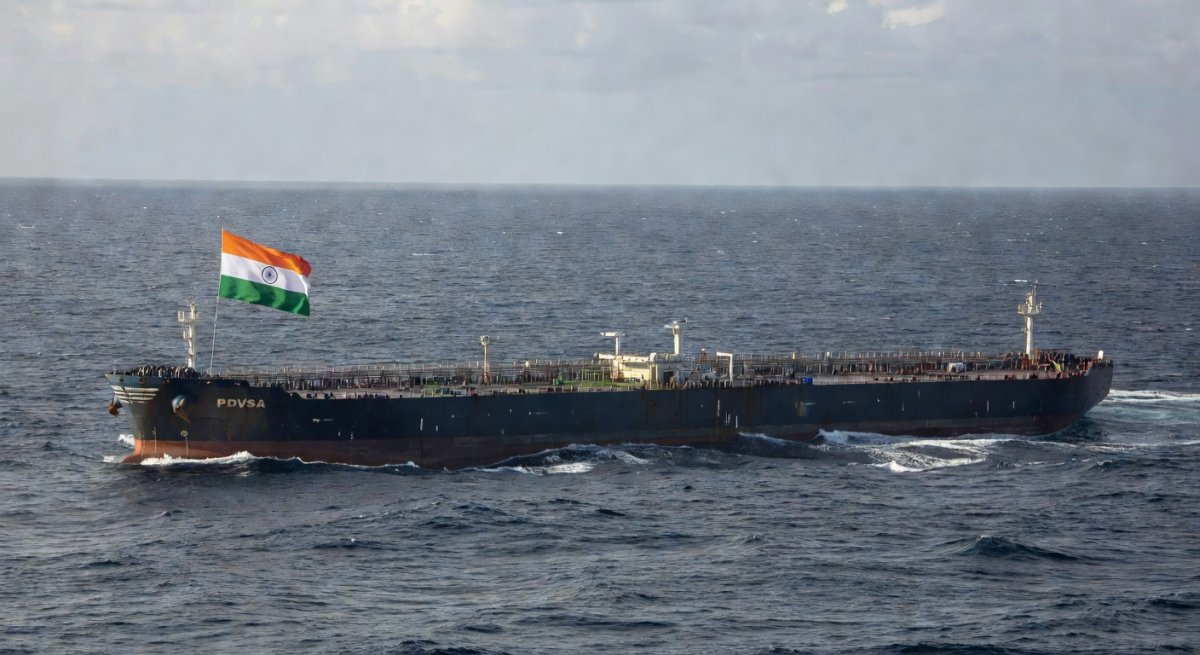
Executive Vice President Delcy Rodríguez traveled to India for high-level discussions with Prime Minister Narendra Modi scheduled for Thursday. The agenda covers trade, investment, healthcare, and renewable energy cooperation, yet the underlying driver remains petroleum. Venezuela seeks renewed market access while India looks to secure additional heavy-crude volumes that its complex refineries can process efficiently.
The meetings occur against a backdrop of cautious diplomatic re-engagement. After years of limited contact due to sanctions, both governments are exploring incremental steps to restore commercial links. Rodríguez’s presence signals Caracas’s intent to position itself as a stable supplier, even as domestic production constraints and political uncertainties persist. Observers note that any concrete agreements will likely focus first on oil before expanding into other sectors.
India's Oil Import Landscape
India depends on foreign sources for roughly 90 percent of its crude requirements, making supply security a permanent national priority. According to BBC reporting, approximately half of these imports—between 2.5 and 2.7 million barrels per day—normally transit the Strait of Hormuz. Recent conflict-related disruptions have effectively closed this chokepoint, forcing Indian refiners to accelerate diversification away from traditional Gulf suppliers.
The vulnerability has prompted urgent outreach to alternative producers. Venezuela’s heavy, sulfur-rich crude matches the technical capabilities of Indian refineries, particularly those on the western coast designed for similar grades. Policymakers in New Delhi view expanded South American sourcing as one element of a broader strategy to reduce exposure to any single geographic corridor.
Venezuela-India Oil Trade History
Bilateral oil trade reached its earlier peak in 2012 when Venezuela ranked as India’s third-largest crude supplier. Deliveries declined sharply after United States sanctions took effect in 2019, halting most flows for several years. Indian refiners resumed purchases in February following a sanctions-easing arrangement between Washington and Caracas, marking the first sustained volumes in nearly five years.
The interruption highlighted how external political decisions can sever long-standing commercial relationships. During the sanctions period, Indian companies redirected procurement toward Russia and Middle Eastern producers. The February resumption therefore represents both a return to an established supplier and a test of whether past volumes can be rebuilt under current geopolitical conditions.
Current Import Volumes
According to maritime analytics firm Kpler, Venezuela supplied approximately 266,000 barrels per day to India in May, accounting for 5.3 percent of total crude imports and placing the country fifth among all sources. Kpler data further show that April and May combined averaged around 280,000 barrels per day, with June cargoes projected to exceed 300,000 barrels per day.
These figures remain modest relative to India’s overall needs yet demonstrate steady month-on-month growth. Only Russia, the United Arab Emirates, Saudi Arabia, and Brazil delivered larger volumes during the same period. Kpler tracking indicates that Venezuelan cargoes are being absorbed primarily by refineries equipped for heavy grades, confirming the technical fit that has historically supported this trade.
Brazil's Competitive Position
Brazil currently ranks among India’s top four crude suppliers thanks to rising output from pre-salt reservoirs beneath the Santos and Campos basins. State-controlled Petrobras and private operators have invested heavily in these deep-water fields, generating a lighter, sweeter crude that complements the heavier Venezuelan grades. The coexistence of both suppliers in the Indian market illustrates Latin America’s growing role in Asian energy security.
Competition between Brazilian and Venezuelan barrels centers on price, logistics, and contract flexibility. Brazilian cargoes benefit from established trading relationships and fewer political risk premiums, while Venezuelan oil offers volume potential if production stabilizes. Brazilian policymakers monitor these dynamics to ensure that expanded Venezuelan exports do not erode market share or depress realized prices for domestic producers.
Latin America's Fossil Fuel Paradox
Across the region, governments face a persistent tension between oil revenues and international climate commitments. Brazil, Colombia, and Venezuela each rely on hydrocarbon exports to varying degrees, yet all have pledged to reduce emissions under the Paris Agreement. The renewed India-Venezuela trade route exemplifies how short-term fiscal pressures can outweigh longer-term decarbonization targets.
In Venezuela, oil remains the dominant source of foreign exchange despite years of underinvestment. Colombia has pursued modest diversification while maintaining significant production in the Llanos basin. Brazil’s pre-salt expansion continues even as the country hosts international climate negotiations. These parallel trajectories reveal the structural difficulty of pivoting away from resources that still finance public budgets and social programs.
Amazon and Community Impacts
Expanded extraction in the Orinoco Belt and Brazil’s Amazonian states carries direct consequences for forest cover and indigenous territories. In Brazil, the Chico Mendes Institute for Biodiversity Conservation (ICMBio) oversees protected areas that increasingly border new drilling zones. Similar pressures exist in Venezuela’s southern states where informal mining and oil operations overlap with traditional lands.
Forest-dependent communities in both countries report declining water quality, reduced fish stocks, and restricted access to hunting grounds. Civil-society organizations have documented cases where consultation processes fell short of international standards. These local realities underscore that energy-trade decisions made in New Delhi or Caracas ultimately affect livelihoods thousands of kilometers away in the Amazon basin.
Geopolitical Factors
Sanctions relief, the Iran conflict, and India’s diversification imperative converge to shape current volumes. Michael Kugelman of the Atlantic Council has noted that Venezuela offers India a meaningful opportunity to spread supply risk beyond the Middle East, while cautioning that political volatility could still disrupt any emerging partnership. The interplay between U.S. policy signals and Indian procurement decisions will determine whether recent gains consolidate.
Regional diplomacy within Latin America also matters. Brazil’s foreign ministry has maintained quiet engagement with both Caracas and Washington, seeking to preserve space for commercial activity without triggering secondary sanctions. Such balancing acts reflect the broader challenge facing South American governments navigating great-power competition over energy resources.
Future Outlook
Venezuelan production has increased by roughly 400,000 to 500,000 barrels per day this year, yet remains well below historical peaks. Further growth will require sustained capital inflows, reliable access to diluents, and continued sanctions stability. Indian refiners will weigh these constraints against the technical advantages of Venezuelan grades when negotiating future term contracts.
Regional policy frameworks may gradually influence outcomes. Proposals for coordinated Latin American energy strategies, including joint infrastructure and shared environmental standards, could affect how individual countries position themselves in Asian markets. Whether Venezuela becomes a substantially larger supplier to India will ultimately hinge on production recovery, sustained sanctions relief, and the pace of global energy transition.
By Elena Vasquez, Staff WriterThis article was produced with AI-assisted research and editorial support. Reporting is based on sources cited in the article.
What's Your Reaction?
 Like
0
Like
0
 Dislike
0
Dislike
0
 Love
0
Love
0
 Funny
0
Funny
0
 Wow
0
Wow
0
 Sad
0
Sad
0
 Angry
0
Angry
0

Latin America Correspondent at Global1.News. Based in Mexico City, covering politics, economics, energy, and culture across the region. Brings an on-the-ground perspective to stories spanning from the Rio Grande to Patagonia.












Comments (0)