
Escalating US-Iran Conflict Puts Strait of Hormuz at Center of Global Energy Concerns
US-Iran war escalates into sixth night of strikes as Washington targets Iranian infrastructure and Tehran threatens permanent closure of the Strait of Hormuz, with IEA warning of global energy crisis.
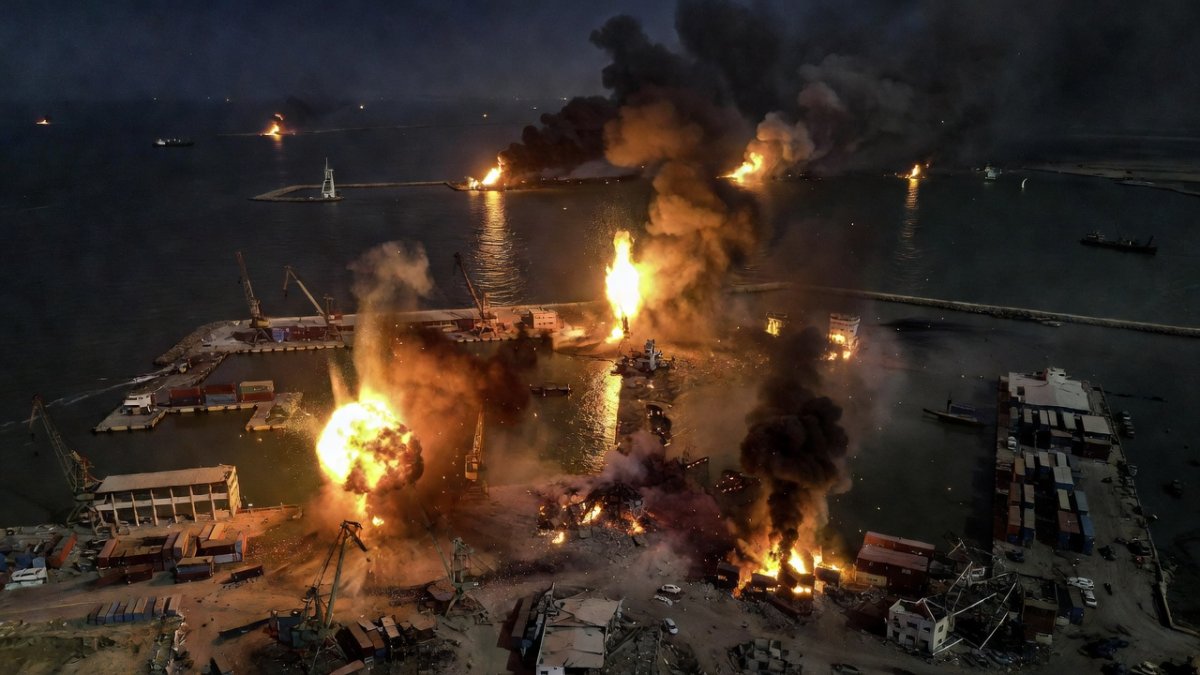
The intensifying conflict between the United States and Iran has entered a dangerous new phase, with American forces carrying out a sixth consecutive night of strikes across southern and central Iran, while Tehran responds by targeting US allies throughout the Gulf and threatening permanent changes to the strategic waterway that underpins global energy markets.
What began as a limited naval confrontation over the Strait of Hormuz has rapidly escalated into the most serious direct military engagement between Washington and Tehran in decades, drawing in Gulf states, triggering energy price volatility, and prompting urgent diplomatic intervention from China and Pakistan.
The Sixth Night of US Strikes on Iran
The United States conducted a sixth consecutive night of strikes against Iranian targets, focusing on Bandar Abbas, Ahvaz, and Iranshahr. American forces also engaged a vessel accused of attempting to breach the reimposed naval blockade around Iranian ports. These actions mark a sustained military campaign aimed at degrading Iranian capabilities following the breakdown of earlier understandings.
Reports indicate that Iran has recorded 38 deaths and more than 400 injuries from US attacks since ceasefire discussions began in Switzerland on June 22. The strikes reflect Washington's determination to enforce restrictions on Iranian maritime movements in key waterways.
Iran's Retaliatory Posture and Threats
Tehran responded by launching missiles and drones toward US allies, with reported impacts in Kuwait, Bahrain, and Jordan. Explosions occurred in Qatar as well. Iranian Armed Forces spokesman Abolfazl Shekarchi stated that the situation in the Strait of Hormuz will not return to its pre-war state, emphasizing Iranian and Omani sovereignty over the waterway and rejecting external interference by the United States.
The Islamic Revolutionary Guard Corps claimed destruction of a US air control radar in Oman's Ghanim region and a maritime control radar in the Strait of Hormuz. Iran further warned it could encourage Houthi allies in Yemen to close the Bab al-Mandeb Strait, extending pressure into the Red Sea corridor.
Analysts at the International Crisis Group have drawn parallels to the 1980s Tanker War, when Iranian forces targeted vessels in the same waterway during the Iran-Iraq conflict, prompting US naval escorts. Similar dynamics appear at play today as Tehran seeks to leverage its geographic position. Chatham House researchers note that Iran's strategy aims to raise the costs for any external power attempting to police the strait unilaterally.
Strategically, Iranian leaders aim to deter further US strikes by demonstrating the capacity to disrupt global energy flows while preserving leverage for future talks. This approach echoes past crises under both the Obama and Trump administrations, when sanctions relief and nuclear negotiations were repeatedly tied to maritime stability assurances.
The Strait of Hormuz Crisis and Energy Implications
The confrontation has placed the Strait of Hormuz at the heart of energy security calculations. A tanker was struck by an unknown projectile roughly 19 nautical miles east of Khasab, Oman, according to UKMTO reporting. Iranian statements assert full sovereignty over the strait and signal unwillingness to accept prior transit arrangements.
Brent crude prices rose 70 cents, or 0.83 percent, reaching $84.93 per barrel on Friday. This movement illustrates immediate market sensitivity to any disruption in the waterway that carries a significant share of global oil supplies.
Carnegie Middle East Center experts highlight that prolonged closure threats could force OPEC+ members, particularly Saudi Arabia, to reconsider output quotas amid rising Asian demand from China, Japan, India, and South Korea. European energy security would also suffer as alternative LNG routes become strained.
IEA Warning on Global Energy Security
International Energy Agency chief Fatih Birol addressed the risks during a Council on Foreign Relations event in Washington. He noted that oil security remains a critical issue and expressed concern if conditions do not improve within the coming weeks. Birol's remarks underscore the agency's assessment that prolonged tensions could affect supply stability across multiple regions.
The warning arrives as OPEC+ members monitor developments that could influence production quotas and export routes from the Gulf.
Historical precedents from the 1973 and 1979 oil shocks show how even temporary Hormuz disruptions triggered global recessions and accelerated diversification efforts. Today's market watchers fear similar second-order effects on inflation and investment flows.
Regional Spillover Effects in Kuwait, Qatar, and Iraq
Debris from intercepted Iranian projectiles sparked fires in Kuwait. In Qatar, one child sustained injuries from falling shrapnel during aerial interceptions. US forces reported shooting down eight explosive drones over Erbil in Iraq's Kurdish region.
These incidents demonstrate how the conflict radiates beyond direct US-Iran exchanges, affecting civilian areas and infrastructure in neighboring states. Qatar also rejected Israeli media claims that it had agreed to join military operations against Iran.
Qatar's delicate balancing act between Gulf neighbors and Iran continues, as Doha seeks to protect its LNG exports while avoiding entanglement in Vision 2030-related diversification setbacks facing Saudi Arabia and the UAE. Iraqi militia networks aligned with Tehran have already signaled readiness to intensify attacks on US positions, adding another layer of proxy escalation.
Diplomatic Efforts and the Collapse of the US-Iran MoU
A US-Iran memorandum of understanding signed in Pakistan a month earlier sought to establish a ceasefire framework. White House Press Secretary Karoline Leavitt attributed the recent strikes to Iran's alleged violation of that agreement, specifically clauses prohibiting attacks on commercial vessels transiting the Strait of Hormuz.
China's Foreign Minister Wang Yi and Pakistan's counterpart Ishaq Dar jointly called for an immediate ceasefire and resumption of dialogue. These appeals reflect efforts by outside powers to contain the escalation before it further destabilizes supply chains and regional alliances.
China's diplomatic push stems from its heavy reliance on Gulf oil imports and its interest in stabilizing Belt and Road corridors. Beijing has quietly urged restraint on both sides while positioning itself as a potential mediator, much as it did during earlier US-Iran tensions.
Meanwhile, US Vice President JD Vance has publicly stated that an Israeli campaign attempted to sway American opinion against Iran diplomacy, revealing internal fractures within the broader US-Israel alignment on how to handle the Tehran question.
What This Means for the Broader Middle East
The current trajectory reveals competing strategic objectives. The United States seeks to enforce maritime restrictions and limit Iranian projection through proxies such as the Houthis. Iran, for its part, leverages control over the Strait of Hormuz and threats to additional chokepoints to deter further pressure and maintain leverage in any future negotiations.
Second-order effects include higher energy costs that could slow Gulf economic diversification plans and increase volatility for importers in Asia and Europe. Sunni-Shia geopolitical competition risks intensification as states recalculate security alignments, while existing frameworks like the Abraham Accords face renewed strain from expanded conflict zones.
Great-power involvement adds another layer, with China and Pakistan advocating de-escalation to protect their own energy and trade interests. The episode illustrates how localized naval actions can quickly generate wider economic and security consequences across the Middle East and beyond.
Israel's calculations remain focused on preventing Iran from achieving a durable deterrent through the strait, while Hezbollah's potential involvement in Lebanon could open a northern front. Meanwhile, Houthis in Yemen and Iraqi militias continue to serve as force multipliers for Tehran's asymmetric strategy, complicating any swift resolution.
By Malik Hassan, Staff Writer
This article was produced with AI-assisted research and editorial support. Reporting is based on sources cited in the article.
What's Your Reaction?
 Like
0
Like
0
 Dislike
0
Dislike
0
 Love
0
Love
0
 Funny
0
Funny
0
 Wow
0
Wow
0
 Sad
0
Sad
0
 Angry
0
Angry
0

Middle East Correspondent at Global1.News. Based in Beirut, covering politics, conflict, energy, and society across the Middle East. Brings context and depth to a region often reduced to headlines.













Comments (0)