
Vance Rogan Interview Exposes Israel Iran Campaign
Vice President JD Vance accused Israeli government elements of running a covert digital influence campaign to prolong the US-Iran war, citing a Time investigation into Brad Parscale's firm. His Rogan interview has strained US-Israel relations as the June 2026 ceasefire unravels.
JD Vance’s Rogan Revelations Fracture US-Israel Ties Amid Escalating Iran Conflict
Washington, D.C. — July 17, 2026 — Vice President JD Vance’s extended conversation with Joe Rogan has injected new volatility into the already strained US-Iran-Israel dynamic, with direct implications for Gulf security and global energy flows.
Geopolitical Context: US-Iran War and the Negotiation Track
The sixth night of US strikes on Iranian targets, met by Tehran’s retaliation against Gulf bases, marks the collapse of the June 2026 US-Iran interim Memorandum of Understanding. That agreement sought limited de-escalation and verification steps, yet both sides now exchange fire while regional actors recalibrate.
Washington’s leverage rests on military reach and sanctions relief offers, whereas Tehran retains asymmetric tools including proxy networks and oil export channels. The unraveling leaves little room for renewed talks without addressing the influence operations now under public scrutiny.
The June 2026 US-Iran MoU was a 60-day framework that included mutual de-escalation steps, limited sanctions relief for Iran, and Iranian commitments to halt enrichment above 60%. It collapsed after Iran struck an Israeli-linked tanker in the Arabian Sea on July 8, followed by US retaliatory strikes. This narrow window for confidence-building measures has now given way to open exchanges of fire that risk drawing in additional actors across the region.
Gulf states are caught in the middle. The UAE has publicly called for restraint while quietly hosting US naval assets. Qatar continues mediation channels, yet both capitals recognize that any escalation could disrupt their own security arrangements and economic diversification plans.
Brent crude has risen 12% since July 8, crossing $94 per barrel, with tanker war risk insurance premiums quadrupling for Strait of Hormuz transits. These price movements already signal how quickly energy markets price in the possibility of sustained disruption to global supply routes.
The Vance Bombshell: What Was Said
During the three-hour interview released July 15, 2026, Vance accused elements within the Israeli government of financing a discreet foreign influence campaign designed to sabotage US-Iran negotiations and sustain hostilities indefinitely. He directed a blunt “go to hell” at those orchestrating the effort.
Vance also addressed the Jeffrey Epstein files, acknowledging that the Trump administration had “screwed up” their handling. He described Epstein’s connections to the highest levels of Israeli and US intelligence as evident. On the broader Iran track, he offered cautious defense of the interim framework while voicing skepticism about its durability.
The Time Investigation: Brad Parscale and Clock Tower X
A Time magazine investigation published July 13, 2026, detailed how Brad Parscale, Trump’s former campaign manager and now a registered Israeli agent, operates Clock Tower X. The firm was contracted to run a digital campaign for Israel that specifically targets MAGA influencers.
This operation aligns with Vance’s description of a well-funded effort to shape narratives inside the United States. The revelation supplies concrete names and structures to claims previously aired only in private diplomatic channels.
Brad Parscale registered as a foreign agent for Israel in March 2026. His firm Clock Tower X reportedly received $2.3 million for a six-month digital campaign targeting US audiences. The registration filing itself has become a focal point for congressional staff examining foreign lobbying disclosures.
Time documented that at least 18 MAGA influencers with combined followings exceeding 40 million posted near-identical criticism of the Iran deal within a 72-hour window, triggering US official suspicion. Coordinated messaging of this scale suggests professional narrative management rather than organic grassroots reaction.
The operation targeted not just the Iran deal but also personal attacks on Vance, portraying him as "soft on Iran" — a charge that resonated within hardline pro-Israel circles. Such tactics risk deepening divisions inside the administration’s own political base at a moment when unified messaging on Middle East policy is already fragile.
Epstein, Intelligence, and the Wider Web
Vance’s linkage of Epstein to Israeli intelligence channels revives long-standing questions about foreign penetration of US elite networks. Such connections, if substantiated, would illustrate how influence operations extend beyond social media into deeper intelligence tradecraft.
These remarks complicate efforts to compartmentalize the Epstein issue from current policy disputes. They also feed narratives in Tehran and elsewhere that portray US decision-making as subject to external manipulation.
Israel’s Strategic Calculus
Israeli officials view an unconstrained Iran as an existential threat requiring sustained pressure. Prolonging conflict through influence tools may appear rational when negotiations risk lifting sanctions without ironclad nuclear restrictions.
Yet the public exposure of Clock Tower X and Vance’s rebuke carries second-order costs. It risks alienating segments of the American right that the Israeli government has cultivated for years, potentially narrowing future diplomatic room.
Israeli intelligence assessments view Iran as weeks away from weapons-grade enrichment capability. IAEA inspectors reported in late June that Iran had stockpiled 275kg of 60% enriched uranium. This timeline has hardened Israeli thinking that diplomatic pauses only buy Tehran additional time to cross critical thresholds.
Israeli defense officials have publicly argued that any deal legitimizing Iranian enrichment capacity is worse than no deal, a position that has strained relations with the White House. The stance reflects a long-standing preference for military prevention over negotiated limits, even when such limits include verification mechanisms.
The exposure of Clock Tower X may have the paradoxical effect of strengthening oversight: expect new congressional inquiries into foreign influence in US Middle East policy. These inquiries could impose greater transparency requirements on future lobbying efforts while also complicating Israel’s ability to shape American public debate without scrutiny.
Gulf and Regional Reactions
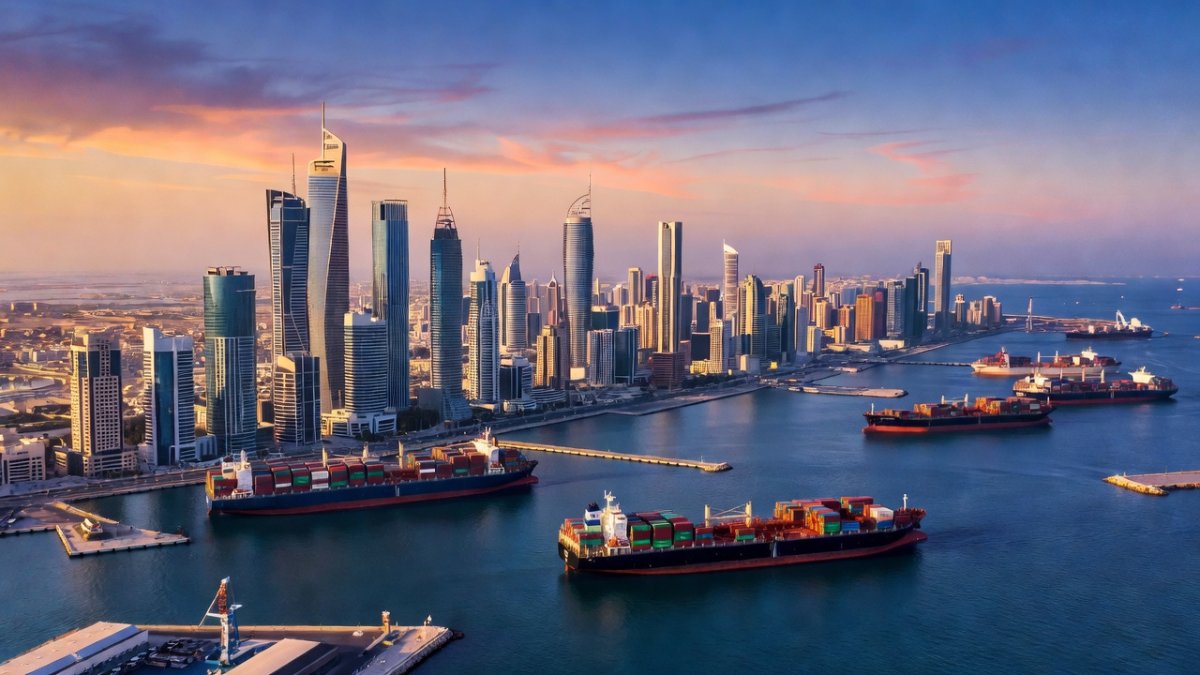
Qatar, Saudi Arabia, and the UAE are tracking developments closely. Renewed US-Iran fighting threatens shipping lanes and raises the prospect of oil supply disruptions that could spike prices at a sensitive moment for Gulf budgets.
Al Arabiya English’s W News Extra devoted a major segment to the Rogan interview, signaling that Arab media see Vance’s intervention as a potential pivot point in Washington’s regional posture. Riyadh and Abu Dhabi must weigh whether to quietly encourage de-escalation or hedge against prolonged instability.
What This Means for US-Israel Relations
Vance’s comments have already drawn condemnation from pro-Israel organizations and some Republican voices. Netanyahu’s office has withheld official comment, while several Israeli MKs labeled the remarks irresponsible.
The episode tests whether the US-Israel relationship can absorb public friction over influence operations without broader strategic drift. Future arms packages and intelligence sharing may face added congressional scrutiny if the narrative of foreign meddling gains traction.
Regional Implications
Great-power competition adds another layer. Russia and China watch for openings to portray the United States as internally divided and unreliable. Any perception that Israeli actions helped derail a US-brokered understanding could accelerate alternative security arrangements in the Gulf.
Energy markets remain the clearest transmission belt. Sustained conflict raises the risk premium on Gulf crude, benefiting producers yet threatening global growth. Regional capitals therefore share an interest in containing the fallout even if their preferred outcomes differ.
Gulf stock markets have shed 3-5% since the ceasefire collapse. Saudi Arabia's PIF is reportedly hedging by increasing holdings in energy infrastructure outside the Gulf. Such portfolio shifts indicate that regional sovereign investors are already pricing in the possibility of prolonged instability.
Russia has offered to mediate between Iran and the US, while China has increased Iranian crude purchases through shadow fleet channels. Both moves illustrate how extra-regional powers are positioning themselves to benefit from any vacuum left by strained US-Gulf security ties.
A prolonged conflict accelerates Gulf state diversification away from US security guarantees, with both Saudi Arabia and UAE deepening defense ties with Asian partners. This rebalancing reflects a pragmatic recognition that American domestic politics may no longer deliver consistent regional engagement. By Malik Hassan, Staff Writer
This article was produced with AI-assisted research and editorial support. Reporting is based on sources cited in the article.
What's Your Reaction?
 Like
0
Like
0
 Dislike
0
Dislike
0
 Love
0
Love
0
 Funny
0
Funny
0
 Wow
0
Wow
0
 Sad
0
Sad
0
 Angry
0
Angry
0
Middle East Correspondent at Global1.News. Based in Beirut, covering politics, conflict, energy, and society across the Middle East. Brings context and depth to a region often reduced to headlines.











Comments (0)