
Iran's Hormuz Fees Test US MoU and Gulf Oil Security
**Keywords:** Iran Hormuz fees, Strait of Hormuz, US-Iran MoU, Mohammad Bagher Ghalibaf, Gulf oil exports, Saudi Arabia Petroline, oil prices, Shehbaz Sharif, Trump Iran deal, Maersk CEO, maritime service fees, 2026 Hormuz crisis The announcement by Iran's chief negotiator Mohammad Bagher Ghalibaf that Tehran will begin charging ships transiting the Strait of Hormuz after a 60-
The announcement by Iran's chief negotiator Mohammad Bagher Ghalibaf that Tehran will begin charging ships transiting the Strait of Hormuz after a 60-day fee-free window directly challenges the fragile US-Iran memorandum signed on June 17, 2026, and reverberates across Sunni-Shia fault lines, Gulf energy security, and ongoing Arab-Israeli normalization efforts. The move comes as Gulf states seek to diversify their economies away from oil dependence while navigating Iranian influence and US strategic interests in the region.
Iran's Hormuz Service Fees Threaten Fragile US Deal and Gulf Energy Routes
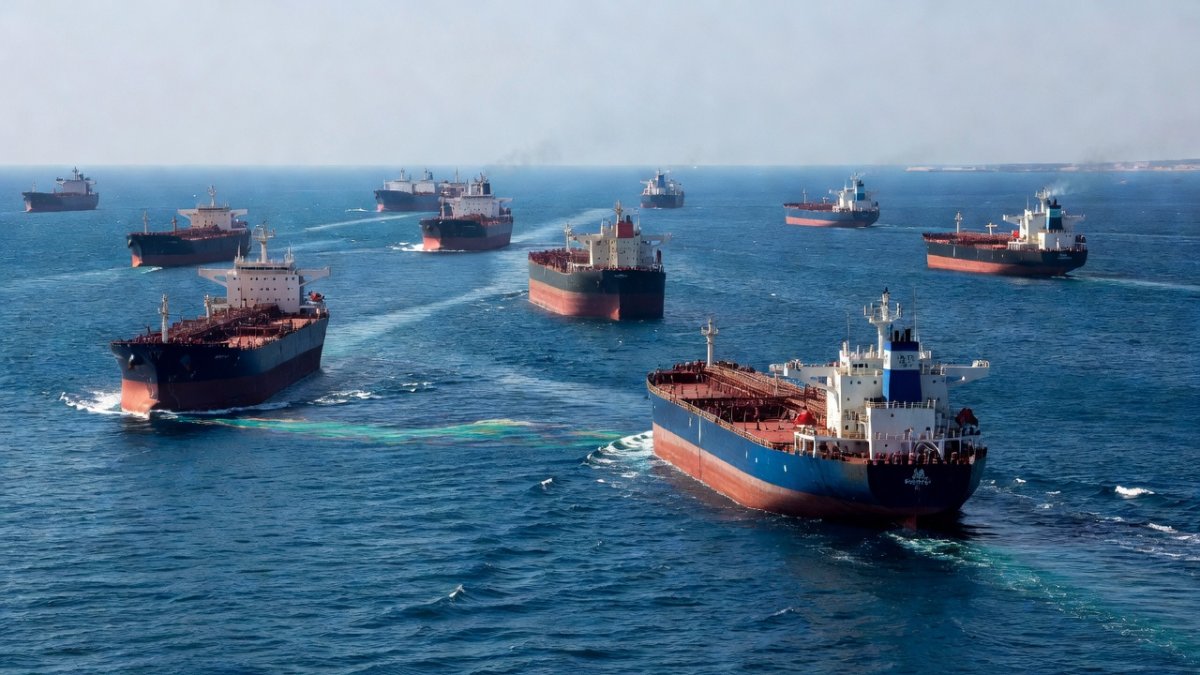
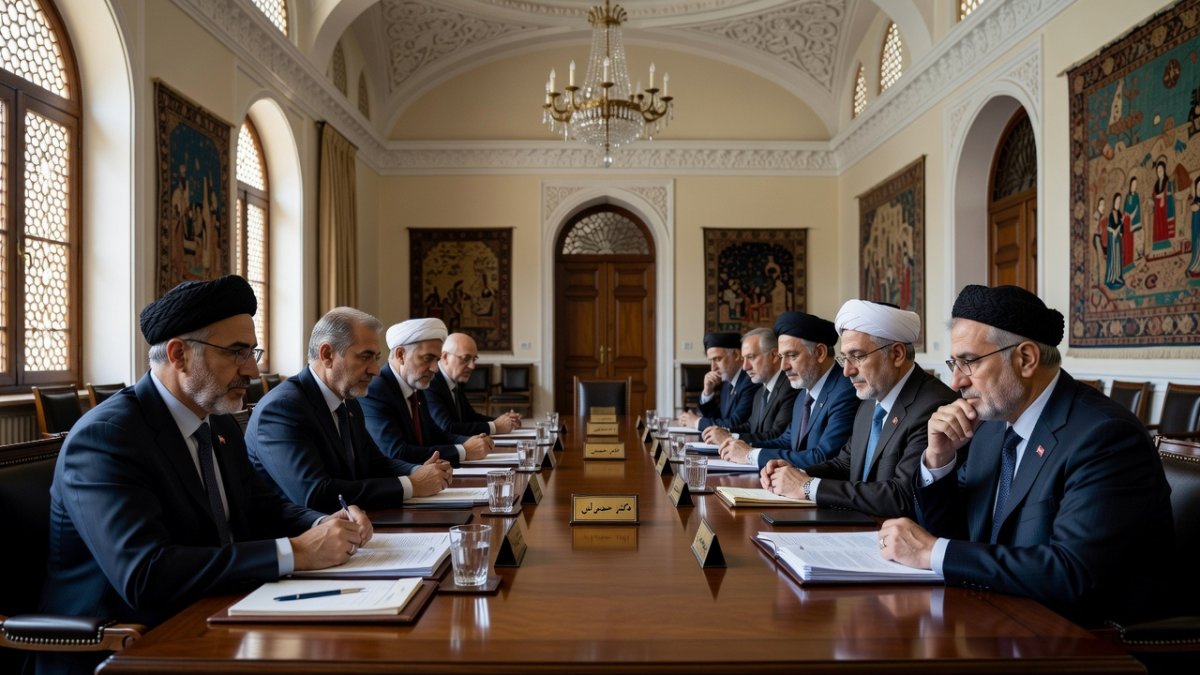
Beirut, Lebanon – June 18, 2026 — Iran's decision to impose maritime service fees on vessels crossing the Strait of Hormuz after the initial 60-day period outlined in the US-Iran memorandum has introduced fresh uncertainty into Middle East energy markets and diplomatic calculations. The 14-point agreement, mediated by Pakistan Prime Minister Shehbaz Sharif and signed in Islamabad, ended a 3.5-month blockade that began February 28, 2026, and drove Brent crude prices close to $80 per barrel. Under the terms, Iran reopened the strait to commercial traffic, the United States lifted its naval blockade, and $24 billion in frozen Iranian assets were released in exchange for a temporary toll-free window.
The Islamabad MoU and Its 60-Day Window
The memorandum explicitly limited the fee-free period to 60 days, after which Iran asserts the right to collect payments framed as compensation for maritime services rather than traditional tolls. Mohammad Bagher Ghalibaf stated on Iranian state television that the strait would not return to pre-war conditions and that Iran possesses sovereignty over the waterway. This interpretation directly contradicts earlier assurances from US President Trump that the strait would remain permanently toll-free. The distinction between "service fees" and "tolls" has become the central semantic battleground, with Washington insisting it will not permit any charges that restrict freedom of navigation.
Iran's Sovereignty Calculus and Regional Leverage
Tehran views the memorandum as validation of its long-standing claim to authority over the strait, a position that strengthens its hand in broader negotiations involving the nuclear file and sanctions relief. By securing the release of $24 billion while retaining the option to generate future revenue from transit, Iranian leaders calculate they have extracted meaningful concessions without fully surrendering strategic control. This stance aligns with Iran's wider regional posture of asserting influence across Shia communities in Iraq, Lebanon, and Yemen while countering Sunni-led Gulf states. The move also serves domestic political purposes by demonstrating that the government can extract economic benefits even under pressure.
Gulf States' Exposure and Alternative Routes
Saudi Arabia, the UAE, Qatar, Kuwait, and Bahrain face the most immediate exposure because the majority of their crude exports must pass through Hormuz. Saudi Arabia's East-West Pipeline, known as Petroline, offers a partial buffer with capacity to move approximately 5 million barrels per day to the Red Sea, yet this route cannot fully replace Hormuz transit volumes. Riyadh's ongoing economic diversification under Vision 2030 depends on stable oil revenues, making any new fees a direct threat to fiscal planning. The UAE has accelerated development of its own bypass pipelines, but these projects require years to reach full scale and cannot immediately offset higher transit costs.
Market Reactions and Industry Warnings
Oil prices fell roughly 4 percent upon announcement of the memorandum, with Brent crude settling between $76 and $78 per barrel. However, the Maersk CEO warned that permitting Iran to charge fees would set a dangerous precedent that could encourage other states to impose similar levies on critical chokepoints. Shipping companies are already modeling scenarios in which even modest per-barrel fees could add hundreds of millions in annual costs for major exporters. The uncertainty has prompted some charterers to explore longer routes around the Cape of Good Hope, increasing both transit times and insurance premiums.
US Strategic Calculations and Enforcement Challenges
Washington presents the agreement as a diplomatic success that restored commercial access without military escalation. Yet the administration faces the difficult task of preventing Iran from implementing fees once the 60-day period expires. Any US naval response risks reigniting the very crisis the memorandum sought to end. The involvement of Pakistan's Shehbaz Sharif as mediator added a layer of Islamic-world legitimacy to the deal, but Islamabad's influence over Tehran's subsequent actions remains limited. US officials have signaled they will treat any fee as a violation of the spirit of free navigation, though concrete enforcement mechanisms beyond diplomatic pressure have not been detailed.
Regional Implications and Future Dynamics
The Hormuz fee dispute intersects with multiple Middle East fault lines, including Sunni-Shia competition, Turkey's regional ambitions, and the trajectory of Arab-Israeli normalization. Gulf states already wary of Iranian assertiveness may accelerate security cooperation with the United States and Israel, potentially deepening the very alignments Tehran seeks to disrupt. At the same time, sustained higher transit costs could slow Gulf economic diversification programs that rely on predictable energy income. If Iran successfully collects fees, other littoral states might pursue similar arrangements, reshaping the legal and commercial framework governing international straits. The coming months will test whether the Islamabad MoU represents a durable de-escalation or merely a temporary pause in a longer contest over control of the world's most critical energy corridor.
By Malik Hassan, Staff Writer
This article was produced with AI-assisted research and editorial support. Reporting is based on sources cited in the article.
What's Your Reaction?
 Like
0
Like
0
 Dislike
0
Dislike
0
 Love
0
Love
0
 Funny
0
Funny
0
 Wow
0
Wow
0
 Sad
0
Sad
0
 Angry
0
Angry
0
Middle East Correspondent at Global1.News. Based in Beirut, covering politics, conflict, energy, and society across the Middle East. Brings context and depth to a region often reduced to headlines.











Comments (0)